Ol Pejeta Conservancy, located in Kenya’s Laikipia Plateau, is one of the country’s most important conservation areas. This non-profit reserve is home to a diverse range of wildlife, including the iconic Big Five (lions, leopards, elephants, rhinos, and buffalo). After the Masai Mara, it boasts one of the highest predator densities in Kenya.
Ol Pejeta is the largest black rhino sanctuary in East Africa and the last refuge for the world’s only remaining northern white rhinos. It is also the only place in Kenya where visitors can see chimpanzees, thanks to a sanctuary that rehabilitates animals rescued from the illegal wildlife trade. Ol Pejeta is a model of sustainable tourism, reinvesting a significant portion of tourism revenue into conservation efforts and local community projects. Their mission is to ensure that wildlife conservation translates into better education, healthcare, and infrastructure for nearby communities.

10 Reasons to Visit Ol Pejeta Conservancy
1. Support a Conservation Success Story
As Ol Pejeta states, its mission is to “conserve wildlife, provide a sanctuary for great apes, and generate revenue through wildlife tourism to reinvest in conservation and community development.”
By visiting the reserve, you are directly contributing to the conservation of biodiversity and the economic development of rural communities.

2. See the Last Two Northern White Rhinos
Tragically, only two northern white rhinos remain on Earth—Najin and her daughter, Fatu. This subspecies is on the brink of extinction, with the only hope for survival resting on advanced reproductive technologies like in vitro fertilization and stem cell research—expensive and untested methods for rhinos.
During a safari at Ol Pejeta, visitors can see these two rhinos up close. A guided visit by car with a park ranger takes you into their enclosure, offering a unique opportunity to witness these remarkable animals and learn about their story. This activity costs $70 per person.

3. Enjoy Stunning Views of Mount Kenya
Ol Pejeta offers more than just incredible wildlife—it also boasts diverse landscapes, from open grasslands to thick bush and riverine areas.
On clear mornings, visitors can see the striking silhouette of Mount Kenya, the country’s highest peak. The sight of this majestic mountain rising behind zebras, rhinos, or giraffes is reason enough to visit Ol Pejeta.

4. Visit Rescued Chimpanzees at Sweetwaters Sanctuary
Kenya has no wild chimpanzees, but in 1993, when a rescue center in Burundi had to shut down due to civil war, Ol Pejeta provided a new home for these primates.
The Sweetwaters Chimpanzee Sanctuary, supported by the Kenya Wildlife Service (KWS) and the Jane Goodall Institute, cares for orphaned and mistreated chimpanzees from West and Central Africa. Today, 35 individuals live in spacious enclosures with excellent conditions.
The sanctuary is open daily from 9:30 AM to 1:00 PM and 2:00 PM to 4:30 PM, and the visit is included in the Ol Pejeta entry fee.
5. Spot Black Rhinos in the Wild
Ol Pejeta has the highest density of black rhinos in East Africa. These rhinos are generally harder to spot than their white counterparts, as they prefer dense vegetation and are more sensitive to vehicle noise. However, early morning game drives offer a good chance of encountering them.
To distinguish between the two species, don’t focus on color—both are gray. The term “white” rhino originates from a misinterpretation of the Dutch word “wijde” (meaning “wide”), referring to their broad mouths. Black rhinos have a hooked lip and feed mainly on leaves from bushes and trees, whereas white rhinos graze on grass.
💡 Get a Free Quote for Your Trip to Kenya with Trusted Local Operators
If you’d like to plan your trip to Kenya with reliable local tour operators, I can help you connect with the best ones. Just fill out this quick form, and based on the type of safari you’re looking for, I’ll match you with the most suitable local agencies. I’ll also be available to answer any questions throughout the planning process — so your safari will be stress-free, authentic, and truly unforgettable!

6. Witness White Rhino Calves
Game drives in Ol Pejeta are special. There are fewer vehicles than in more popular parks, and the open terrain makes wildlife easier to spot. White rhino sightings are almost guaranteed, and with some luck, you might even see a calf.
Few sights are as heartwarming as a baby rhino walking closely beside its mother.

7. See Lions Without the Crowds
Ol Pejeta is home to lions, leopards, and cheetahs, though spotting them can be challenging due to the heat, which keeps them resting in the shade during the day.
However, when you do find lions, the experience is unforgettable—chances are you’ll be the only one watching them, with no other vehicles around.

8. Meet Baraka, the Blind Rhino
Baraka is a black rhino born in the wild at Ol Pejeta who lost sight in both eyes due to an injury and cataracts. After receiving extensive veterinary care, he now lives in a secure 40-hectare enclosure at the heart of the reserve.
Visitors can get close to Baraka and even feed him under the supervision of his caretakers.

9. Experience a Walking Safari
A walking safari in Ol Pejeta is a completely different experience from a traditional game drive. Accompanied by a park ranger, you’ll focus on the finer details—interpreting tracks, smells, sounds, and spotting smaller creatures often overlooked from a vehicle.
On some walks, you might even encounter larger mammals, making for an unforgettable adventure.

10. Watch Wildlife Gather Around Waterholes
During the dry season (July to October), water becomes scarce in Ol Pejeta. Most rivers dry up, leaving only a few natural and artificial waterholes.
Visiting these waterholes during the hottest part of the day offers a chance to witness incredible wildlife interactions as animals cautiously approach to drink.

Ol Pejeta Conservancy Safari: Practical Information for Visiting
How to Get to Ol Pejeta Conservancy
Ol Pejeta is about a 4-hour drive from Nairobi. Visitors can reach the reserve by rental car (a 4×4 is not required) or as part of a guided tour with a local operator in Kenya.
For those using public transport, buses run to the nearest town, Nanyuki, where taxis can be hired for the final leg of the journey.
Entrance Fees
The entrance fee for Ol Pejeta Conservancy is $90 per adult, payable by card at the gate (cash is not accepted). There is also a vehicle entry fee of 600 KSH
For updated prices and additional activities, check the official website.
Best Time to Visit
The best time to visit Ol Pejeta is during Kenya’s dry seasons: June to September (cool and dry) and January to February (hot and dry). October and November are also good months, though some rain is possible.
April and May tend to be the wettest months, making wildlife viewing more challenging. However, this is also the cheapest time to visit, with lower accommodation prices. A 4×4 vehicle is recommended during this period.

Where to Stay in Ol Pejeta
Staying overnight allows visitors to enjoy both evening and early morning safaris. Ol Pejeta offers three accommodation options:
- Camping – Five campsites available (Mbogo, Hippo Hide, Murera Ndonga, Ewaso, Ol Lerai) for 1,300 KES per person (bring your own gear).
- The Stables – A budget-friendly option at $55 per night, including all meals.
- Pelican House – A self-catering house for up to eight people, costing $80-$100 per person.
- For more luxurious stays, Sweetwaters Serena Camp is a highly rated lodge with spacious tents and a prime location overlooking a waterhole that attracts wildlife.
Budget travelers can also find accommodation in nearby Nanyuki.
My Experience at Ol Pejeta Conservancy
The Journey to Ol Pejeta from Nairobi
Ol Pejeta was the first stop on my trip to Kenya. At 8 a.m., I met John, the guide who would accompany me throughout my journey. I had booked my safari with a local tour operator, which arranged a private and customized itinerary.
The drive from Nairobi to Ol Pejeta Conservancy takes about four hours. However, my journey took much longer than expected. About two hours into the drive, we had a flat tire. After changing it, we continued, but the new spare wasn’t ideal for an 11-day safari. So, before reaching Ol Pejeta, we made a stop at a workshop in Nanyuki to get it fixed.
Much later than planned, but with everything sorted, we finally entered Ol Pejeta around midday. We arrived through the Rongai Gate, just in time for a short game drive on our way to see the last remaining northern white rhinos.
Meeting Baraka and the Northern White Rhinos
I had booked the “Meet the Northern White Rhinos” experience for 3 p.m. This special activity allows visitors to enter (by vehicle) the enclosure where Najin and Fatu, the last two northern white rhinos, live. It’s a unique opportunity to learn about their story while contributing to conservation efforts.
One of the park rangers welcomed me and first took me to meet Baraka, a blind black rhino. His fight for survival has made him an ambassador for his species.
After feeding Baraka some leaves, I got into the vehicle and entered the 280-hectare enclosure where Najin and Fatu live. I spent about 30 minutes there, observing these two incredible animals up close and learning about their past, present, and the ongoing efforts to save their species from extinction. They represent the last hope for the northern white rhino.


Evening Safari at Ol Pejeta
Around 4 p.m., I started my afternoon safari in Ol Pejeta. There were still about three hours until sunset. I quickly noticed how few vehicles were around, yet the wildlife was abundant. It didn’t take long to spot the first zebras, impalas, and giraffes.
A little further on, we reached a grassy plain where I saw a white rhino and her calf, barely five months old. I spent a long time watching and photographing them—it was such a heartwarming scene.
As we continued exploring, the highlight of the day arrived as the sun began to set: my guide spotted a pride of lions! They were gathered near a small waterhole with a buffalo carcass. There were two adult lionesses, a subadult male, and two cubs. I observed them up close, completely alone. The lions paid no attention to us, accustomed to vehicles, and continued playing and resting.
Ol Pejeta has one of the highest lion populations in Kenya outside of the Maasai Mara.
Though I could have stayed watching them for hours, we had to leave as night was approaching. We were about 20 minutes away from The Stables, my accommodation for the night.

Morning Safari at Ol Pejeta
One of the biggest advantages of staying inside the conservancy is the ability to start early morning game drives from a great location. By 7 a.m., we were already on the dusty tracks of the reserve. Not long into the drive, I spotted two black rhinos moving through the bushes—my first time seeing them in the wild!
Later, we returned to the open plains where we had seen the white rhino and her calf the day before. They were gone, but we found four other white rhinos grazing nearby. I decided to photograph them from a distance, capturing them against the breathtaking silhouette of Mount Kenya. The scenery was stunning.
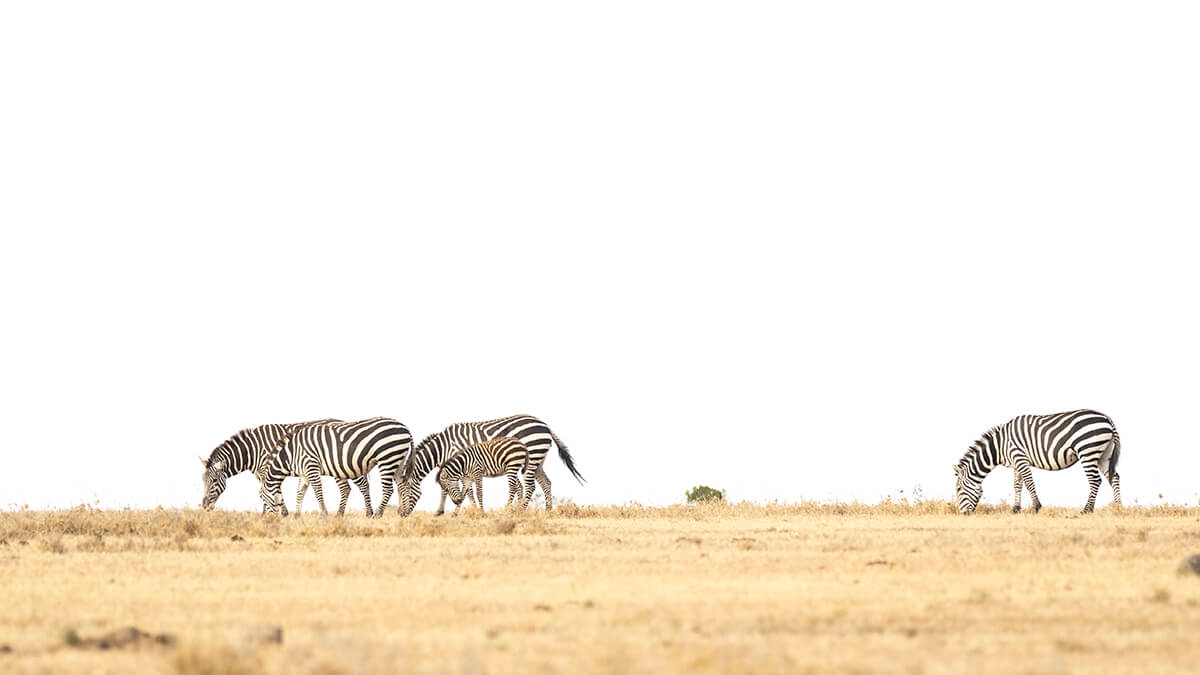
As the morning went on, we encountered zebras, buffaloes, and a small herd of three elephants. A ranger informed us that a cheetah had been spotted earlier near a bushy area, so we scanned the landscape carefully. Unfortunately, it had already moved on.
By 11 a.m., the heat was rising, and it was time to leave the park and head toward Samburu National Reserve, our next destination.

Plan Your Trip to Kenya
🦍 Find the best trips and safaris to Kenya with a local operator here.
✈️ The best flight deals to Kenya here.
🏨 The best prices for accommodations in Kenya here.
🚑 Get your travel insurance with a 7% discount here.
💳 The best card for paying (without fees) and withdrawing money abroad here.