
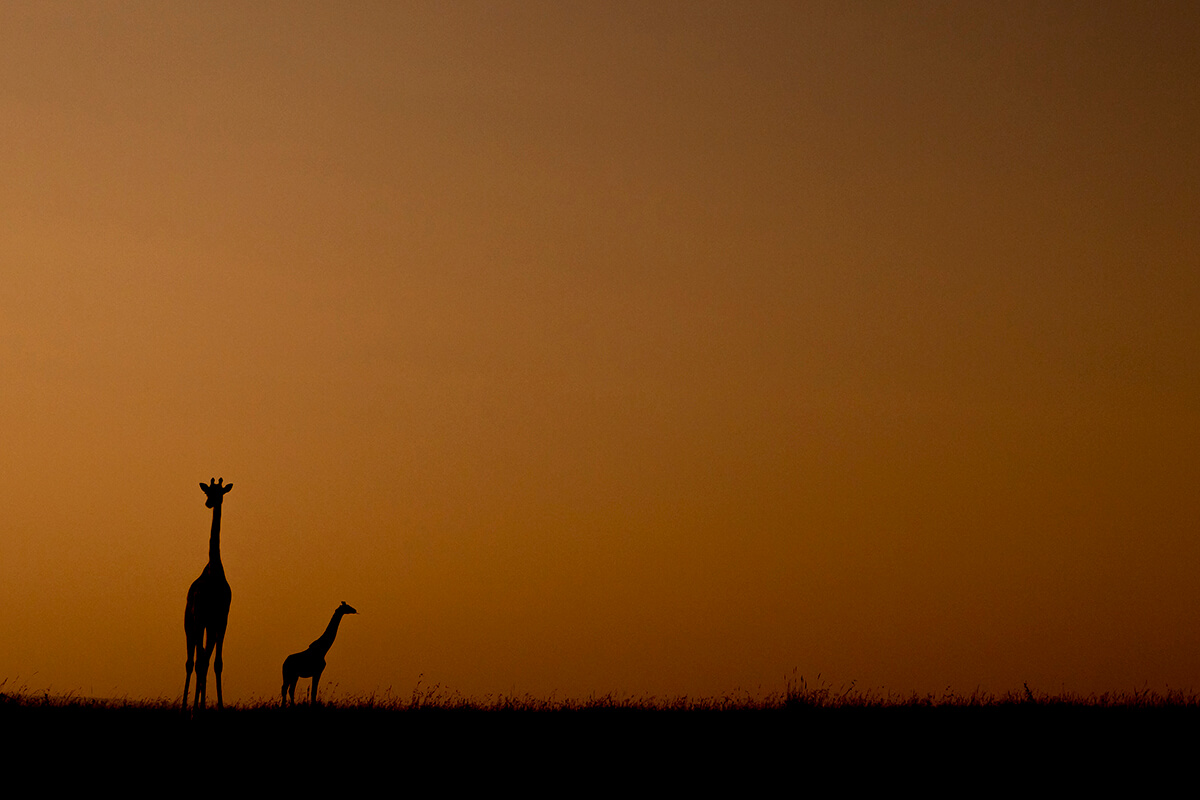
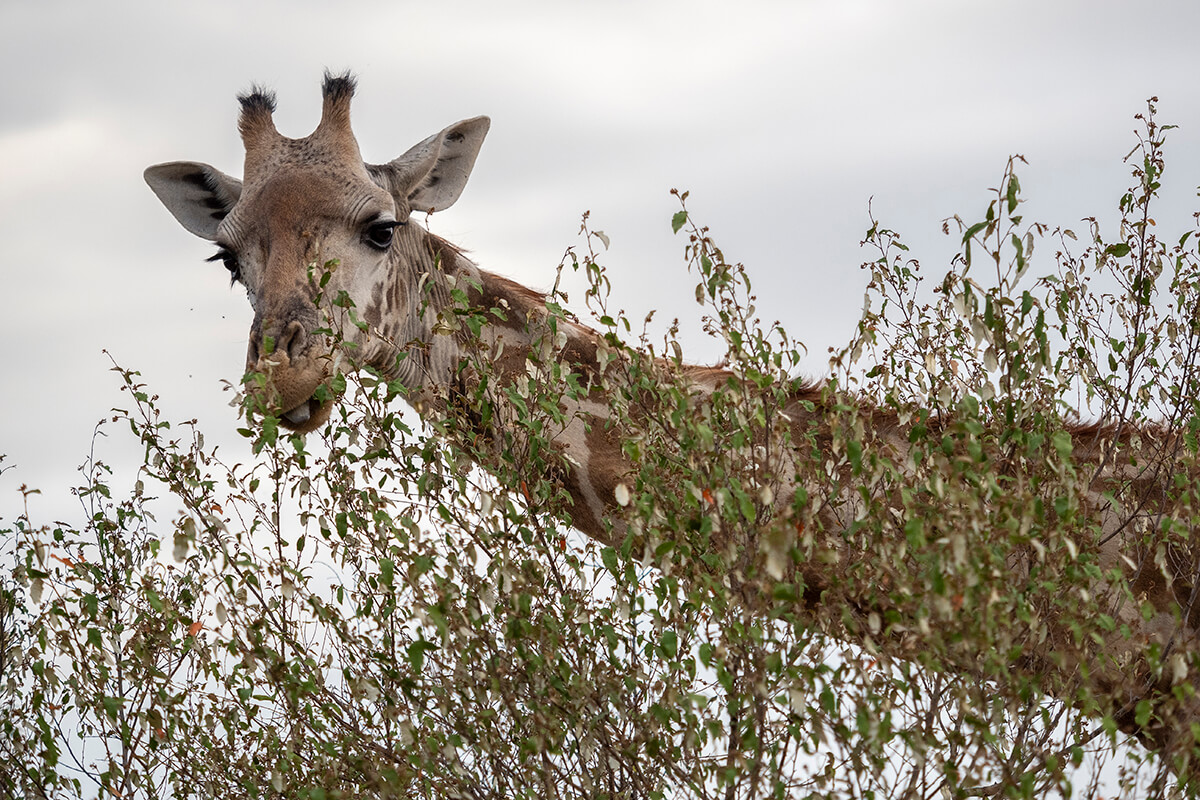
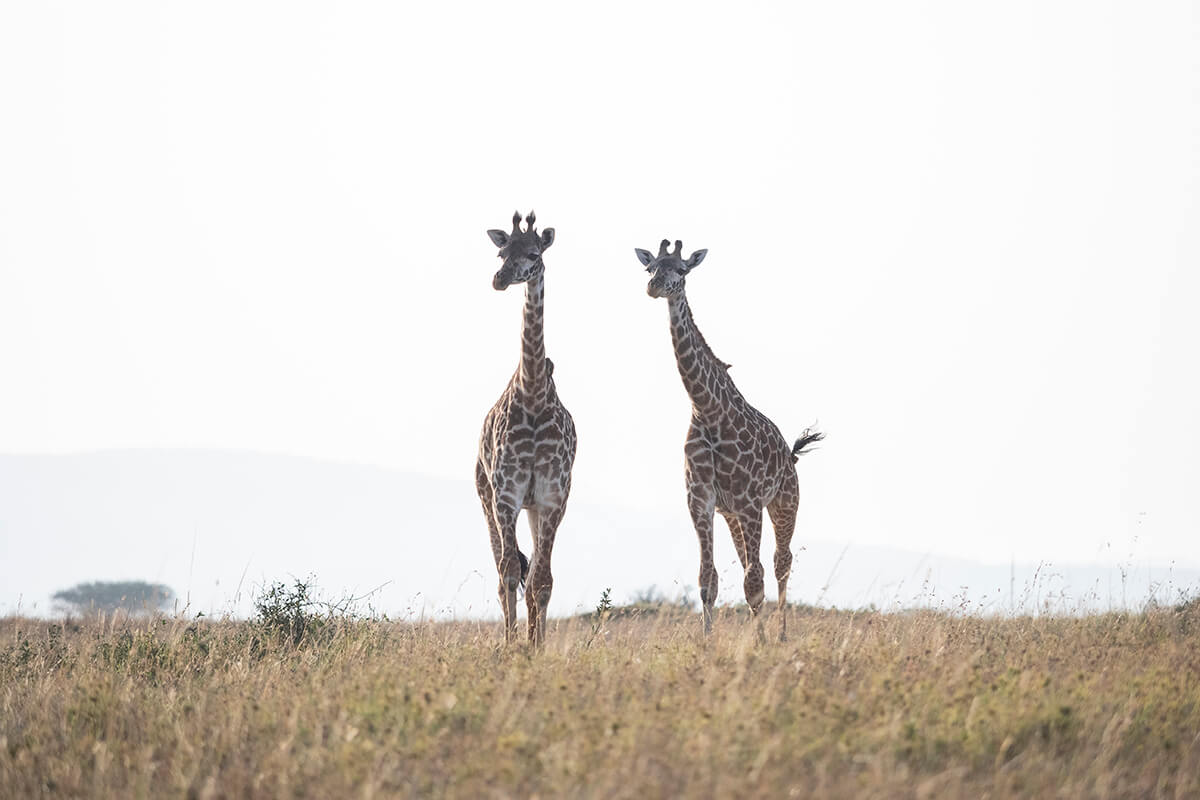
A safari in the Masai Mara is often the highlight of any trip to Kenya. The vast savannahs of this national reserve serve as the backdrop to one of the best places to observe, admire, and photograph Africa’s majestic mammals. Herds of elephants roam gracefully across the land, giraffes stand tall with elegance against the sky, and near them, impalas, zebras, and wildebeests move in harmony.
While seeing the herbivores of the Masai Mara is an incredible experience, it’s undeniable that the true stars of a Masai Mara safari are the big cats. This reserve is home to lions, cheetahs, and leopards.
The growing popularity of Masai Mara has made it an increasingly expensive destination, with overcrowding becoming more frequent than desired. In this guide to planning a safari in Masai Mara, you’ll find all the information you need to enjoy an affordable safari and tips on how to responsibly and authentically experience the African wildlife.
How to Get to Masai Mara National Reserve
The Masai Mara is located 230 kilometers from Nairobi. The drive to the Sekenani Gate, the closest entrance, typically takes about five hours.
There are several ways to reach the reserve, and depending on how you plan your safari in the Masai Mara, you can choose the best option for you.
1. Arriving at Masai Mara with an Organized Safari
This is the simplest option to reach Masai Mara. By booking an organized safari that includes transport to the reserve, accommodation, meals, and safaris, you won’t have to worry about any logistics.
The advantage of these tours is that you will have a local guide who picks you up from the airport and handles the driving and arrangements. The downside is that it’s the most expensive option.
However, booking directly through a trusted local tour operator in Kenya can provide good deals. I recommend filling out this form so I can connect you with reliable local operators who will offer a personalized itinerary and budget according to the type of safari you wish to experience.
2. Arriving by Rental Car
The road from Nairobi to Masai Mara (specifically to Sekenani Gate) is in good condition and can be navigated with any type of rental car.
If you’re planning to go on safaris, keep in mind that since 2025 it is no longer allowed to self-drive inside the Masai Mara. All visitors must be accompanied by a licensed guide. The terrain in the reserve can be rough and challenging to navigate, so a 4×4 vehicle with a professional driver is essential. Renting one directly from Nairobi is usually the most convenient option, with rates starting at around $120 per day, including fuel, permits, and the driver’s expenses.
If you rent a regular car, you can drive to the park entrance and book safaris directly with your accommodation.
3. Booking Transfers Through Your Accommodation
Many lodges in the Masai Mara, both near and inside the reserve, now offer additional services, including transfers from Nairobi to the accommodation. These transfers typically cost between $150 to $250 per person, regardless of the number of travelers.
This option can be convenient if you plan to stay in Masai Mara for several days and also book safaris through the same accommodation. Some places offer packages that include meals and two safaris per day (morning and evening) at a reasonable price.
4. Arriving via Public Transport
If you’re looking to experience a Masai Mara safari on a budget, taking the bus to the reserve is an affordable option. The journey costs less than €10 per person.
Here’s the process for taking public transport from Nairobi to Masai Mara:
- Take a bus or matatu (shared minibus) to Narok (about 3 hours, 400 KSH).
- From Narok, take another matatu or taxi to the Sekenani Gate (another 3-hour journey for 500 KES by matatu or about 2 hours for 3,500 KES by taxi).
- If you’re staying inside the reserve or near another gate (Talek or Ololaimutiek), you’ll need to pre-arrange transfers from Sekenani Gate with your accommodation.
5. Flying to Masai Mara from Nairobi
Flying to Masai Mara is another option, though it’s more expensive. There are nine airstrips within the Masai Mara, many of which are located near luxury lodges.
Air Kenya and Safarilink offer regular flights from Nairobi to the Masai Mara. While this is a quick and convenient option, the cost can be high.
What’s the Best Time to Plan a Safari in Masai Mara?
A safari in the Masai Mara is spectacular at any time of year. However, the experience can vary depending on when you visit.
- June to October: The dry season is considered the best time for a safari. The lack of vegetation makes wildlife spotting easier, and many animals congregate near water sources. However, this is also peak season, so there may be more vehicles and tourists.
- January to February: These months are also great for safaris. The rains are light (though there may be occasional afternoon showers), and there are fewer tourists, which means fewer vehicles around.
- March, April, November, and December: During these months, the rains can affect safari experiences. While the short, intense rains make the landscape lush and beautiful, they can also make some roads impassable. These are considered off-peak months, meaning lower prices and fewer crowds.
When Can You See the Great Migration in Masai Mara?
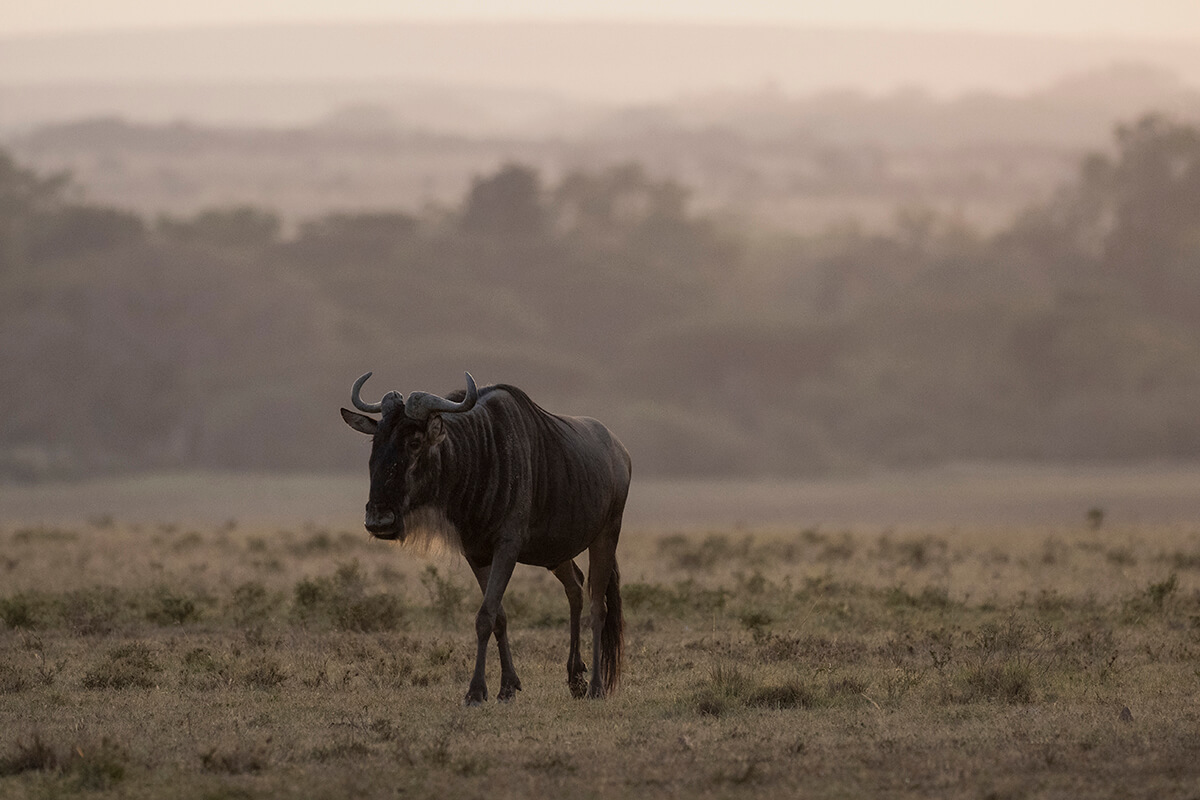
Seeing the Great Migration in Masai Mara can also be a deciding factor when choosing the best months to plan a safari in Kenya’s most famous savannah. The Great Migration is one of the most extraordinary natural phenomena. It involves the circular migration of over a million wildebeests, accompanied by thousands of zebras and other herbivores, through the Serengeti-Mara ecosystem.
In general, the Great Migration begins to arrive in Masai Mara at the end of July. During this month, most of the wildebeests and zebras are in the northern Serengeti, and when food begins to run low, they start the iconic river crossings at the Mara and Talek Rivers, to reach the plains of Masai Mara. This is one of the most sought-after scenes during safaris.
In August, the Great Migration concentrates in Masai Mara, where vast herds of wildebeests and zebras can be seen. These herbivores will continue to feed in this area until the first rains, in late October and early November. Then, the large herds of wildebeests head back to Serengeti, having to cross the dangerous Mara or Talek Rivers again.
Safari in Masai Mara: What Is the Cost?
A safari in Masai Mara is not a cheap activity, and several factors can influence the final cost of the experience.
The only fixed cost is the entrance fee to the national reserve. Since 2023, access is limited to 12 hours between 6 a.m. and 6 p.m. From January to June, the fee for foreign adults is $100 per person, while from July to December it increases to $200 per person.
If you sleep inside the reserve you must leave the reserve by 10 a.m. the following day to avoid paying for another day.
The entrance fee is paid at the entrance gate of the reserve. Payment can be made by card, although sometimes it doesn’t work.
In addition to this price, you’ll need to factor in the cost of the vehicle, the driver/guide (not mandatory but highly recommended), accommodation, and meals. The approximate costs are as follows:
- Vehicle and Driver/Guide: Renting it for the entire trip costs about 120 dollars per day (including fuel). If you hire it only for the safari from your accommodation (vehicle + guide), the minimum price is 90 dollars for a half-day safari and 150 dollars for a full day. In mid-range or higher-end accommodations, it can be more expensive.
- Accommodation: This is the most variable cost depending on the location of the lodge or camp and the quality standards. The cheapest options cost about 30 dollars per person per night.
- Meals: Restaurants in accommodations in the Masai Mara area tend to be expensive (between 8 and 15 dollars per meal in the most affordable options). To save, a good option is to buy food at a supermarket before arriving at the reserve (stopping in Naivasha or Narok is a good choice).
Thus, if you opt for the most economical options (renting a car with a driver, supermarket food, and cheap accommodation), the price of a day’s safari in Masai Mara will be approximately 250 dollars per person (assuming two people are traveling).
If you choose better-located and higher-quality accommodations, the price can easily rise to 300 dollars per person per day.
Booking a safari directly with a local tour operator will offer similar prices. You can also opt for a shared safari, which significantly reduces the cost.
💡 Get a Free Quote for Your Trip to Kenya with Trusted Local Operators
If you’d like to plan your trip to Kenya with reliable local tour operators, I can help you connect with the best ones. Just fill out this quick form, and based on the type of safari you’re looking for, I’ll match you with the most suitable local agencies. I’ll also be available to answer any questions throughout the planning process — so your safari will be stress-free, authentic, and truly unforgettable!
What Wildlife Can You See During a Safari in Masai Mara?
After driving around for a few minutes in Masai Mara, it becomes clear that this is a unique territory. The abundance of wildlife is surprising, and due to the sparse vegetation, it’s much easier to spot animals every few minutes.
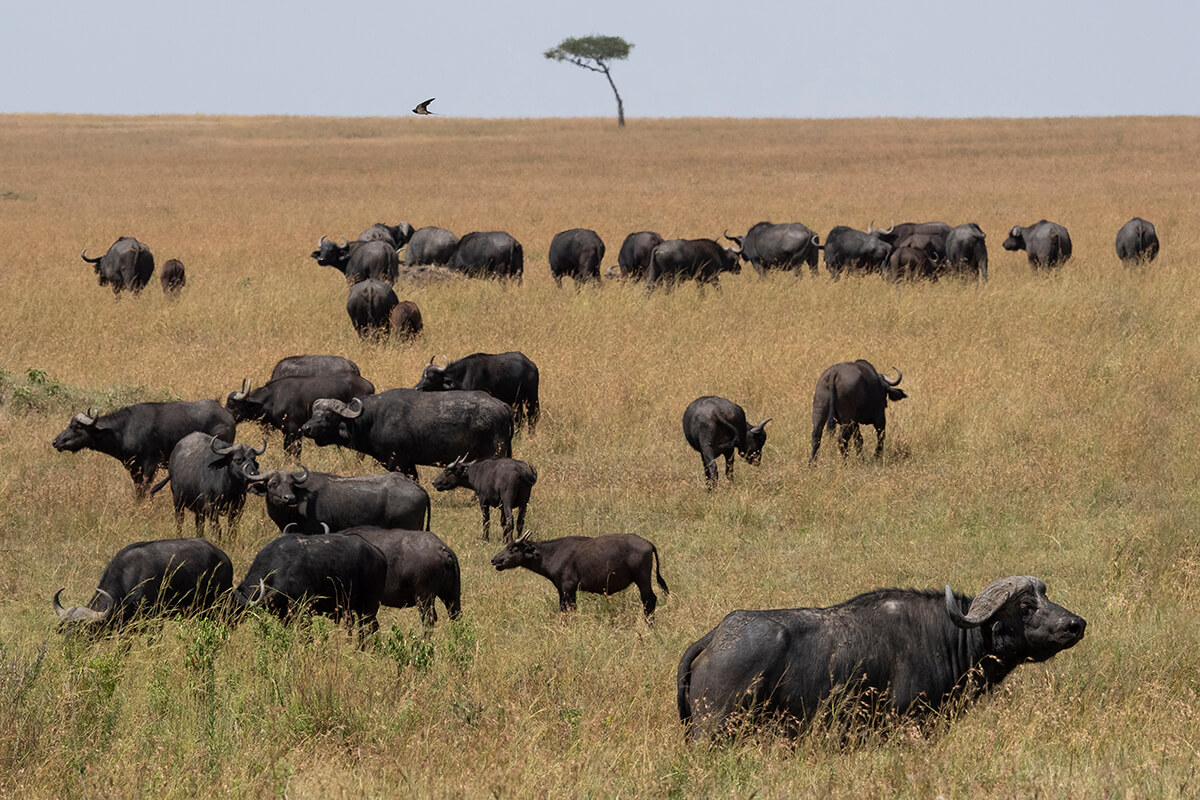
In this reserve, you can see the iconic Big Five (elephant, lion, rhinoceros, buffalo, and leopard). The hardest to spot is the rhinoceros. Specifically, Masai Mara only has black rhinos, and they are mostly seen in the Mara Triangle.
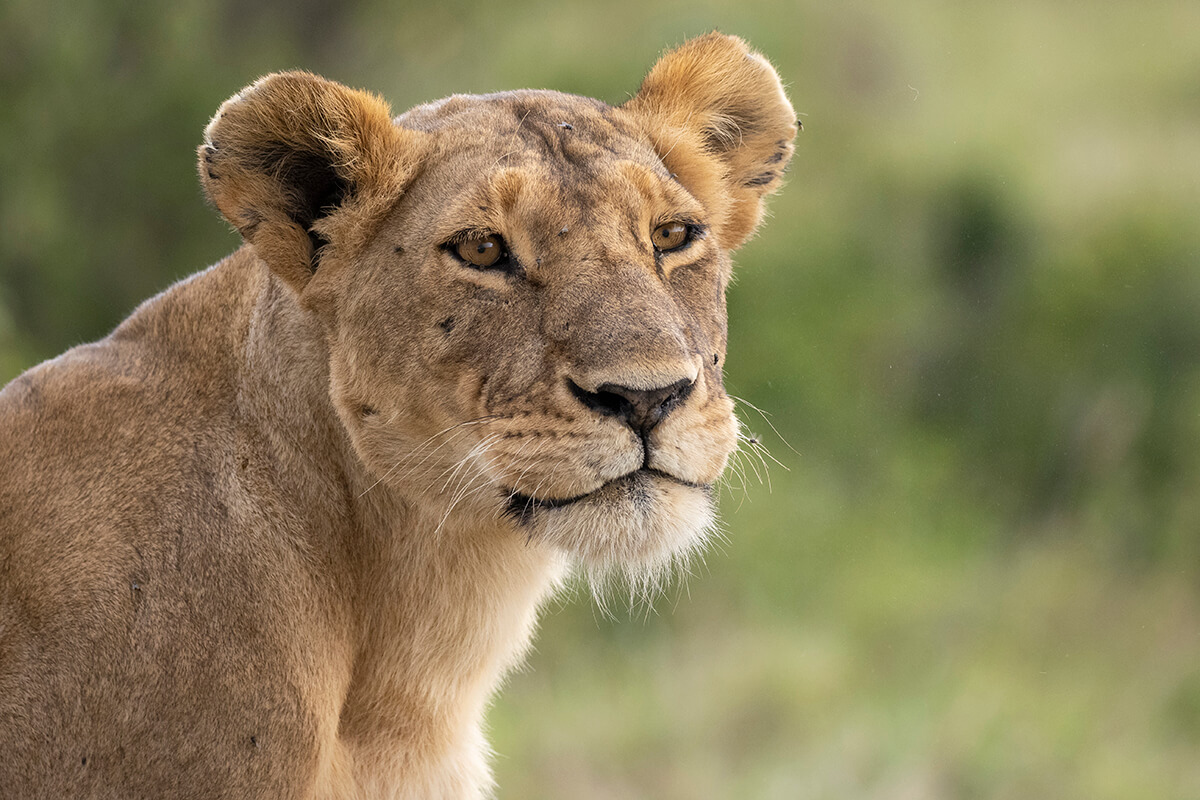
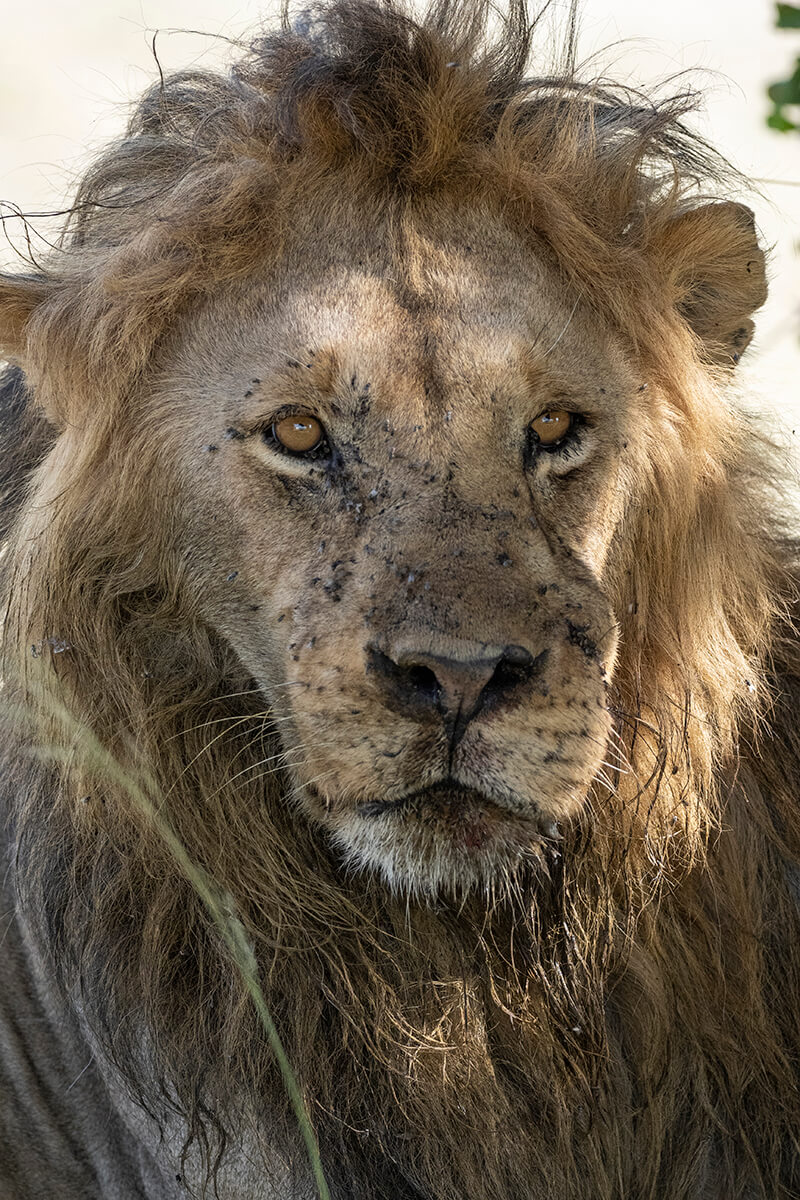
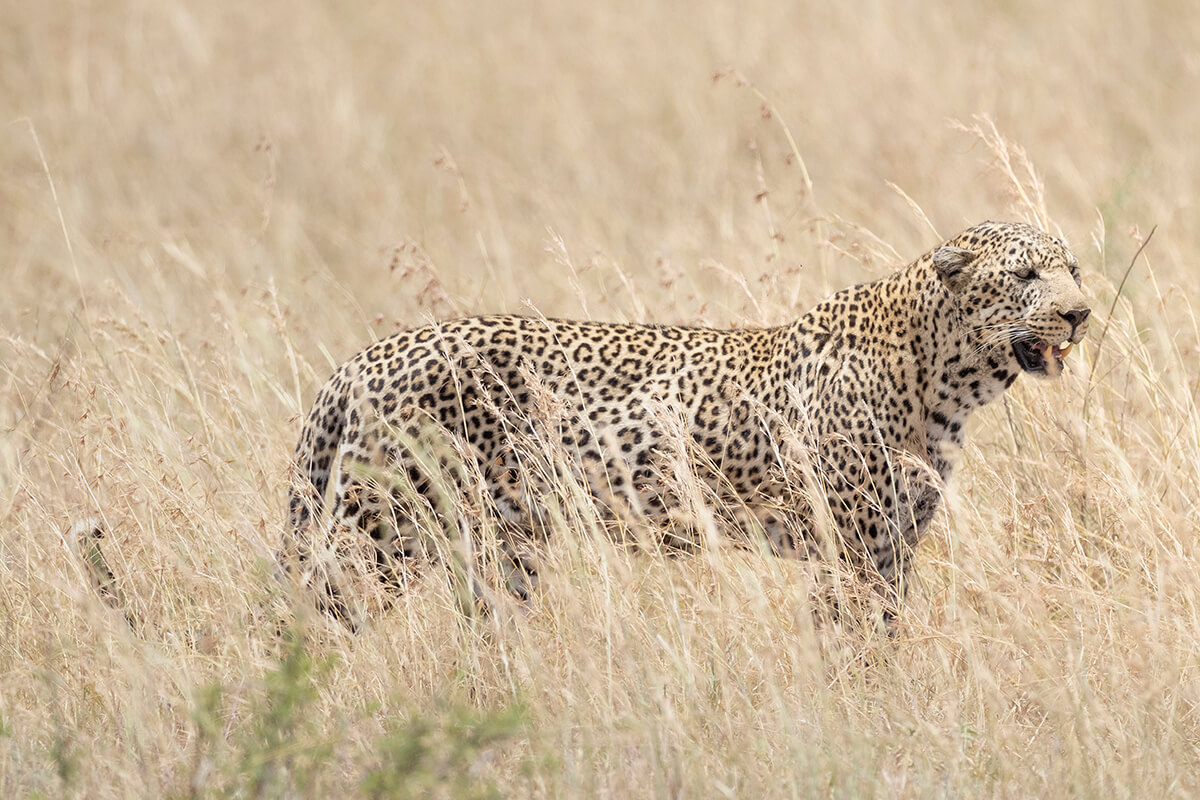
Big cats are one of the main attractions of the safari. Lions are the most abundant and easiest to spot. Cheetahs are also frequently seen. Leopards are more elusive. To increase your chances of spotting these cats, it’s worth spending at least two full days on safari.
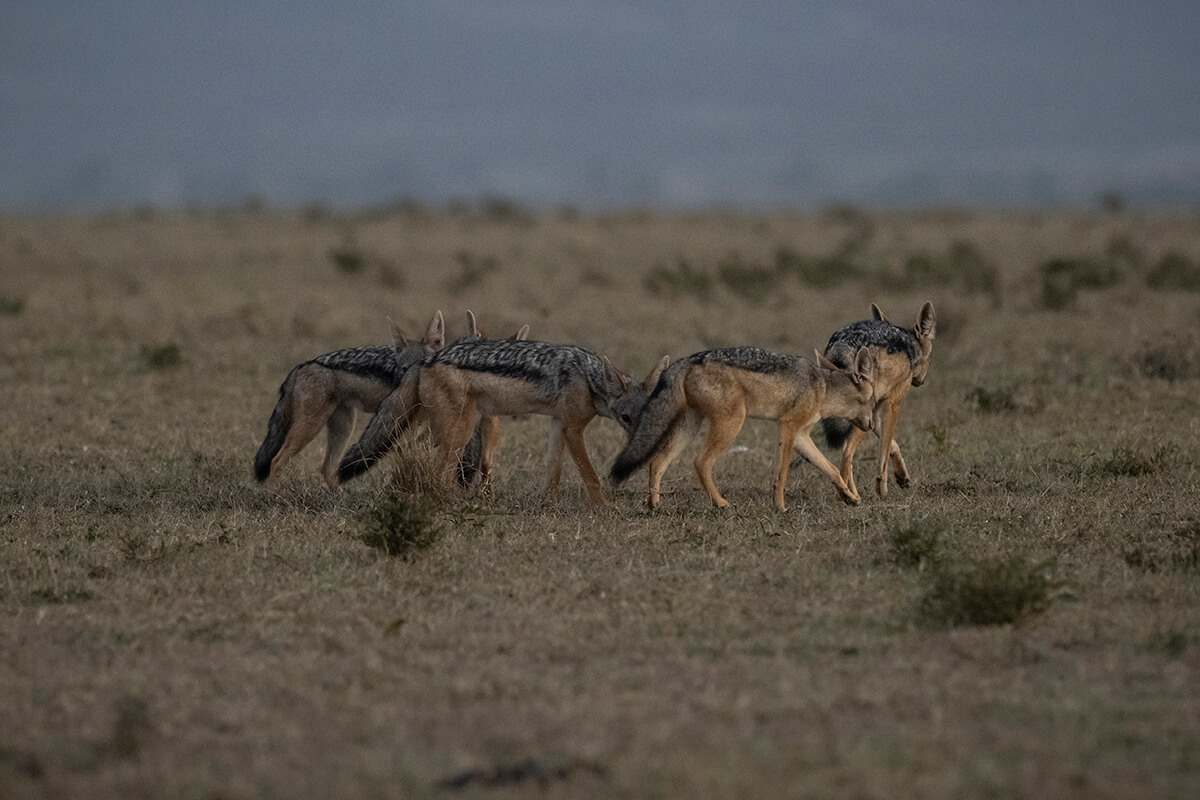
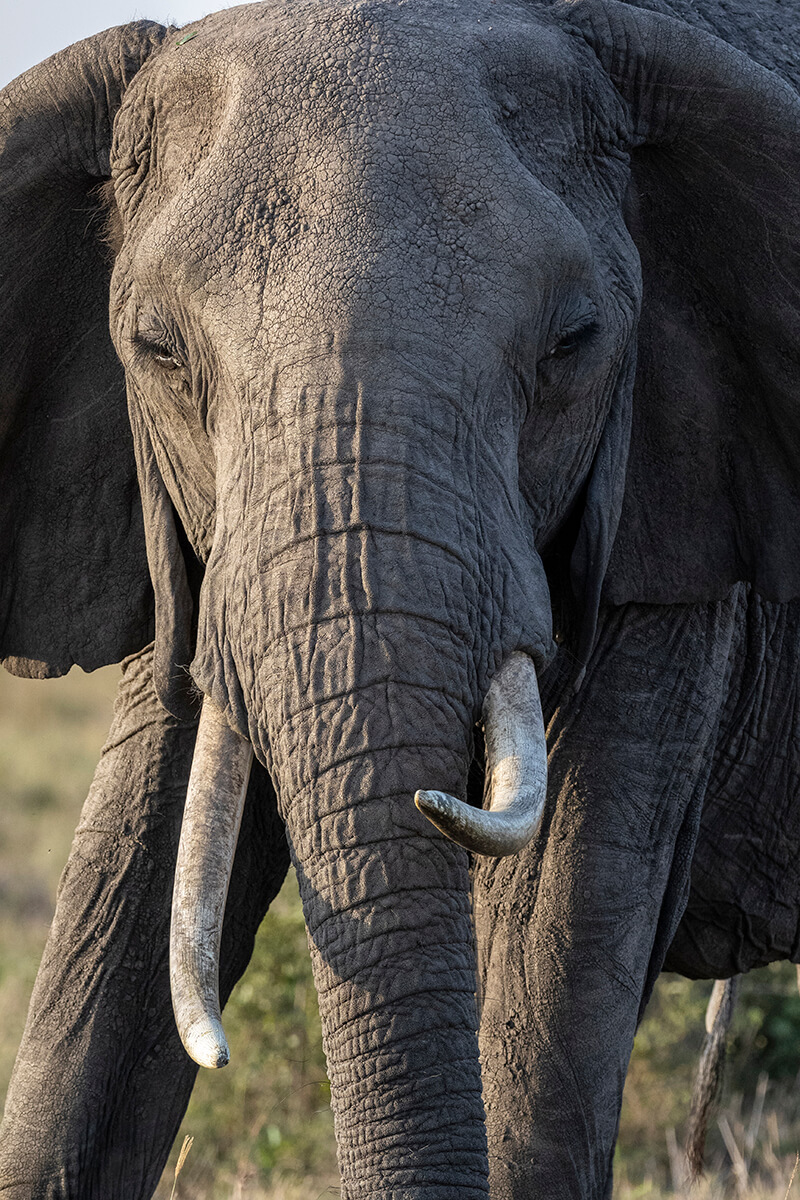
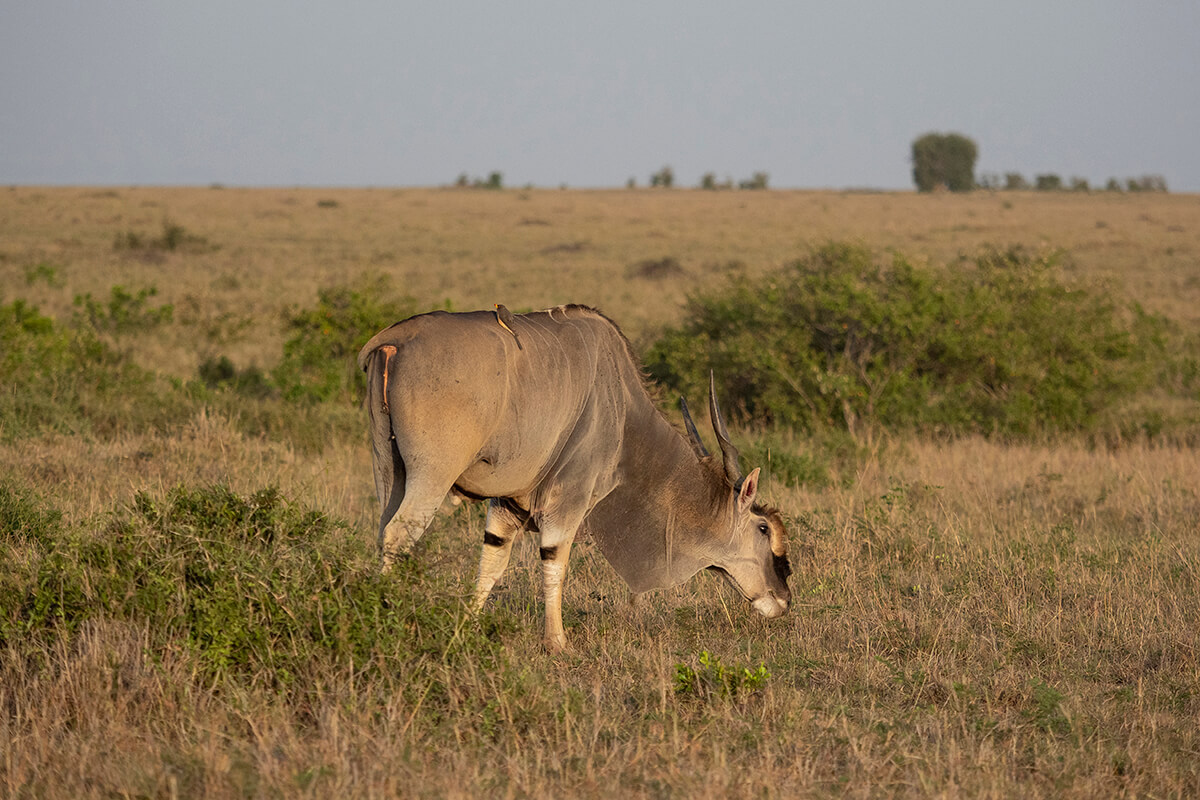
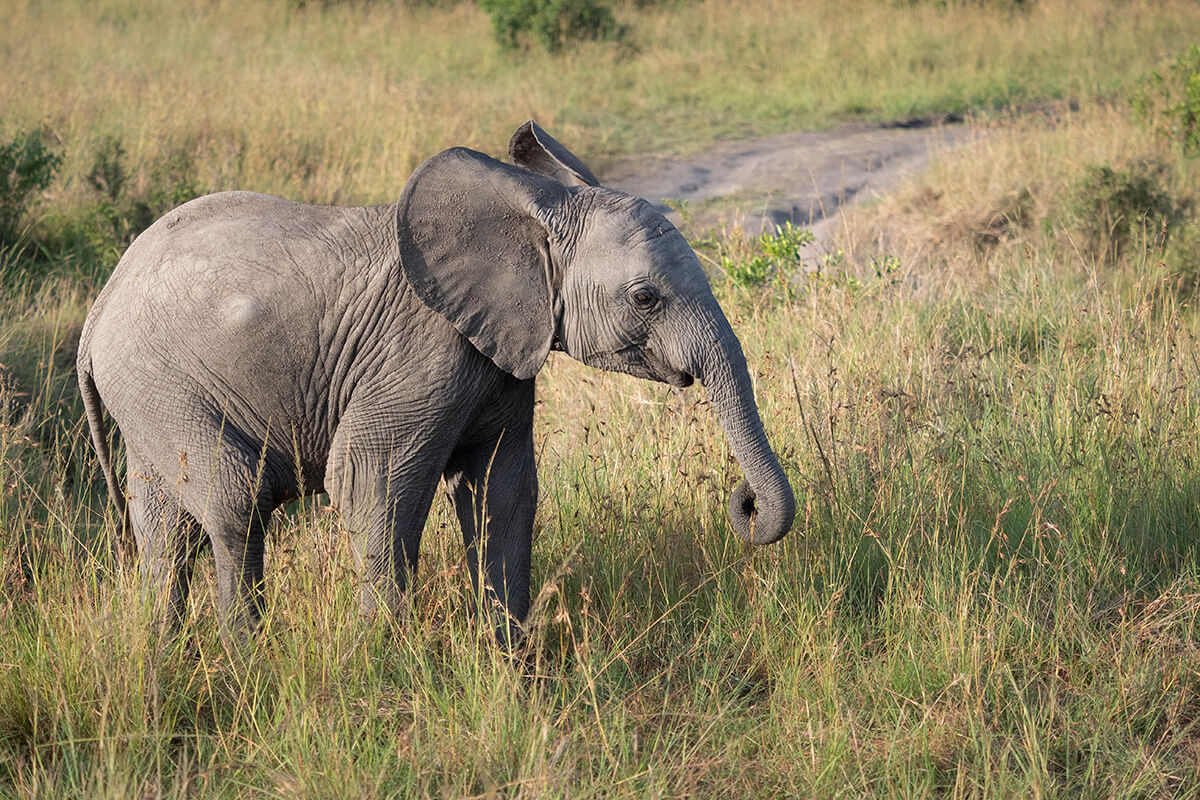
As for other wildlife, Masai Mara is a spectacle. You will have the privilege of admiring elephants, giraffes, impalas, Thomson’s gazelles, elands, topis, buffalo, and wildebeests. In the mornings, it is also common to see spotted hyenas and black-backed jackals.
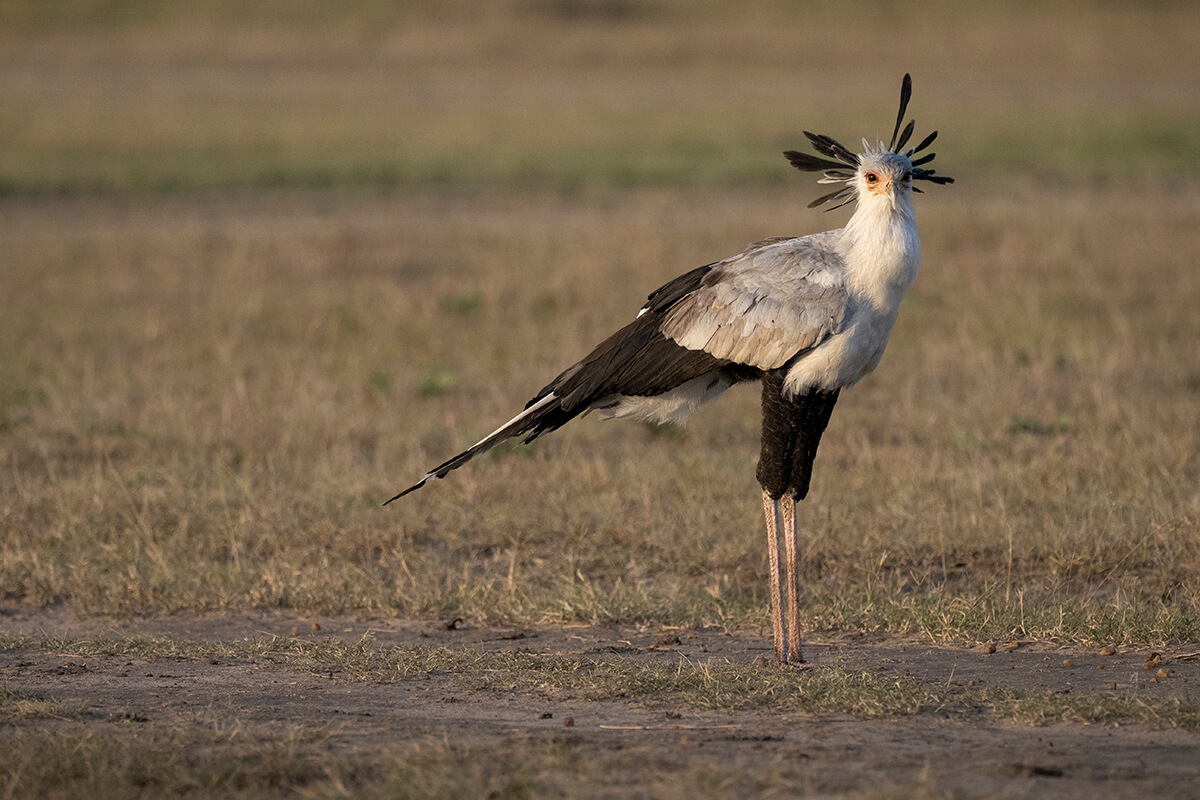
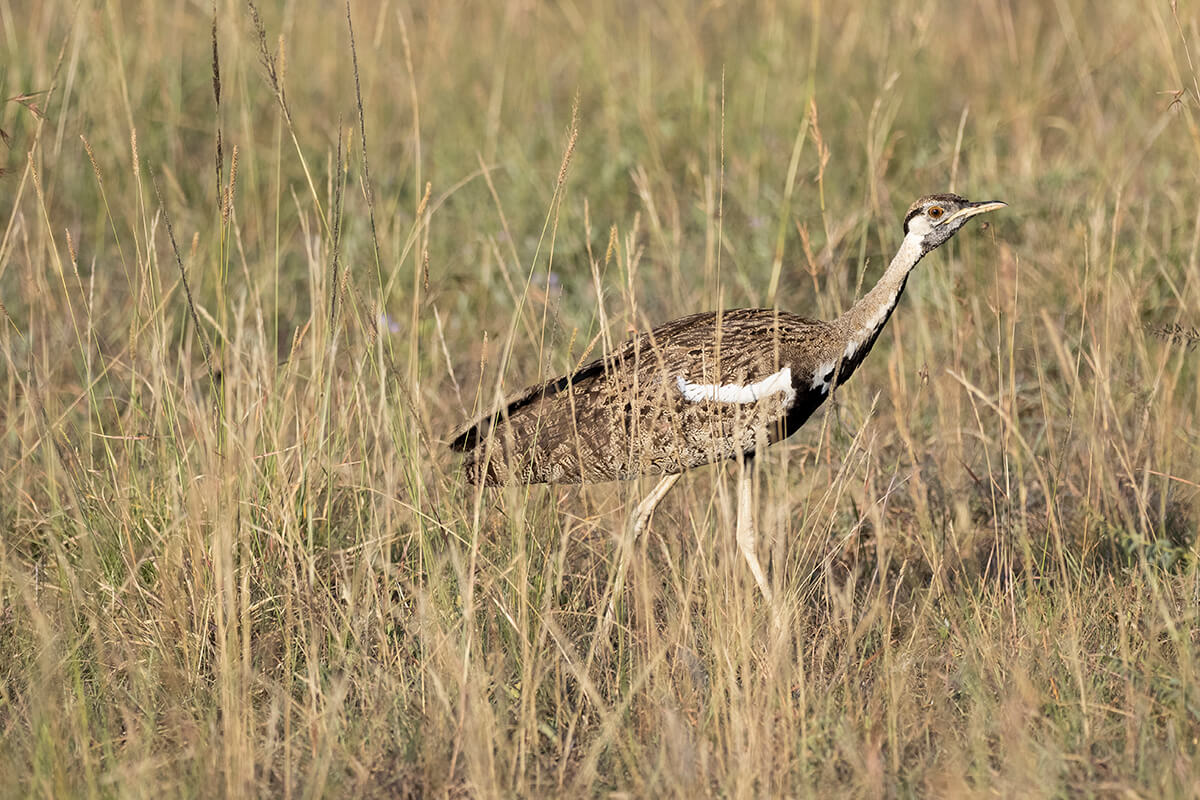
There is also a large variety of birds, with over 500 species. The park is particularly rich in raptors, with 57 species present. Often, vultures hover over the plains, while near carcasses, it’s common to see vultures. Other notable birds include the kori bustard, secretary bird, crested hornbill, and southern ground hornbill.
How Is Masai Mara Divided (Sections and Entry Gates)?
The Masai Mara ecosystem covers 1,510 km² and is divided into three sections: the Masai Mara National Reserve, the Mara Triangle, and the Mara North Conservancy. There are no barriers separating these areas, so animals can roam freely throughout the ecosystem.
Masai Mara National Reserve
This is the largest section of the reserve, managed by Narok County. It’s where you’ll find the iconic plains of Masai Mara. It also attracts the most visitors, and most accommodations are here.
Entry gates to the Masai Mara National Reserve:
- Sekenani Gate: The main entrance, closest to Nairobi, and in good condition. A good number of accommodations are in this area.
- Talek Gate: Located in the northwest section, it is one of the best areas for viewing lions, cheetahs, and leopards.
- Musiara Gate: Located in the northeast, near the Mara Triangle, less frequented.
- Oloolaimutia Gate: In the eastern section, with more varied terrain and lower wildlife density.
Mara Triangle
Managed by the Mara Conservancy, this is a wilder section with fewer visitors. It has fewer roads, but they are in good condition for self-drives. There are also three public campsites (Oloololo, Eluai, and Iseiya), offering affordable camping within the reserve.
Mara North Conservancy
A private conservation area along the northern border of the Masai Mara National Reserve, with one of the highest densities of animals in the Mara. Access is only possible through accommodations in one of the 12 luxury lodges in the area, with safaris included.
Where to Sleep During a Safari in Masai Mara
Choosing the right place to stay is a key part of enjoying a great safari in the Masai Mara. The most important factor is picking a well-located camp or lodge.
If your budget allows, staying inside the reserve is by far the best option. This gives you access to the early morning and late afternoon light—often the best times to see wildlife and witness the most exciting scenes.
Some of the best-rated and best-located accommodations inside the Masai Mara National Reserve include:
- Ashnil Mara Camp – Located next to the Mara River, this is one of the most strategically placed camps in the Masai Mara. It sits in an area with one of the highest densities of wildlife and predators in the reserve.
- Fig Tree Camp – Situated next to the Talek River, this is another excellent location, offering great opportunities to see wildlife from the very beginning of your game drives.
- Sarova Mara Game Camp – A camp located in the heart of the Masai Mara, in one of the best areas to witness the Great Migration.
If you’re looking for a more budget-friendly safari, it’s better to stay at one of the campsites in the Mara Triangle or choose an accommodation near the entrances to the Masai Mara. In that case, I recommend staying near Talek Gate. From this gate, it takes just about 15 minutes to reach one of the areas of the reserve where wildlife—especially big cats—is commonly spotted.
The most recommended camps near Talek Gate include:
- Talek Bush Camp – A great option if you want to stay close to the gate without sacrificing comfort or value for money.
- Mara Duma Bush Camp – Located just outside the reserve, also along the Talek River.
- Crocodile Camp – The perfect choice for travelers on a tight budget. The tents are simple but clean. The restaurant is pricey—around $15 per meal—so if you’re trying to save money, it’s better to bring food from the supermarket. This is where I stayed for four nights.
If you’re going on a safari with a local tour operator, they will usually suggest accommodations. However, if it’s a private safari, you can often customize where you stay—just keep in mind this may affect the final price. I recommend double-checking the location of any suggested camps or lodges, and if you’re not convinced, don’t hesitate to ask for alternatives.
My Experience: 5 Days Safari in the Masai Mara
Day 1: From Lake Naivasha to the Masai Mara
On the fifth day of my trip to Kenya, I started the morning at Lake Naivasha. After enjoying a boat ride the previous afternoon, I set off early towards the legendary Masai Mara, excited for my first game drive in the afternoon.
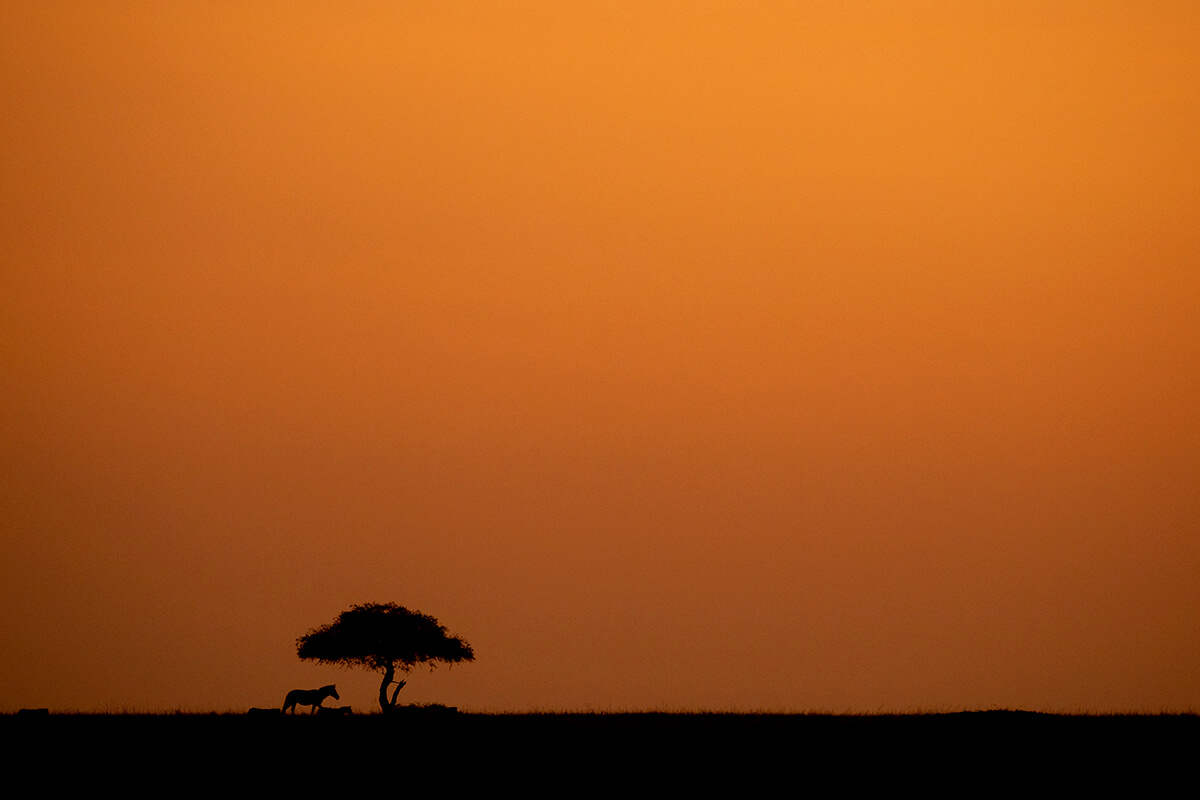
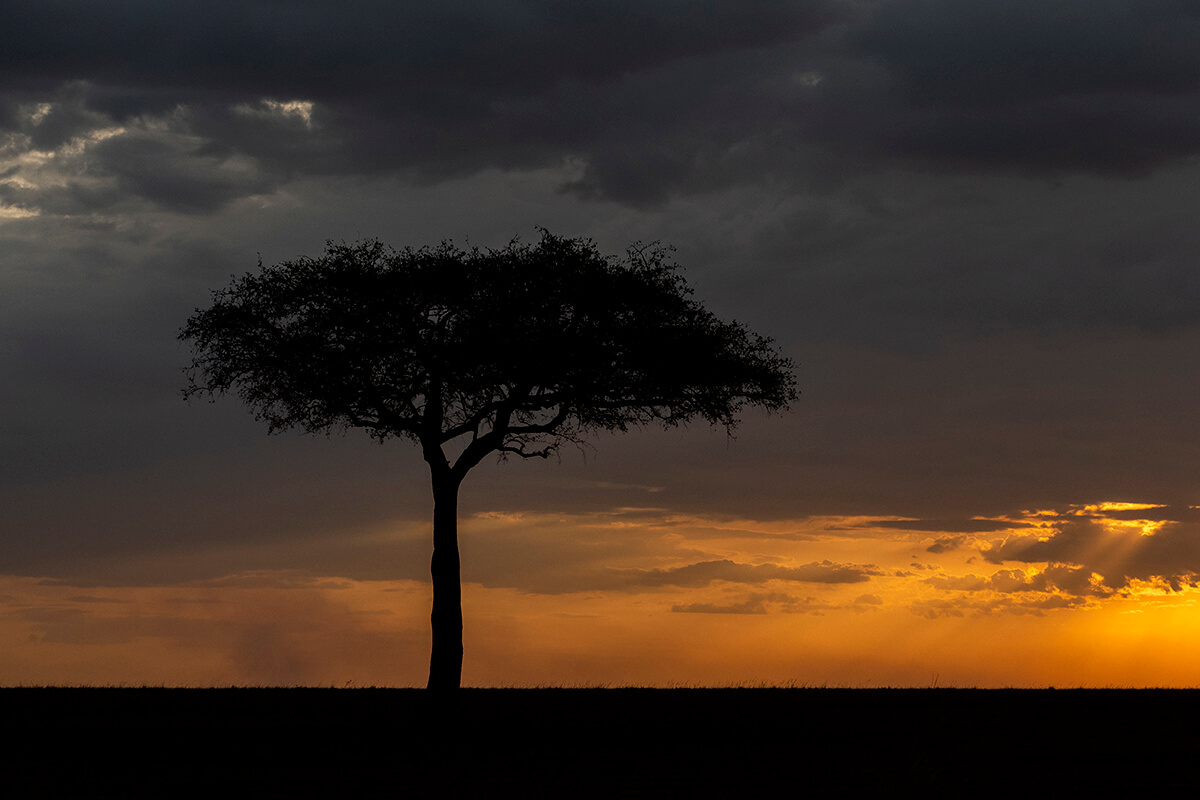
Upon arriving at the reserve, we entered through the Sekenani Gate and began exploring right away. It was my first safari in the Masai Mara, and the experience didn’t disappoint. The golden afternoon light bathed the savannah, and the iconic acacia trees stood tall against the horizon, creating the perfect backdrop for wildlife sightings.
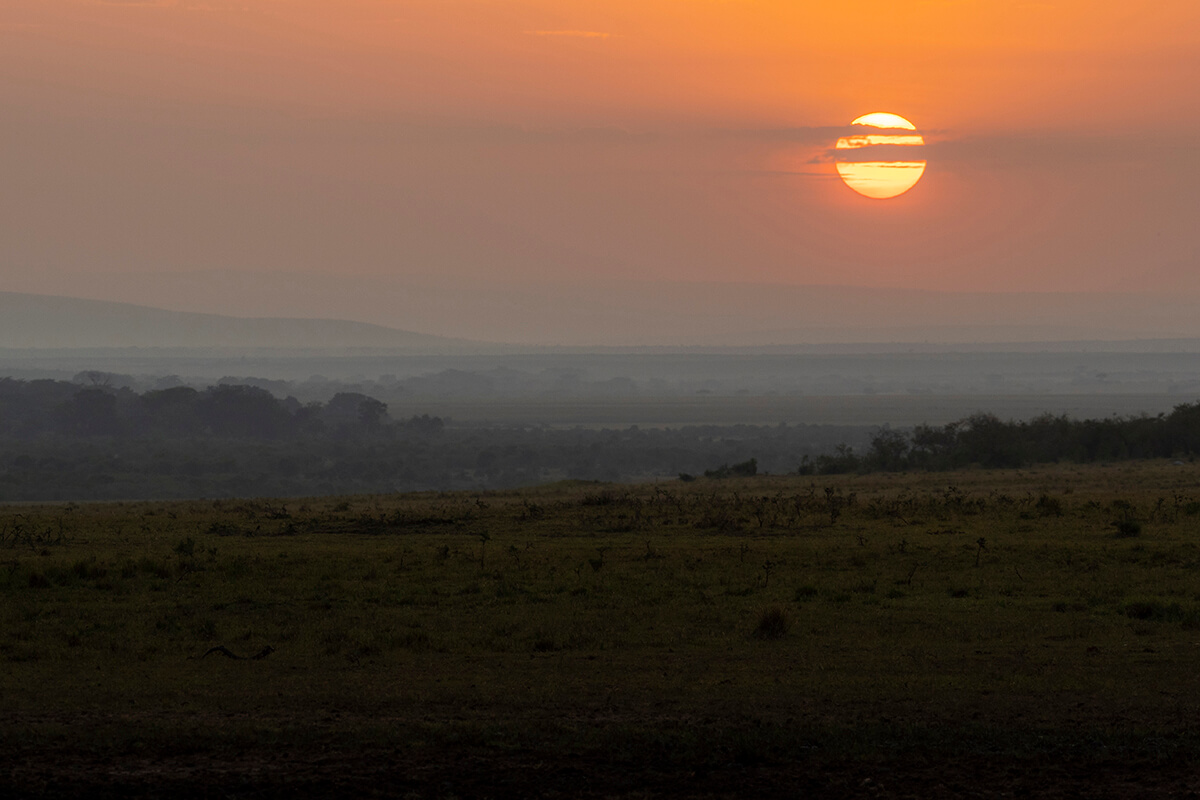
As the sun began to set, we made our way toward the Talek Gate, where my accommodation for the night was located. Exiting the reserve as the sky turned orange and pink was the perfect ending to an unforgettable first day in the Mara.
Day 2 (I): A Morning Surrounded by Lions
After the first night at the Crocodile Camp, just five minutes from the Talek Gate, I entered the Masai Mara National Reserve just after 6:00 AM. The sun hadn’t fully risen yet, but the warm hues of dawn were beginning to emerge.
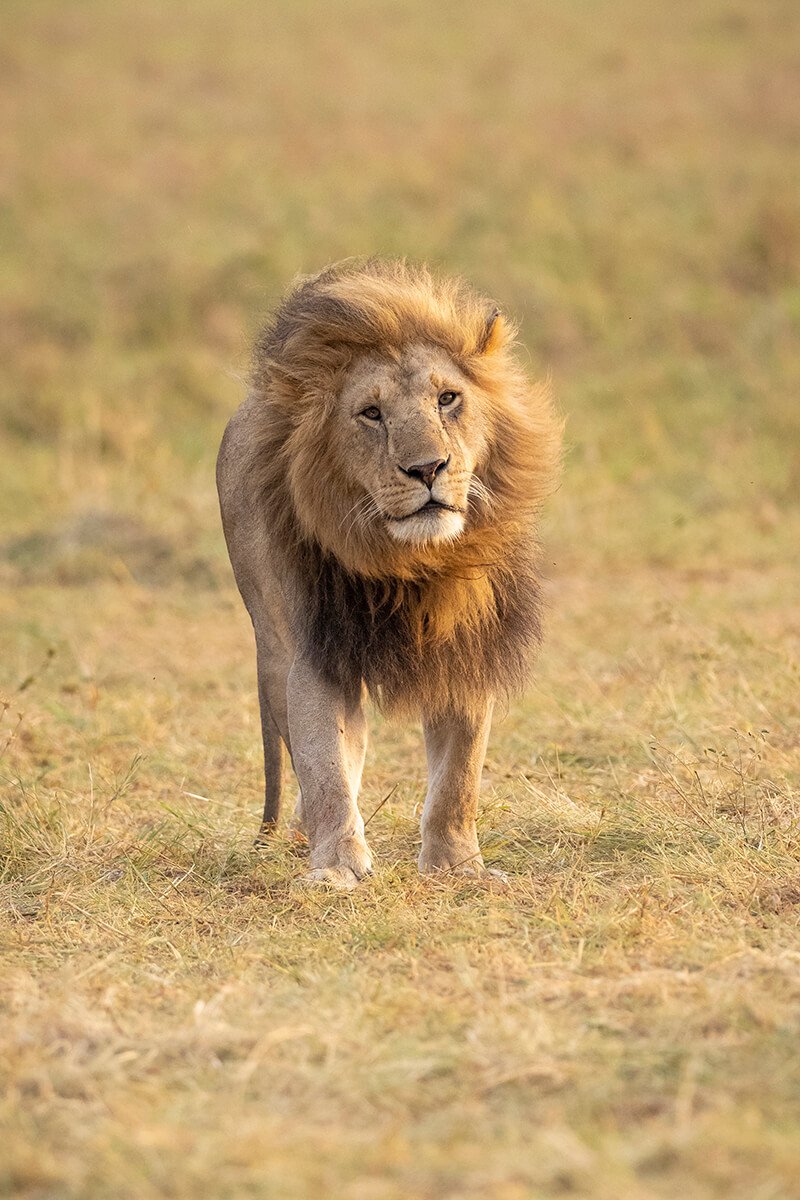
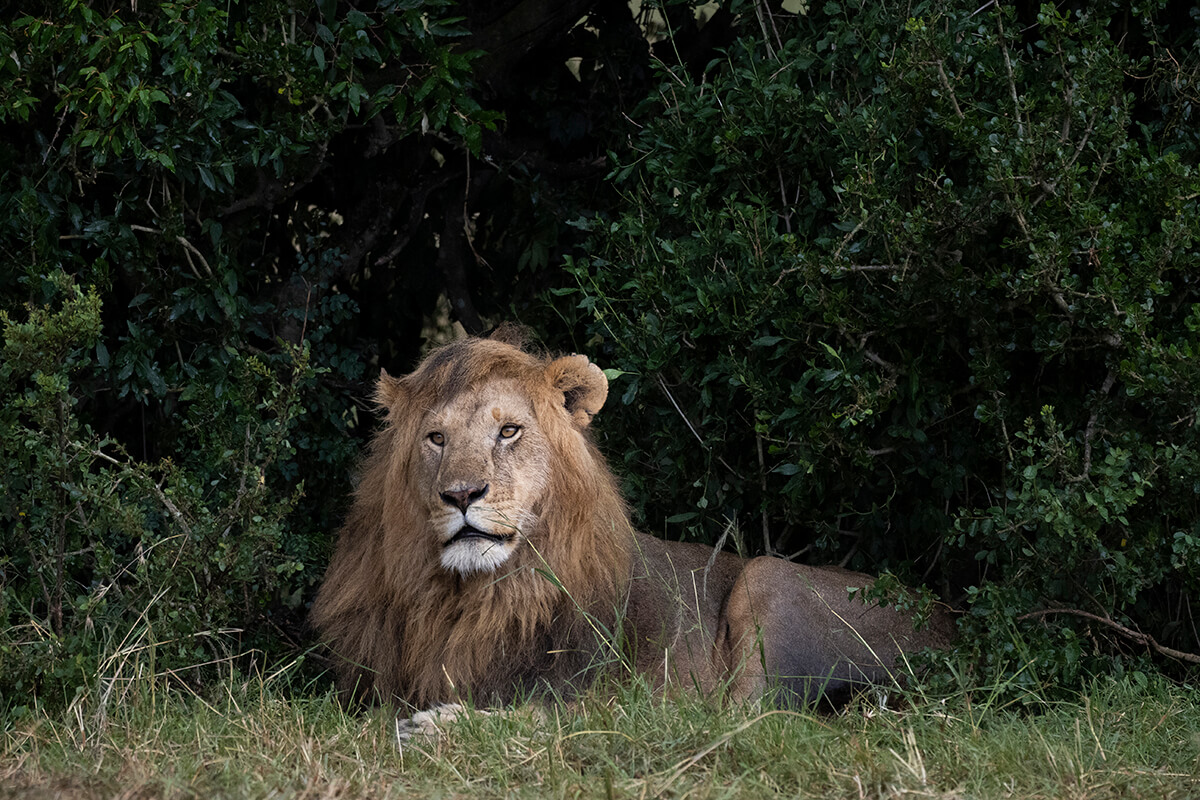
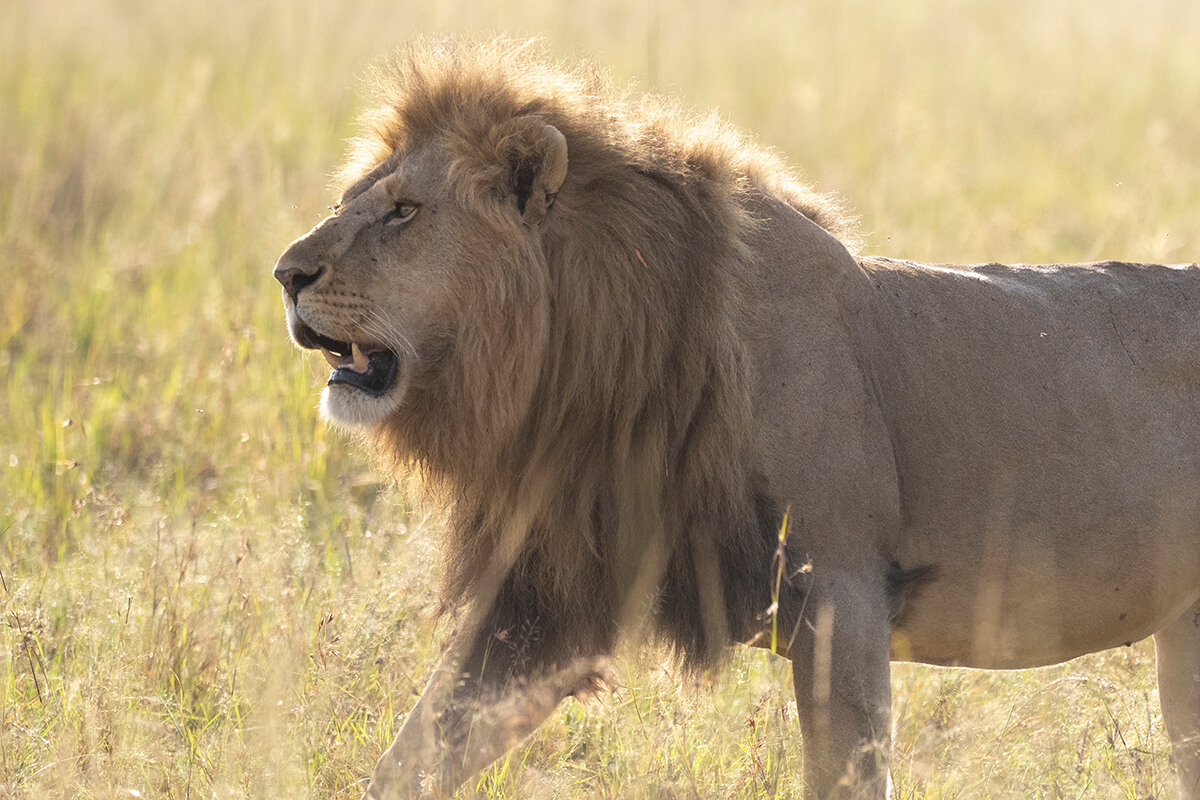
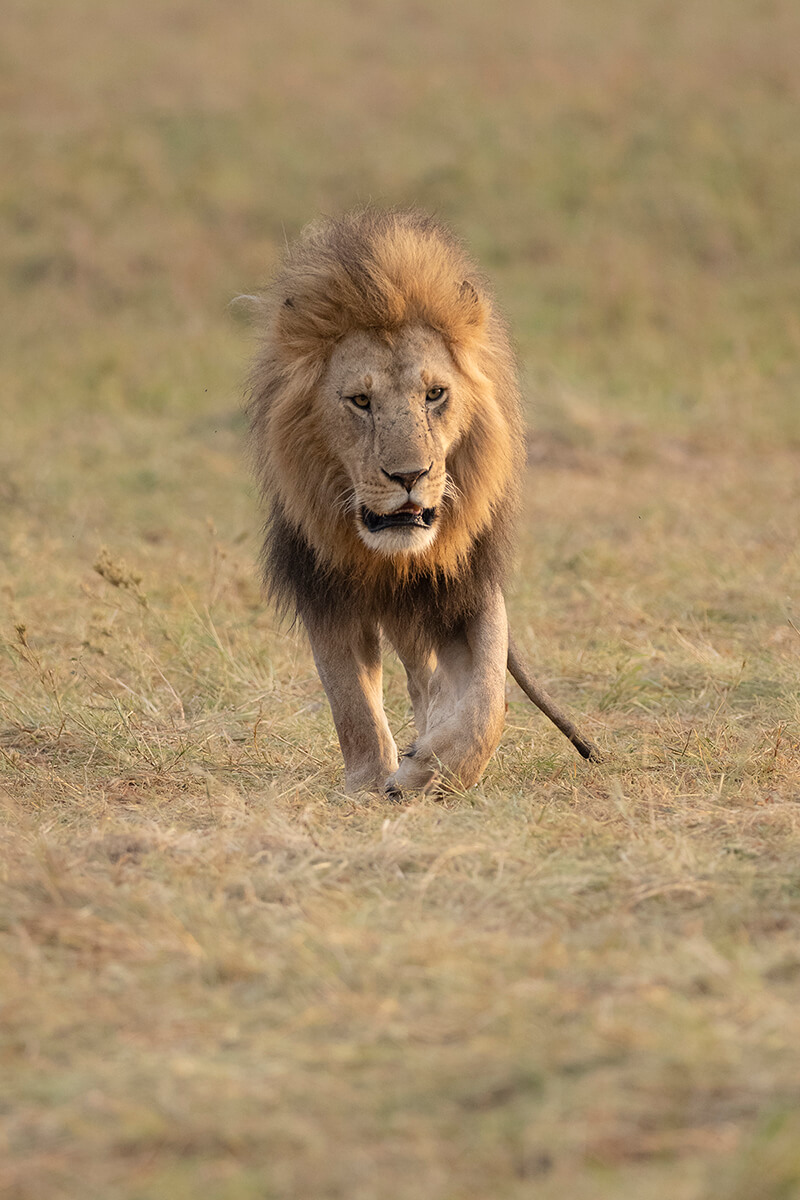
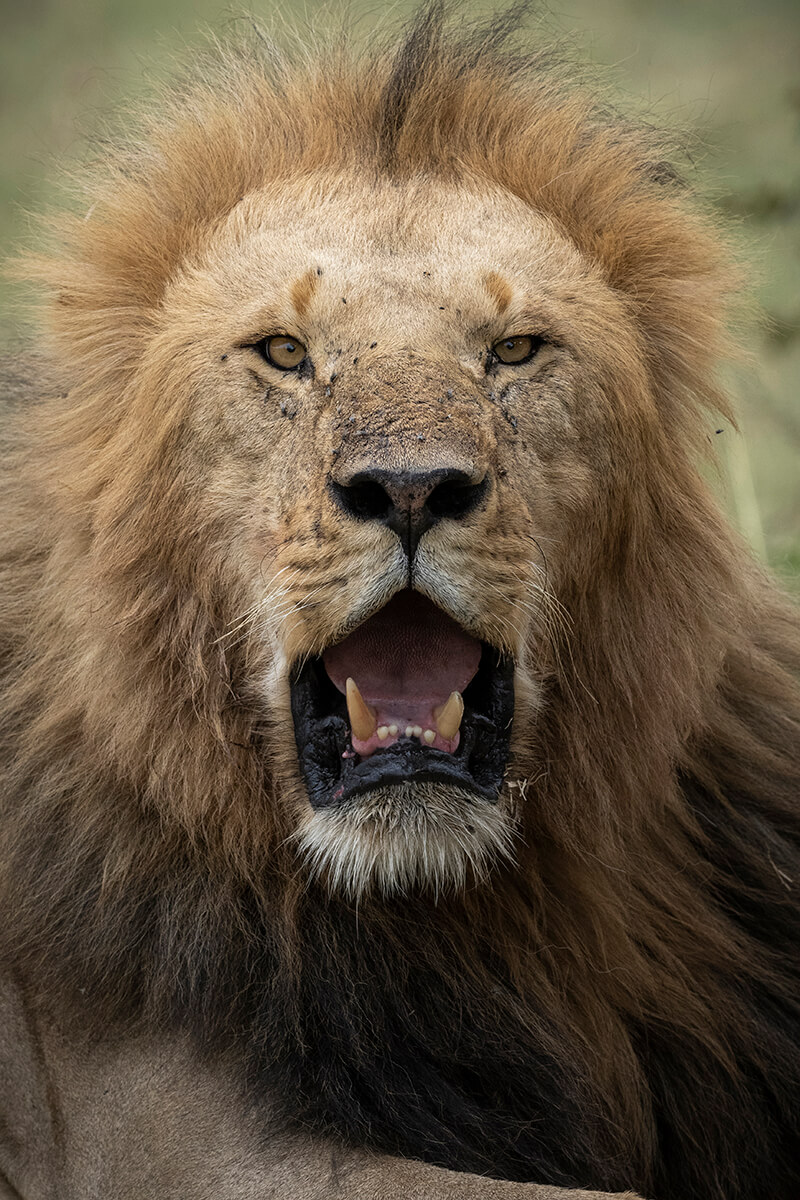
After spotting some hyenas, jackals, wildebeest, zebras, impalas, and giraffes, I saw my first male lion of the trip. He was massive. Majestic. As he walked in the golden morning light, he exuded an awe-inspiring grandeur.
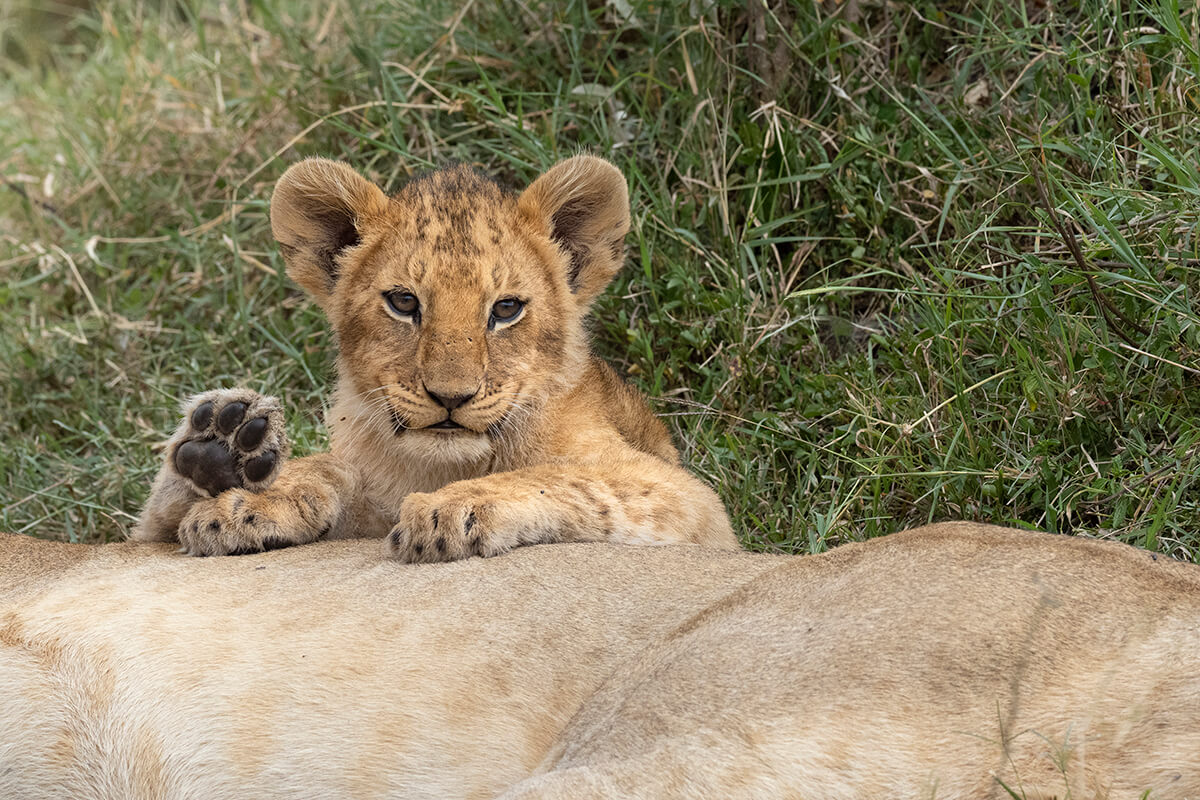
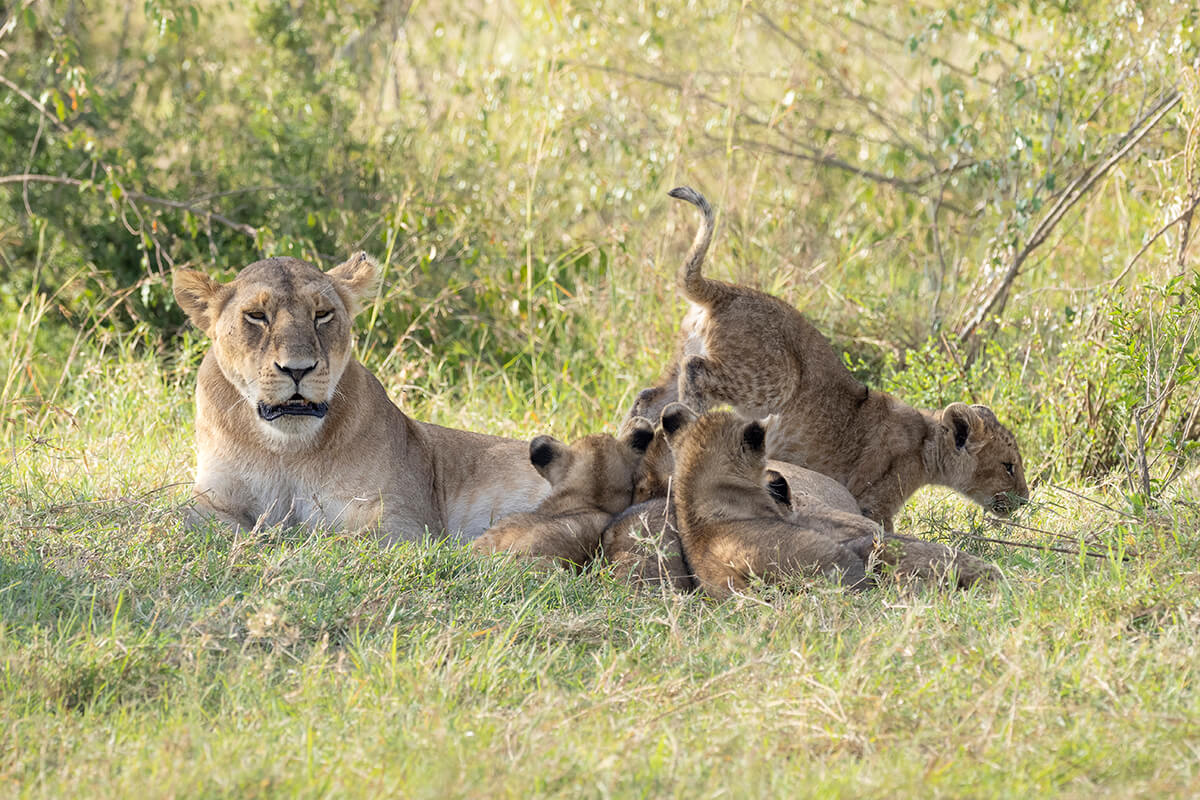
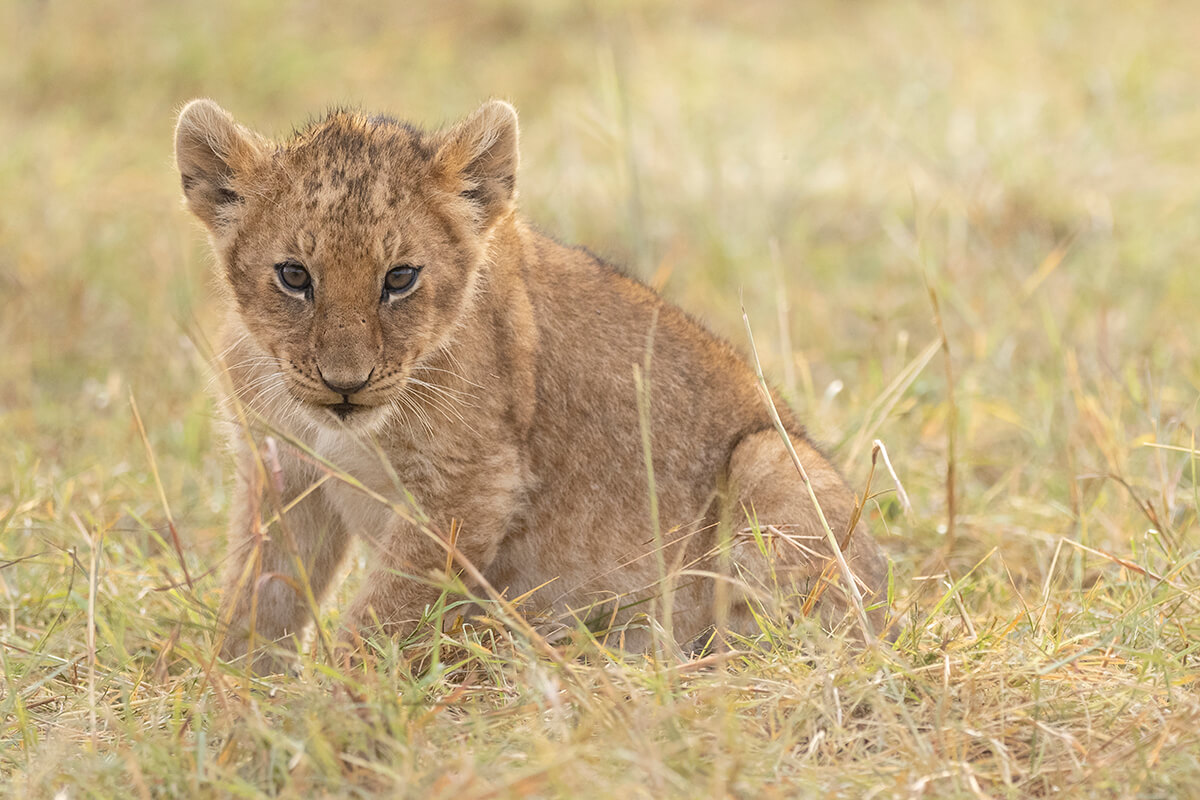
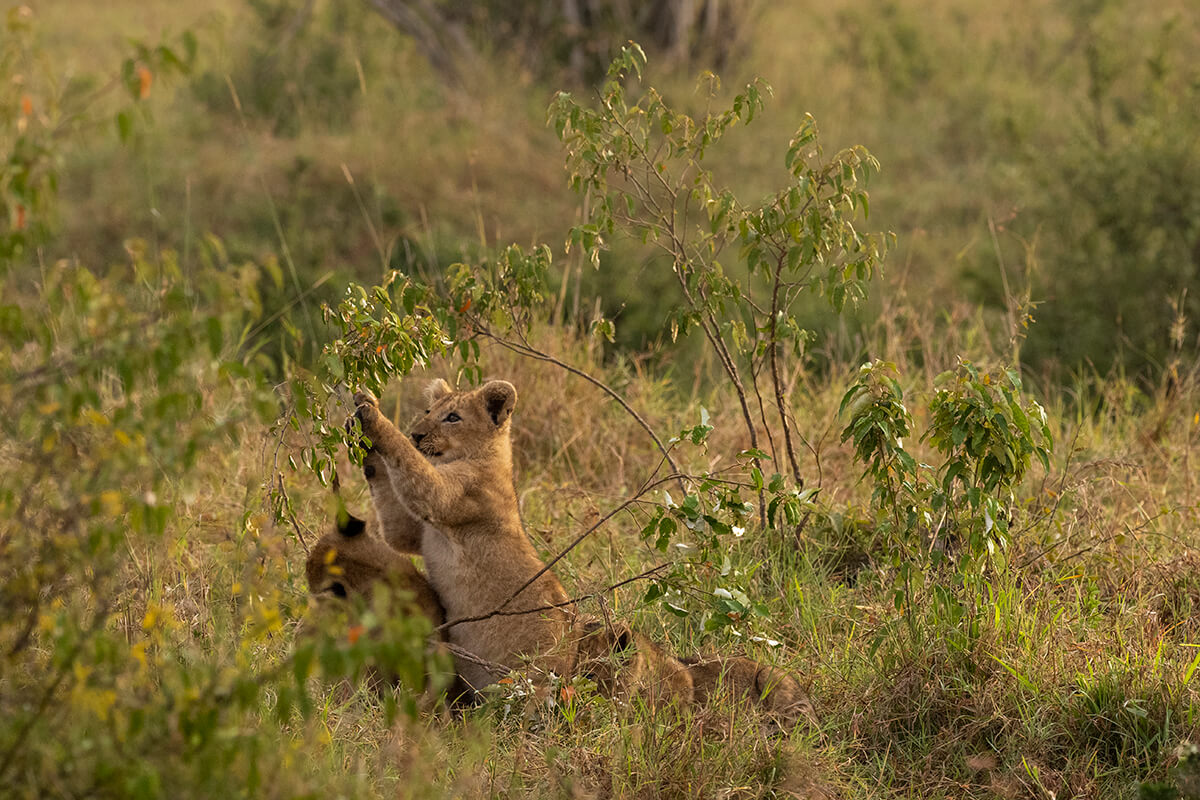
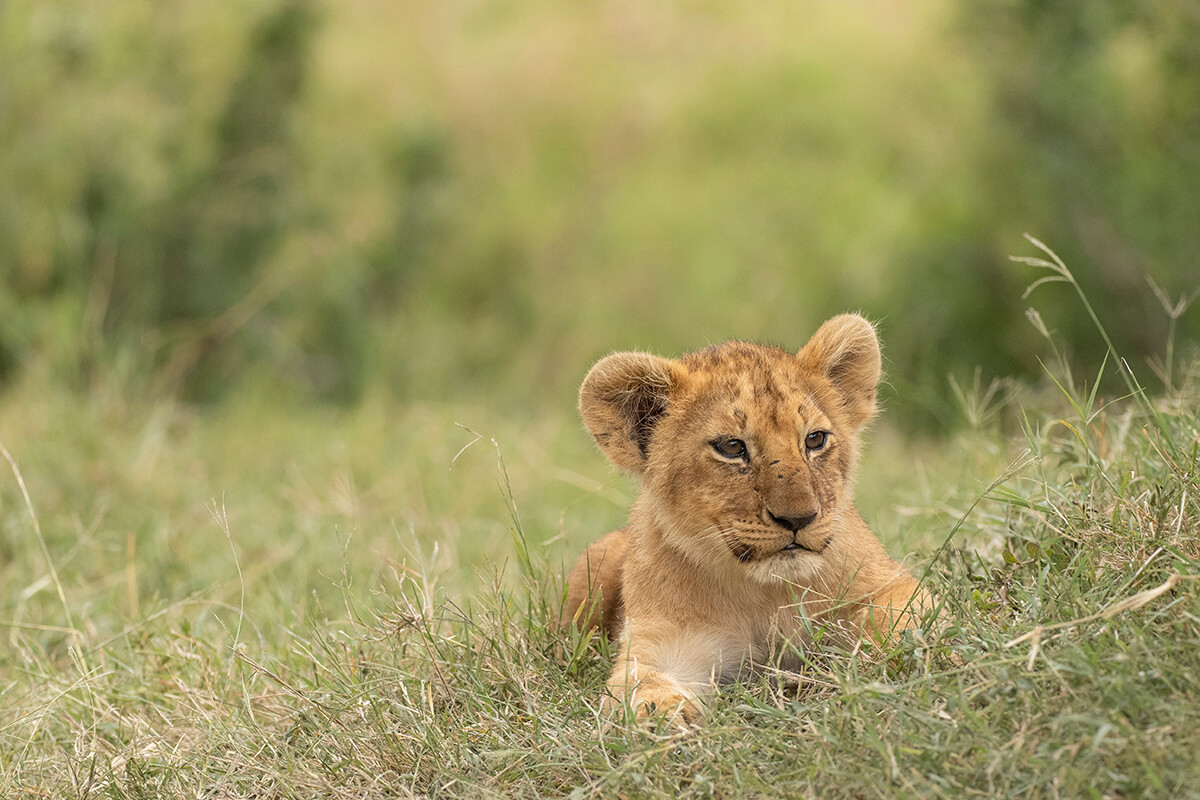
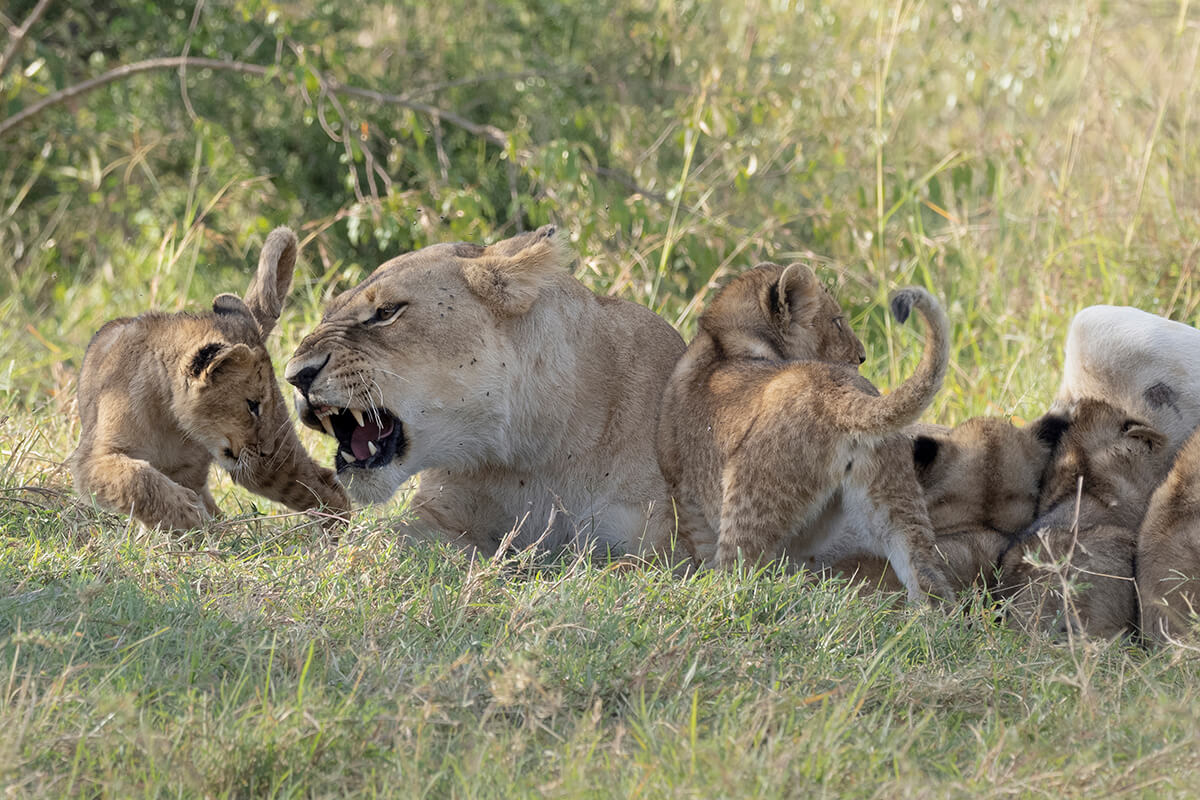
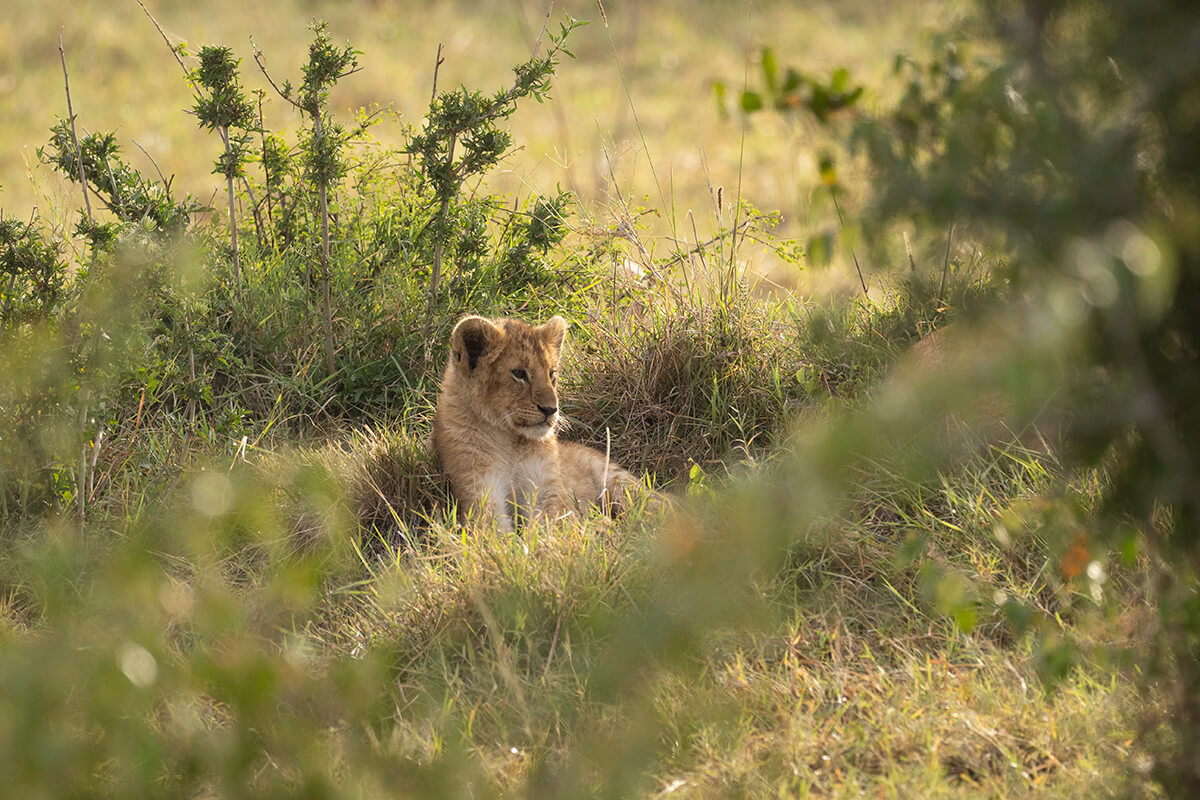
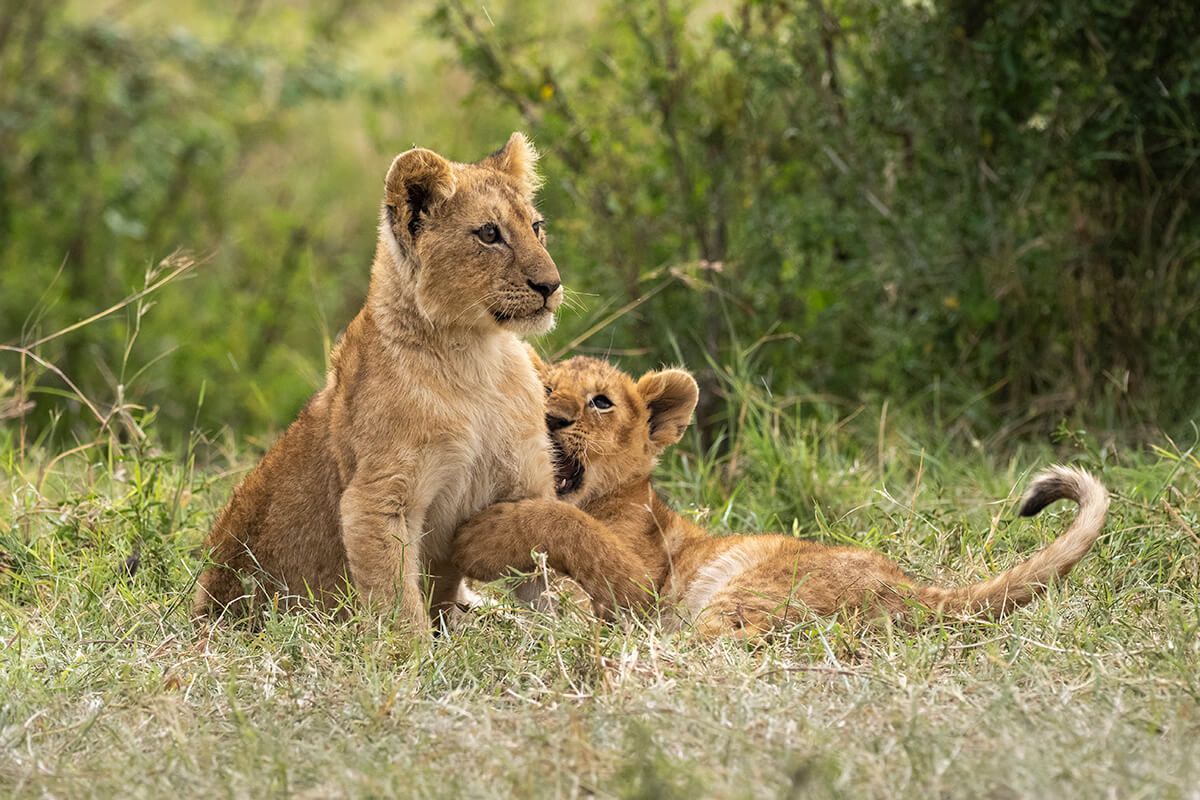
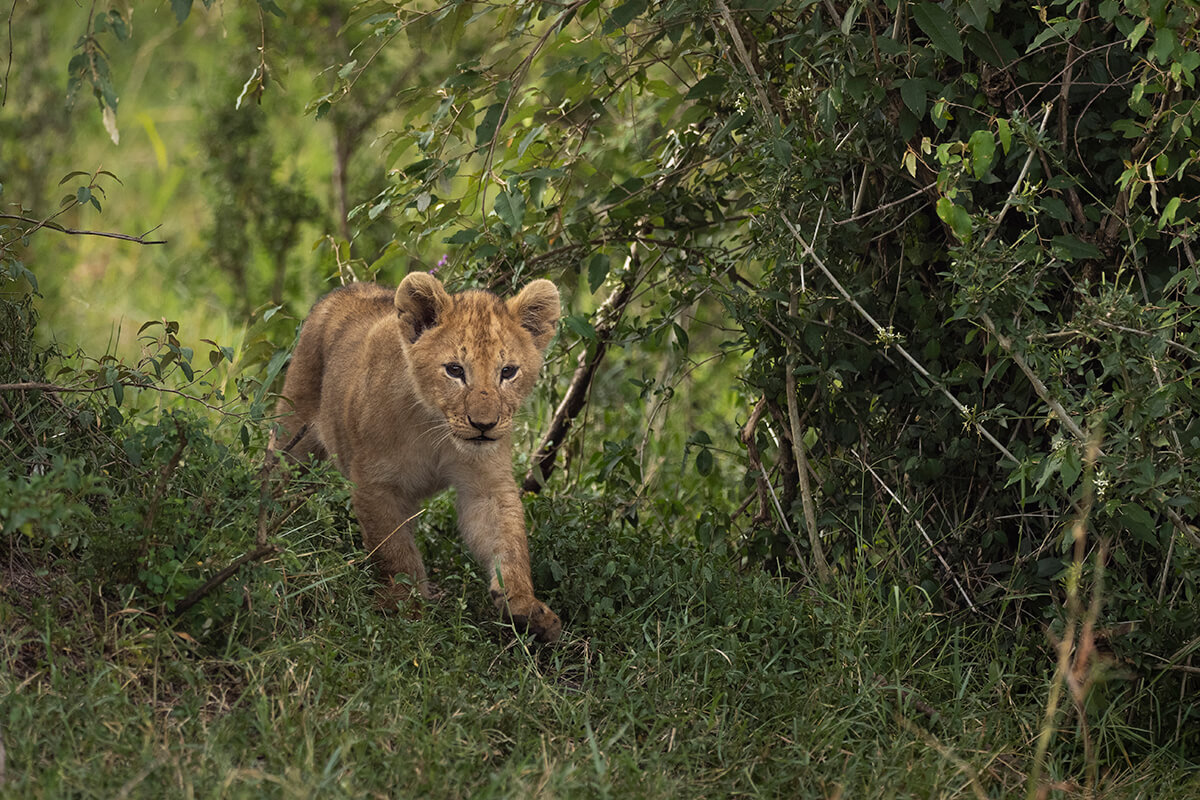
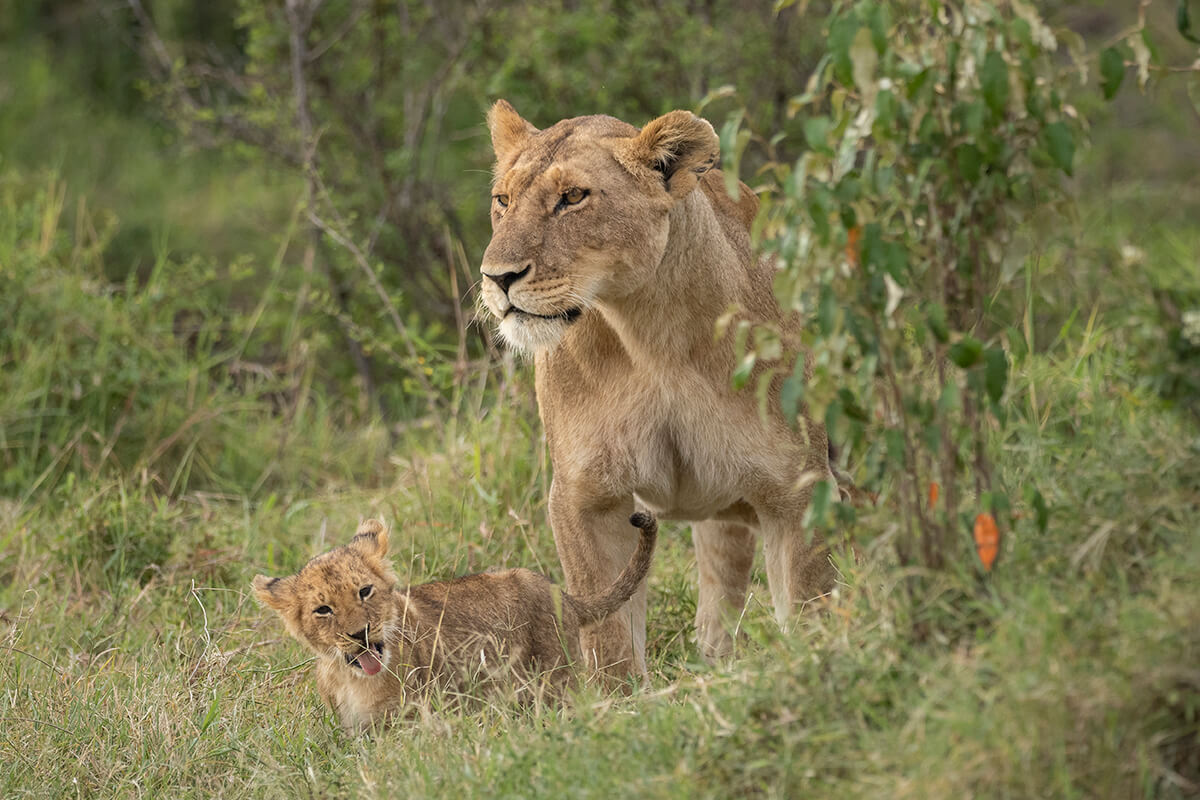
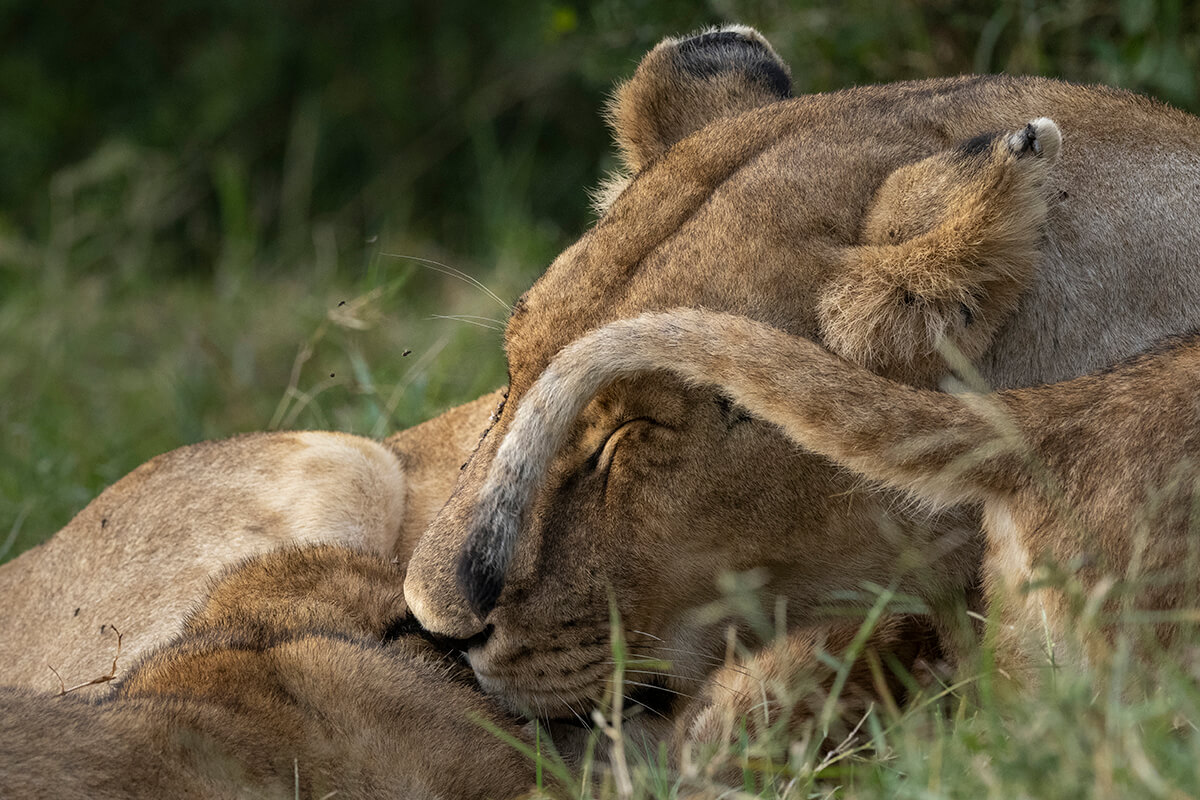
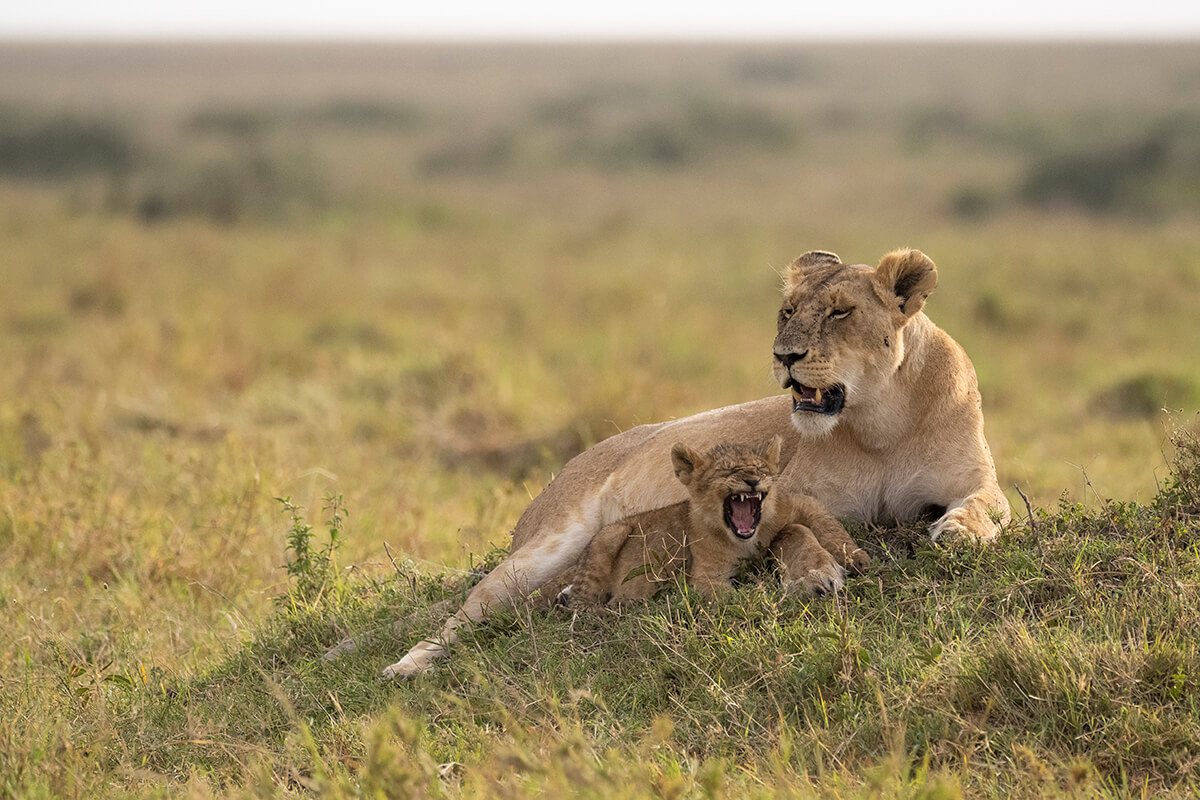
We followed the lion’s path and, to our surprise, came upon a clearing where the entire Rongai pride was gathered. It was a dream come true for any safari in the Masai Mara. There were two adult male lions, four females, and eight cubs between three and four months old. Few things are as heartwarming as the sight of tiny lions…
I got to enjoy that magical moment for a couple of hours. I didn’t know if I’d ever see a scene like it again.
Day 2 (II): A Leopard in the Masai Mara
Around 11:00 AM, as the heat began to rise, I suggested to my guide that we move to try and find some other interesting sights.
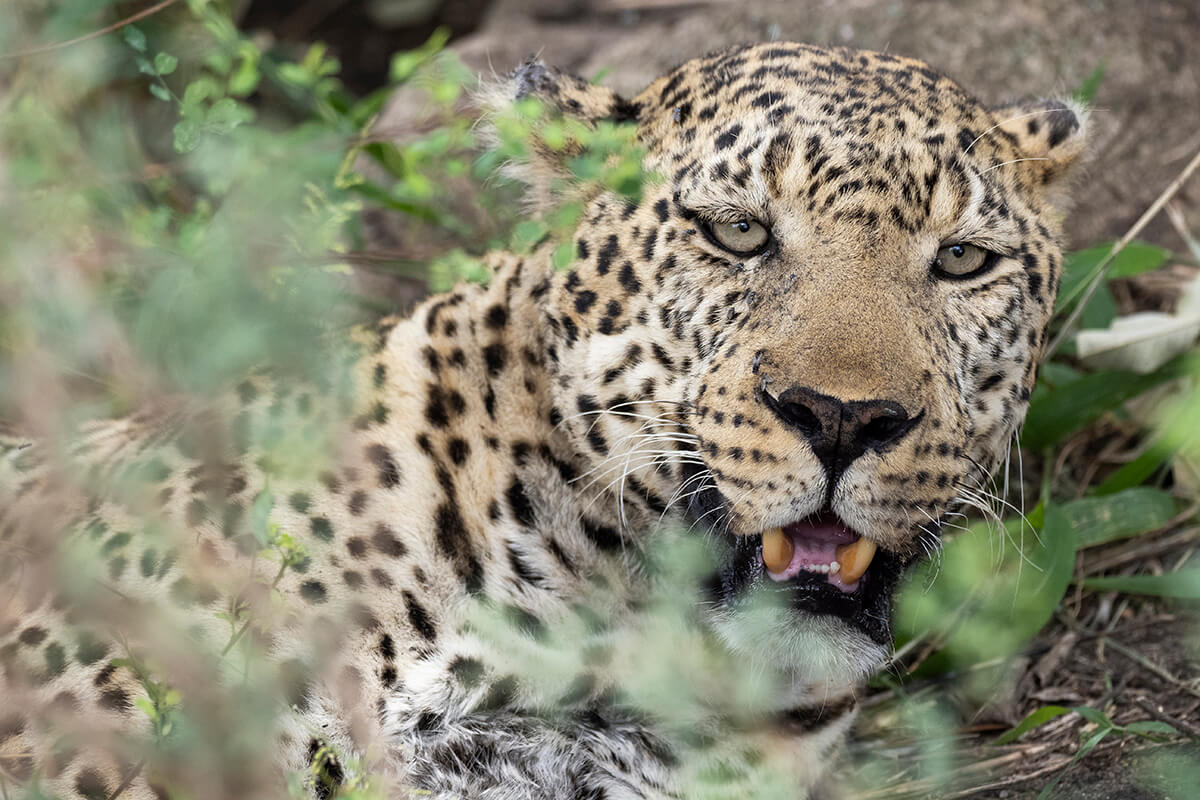
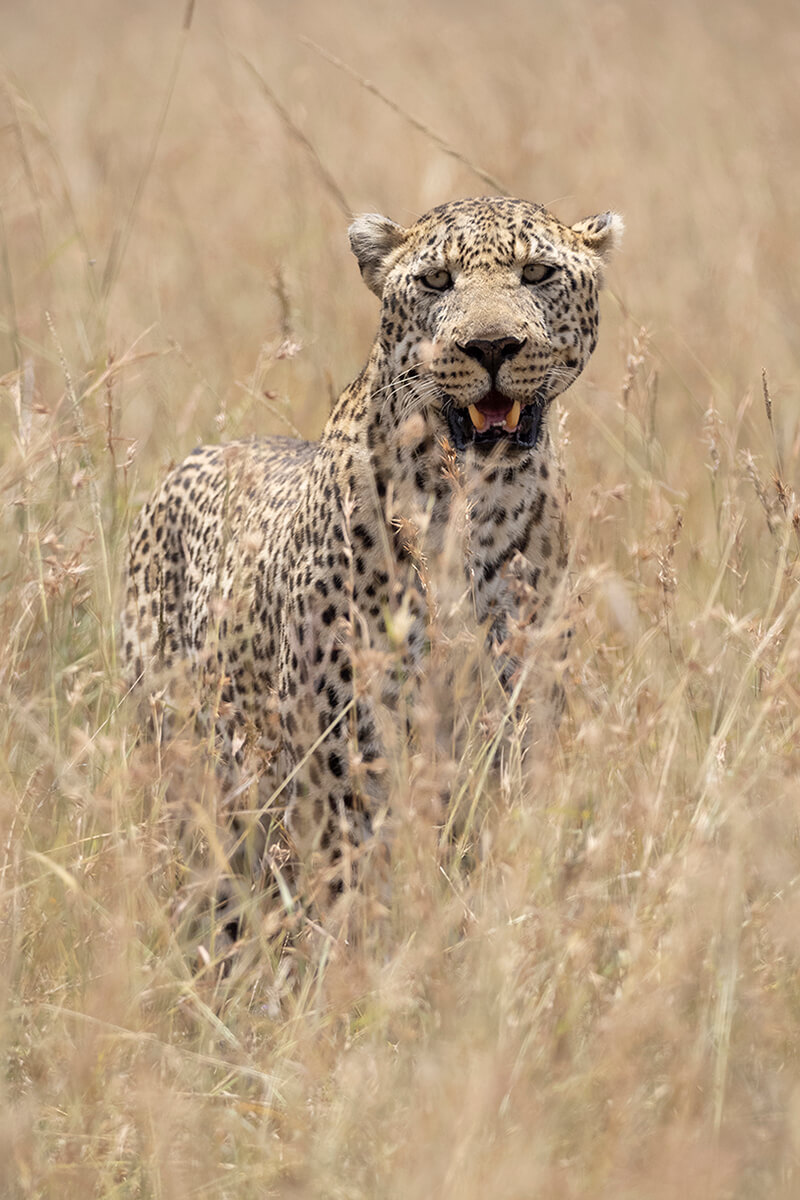
We didn’t drive for long when we came upon a group of five or six cars parked near a tree. This usually signals the presence of something interesting. When I saw a leopard lounging at the base of the tree, I couldn’t believe my eyes. It was the one feline I was most eager to see in the Masai Mara.
After about an hour of watching the leopard change positions as it slept, it finally stood up and started moving. I managed to snap some pictures and enjoy its penetrating gaze before it vanished into the tall grass of the Masai Mara.
Day 2 (III): Crocodiles and Hippos of the Mara River
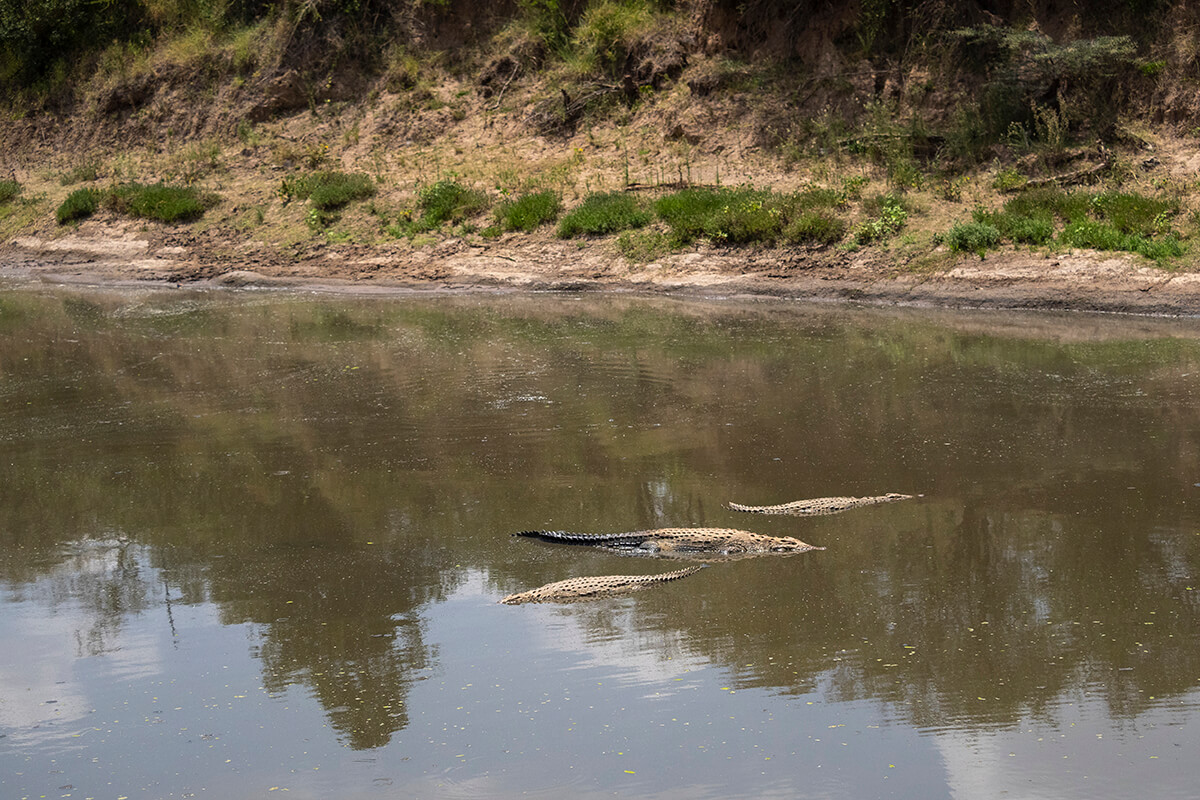
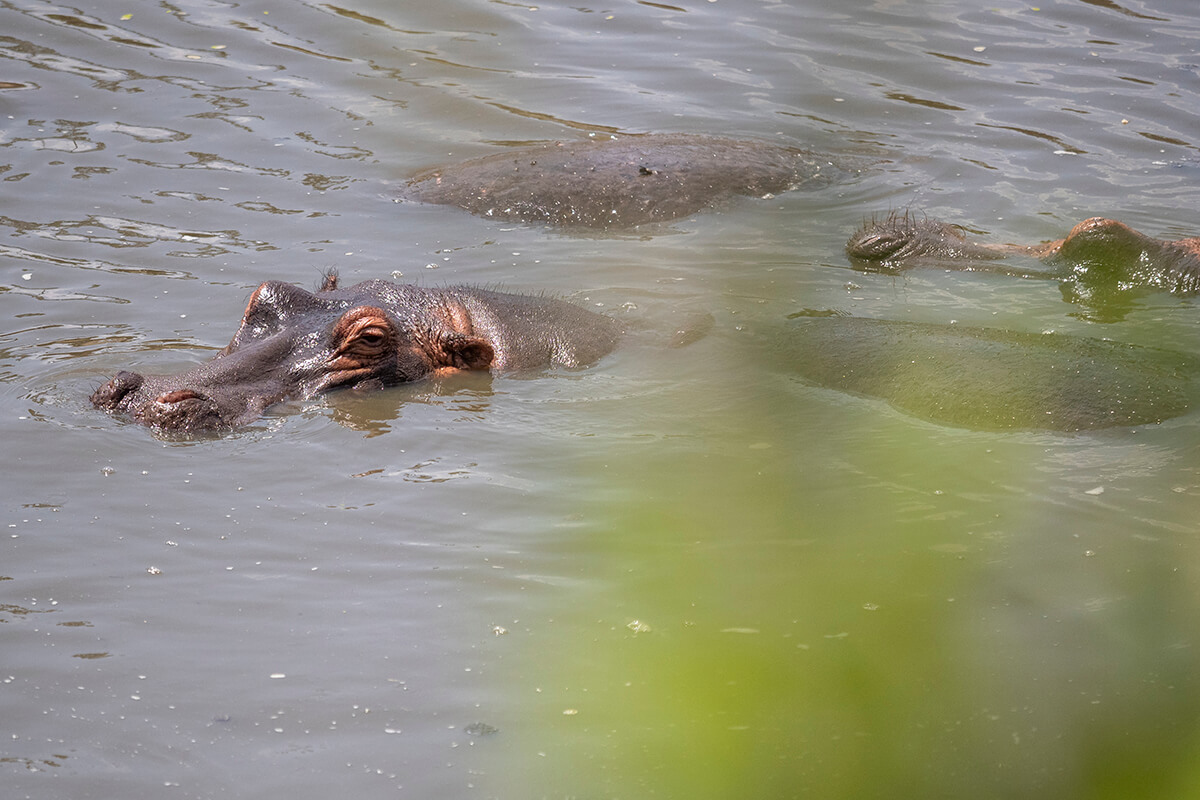
The heat was really setting in, and my guide, John, suggested we head to the Mara River, right on the border with Tanzania. It’s quite common to pack a meal and enjoy lunch by one of the most iconic rivers in East Africa.
After lunch, I went on a small walk with one of the park rangers to try to spot some crocodiles and hippos that live along the river.
Day 2 (IV): The Cheetahs of the Masai Mara
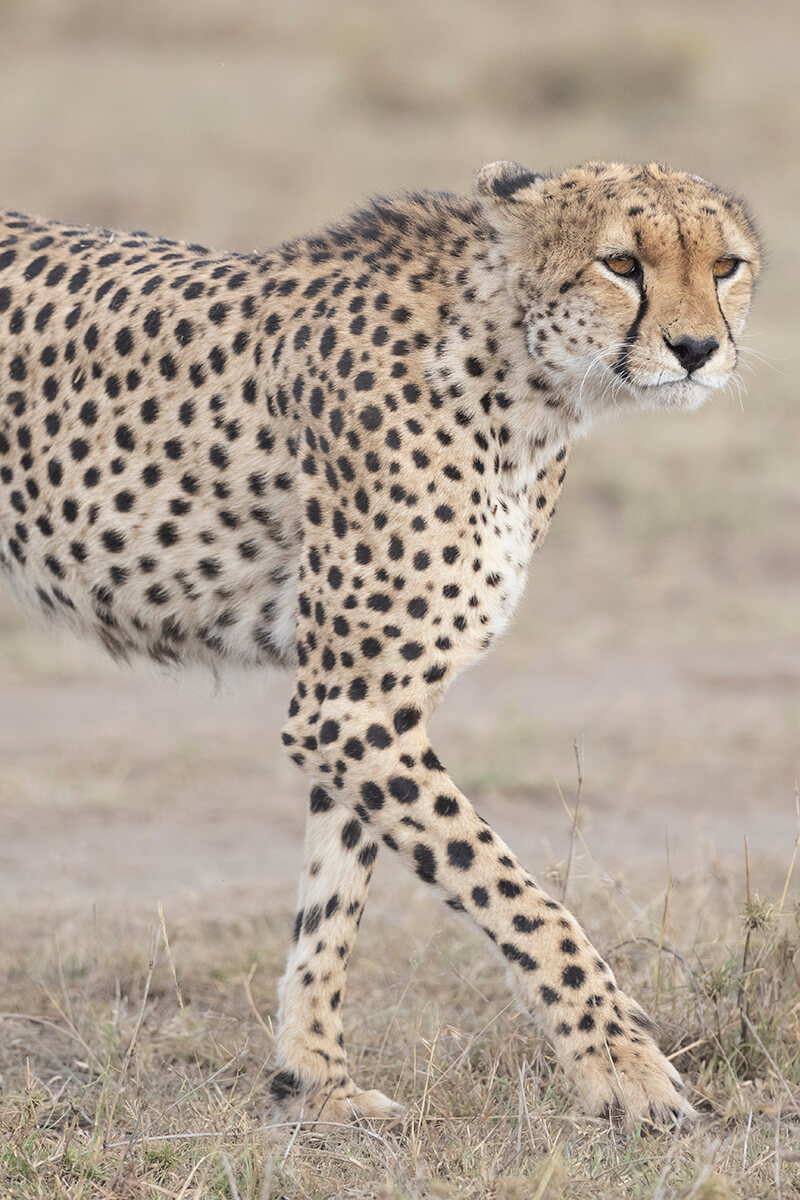
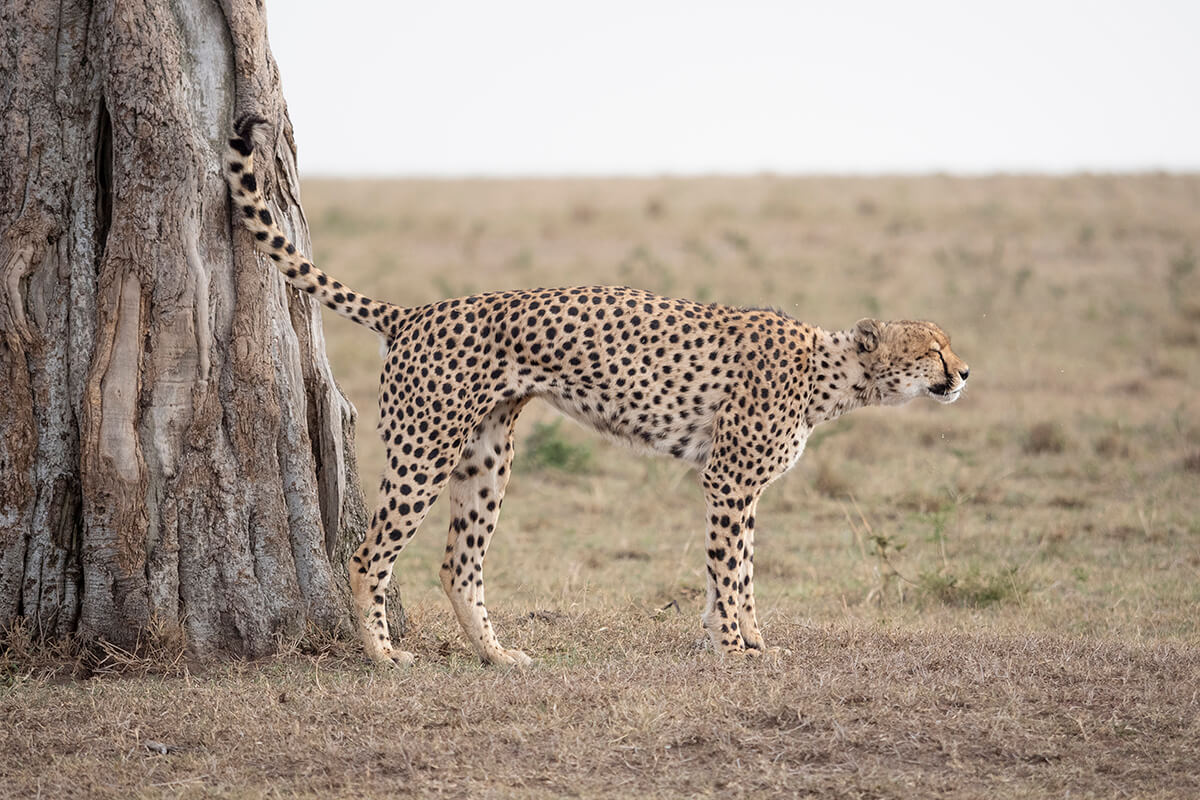
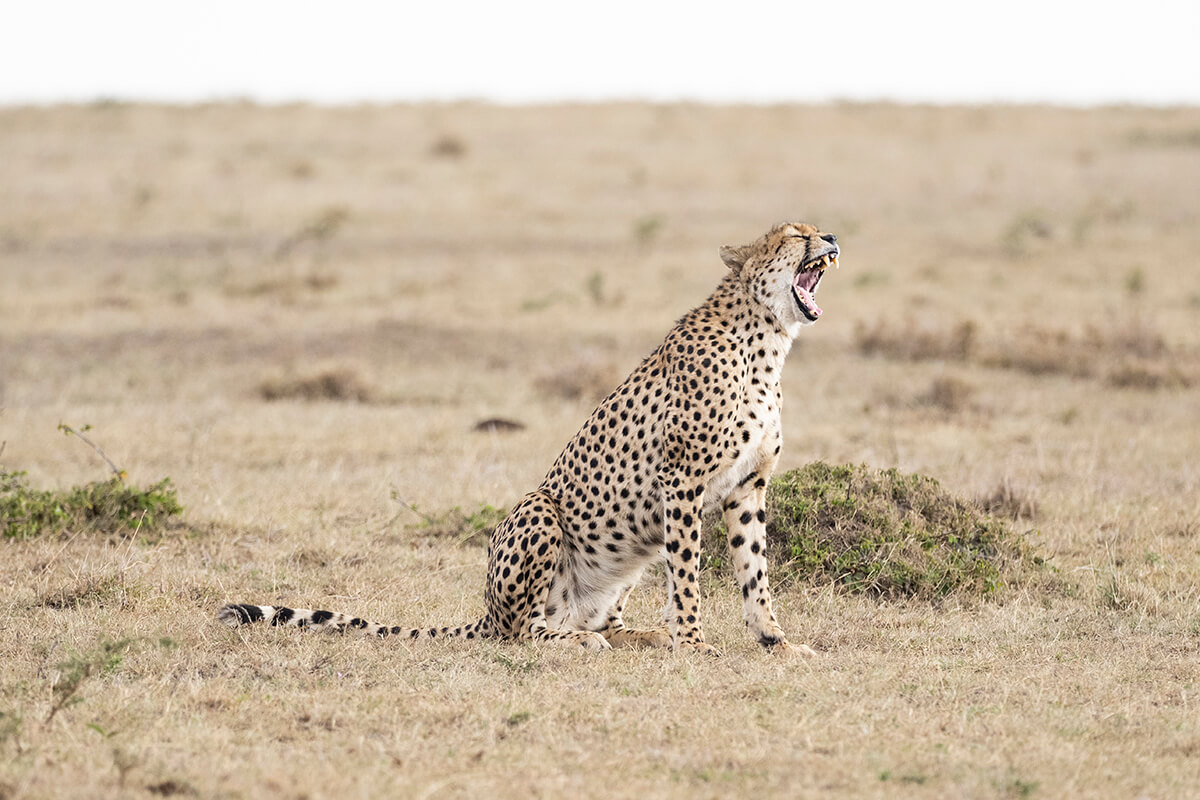
We continued the safari, heading towards the plains, located about twenty minutes from Talek Gate. We didn’t find much activity, so we took the main road east. About twenty minutes later, we got the third great surprise of the day: two cheetahs!
They were resting under a tree, but we expected them to become more active once the temperature dropped.
Sure enough, around 5:00 PM, as the heat began to subside, one of the cheetahs began to move, likely starting a patrol to scout for something to eat. The other cheetah quickly followed. Slowly, they moved off into the distance.
It was time to wrap up my first day of safari in the Masai Mara. A nearly unbeatable day, as very few people get the privilege of observing and photographing all three of the big African cats in one day.
Third Day (I): Starting the Day with a Cheetah
Just like yesterday, shortly after entering the Masai Mara Reserve, I was able to spot some jackals and hyenas. The light was low for good photographs, so I decided to keep moving. The first hours of the day are usually the most productive, and I always had the uncertainty of whether it was better to continue or stop and photograph a scene calmly.
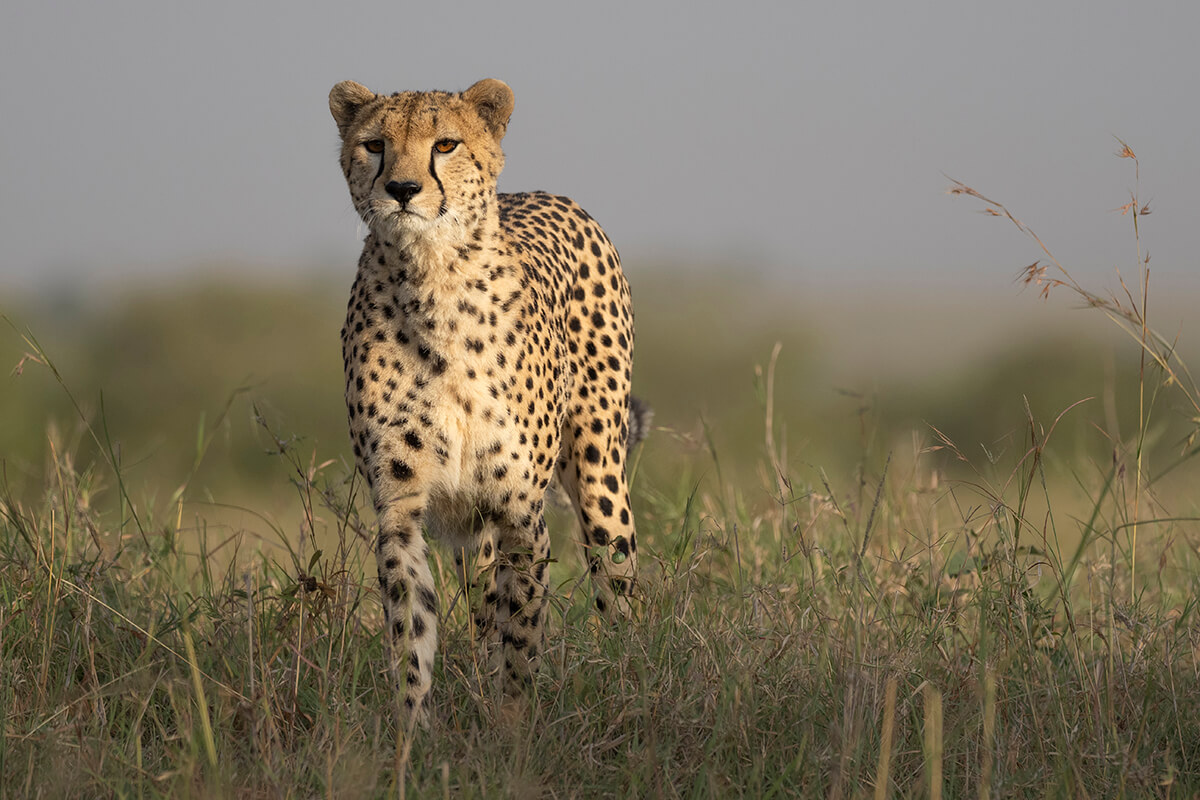
In this case, it was a good decision to continue with the safari, as a few minutes later, we found a cheetah. It walked a few meters and then climbed onto a small hill, where it had a good perspective to analyze the terrain.
It stayed still for quite a while, which caused more cars to arrive. When the cheetah decided to move, I could clearly see that it wasn’t comfortable among so many vehicles. Some animals ignore cars, but others can become more uncomfortable or scared. In this case, it was evident that the cars were bothering it, so I told my guide that I preferred to leave and continue exploring other paths in the Masai Mara.
Third Day (II): Enjoying the Rongai Pride
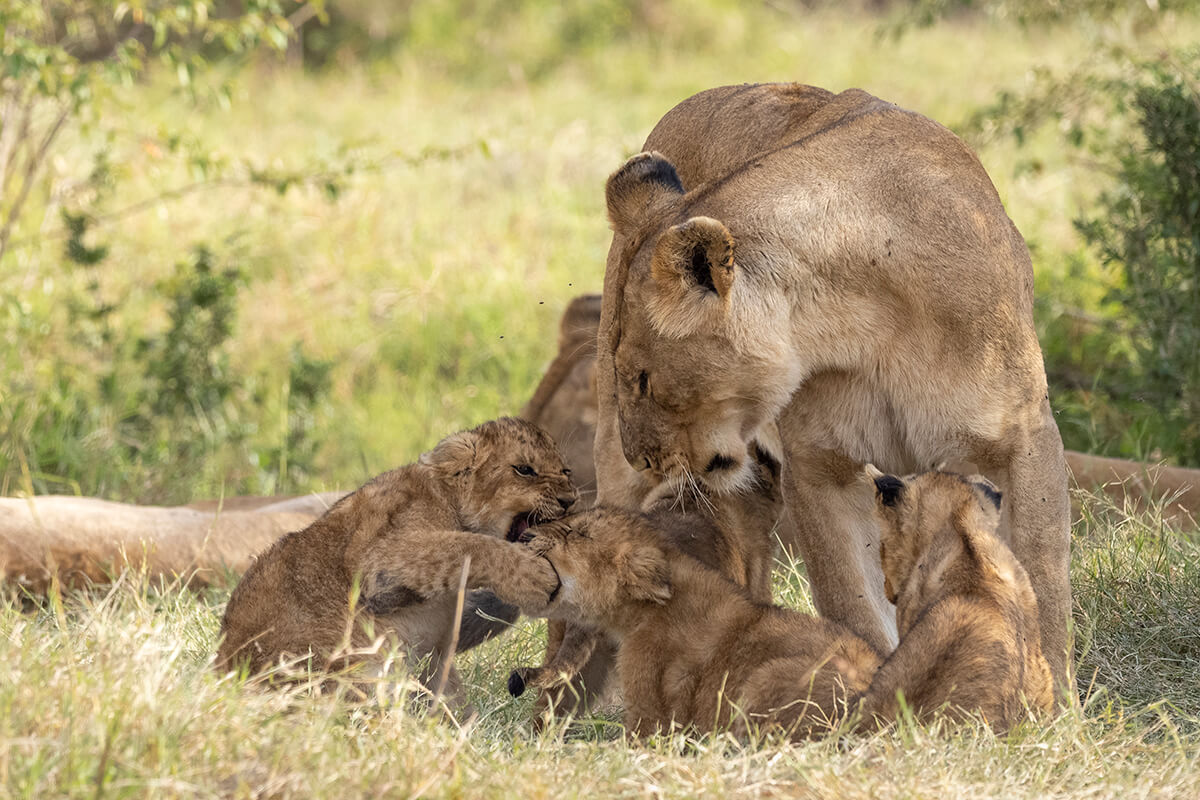
We headed to the area where we had seen the lion pride yesterday. And, to my good fortune, they were still there. It was very special to see the little lion cubs again as they played, drank milk, meowed, or slept.
Third Day (III): A New Leopard in the Masai Mara
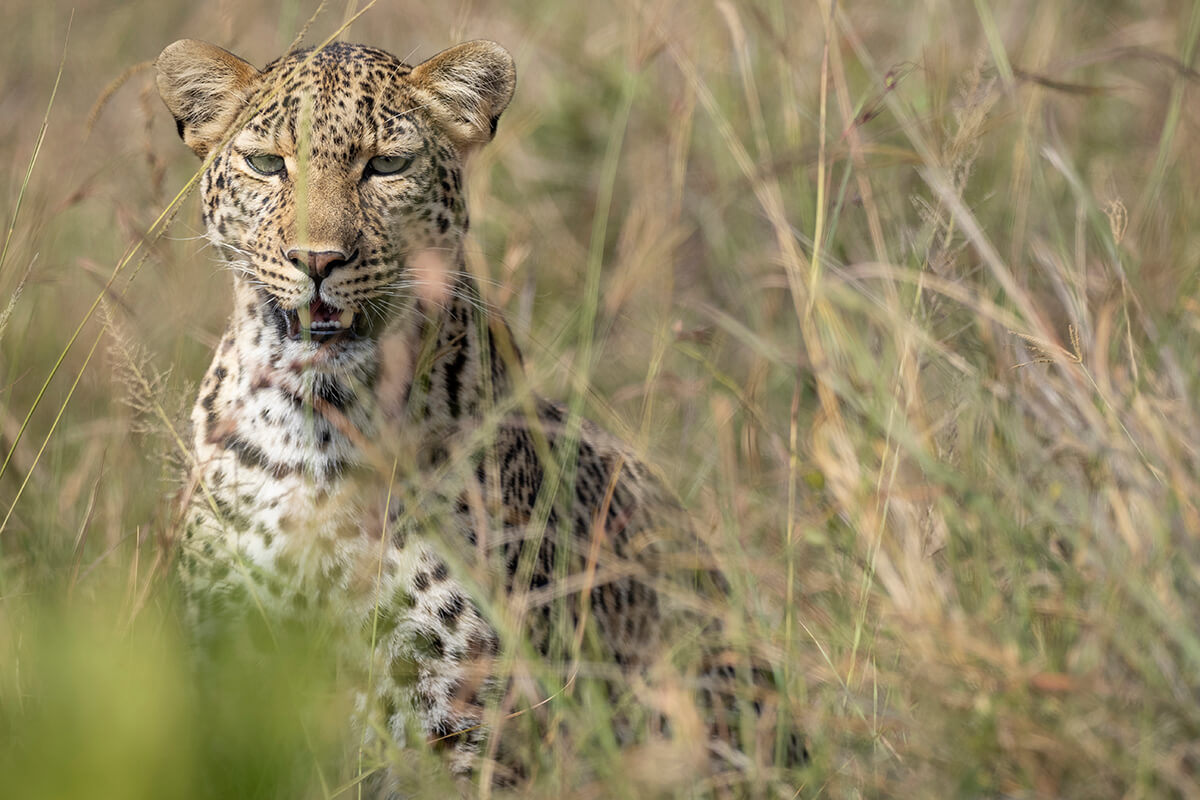
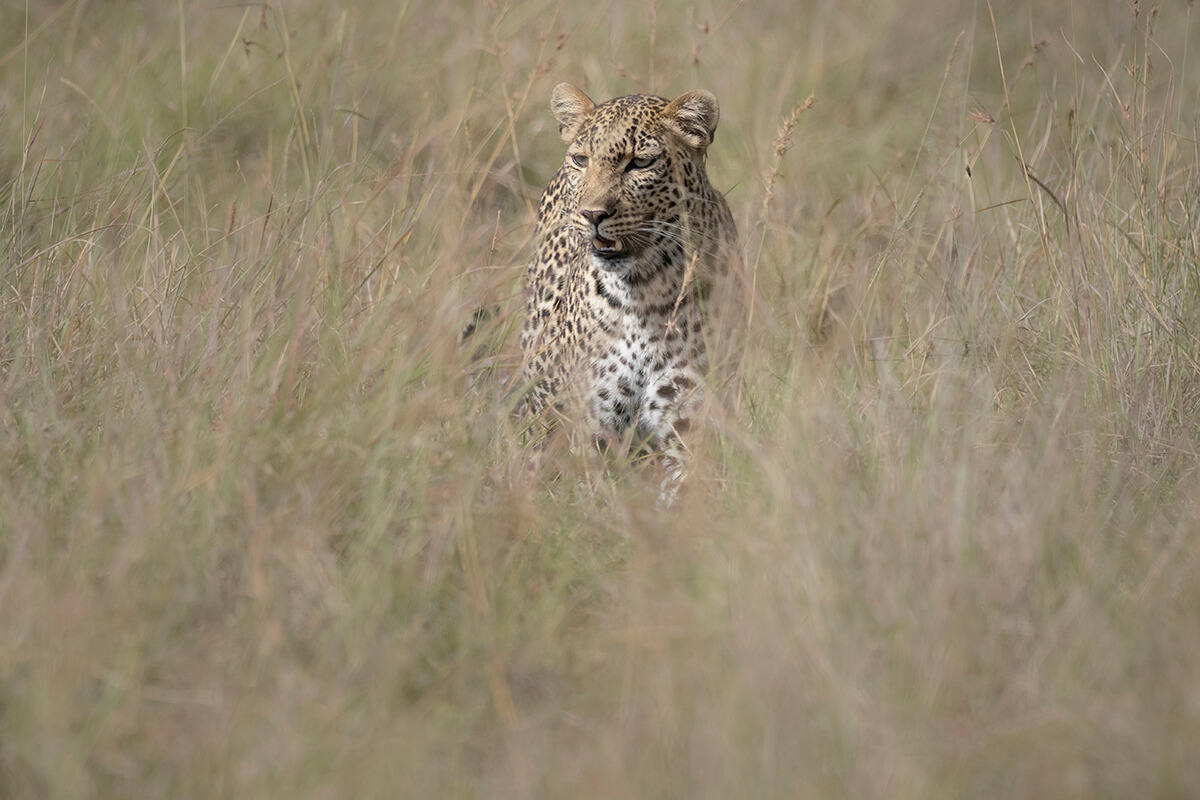
Around mid-morning, as we continued with the safari, luck smiled upon me once again. I was able to see a new leopard, a female walking. With the dry grass color, there were moments when it disappeared.
It wasn’t a long sighting, just one or two minutes, but there wasn’t much more I could ask for on a new morning safari in the Masai Mara.
Third Day (IV): The Elephants of the Masai Mara
Since it was very hot, and since I had already noticed that during the midday hours there was very little animal movement, I decided to return to the accommodation to eat and rest for a couple of hours. In the afternoon, I would go out again for a three-hour safari.
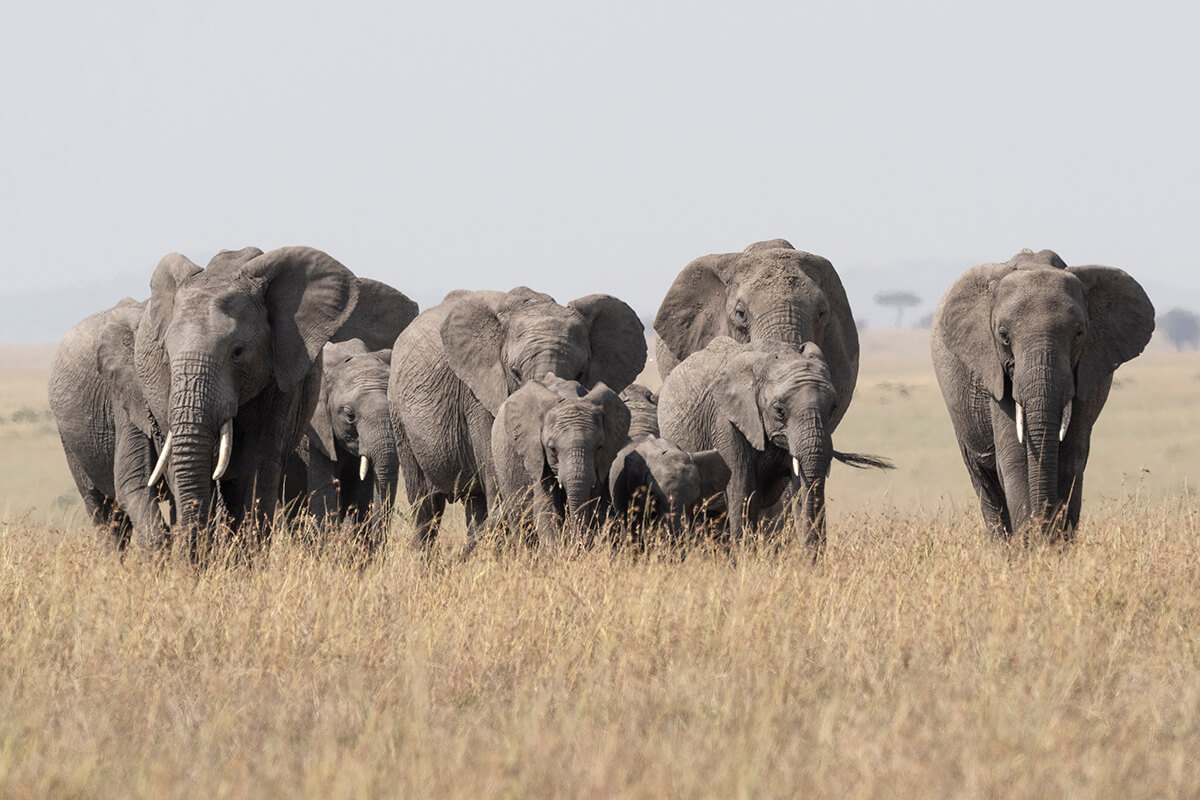
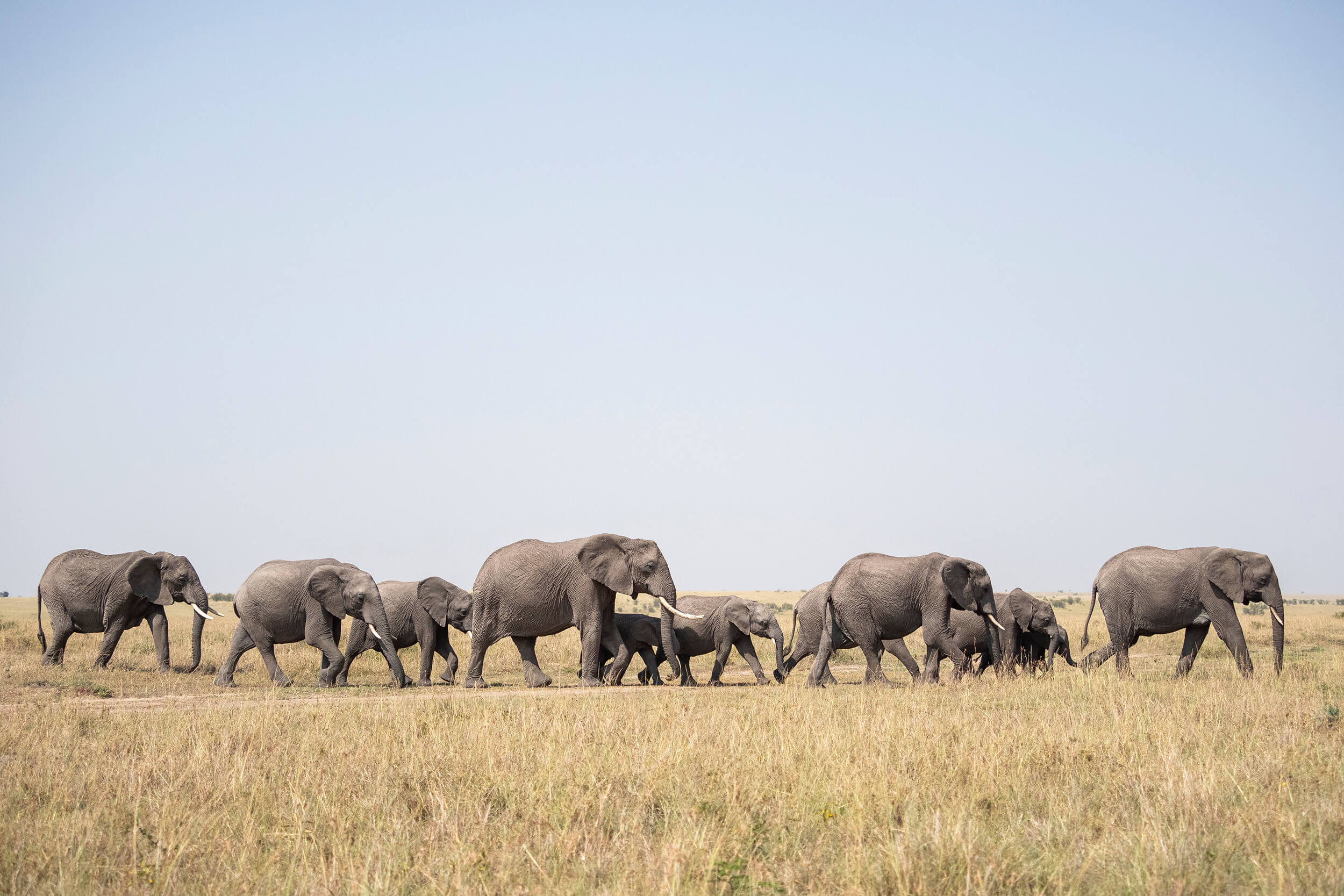
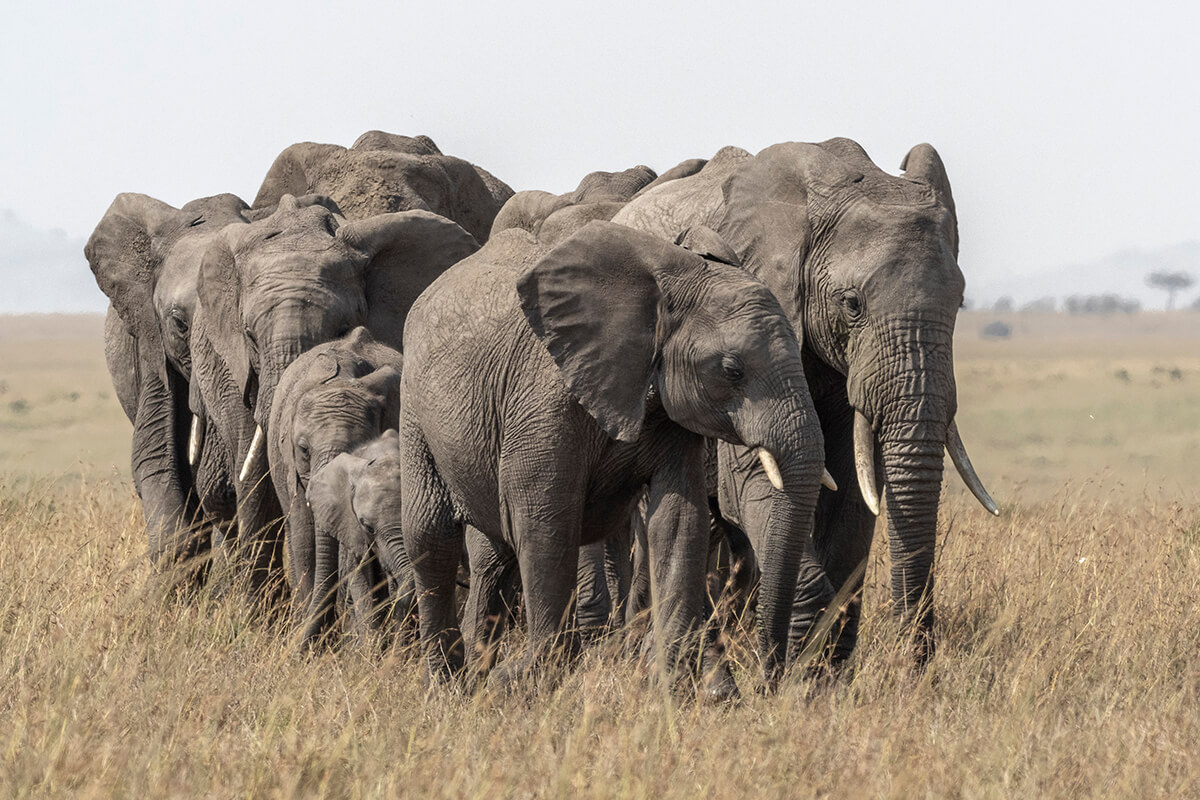
On the way to the Talek Gate, I had one last surprise. We found a group of elephants walking in the distance. They were heading in our direction, possibly to drink water at a pond behind us.
We waited for them there. With the engine off. And I was able to photograph them as they walked in synchrony, getting closer and closer. They passed in front of the van, and then began to hydrate peacefully.
Third Day (V): An Afternoon with Lions
When I re-entered the reserve just after three in the afternoon, I told my guide that I preferred to go directly to where we had seen the lion pride. If they were still there, I thought there was no better plan than to enjoy the last hours of the afternoon admiring this feline family.
Indeed, they hadn’t moved. I had already taken many photos of them, so I took the opportunity to simply observe and admire them.
When the light started getting better, I picked up my camera again. It was an irresistible moment for any photography enthusiast.
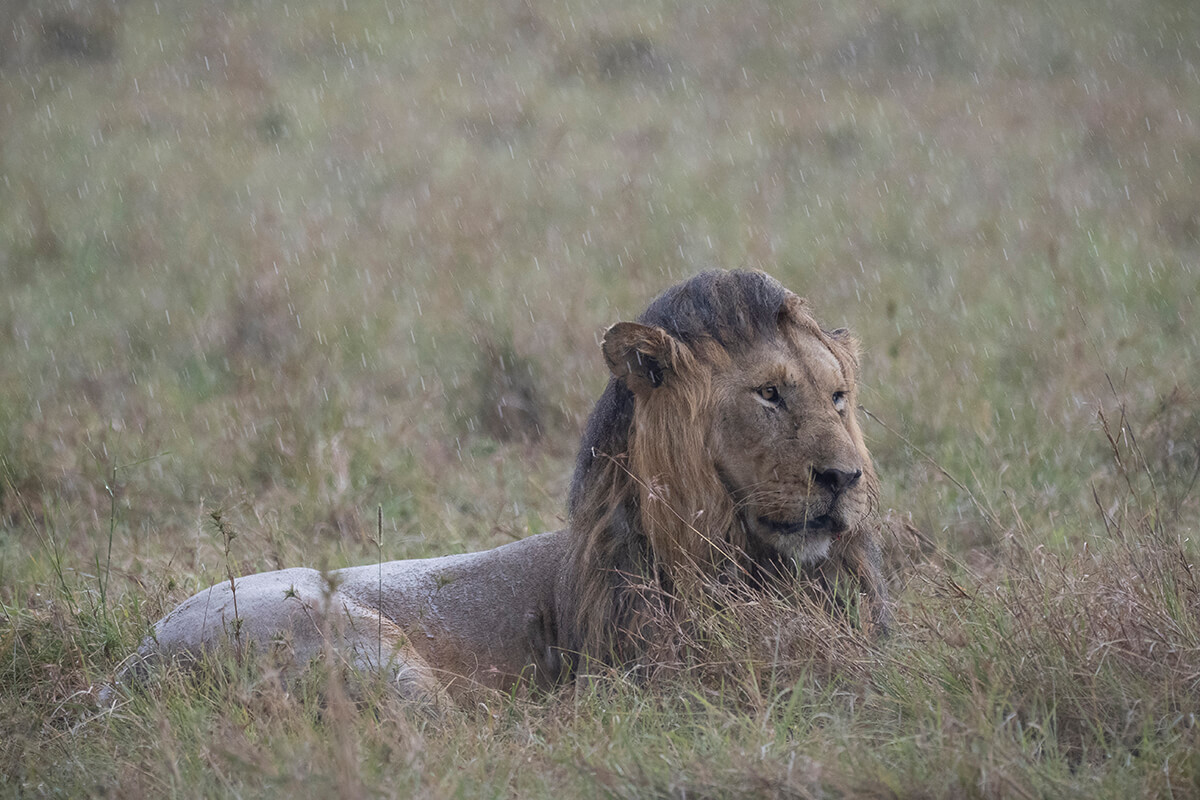
However, we had to leave in a hurry without being able to enjoy the sunset there. A heavy rain surprised us, and when it rains, some of the tracks in the Masai Mara become a slippery mess. My guide told me we had to leave, as the route back to Talek Gate would take longer, and it wouldn’t be wise to be pressed for time in case we got stuck.
The car slipped quite a bit, but we managed to exit the reserve without any issues.
Fourth Day (I): More Lions in the Masai Mara
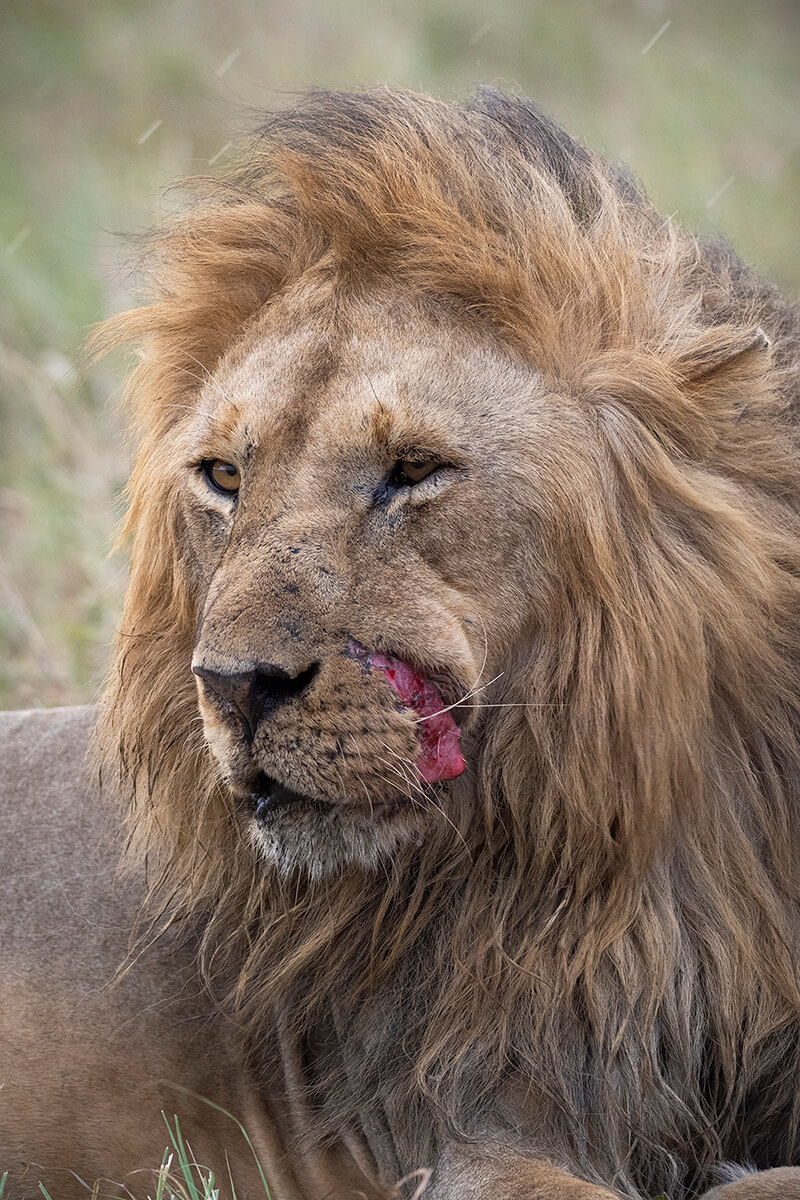
The big stars of my safari in the Masai Mara were the lions. And the fourth day in the reserve was no exception. Once again, in the morning, I was able to photograph all the members of the Rongai Pride, including the two males, for a couple of hours. I was able to take some of my favorite photos from the Kenya trip using the beautiful morning light.
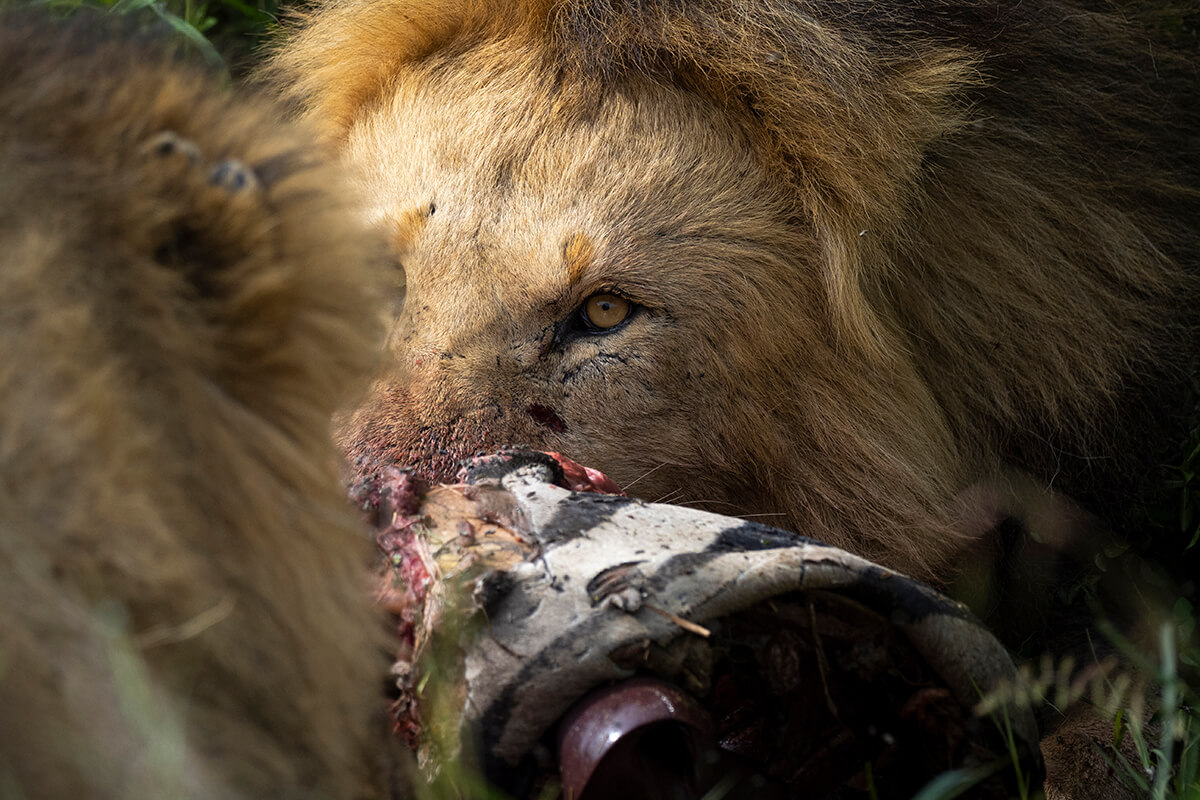
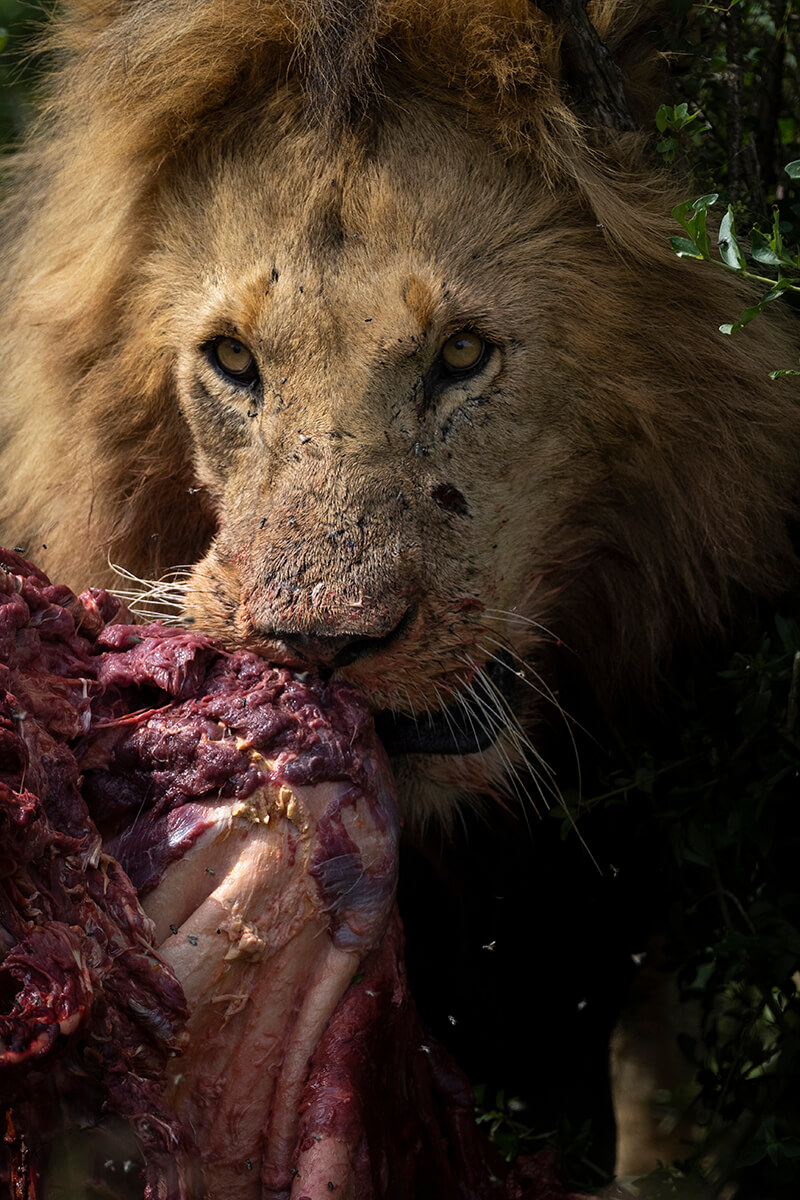
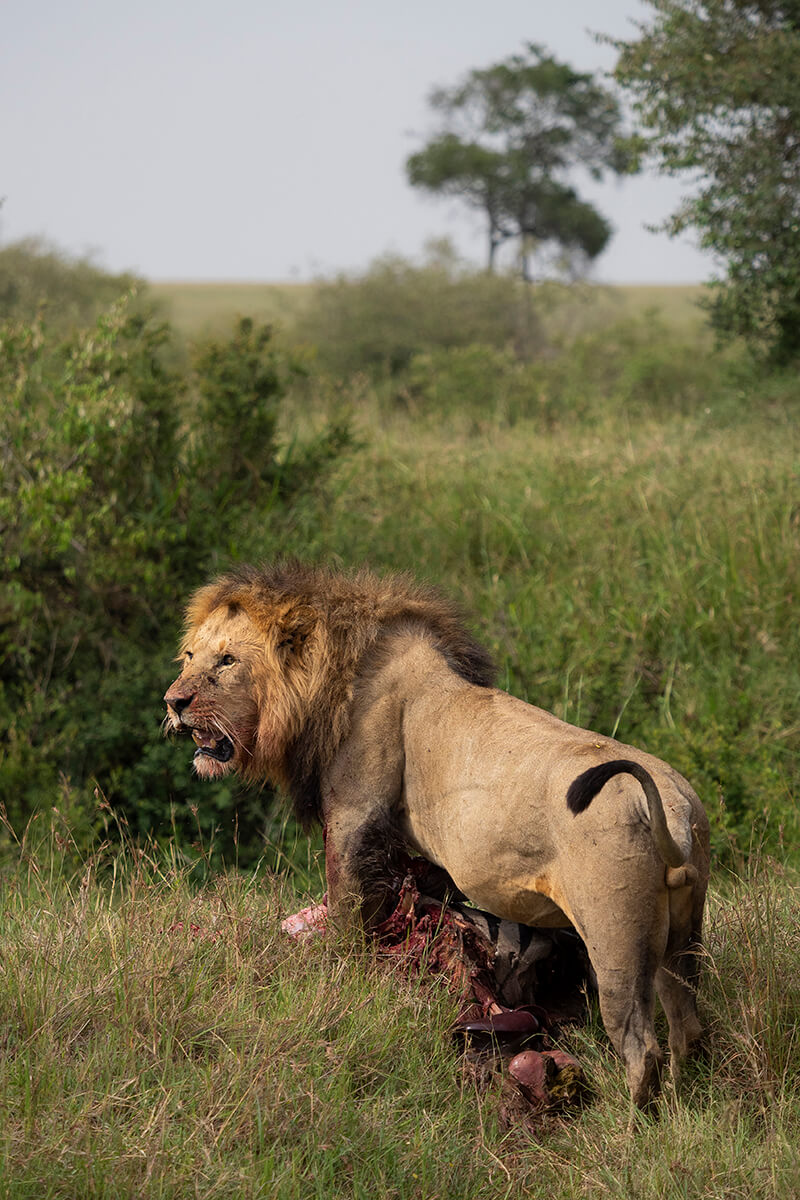
Knowing that something was always happening in the Masai Mara, I told my guide to move to try to spot something else. After half an hour of driving, we came across a group of cars parked. The reason: two lions feeding on a zebra they had recently hunted. It was a wild scene full of strength.
I stayed there for a while until one of the two males decided to take the zebra and hide it behind a bush. Then the two lions lay down to rest. They were too full.

Day Four (II): The Variety in Masai Mara Safaris
After this unforgettable scene, we began heading back toward the Talek Gate. Once again, I had decided to do a morning safari and one in the afternoon, taking a break during the hottest hours.
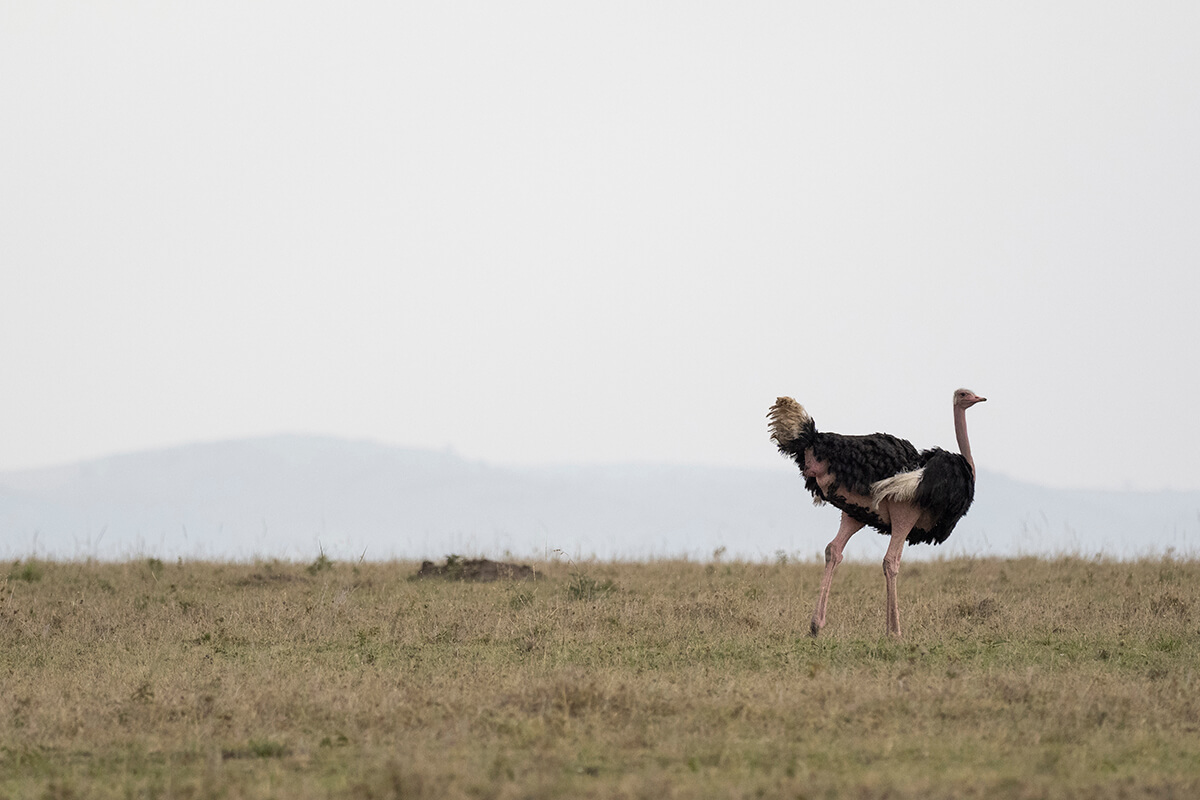
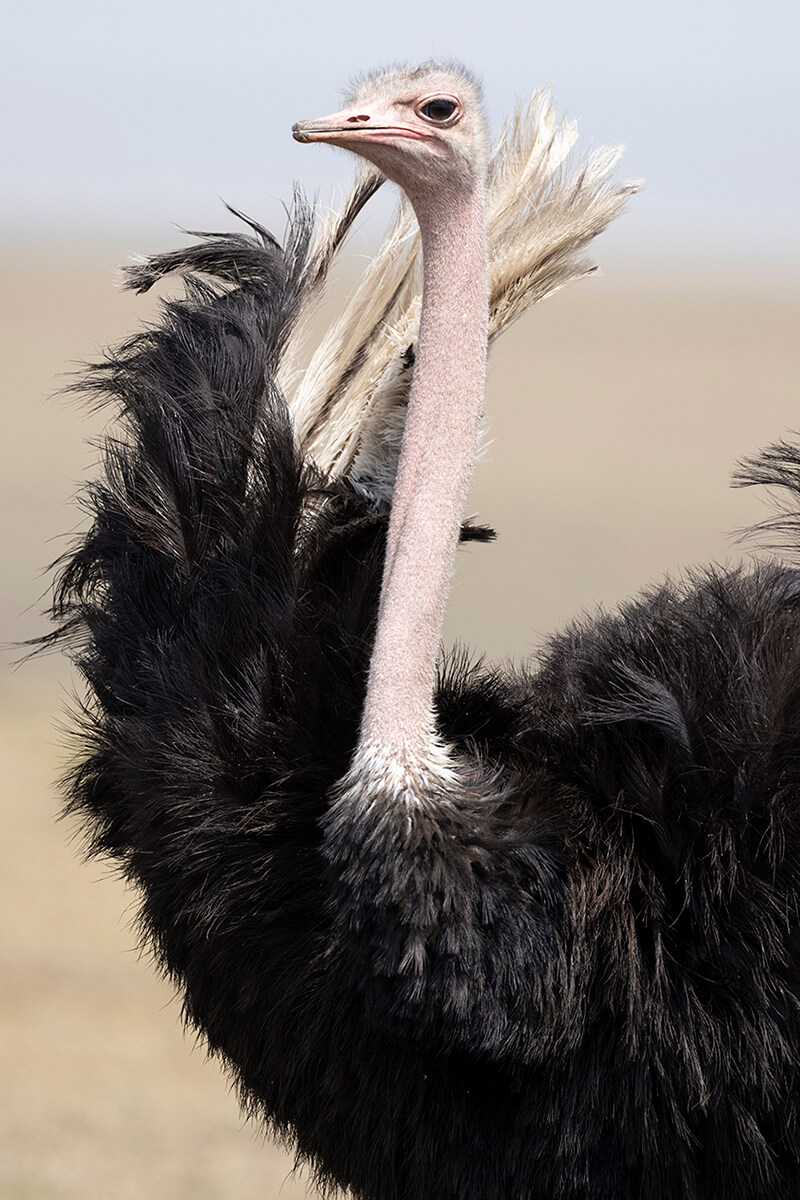
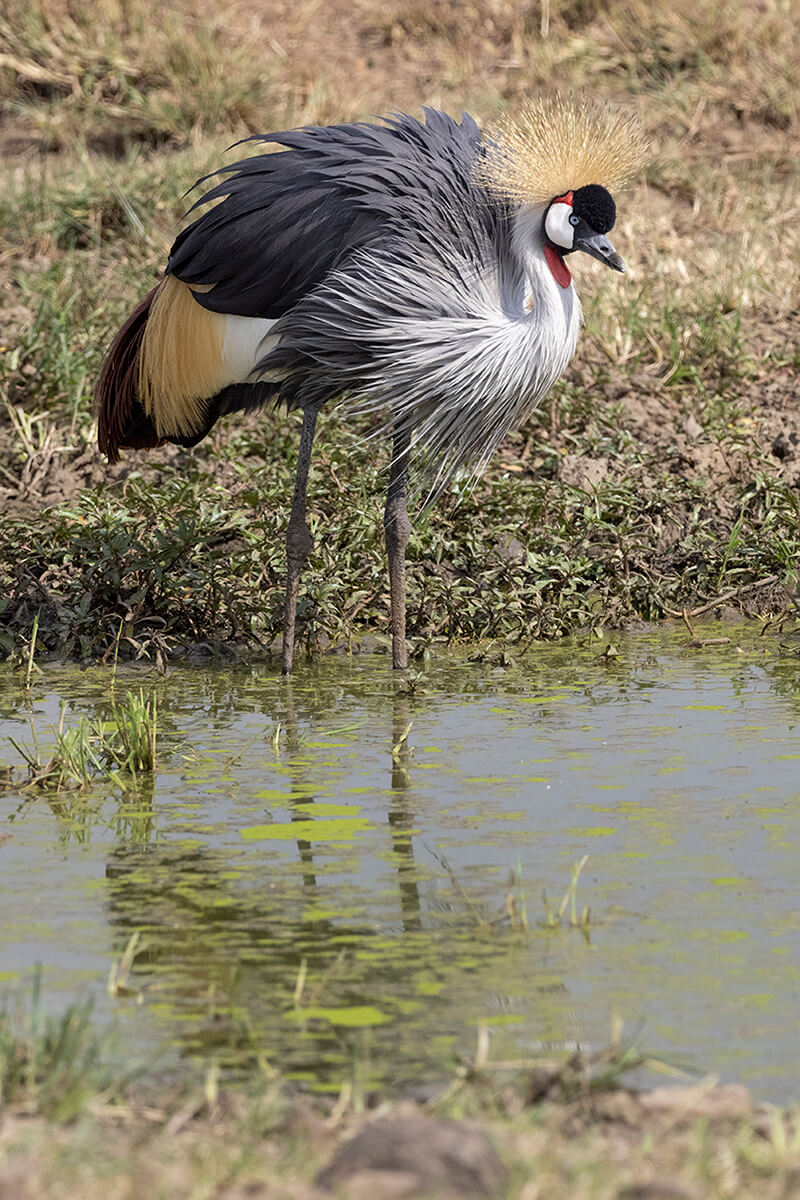
On the way back, I took the opportunity to keep enjoying the great diversity of wildlife in this Kenyan reserve. Every few meters, there was a different animal: impalas, Thomson’s gazelles, a Kori bustard, a pair of ostriches, zebras, giraffes, elephants…
Day Four (III): A New Feline Afternoon
During the afternoon safari, we first moved through some new areas, looking for any remarkable sightings. Cats are my weakness, and we especially tried to find a leopard or cheetah. We had no luck, so we went back to the area where we had seen the two males eating the zebra.
They were still there, but they were still sleeping. I took advantage of the seconds when they lifted their heads to take a few more photos, but it was clear they had no intention of moving.
There was still some time left before the gates closed, so I asked my guide to visit the Rongai Pride lions again, the pride that had given me so many memorable moments. I didn’t know if I would see them again the next day, so I admired them with great appreciation and a sense of farewell.
It started raining again, and without wasting too much time, we had to call the safari off.
Day Five: The Final Surprise of Masai Mara
All the safari days in Masai Mara had been spectacular, but the time had come to leave the reserve. I only had the last few hours there.
While my guide was driving, I noticed there were far fewer animals. It had rained heavily overnight, and it seemed that the wildlife had dispersed and moved to different areas. We were also informed that the lions from the Rongai Pride were no longer in the same spot.
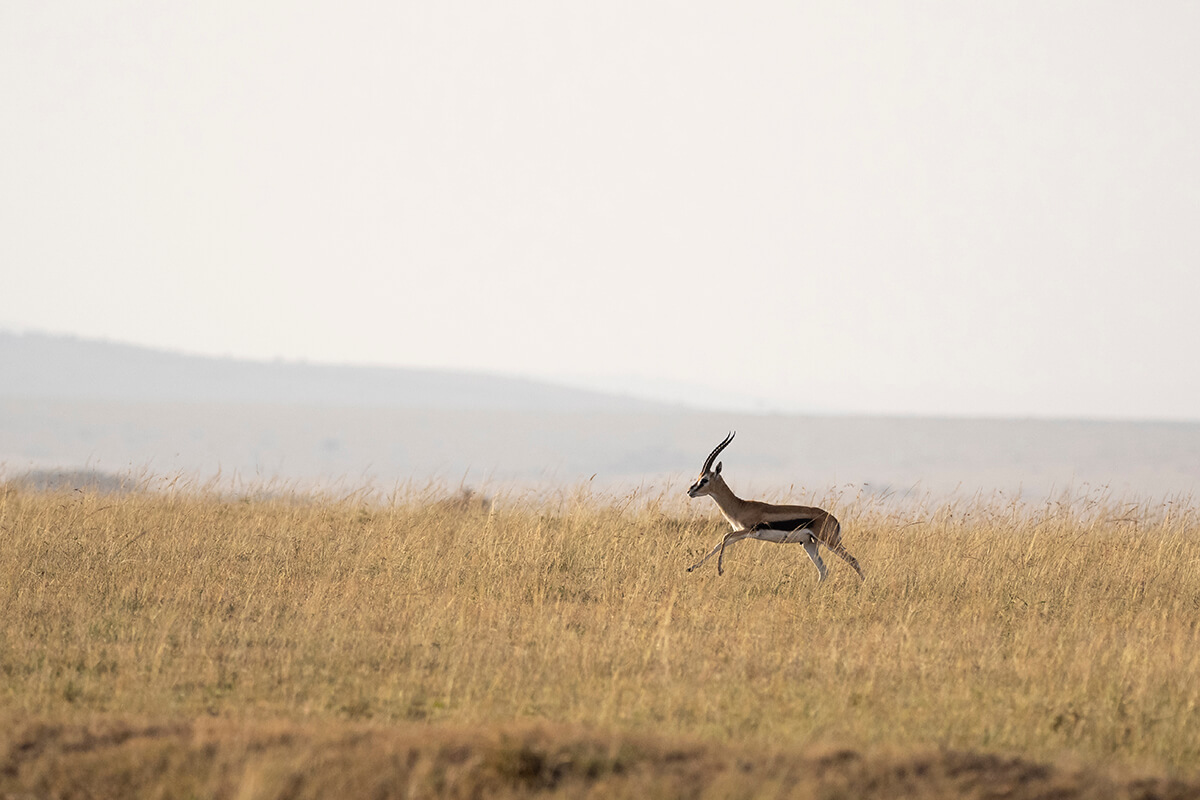
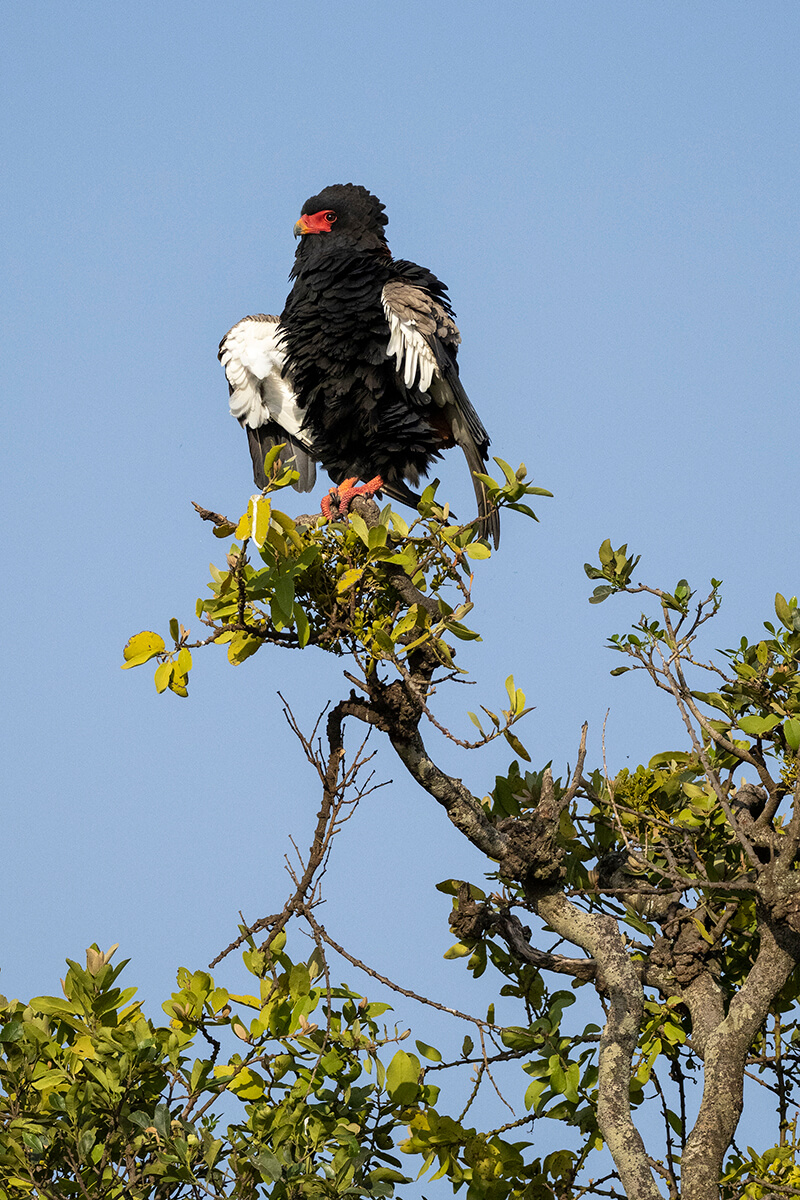
Therefore, John suggested we head toward the border with Serengeti to see if we could find something interesting there. I was surprised to still not see too many animals. No herbivores, like the abundant impalas, zebras, or topis. I only saw a Thomson’s gazelle, a couple of hyenas, and several birds.
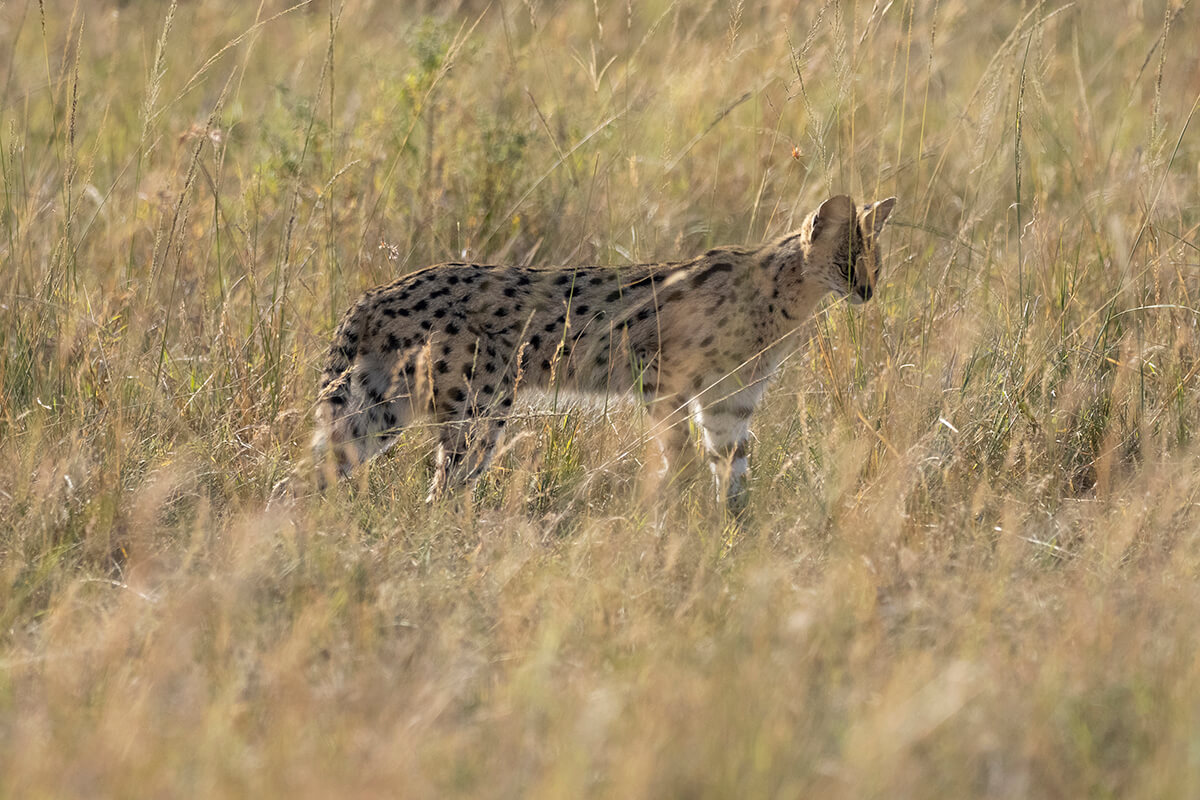
It seemed like it would be an unproductive day when I saw a small silhouette moving through the grass. Quickly, I grabbed my camera to try to make out what it was, though I had a suspicion and was getting nervous. Through the camera, I confirmed what I thought: it was a serval! One of the most elusive felines of Masai Mara. We were able to get a little closer, but in the blink of an eye, it disappeared into the bushes. A fleeting but unforgettable moment.
With this great moment, we headed toward the Sekenani Gate to leave Masai Mara. From there, I had about four hours of road ahead to the last reserve of the trip to Kenya: Lake Nakuru National Park.
Plan Your Trip to Kenya
🦍 Find the best trips and safaris to Kenya with a local operator here.
✈️ The best flight deals to Kenya here.
🏨 The best prices for accommodations in Kenya here.
🚑 Get your travel insurance with a 7% discount here.
💳 The best card for paying (without fees) and withdrawing money abroad here.

