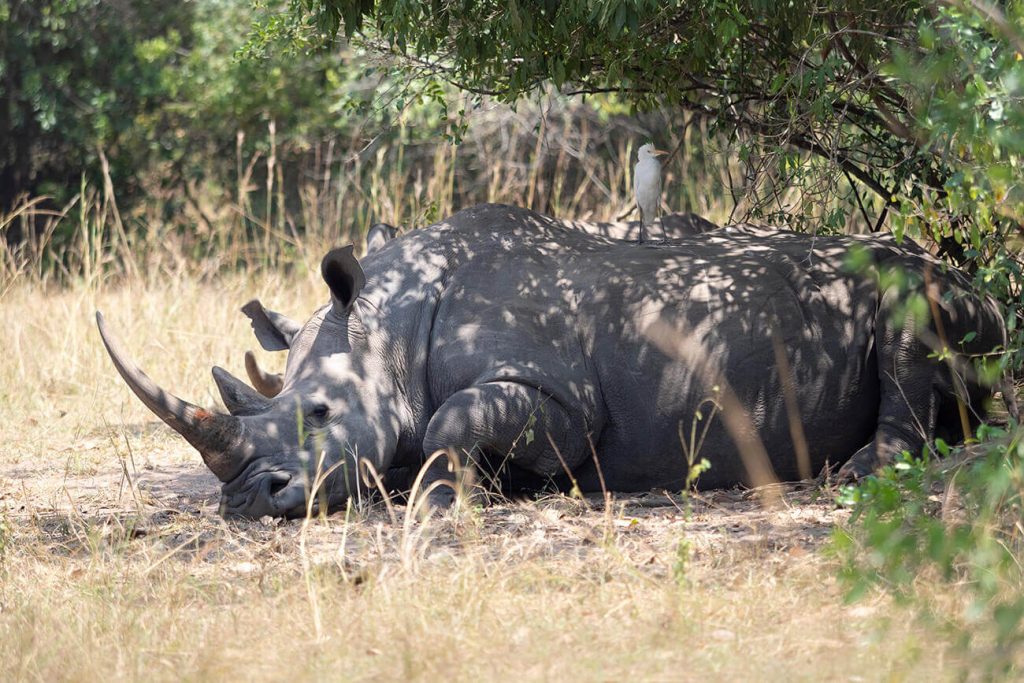
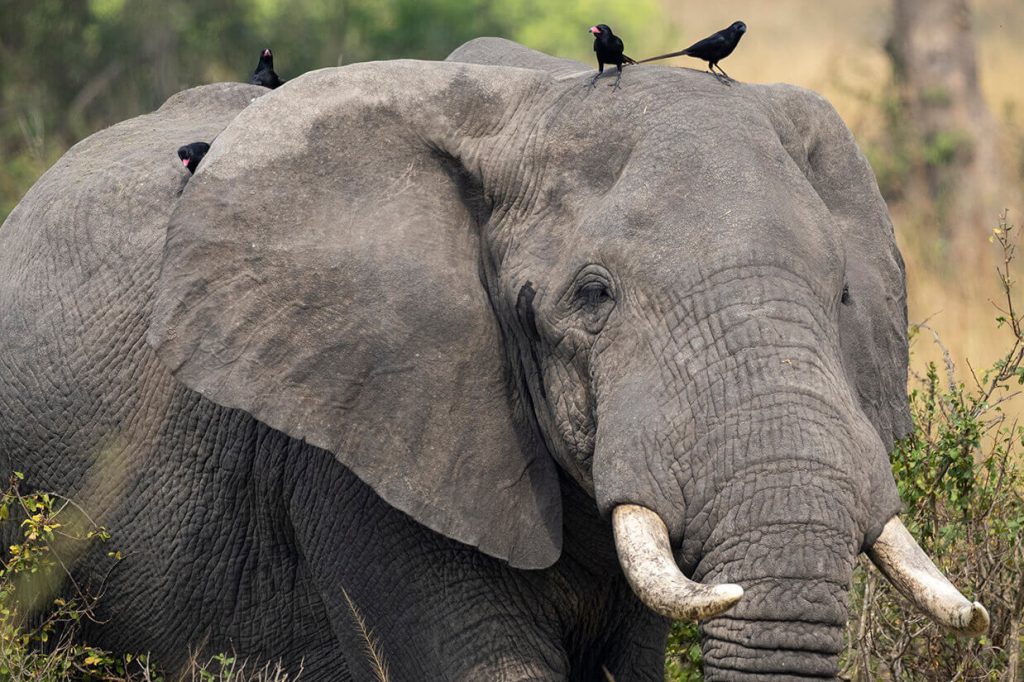
Queen Elizabeth National Park is the ultimate safari destination in Uganda. Some sections of this national park are considered among the best areas to see lions in the entire country. Moreover, along the Kazinga Channel, you’ll find the highest concentration of hippos in the world.
In short, Queen Elizabeth National Park is a must-visit on any trip to Uganda. It offers a unique opportunity to experience the thrill of wildlife safaris and to explore one of the most beautiful savannah landscapes in the Pearl of Africa.


How to Get to Queen Elizabeth National Park
The most common way to reach Queen Elizabeth National Park is by car. From the country’s capital, Kampala, the drive takes about 8 hours. However, the most usual route is to visit Queen Elizabeth National Park after doing a chimpanzee trekking experience in Kibale. From there, it’s about a 2-hour drive to the northern section of Queen Elizabeth National Park.
You can reach the park by renting a car (it is highly recommended to rent a 4×4 so you can also use it for the safaris); alternatively, you can rent a car with a driver. Finally, the most common and convenient option is to visit the national park as part of a tour organized by a local tour operator in Uganda.
The most budget-friendly way to get to Queen Elizabeth National Park is by public transport, specifically by bus. You’ll need to take a bus to Katunguru, and from there, catch a taxi or shared taxi to the park. Once you arrive, it’s easy to arrange a 4×4 vehicle with a driver through your accommodation for the safari drives (these usually cost between $100 and $120 per day).
Best Time to Go on a Safari in Queen Elizabeth National Park
Queen Elizabeth National Park is open all year round, and safaris can be done in any month. However, the best months to see wildlife are usually those with less rain — January, February, June, and July. The advantage of these months is that there is less vegetation, and animals tend to gather around water sources, making them easier to spot.
During the other months, it is still a good idea to go on a safari in Queen Elizabeth National Park, but you may encounter storms (especially in the afternoons), and some roads might become inaccessible due to the rain.


How Much Does a Safari in Queen Elizabeth National Park Cost?
For foreign visitors, the entrance fee to Queen Elizabeth National Park is $40. The ticket is valid for 24 hours. Additionally, there is a fee of 30,000 UGX per vehicle.
It is possible to do safaris in Queen Elizabeth National Park independently, but if it is your first time visiting, it is worth hiring one of the park guides available at the different park entrances. With their help, it is much easier to navigate the park and locate elusive animals such as lions. The cost of this service is $20.
Therefore, if you travel independently and add up all the expenses (park entrance, guide, car rental, accommodation, and food), the average cost of a safari for two people is around $240 in total.
If you travel with a local operator, you can find some options for about $300 per day for two people.
What to Do in Queen Elizabeth National Park (Uganda)
Queen Elizabeth National Park is normally associated with 4×4 safaris and lions, but within this conservation area, there are several other activities to enjoy. These are the three main activities you can do inside this famous Ugandan national park:
1. 4×4 Safari Through the Savannah
Going on a safari through the savannah of Queen Elizabeth National Park during the early morning or late afternoon hours is an exciting experience that often rewards visitors with memorable wildlife sightings. Elephants and buffaloes are quite abundant and are regularly spotted.
There is also a great variety of antelope species, including the Uganda kob, topi, and waterbuck. However, there are no giraffes or zebras in any part of this national park.
Regarding big cats, lions are the main attraction. In the Mweya Peninsula area (Kasenyi sector), it is common to see them at dawn as they patrol their territory searching for prey. In the southern part of the park, in the Ishasha sector, you can find the famous tree-climbing lions. These lions have adapted to climbing trees to sleep away from the bothersome tsetse flies. To see lions sleeping in the trees, it’s best to visit the park in the mid-morning.
There are also leopards in this national park, but spotting them requires very sharp eyesight and a lot of luck.
To learn more about the conservation work being done in Queen Elizabeth National Park, including efforts to protect lions and other wildlife, visit the Wildlife Conservation Society’s Uganda Program.


2. Boat Safari on the Kazinga Channel
One of the most impressive experiences to have in Queen Elizabeth National Park is a two-hour boat safari along the Kazinga Channel. This channel, which separates Lake George and Lake Edward, is one of the main water sources in the area and, especially during the dry season, attracts a large amount of wildlife.
During boat rides, hippo sightings are guaranteed. You can also see many different water birds, crocodiles, and with a bit of luck, spot groups of elephants cooling off in the channel.
Boat safaris depart from here and generally do not require prior reservation.
💡 Get a Free Quote for Your Trip to Uganda with Trusted Local Operators
If you’d like to plan your trip to Uganda with reliable local tour operators, I can help you connect with the best ones. Just fill out this quick form, and based on the type of safari you’re looking for, I’ll match you with the most suitable local agencies. I’ll also be available to answer any questions throughout the planning process — so your safari will be stress-free, authentic, and truly unforgettable!


3. Trekking to See Chimpanzees
Queen Elizabeth National Park is one of the areas in Uganda where you can see chimpanzees. Although chimpanzee trekking is more famous in Kibale National Park, here it is cheaper and usually less crowded. The downside is that the chances of spotting the primates are lower (chimpanzees are typically seen in about 60% of the treks).
The chimpanzee treks take place in Kyambura Gorge, home to 17 chimpanzees. The permit for this activity costs $50 per person and must be obtained in advance through the Uganda Wildlife Authority (if traveling with an agency, they usually handle the permit arrangements).

Where to Stay in Queen Elizabeth National Park (Uganda)
If you have enough time, it is advisable to spend three nights in Queen Elizabeth National Park. The first two nights (arrival day and after the first day of safari) are usually spent in the Mweya Peninsula area (north of the national park). Some notable accommodations in this area include:
After the second night, you can do a safari en route to the Ishasha sector in the south of the park. It’s worth spending the afternoon and the following morning trying to locate the tree-climbing lions. Some of the best-rated places to stay in this sector are:
- Enjojo Lodge
- Topi Lodge

My Experience: Safari in Queen Elizabeth National Park
Arrival at Queen Elizabeth National Park from Kibale Forest
With excitement running high after seeing chimpanzees in Kibale National Park, my guide came to pick me up at the end point of the trek, and we began the journey to Queen Elizabeth National Park. It was about a two-hour drive, leaving behind small rural villages.
A little before 4 p.m., I arrived at my accommodation, Buffalo Safari Lodge. Since I didn’t know exactly what time I would reach the national park—depending on how long the Kibale Forest trek took—I hadn’t scheduled any activities for the afternoon.
I spent the time enjoying the views over the Kazinga Channel and was able to see some buffaloes and elephants walking near the river.

Morning Safari in Queen Elizabeth National Park
I started my first day of safari in Queen Elizabeth National Park with great excitement and hope of seeing a lion. Accompanied by my guide, Twaha, I arrived at the park entrance, Katunguru Gate. It was 6:30 a.m., just as it opened.
The sun hadn’t risen yet, so it was a good time to look for big cats. We drove slowly along the trails in the Kasenyi sector with little success. The first few minutes were quite disappointing — basically, we weren’t seeing anything.
Shortly after, my guide received a call informing him that lions were being seen from the paved road crossing the park. We weren’t too far, so we headed there. We arrived just in time to see a lioness and her two cubs. However, they were quite far away and hard to spot, especially the cubs.

Nearby, there was a group of Uganda kob antelopes that hadn’t noticed the felines, and it seemed the lioness was preparing an ambush. She slowly approached, using the tall grass to camouflage herself. But when she was still far away, one of the antelopes spotted her. Without the element of surprise, a successful hunt would be impossible.
After that tense moment, the lioness stretched, and the cubs went to her. Then, three or four cars decided to ignore park rules (it’s forbidden to leave the trails) and went off-road to get closer to the lions. Obviously, I told my guide I didn’t want to do the same and preferred to leave and keep exploring the park trails. Maybe we would have better luck…


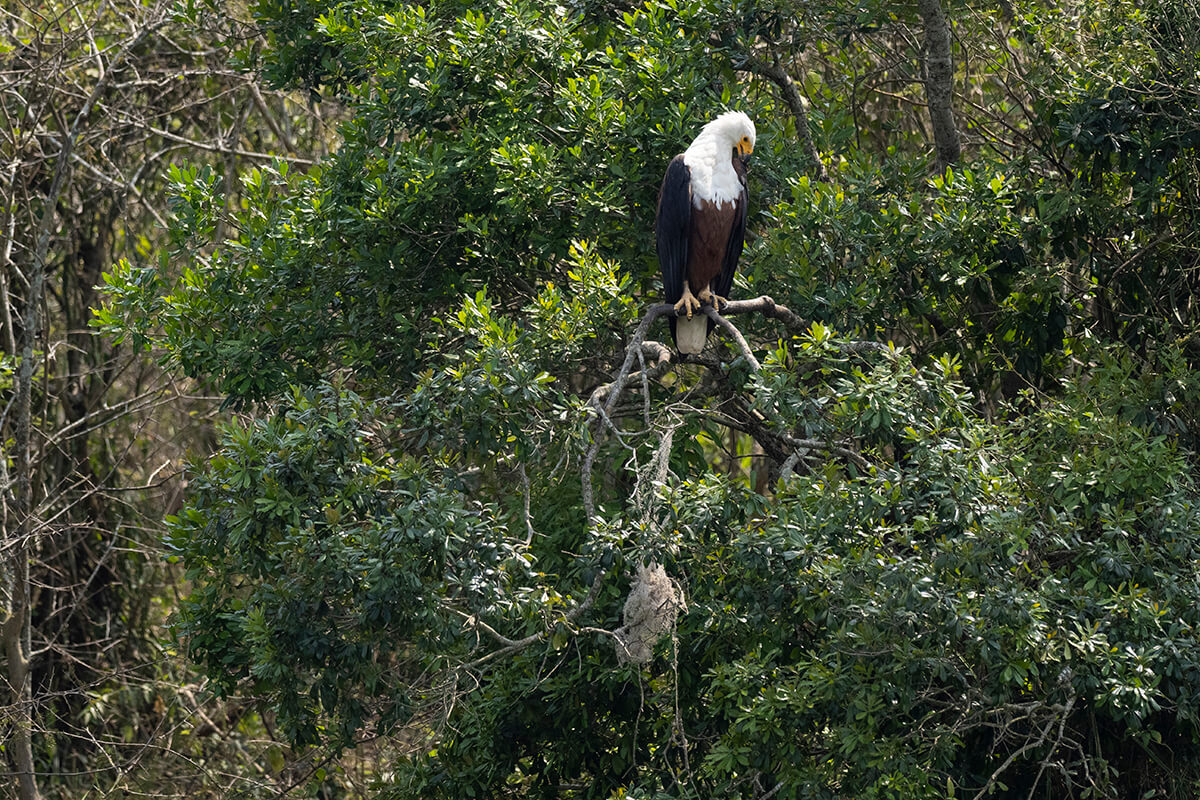
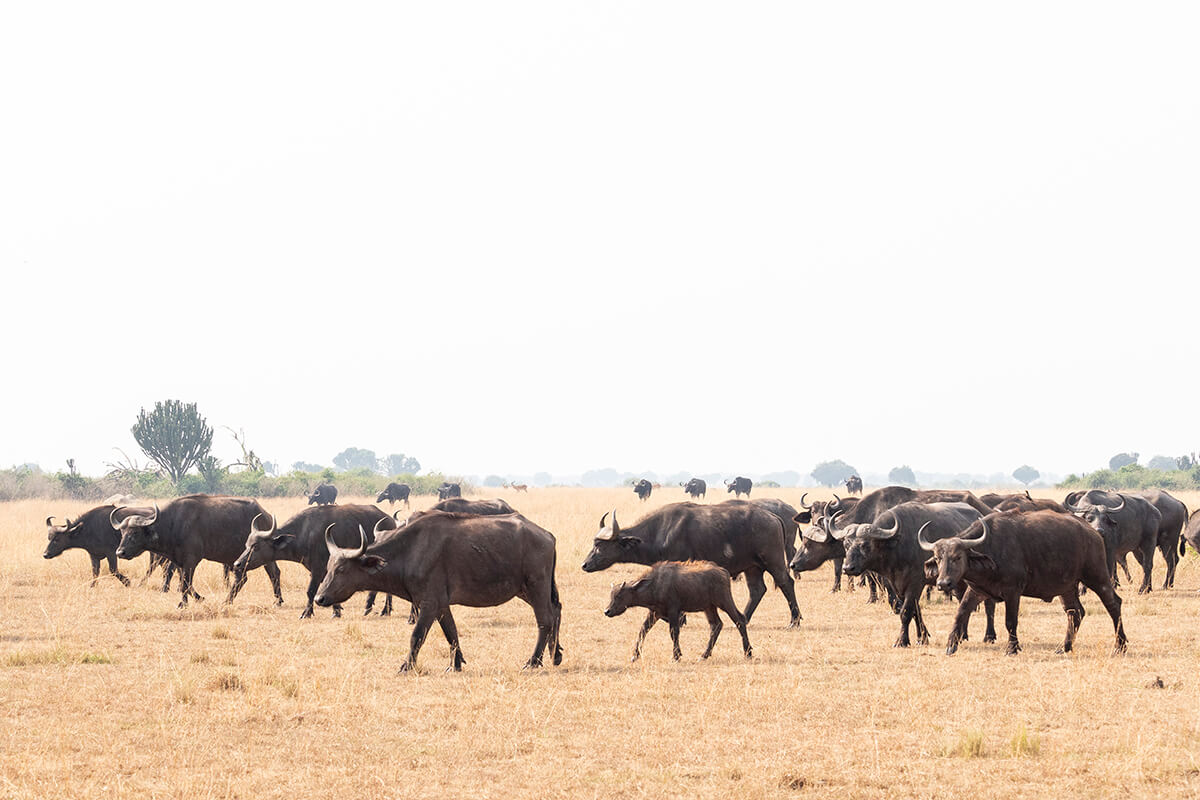
For the rest of the morning safari in Queen Elizabeth National Park, we didn’t see any more big cats. I was surprised by the low density of wildlife, but as we continued, we found more animals. I saw a large herd of buffalo and a huge elephant. Not far from there, there was a hooded vulture, two white-backed vultures, and a palm-nut vulture — all attracted by the carcass of an antelope. We finished the route on a trail very close to the Kazinga Channel, where I saw quite a few hippos.


Exploring Kazinga Channel by Boat
After a break for lunch at the lodge, just before 2 p.m., I headed to the Kazinga Channel area, where boats depart for safaris.
To be honest, I hadn’t researched much about this activity and wasn’t sure if it would be worth it. That’s why I was so surprised.


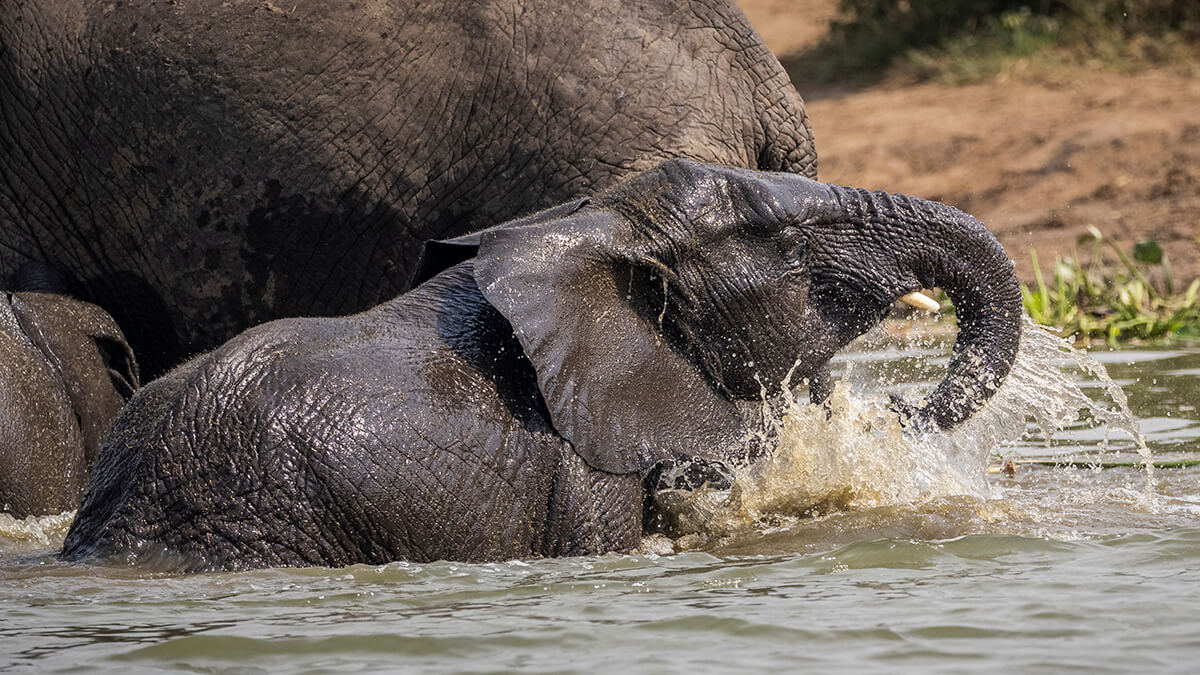
I was amazed by the number of hippos present. The best moment came when we found about twenty elephants eating, drinking, and bathing. It was a beautiful scene. Also nearby was a group of hippos, including some calves. Watching how these species interacted was very interesting.
We stayed about thirty minutes in the same spot, with the small boat’s motor turned off. It was one of the best moments of my visit to Queen Elizabeth National Park.



The Last Safari in Queen Elizabeth National Park
The boat safari on the Kazinga Channel ended shortly after 4 p.m. There were still a couple of hours of daylight left, and since we hadn’t had much luck with the morning game drive, Twaha suggested we take one last drive through the park.
We headed west to enter the park through Kabatoro Gate. On the way there, I caught sight of Lake Nyamanyuka, a lake formed in a volcanic crater.
Once inside the park, I noticed the vegetation was much thicker, making it harder to spot animals. The typical savannah of the Kasenyi sector was gone.
I managed to photograph a group of elephants, various bird species, and countless warthogs. Unfortunately, we didn’t have any luck spotting lions that afternoon.
We left the park as night fell after an intense day in Queen Elizabeth National Park. The first morning safari had been somewhat disappointing, but the boat trip on the Kazinga Channel had left me fascinated by this part of Uganda. Definitely a must-visit on any itinerary in the country.


Plan Your Trip to Uganda
🦍 Find the best trips and safaris to Uganda with a local operator here.
✈️ The best flight deals to Uganda here.
🏨 The best prices for accommodations in Uganda here.
🚑 Get your travel insurance with a 7% discount here.
💳 The best card for paying (without fees) and withdrawing money abroad here.