Taking a trip to Uganda lets you discover a destination of unique natural wealth on the African continent. Uganda is one of the best places in the world to see mountain gorillas in the wild. They are a critically endangered species, with only around 1,000 individuals left living freely.
But this country is much more than its mountain gorillas. On a trip to Uganda you also have the privilege of watching many other animal species. Such as the chimpanzees of the Kibale forests, the golden monkeys of the Virunga mountains or the tree-climbing lions of Queen Elizabeth National Park.
This 10 days Uganda safari showed me why the country is known as the Pearl of Africa. It is home to a great diversity of landscapes: savannahs, rainforests, lakes, extinct volcanoes and craters; and in every one of them you find exceptional wildlife. From Africa’s classic mammals to some of the most threatened primates on the planet. Add to that the friendliness and warmth of its people, and you have one of the most complete destinations on the continent.
Before You Start Your Trip to Uganda
📚 Organisation
How to get to Uganda
Most trips to Uganda begin at Entebbe International Airport, very close to the country’s capital, Kampala.
You can also combine a route through Uganda with some of its neighbouring countries, such as Rwanda or Kenya. But even then, the usual way to reach Uganda is still by plane.
How to get around Uganda
The best way to get around Uganda is in a 4×4 vehicle, especially if you want to go on safari. The country is not well set up for travelling efficiently by public transport.
If you want to travel independently, there are several companies that rent off-road vehicles, for example: Road to Africa or Rent a Driver Uganda. If you would rather not drive in the country, you can hire the car with a driver. Driving at night is not recommended.
Where to sleep
Near the national parks and other tourist areas of the country there is a good range of accommodation, with options for every budget. There is everything from simple tents with a bed inside to luxury lodges with plenty of comforts.
If you travel independently, you can book most accommodation through Booking.com. In other cases you need to book directly by email. A group of highly recommended places, with excellent value for money, are the Nature Lodges.
You can also sleep at the Uganda Wildlife Authority (UWA) campsites inside some of the national parks. In this case you need to bring all the camping equipment yourself. It costs around $6 per person.
Emergency numbers
The emergency numbers in Uganda are 112 and 999.
For consular emergencies, contact the embassy or consulate of your own country.
Vaccinations
Yellow fever is endemic in Uganda, which is why yellow fever vaccination is compulsory to visit the country.
Vaccines against hepatitis, tetanus and typhoid are also advised. And depending on the length of your trip, others such as rabies, polio or meningitis may be recommended. It is best to visit a tropical medicine centre a few months before the trip to get all the health information.
Malaria
On a trip to Uganda you also need to keep in mind that malaria exists in the country, and that in some areas it is quite widespread. So you should take every possible measure to avoid mosquito bites: a good repellent, a mosquito net, and light-coloured, long-sleeved clothing.
In most cases it is also advisable to take malaria prophylaxis medication. Again, it is best to consult a doctor at a tropical medicine or travel health centre.
SIM card
To have an internet connection during a trip to Uganda, you can easily buy a SIM card at the airport. Just after leaving the airport, turning left, there are three stands from different companies selling prepaid SIM cards: MTN, Airtel and Africell.
In general, Airtel and MTN have the best coverage. For me, 10GB cost 50,000 UGX.
Plug type
In Uganda the sockets are type G. You need to bring an adapter.
Plan your Uganda trip
Planning a 10 days Uganda safari? Start here
Now that you know how to get to Uganda, the next step is the route. Tell us your dates, interests and budget and receive a no-obligation proposal from local operators, without intermediaries.
🗺️ Geography
Language
The official languages of Uganda are English and Swahili.
Capital
Kampala
Visa
EU citizens need a visa to enter Uganda. At present it must be applied for online before arriving in the country. This is done through this website.
If you are only travelling to Uganda, you need to apply for the tourist visa. It allows you to stay in the country for a maximum of 3 months. It costs $50, paid by card when you submit the online visa application. Approval usually takes around 48 hours. It is advisable to apply one or two weeks before arriving.
If, besides visiting Uganda, you plan to enter Kenya or Rwanda, it is more efficient to apply for the East African Tourist Visa. This visa is valid for 90 days from the day of arrival, allowing you to move freely between Uganda, Kenya and Rwanda. It is important that you apply for this visa through the embassy of the first country you will visit. This visa costs $100.
Time zone
Uganda’s time zone is GMT+3 (two hours ahead of Central Europe, CET).
Climate
Uganda lies around the equator, so the temperature is very similar throughout the year. Daytime temperatures usually hover around 27 ºC. At night, the minimum temperature can drop to 15 ºC.
What you really need to take into account when preparing a trip to Uganda is the rainy season and the dry season. The dry season covers the months of June, July, August, December, January and February. And June and July in particular tend to be the driest months of the year.
However, rain is frequent all year round, so a waterproof jacket is essential in any month.
Other facts about the country
Uganda was a British colony until 1962, and people still drive on the left.
Agriculture is the main economic sector, with coffee exports as the main business. Tourism accounts for less than 10% of the country’s GDP.
Around 85% of the population is Christian. There is also a Muslim minority.
💰 Economy
Currency
The official currency of Uganda is the Ugandan shilling.
However, the tourist industry (payments to local agencies, national park entry permits, permits for primate trekking…) is dollarised. Many prices are quoted in dollars. In many cases you also need to pay in dollars (the notes must be dated after 2009).
Paying by card is not possible in many places.
Prices
Basic goods in Uganda are cheaper than in Europe. There is also some very cheap accommodation. However, national park entry permits, the permit for the mountain gorilla trek or the permit to see chimpanzees are more expensive. Costs are different for locals and foreigners.
To give you an idea of what prices are like, here are some examples:
- A set meal in a local restaurant: 18,000 UGX.
- A starter and main course in a hotel restaurant: 35,000 UGX.
- A bottle of water: 2,000 UGX.
- A litre of petrol: 5,300 UGX.
- National park entry permit (Murchison Falls, Queen Elizabeth…): 40 USD
- Chimpanzee tracking permit: 250 USD
- Mountain gorilla tracking permit: 800 USD.
- Golden monkey tracking permit: 60 USD.
If you book a safari tour with a local Uganda tour operator, everything is usually included (guide, vehicle, permits, meals and accommodation). Prices vary depending on whether you travel in a private vehicle or in a group, and on the number of people. In general, if you take a tour that includes gorilla trekking, the cost per day ranges between €200 and €300 (if you stay in standard-class accommodation).
Although the gorilla trekking permit is quite expensive, a large part of that amount goes towards the conservation and study of this highly threatened species.
If you want more detail on costs, you can read my post on the Uganda safari cost.
Tipping
Tips during a trip to Uganda are not compulsory, but they are expected. Especially when you are happy with the service you have received.
It is better to tip in local currency, that is, in Ugandan shillings.
Some indicative tipping amounts are:
- For the driver: between €10 and €15 per day and person.
- For the primate trekking guides: between €15 and €20 per person.
- Hotel staff: between €2 and €10 per day and person. (There is usually a general tip box for all the staff).
Haggling
In Uganda you need to master the art of haggling. The first price will always be higher, and people expect you to bargain.
Free quote
Permits, guide and vehicle: what will your trip cost?
Permits, vehicle and guide add up quickly. Tell us your dates and group size and receive a price directly from local operators.
✓ Local operators, no intermediaries
✓ Itinerary adapted to your budget
✓ Free and no obligation
👮 Safety
During this trip to Uganda I felt safe at all times. I think it is a country you can travel to with confidence, either with a local agency or independently.
The country’s main tourist spots are quite safe. So when travelling to Uganda, the most important thing to bear in mind is that there are some conflict-prone and risky areas in the country.
The Karamoja region (in the north-east), the border with the Democratic Republic of the Congo and the border with South Sudan are risk areas that should be avoided, as armed conflicts are still ongoing.
In addition, you should also be careful in the capital. Especially regarding robbery and theft.
Nevertheless, it is normal to travel around the country without any problems. Most risks can be avoided by following basic safety recommendations:
- Do not drive at night and avoid secondary roads.
- When travelling by road, keep the doors locked and the windows closed.
- If you go to the Jinja area, be especially careful when driving, as the roads are not in very good condition.
As always, before setting out on any route, it is worth reading your own government’s official travel advice for Uganda.
Best Time to Visit Uganda
Best time
January, February, June and July
January, February, June and July are the best months to enjoy a trip to Uganda, above all because of the weather. These months coincide with the dry season. Since it doesn’t rain much, conditions for trekking to see mountain gorillas and chimpanzees are especially good. In addition, the vegetation is less dense and it is easier to spot wildlife on safari.
High season
June to September
The high season in Uganda coincides with some of the months with the best weather (especially June to August). Although these are the months with the most foreign tourists, no area tends to get overcrowded. That said, you need to book gorilla permits in advance (ideally 6 months), as they are usually in very high demand.
Low season
March, April, May, October and November
The low season in Uganda coincides with the rainy months. During this period the roads are in worse condition and the trekking routes to see primates are also more difficult. This means the number of tourists drops considerably, and some of the lodges close for some of these months.
Good weather
June, July, August, January and February
These are the dry-season months. It usually rains far less, which makes it the best time to go trekking to see mountain gorillas. It is also a very good time to try to see chimpanzees in the Kibale forests.
In addition, since it is hotter and rains little, animals tend to gather around water. And it is usually easier to see the big cats.
Less favourable weather
March, April, May, October and November
During the rainy season, storms are usually the big drawback. Some areas of the national parks become flooded and the terrain on the trekking routes is often muddy. It is also harder to find the mountain gorilla families on rainy days.
The advantage of these months is that the vegetation is at its best, and it is also an ideal period for birdwatching. As it is low season, prices are more competitive.
10 Days Uganda Safari: My Experience
While preparing this trip to Uganda, my initial idea was to rent a car with a driver. I thought it would work out a little cheaper, and I would also have more freedom. However, after crunching the numbers I saw that, travelling alone, the price local agencies offered me for a 10-day trip to Uganda was very similar to what it would have cost me to go independently with a driver.
So in the end I chose to book the trip with a local agency. I was able to fully customise the itinerary, and so organise the route through the country that I had in mind. The advantage is that they took care of all the accommodation bookings and also the various permits for the primate trekking.
For me, the priority of the trip to Uganda was to see chimpanzees and mountain gorillas. Two of the nature experiences I had always dreamed of. I also wanted to include a route to try to see golden monkeys in Mgahinga Gorilla National Park, in the Virunga mountains area. These mountains are where Dian Fossey carried out her studies on mountain gorillas, and she was key to the conservation of this species.
So I would start the trip to Uganda by going from Entebbe, near the capital, to Murchison Falls National Park. On the way, I would be able to visit an inspiring rhino reintroduction project in Uganda: the Ziwa Rhino Sanctuary.
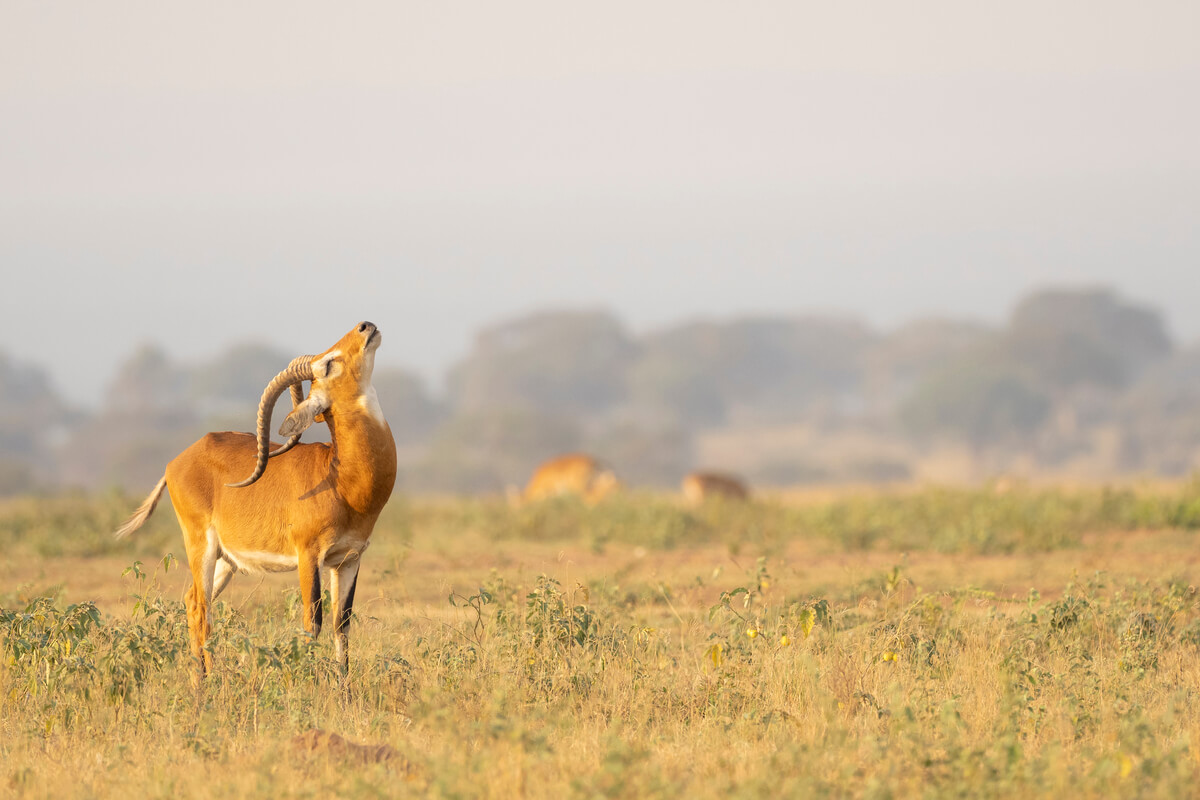
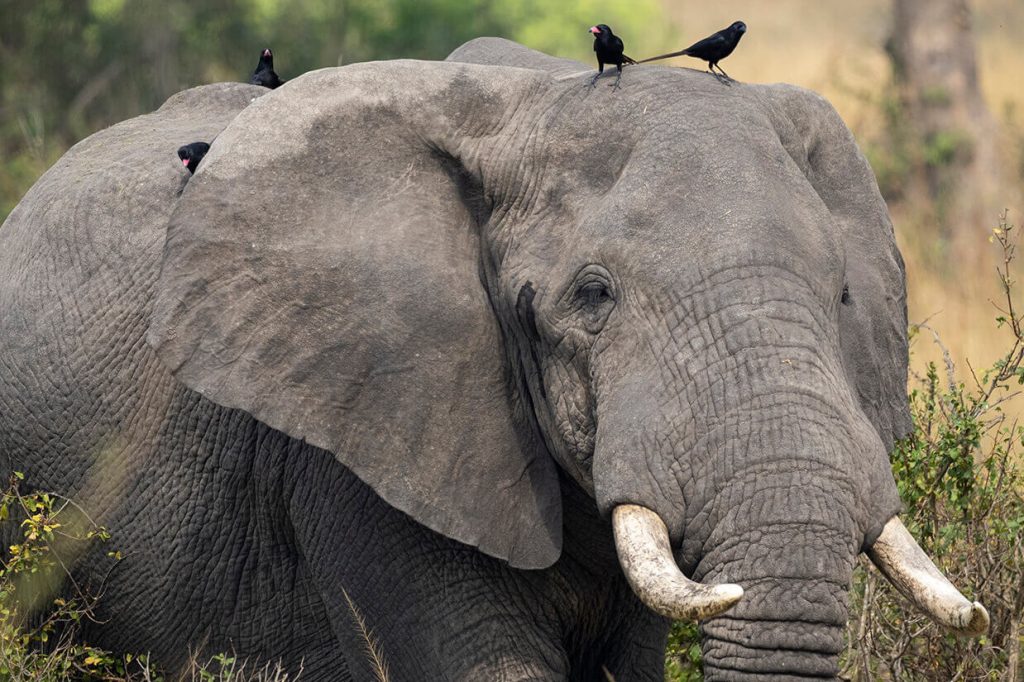
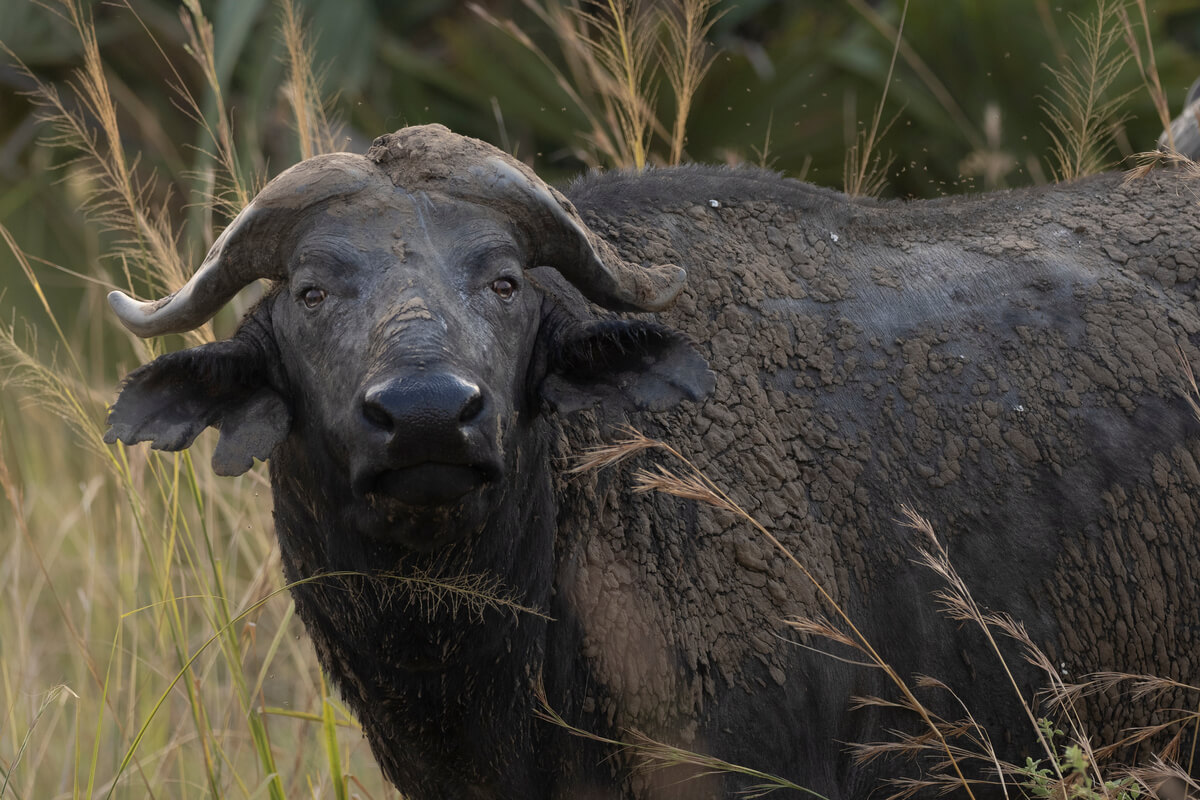
In Murchison Falls National Park I would be able to go on the first safaris of the route. It is one of the best areas in the country to see elephants, giraffes, buffalo and, with a bit of luck, lions and leopards. There you can also see one of Uganda’s most beautiful waterfalls: Murchison Falls.
I would continue the route towards Kibale National Park. There one of the most magical experiences in Uganda awaited me: a trek to see chimpanzees.
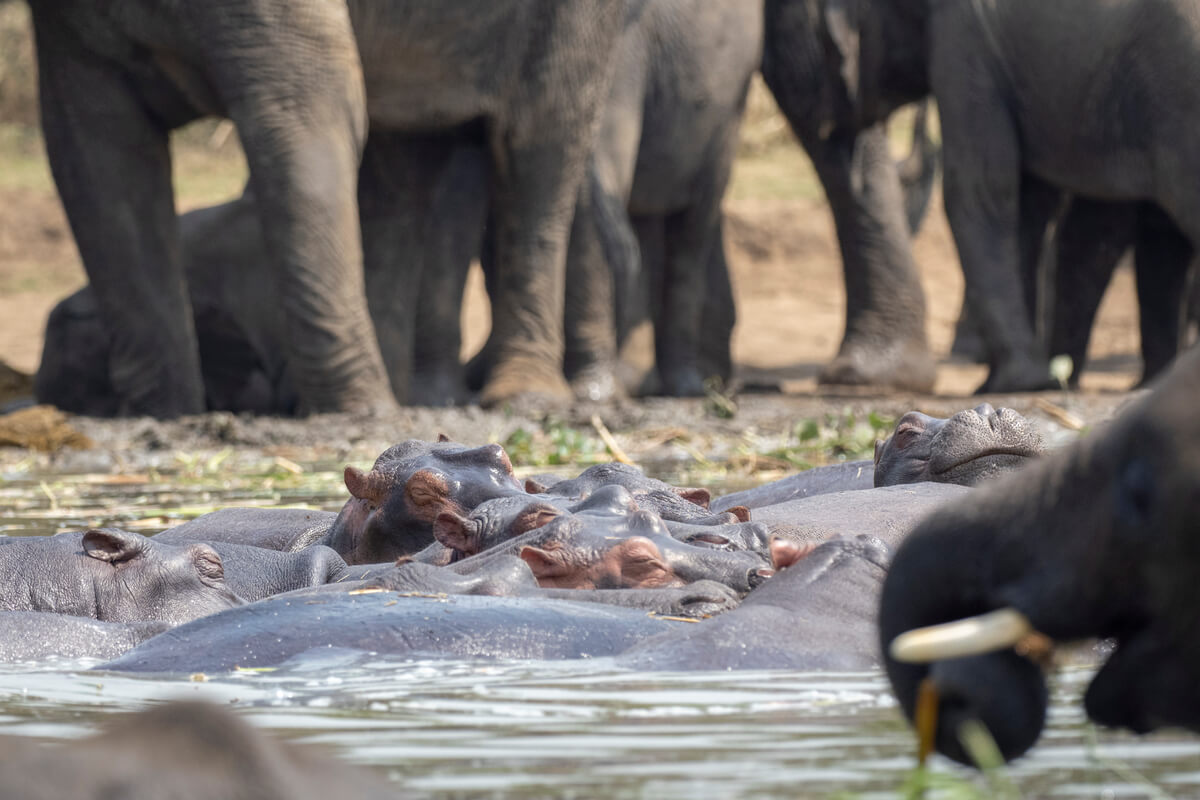
From there, I would head south to Queen Elizabeth National Park. This park is famous for the Kazinga Channel, home to one of the largest hippo populations in Africa. In addition, in the Ishasha sector, there is a pride of lions that have developed the habit of climbing trees.
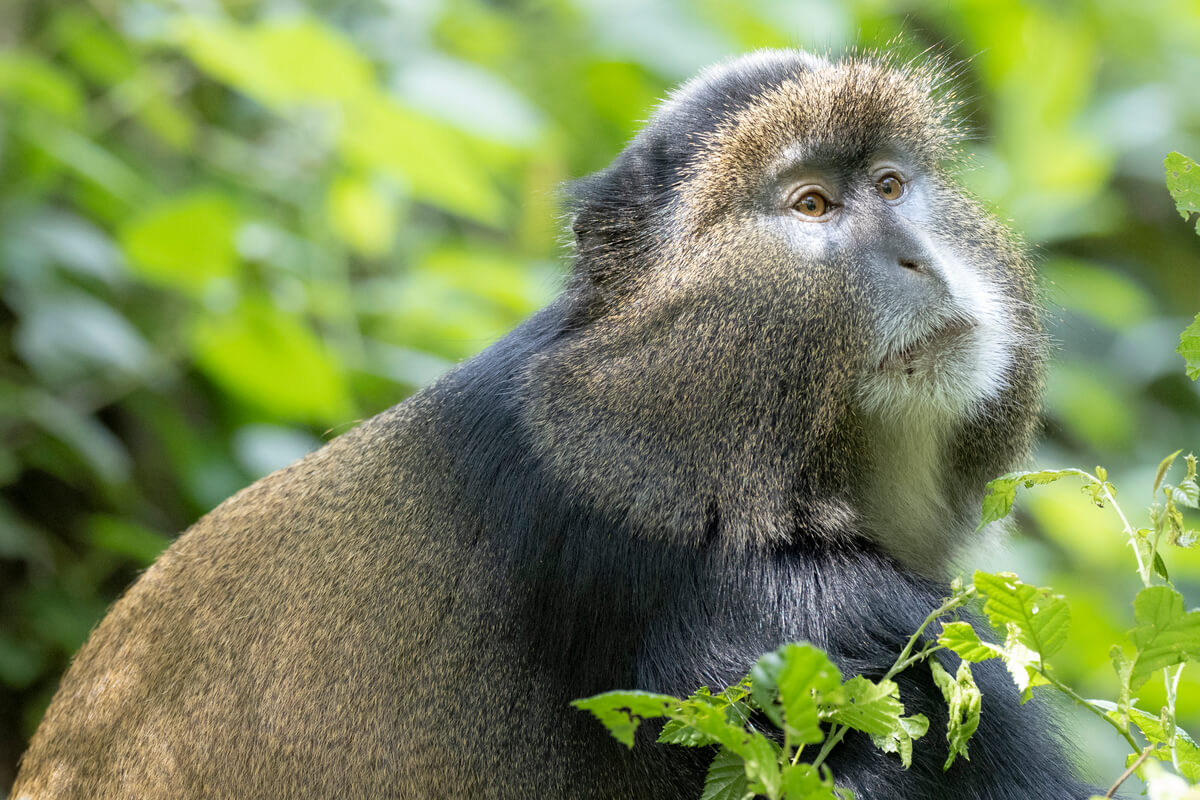
The next stop on the trip to Uganda would be the high point of the route: a trek to see mountain gorillas in Mgahinga Gorilla National Park. A dream come true. The following day, I would try to observe golden monkeys, a species endemic to the Virunga massif.
And to finish the route, I would spend half a day at Lake Bunyonyi, before heading back to Entebbe.
Uganda Trip Notebook
- TRAVEL DATES: 5 to 15 February 2023.
- TYPE OF TRIP: Solo trip with a local agency. Road trip.
- GETTING TO THE COUNTRY: Flight from a major European city to Uganda (Entebbe International Airport) with Kenya Airways, with stopovers in Amsterdam and Nairobi.
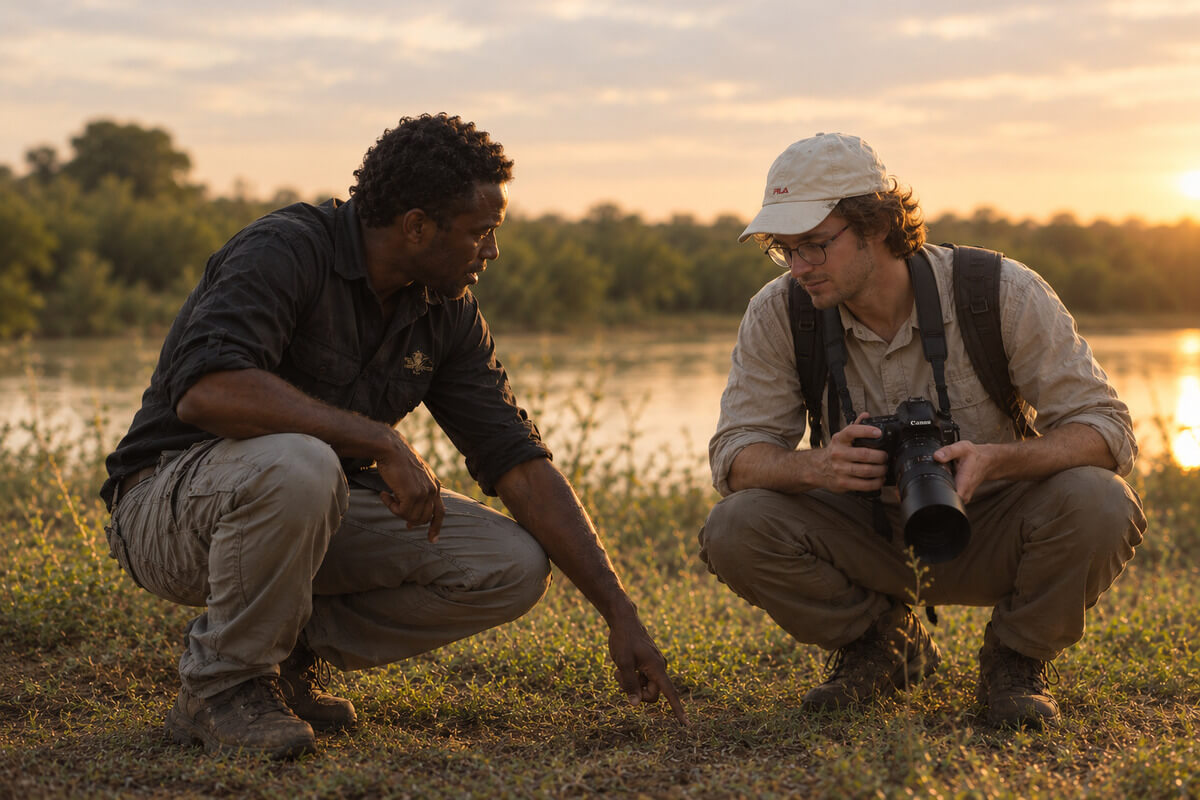
- GETTING AROUND: I travel around Uganda in an SUV van, driven by one of the agency’s guides: Twaha.
- ACCOMMODATION: Although I requested simple accommodation, to bring down the price of the trip, because I was travelling to Uganda in the low season, they ended up offering me better places than the ones I had booked. This is the list of lodges where I finally slept:
- 🏡 ViaVia Entebbe: Accommodation in the town of Entebbe, about fifteen minutes from the airport. The rooms are simple, but the restaurant serves good, inexpensive food. In addition, you can see many birds in its gardens. 1 night. Rating: ⭐⭐⭐⭐⭐
- 🏡 Tilenga Safari Lodge: One of the best lodges of the trip. It is in the north of Murchison Falls National Park, 1.7 kilometres from the entrance (Tangi Gate). It is a very new lodge, only 1 year old, and is owned by the local community. 2 nights. Rating:⭐⭐⭐⭐⭐
- 🏡 Kibale Forest Camp: A very good option for sleeping near Kibale National Park. The tents are very spacious and clean, with comfortable beds. In the gardens of the lodge you can see several species of monkeys. 1 night. Rating:⭐⭐⭐⭐⭐
- 🏡 Buffalo Safari Lodge: A good option for sleeping about 10 minutes from the entrance gate to Queen Elizabeth National Park. It is very close to the Kazinga Channel, so at night hippos or elephants sometimes come close to the lodge. 2 nights. Rating: ⭐⭐⭐⭐⭐
- 🏡 Mutanda Lake Resort: Although it is about 30 minutes from the centre of Kisoro, and getting there means taking a rather slow dirt track, the location of this accommodation is exceptional. It sits beside Lake Mutanda, with great views of the Virunga massif. 1 night. Rating: ⭐⭐⭐⭐
- 🏡 Travellers Rest Hotel: One of the accommodations in Uganda with the most history. Dian Fossey and George Schaller, two key figures in mountain gorilla conservation, stayed here. 1 night. Rating: ⭐⭐⭐⭐⭐
- 🏡 Heritage Lodge Habuharo: Accommodation on a small island in Lake Bunyonyi. It is ideal for relaxing for an afternoon or a day after the intense days spent watching mountain gorillas. 1 night. Rating: ⭐⭐⭐⭐⭐
- 🏡 Frontiers Hotel: A simple, inexpensive hotel with an excellent location near the airport. They offer free transport to the airport. Rating: ⭐⭐⭐
Day by Day on the 10 Days Uganda Safari
DAY 1: The Trip to Uganda Begins
After two stopovers and almost 24 hours of travel, I arrive in Uganda mid-morning. I meet Twaha, the guide from the local agency who will accompany me throughout this itinerary.
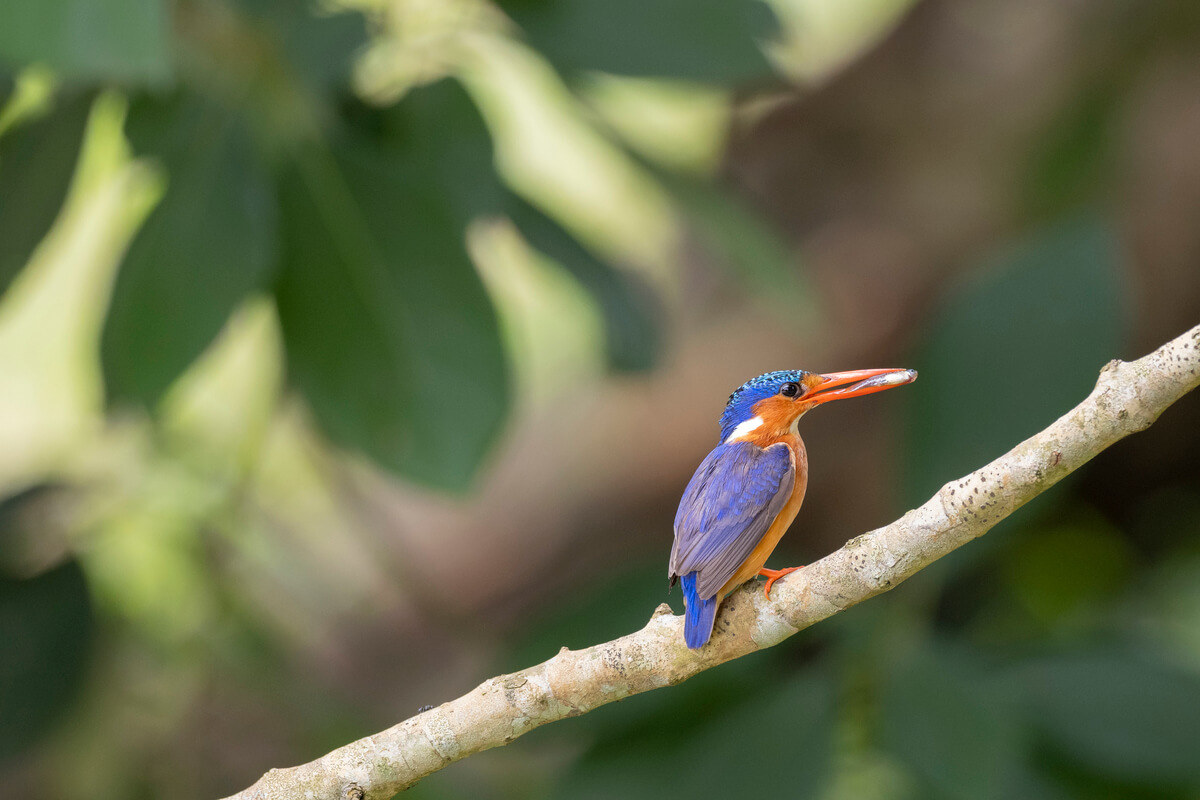
Since the journey to Murchison Falls is quite long (about 7 hours), I prefer to stay in Entebbe to rest. I stay at the Viavia Entebbe hotel. This accommodation is simple, but very quiet and perfect for birdwatching. It has large gardens and two small ponds that attract many bird species. I spend a good part of the afternoon identifying and photographing them.
Even though it is the dry season, a big storm hits in the afternoon. Short but intense.
📚 Post for the first and second day: The Ziwa Rhino Sanctuary in Uganda
Day 2: The Ziwa Rhino Sanctuary
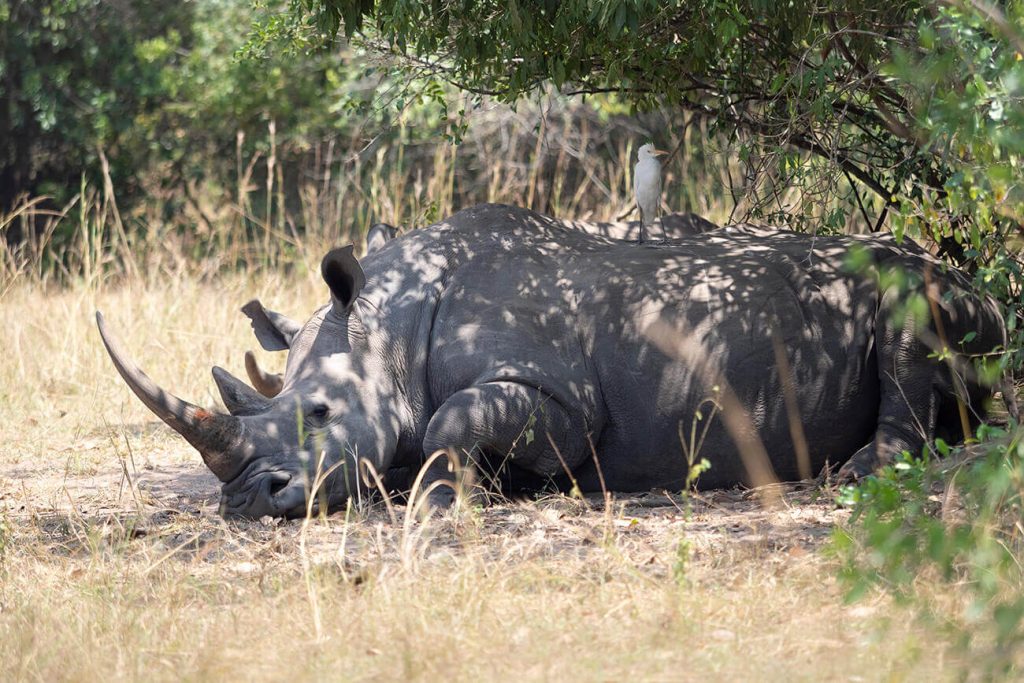
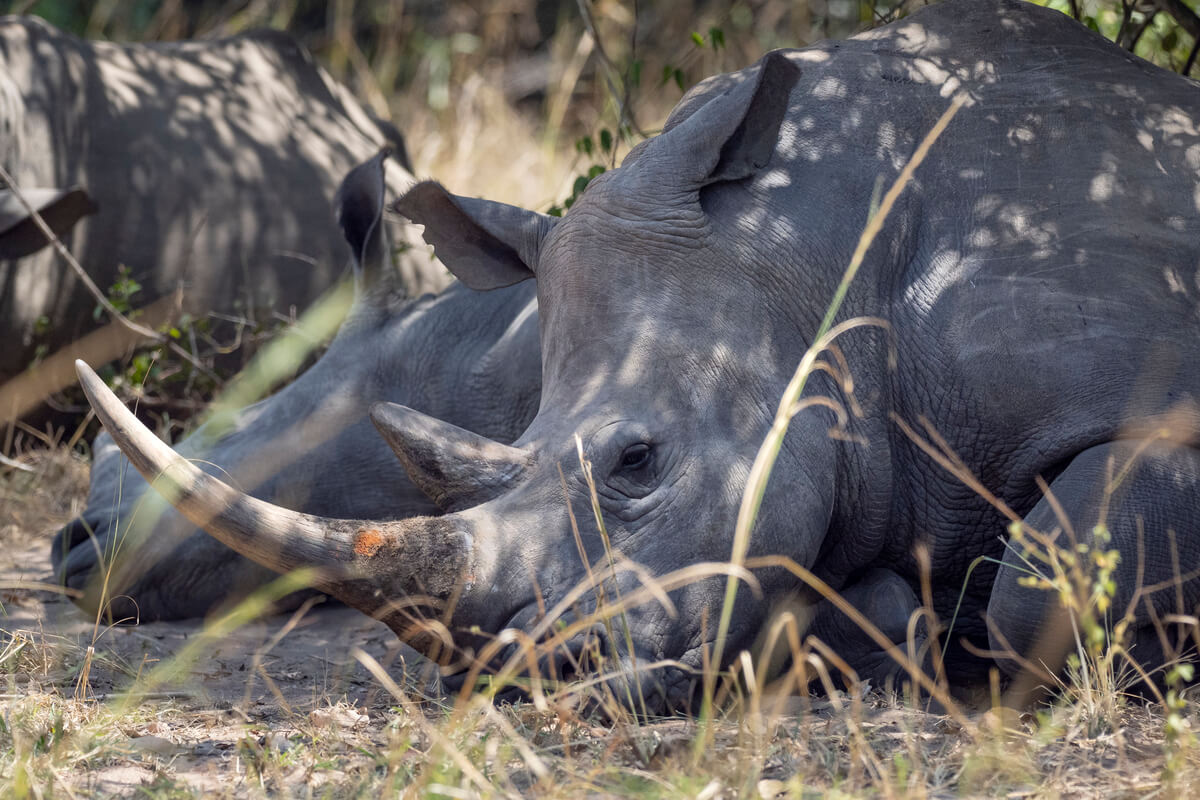
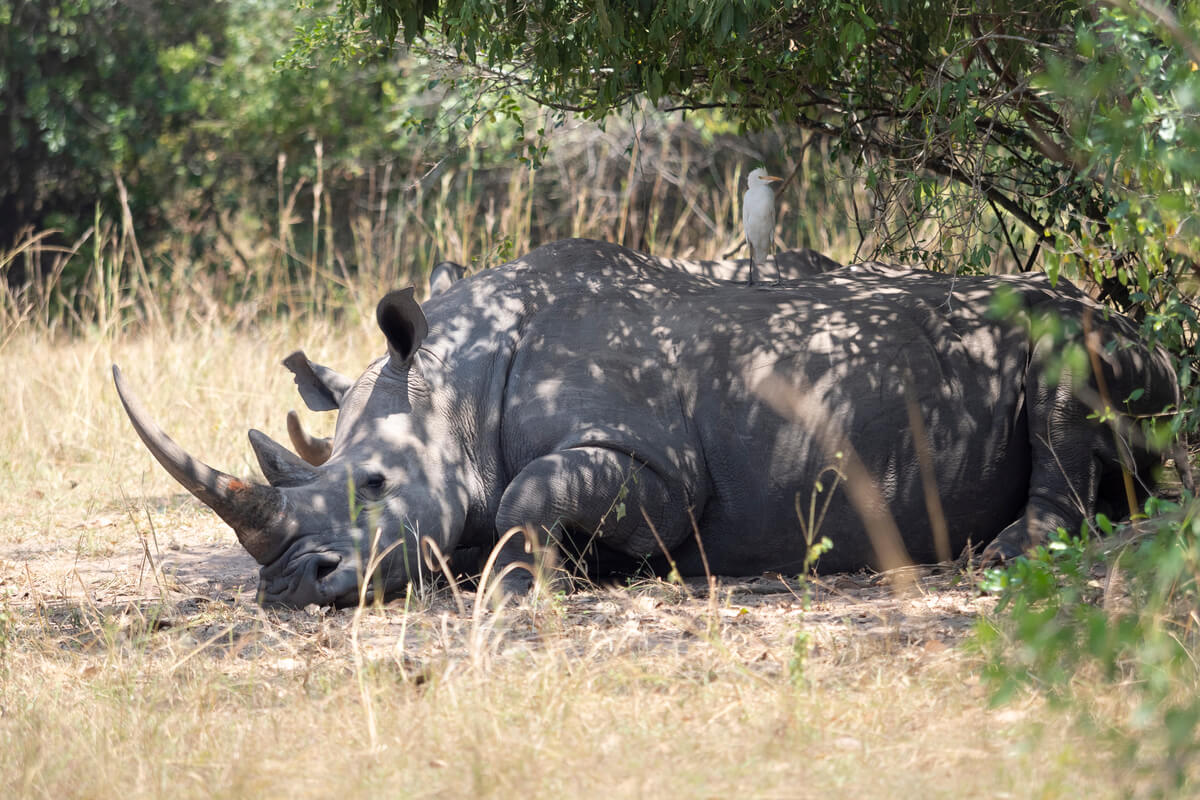
At last I get going and begin the route through Uganda. After about 4 hours in the car, I reach the first stop of the day: the Ziwa Rhino Sanctuary. This reserve, run by the Uganda Wildlife Authority (UWA), is the only place in Uganda where you can see rhinos. They live in semi-freedom. The aim of this programme is to reintroduce them into the national parks, where they became extinct at the end of the last century.
The experience of seeing rhinos in this reserve is special because you approach them on foot. It is also a good way to financially support this important conservation project.
At midday, we continue the journey to Murchison Falls National Park. About 3 more hours by car. At the end of the drive, along the road that crosses the park, I already see the first elephants, giraffes and antelopes. How I had missed the African savannah!
📚 Post for the first and second day: The Ziwa Rhino Sanctuary in Uganda
Day 3: Murchison Falls National Park
I start the day early, going on safari in the northern part of Murchison Falls National Park. It is savannah territory, with endless plains, and a great variety of wildlife can be seen. As the sun begins to rise I spot a group of hyenas scanning the area for carrion. The following hours are a spectacle. We find Uganda kobs, hartebeest, warthogs, elephants, giraffes… Going on safari is always thrilling.
After lunch, I do one of the park’s star activities: a boat trip on the Nile to the foot of Murchison Falls. The trip lasts about 3 hours. Although the view of the waterfall is somewhat disappointing, the trip along the river is fantastic. I see crocodiles, hippos, a great variety of water birds and even a group of elephants.
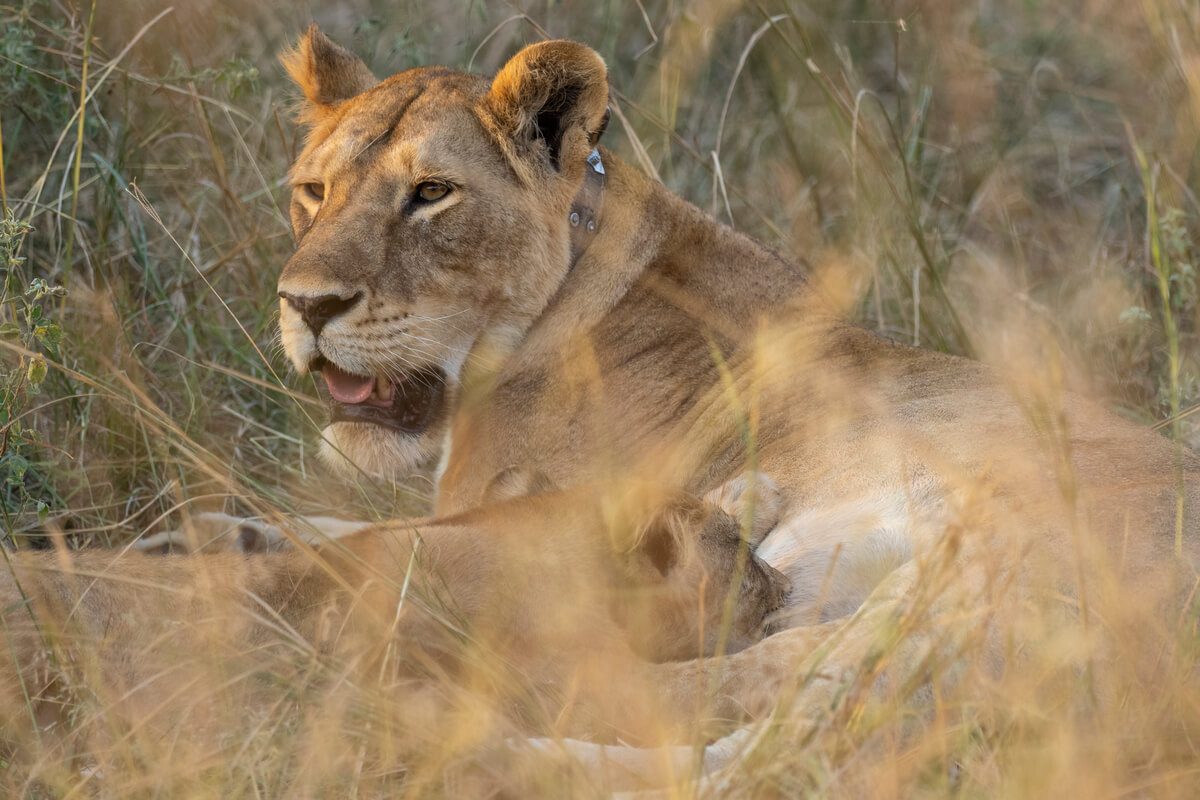
To finish the day, my guide suggests another safari until sunset. We want to find a lion. After many turns, and just as the park’s closing time approaches, we find the grand prize: a beautiful lioness and her cub. It is a magical scene, but unfortunately I can only enjoy it for a few minutes. We must follow the park rules and leave before dark.
📚 Post for the third day: Murchison Falls National Park, Uganda
Day 4: The Top of Murchison Falls and the Transfer to Kibale Forest
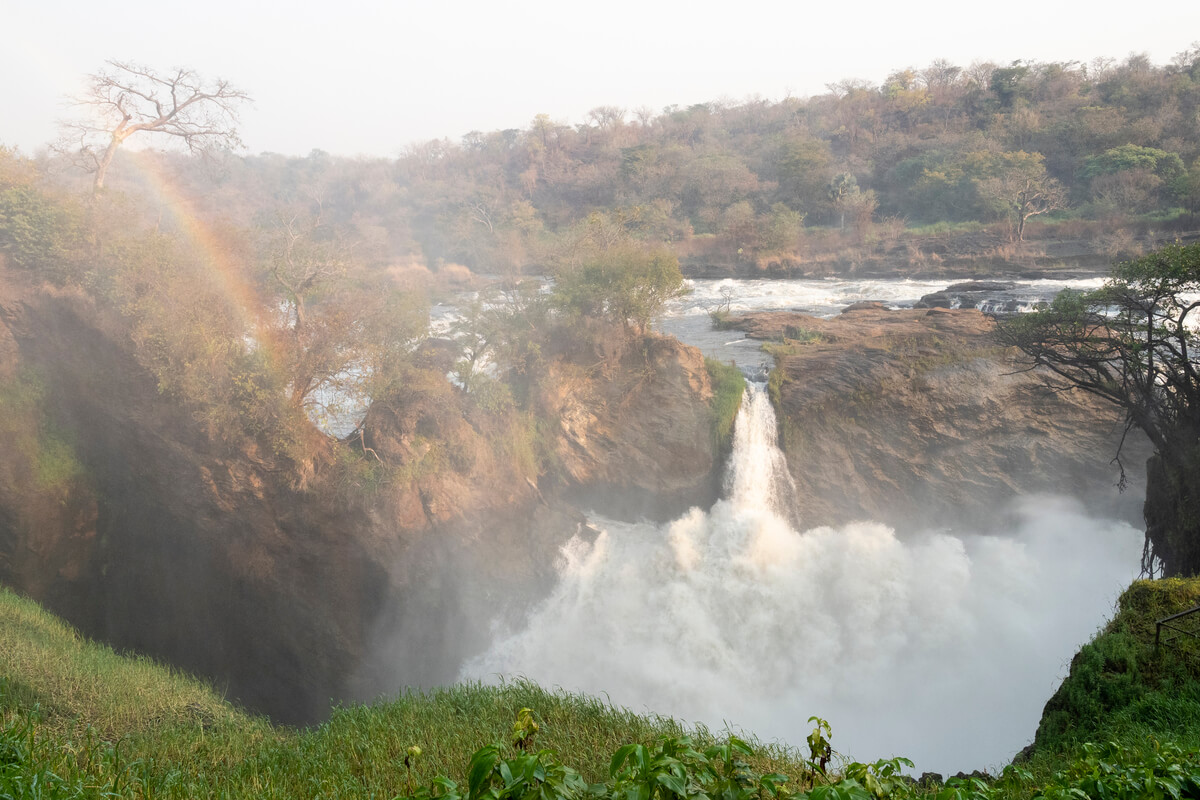
Murchison Falls is considered the most powerful waterfall in the world. 300 m³/s of water pour through it. One of the best views of this waterfall is from the top of the river. It used to be possible to climb up on foot during the boat trip on the river, but the path has now been destroyed. So to get there, you need to drive about 15 kilometres.
I arrive at the top of the falls just as the sun is rising. There is nobody else. And I am captivated by the landscape. The water falls with brutal force, and thanks to all the spray it throws up, a rainbow forms.
With that great moment I say goodbye to Murchison National Park. A long drive awaits me, about eight hours, to reach Kibale National Park. Once I get to the lodge, the Kibale Forest Camp, I take the opportunity to walk around the gardens a little. I am lucky enough to come across a group of red colobus and black-and-white colobus monkeys.
📚 Post for the fourth and fifth day (morning): Seeing chimpanzees in Kibale Forest National Park, Uganda
Day 5: The Chimpanzees of Kibale National Park
One of the most anticipated days of the trip to Uganda arrives: the chance to see wild chimpanzees in Kibale National Park.
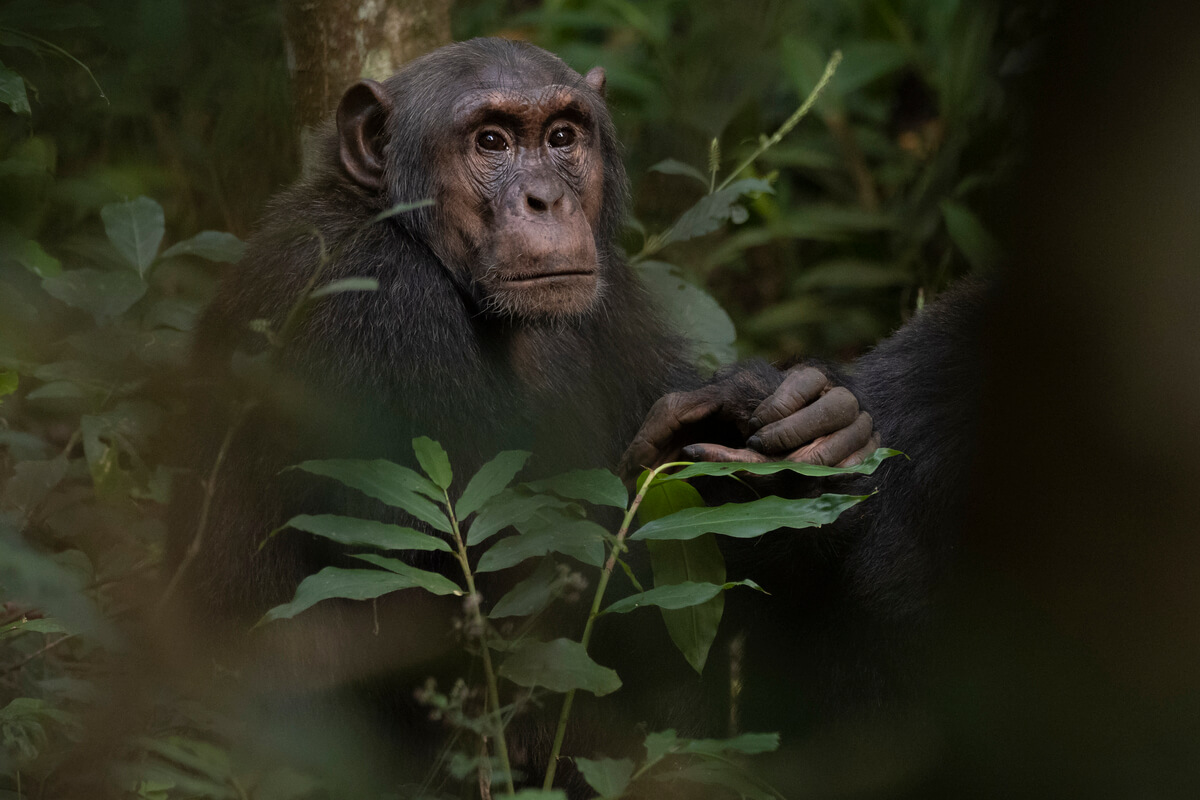
To have a more complete experience, I will do the habituation experience. In this activity, you look for a group of chimpanzees in the process of becoming habituated to humans, and once found, you spend 4 hours with them.
Still in the half-light, around seven in the morning, I join the group and, following the national park guide, we set off. The first thing is to find out where the chimpanzees are. It isn’t too hard to locate them by their calls. Then, through the forest, it is time to find them.
The moment I see the first chimpanzee is magical. He is lying on the ground, watching us. The next four hours are unforgettable. I see the chimpanzees eating, climbing trees, screaming, grooming each other…
It is one of the most incredible experiences of the trip to Uganda.
At midday, once we are back at the park entrance, I get in the car to go to Queen Elizabeth National Park. It is a journey of about two and a half hours.
📚 Post for the fourth and fifth (morning) day: Seeing chimpanzees in Kibale Forest National Park, Uganda
Day 6: Queen Elizabeth National Park
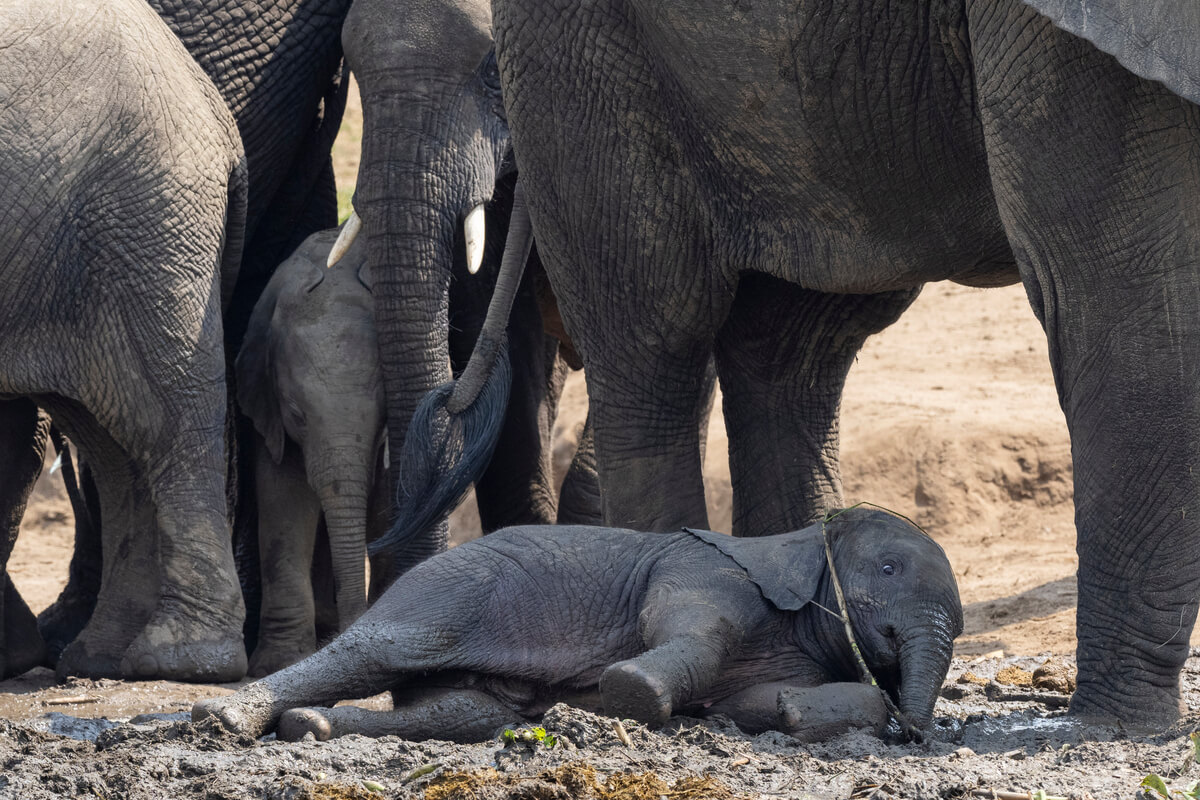
Queen Elizabeth National Park is one of Uganda’s other best-rated natural areas for going on safari and seeing a large amount of wildlife. This national park is crossed by the Kazinga Channel, where you can take boat trips to see hippos, crocodiles, elephants or buffalo. This channel has one of the highest densities of hippos in Africa.
I start the day by entering the park first thing, to go on safari and try to see a pride of lions while they are still on the move. Although I see a lioness and her two cubs, they are very far away and we quickly lose them in the vegetation. For the rest of the morning we drive along the various tracks that run through the park’s savannah. I see an elephant or two and a fairly large herd of buffalo, but I am disappointed by how little wildlife I see. Because of the heat and the lack of water, most animals gather in the areas near the channel.
At midday, however, I am amazed by the boat trip on the Kazinga Channel. I see lots of hippos up close, and also a large group of elephants bathing and drinking in the channel.
There are still about three hours until dark, and my guide suggests going out on safari again. Maybe we will have more luck. We cover a few areas in the north of the park, but without much success. The highlight of the afternoon is a group of four elephants.
📚 Post for the fifth (afternoon) and sixth day: Safari in Uganda’s Queen Elizabeth National Park
Mountain gorillas
Want to meet the mountain gorillas?
Next, my route heads to the Virunga massif for the gorillas. Tell us your dates and what you would like to see, and local operators will adapt the route and handle the permits.
Day 7: Transfer to the Virunga Massif
When planning a trip to Uganda, you must bear in mind that the distances between some of the national parks are long, and that there may be days when you spend most of the day in the car.
I leave the Buffalo Safari Lodge around eight in the morning, heading for Mgahinga Gorilla National Park . This national park, the smallest in the country, is one of the places where mountain gorillas can be seen. Although it is not the most famous (Bwindi National Park is much more popular), for me it has two very special things. On the one hand, it is part of the Virunga volcanoes massif, the territory where people began to study mountain gorillas and to fight for their conservation. In addition, in this national park you can see the mountain gorilla family with the most silverback males. Specifically, there are three.
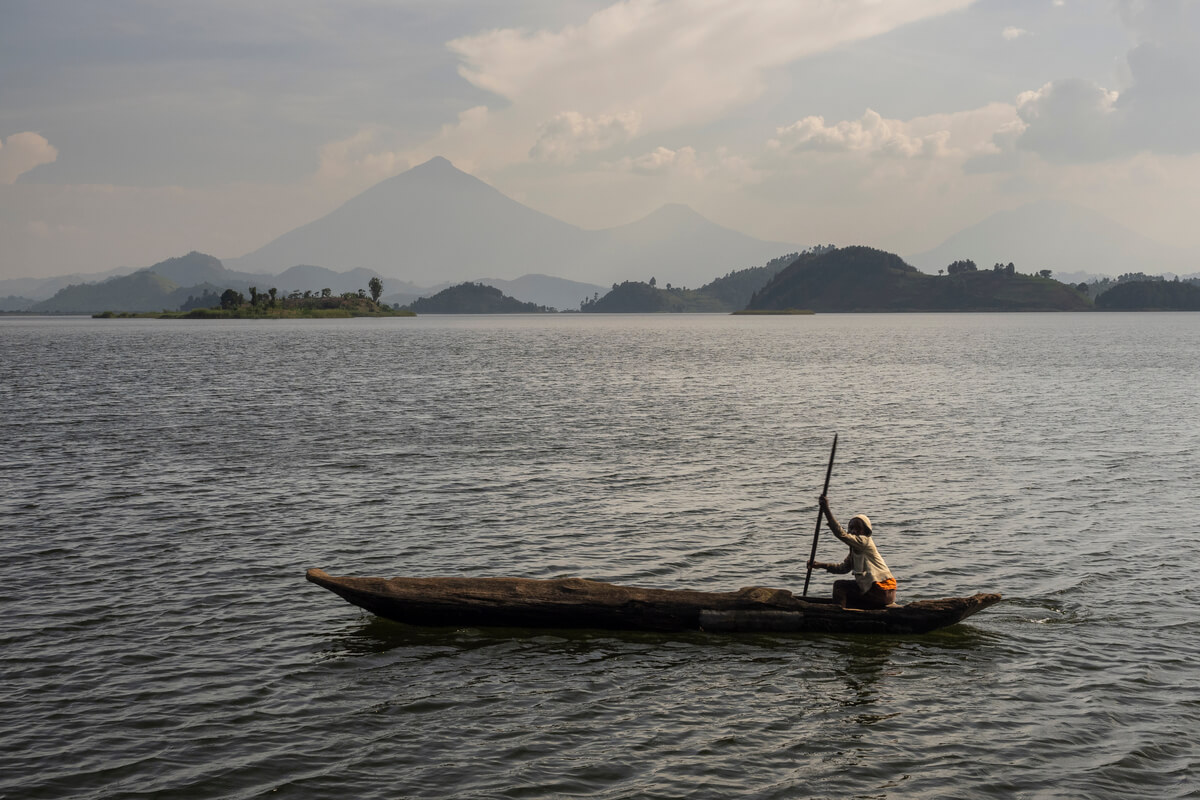
Around four in the afternoon, I arrive at a lovely lodge beside Lake Mutanda, the Mutanda Lake Resort. From there I enjoy an excellent view of the three mountains of Mgahinga Gorilla National Park: Muhavura Volcano, Mgahinga Volcano and Mount Sabyinyo.
📚 Post for the seventh and eighth day: Gorilla trekking in Uganda (Mgahinga Gorilla National Park)
Day 8: The Mountain Gorillas of Mgahinga National Park
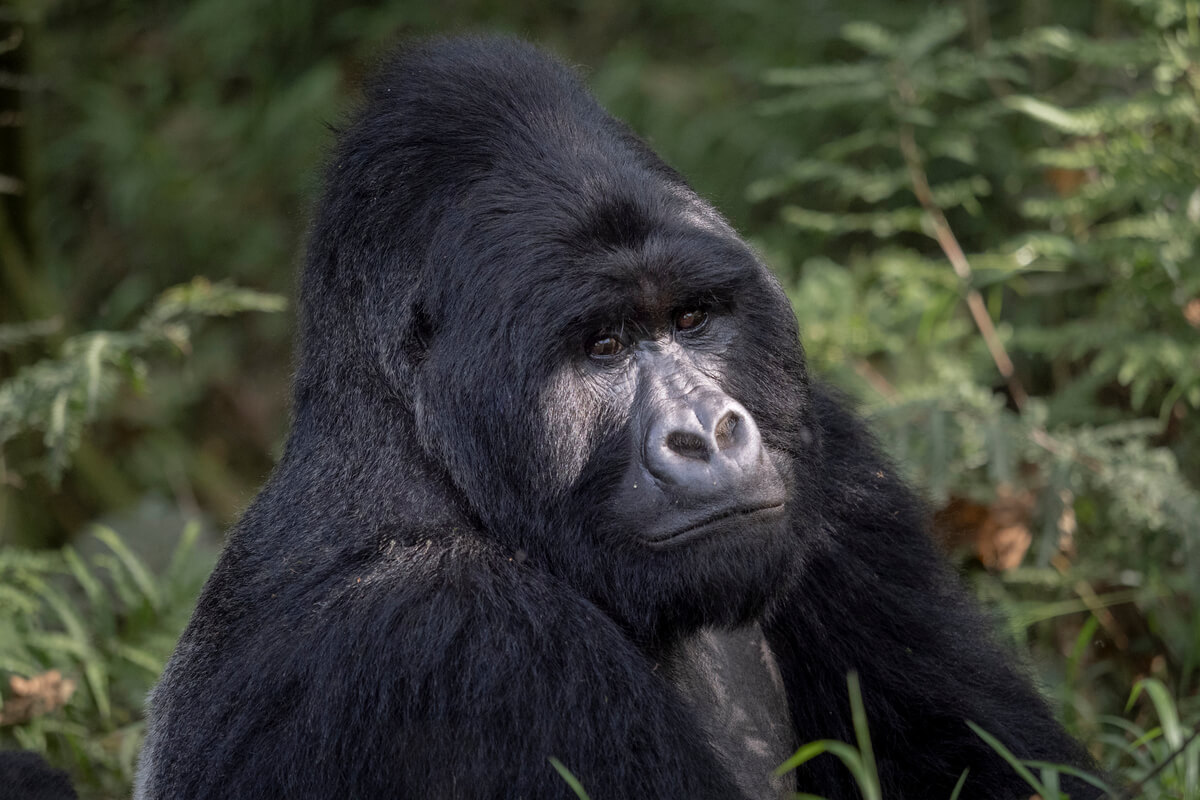
The day has come to fulfil one of my dreams. The main reason for making this trip to Uganda. Today is the day when, if all goes well, I will spend an intense hour with a group of mountain gorillas.
At 7:30, I arrive at the entrance gate of Mgahinga Gorilla National Park, specifically the Muhabura Gate, from where I will start tracking the gorillas to find the Nyakagezi family.
After some exciting traditional dances performed by the local community, we start walking. When we haven’t been walking for very long, the group of trackers who set out a few hours earlier call the guide: they have already located the mountain gorillas.
They are quite close. After walking for an hour we find the first gorilla. It is a very exciting and intense moment. Hard to describe in words. The hour I spend with them, photographing them and having them so close, is something I will hardly forget.
When the time allowed with them is over, it is time to retrace our steps and return to the entrance gate.
I spend the rest of the afternoon at the historic Travellers Rest Hotel.
📚 Post for the seventh and eighth day: Gorilla trekking in Uganda (Mgahinga Gorilla National Park)
Day 9: The Golden Monkeys of the Virunga Mountains
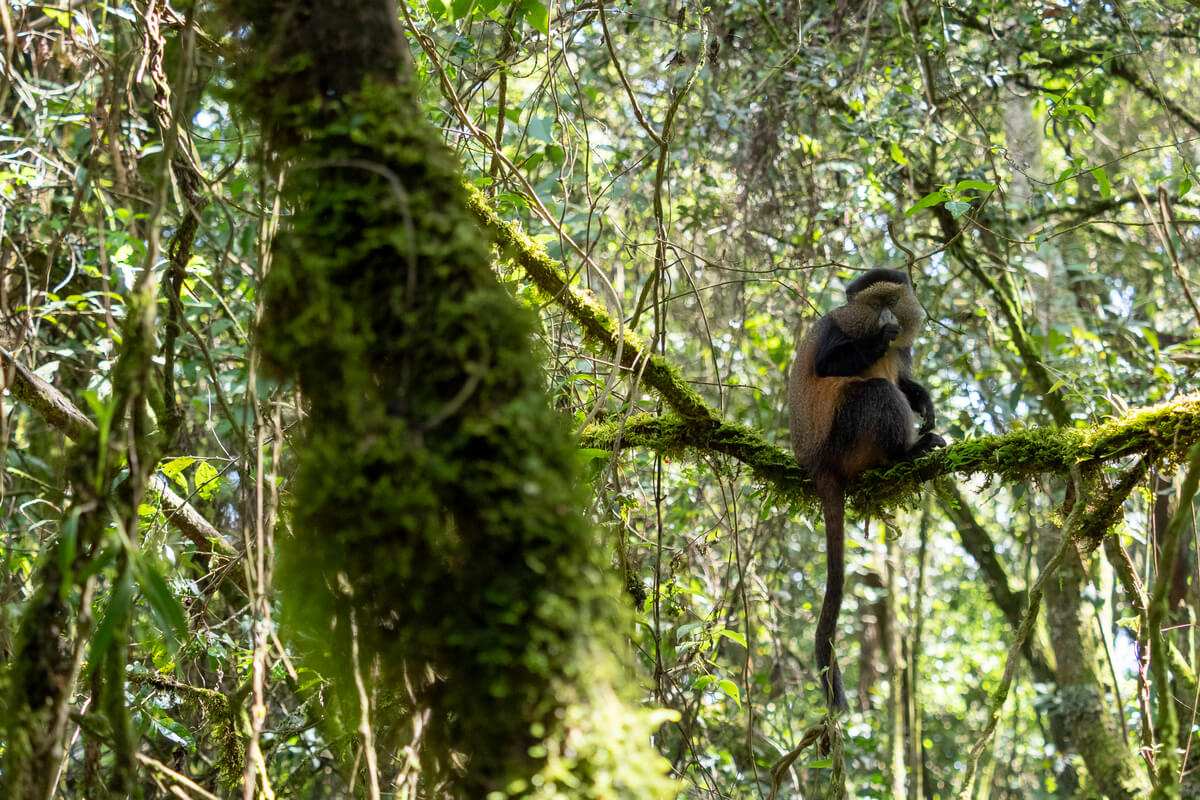
Throughout the Virunga volcanoes massif, there is an endemic species of monkey: the golden monkey (Cercopithecus kandti ). In Uganda, this species can only be seen in Mgahinga Gorilla National Park.
As with the gorillas, there is a group habituated to humans, which can be visited with the help of a guide and a group of trackers. Again, you can only spend one hour with them.
At 7:30 in the morning I arrive at the park entrance. This time at a different gate: the Ntebeko Gate. From there we have to walk for about two hours until we find the group of golden monkeys. I watch them as they leap between the trees, eat bamboo or play with each other.
After an hour, I have to head back to the starting point.
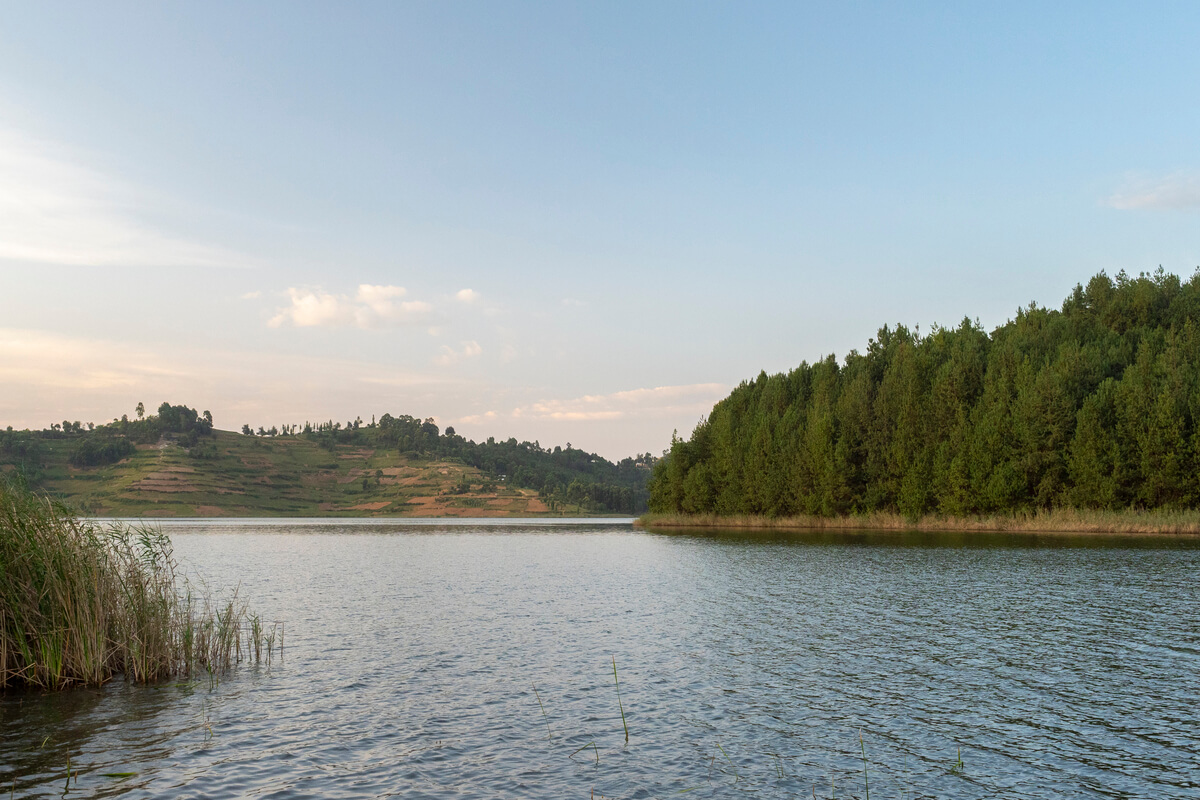
Once I meet Twaha, my guide, I get in the car to go to Lake Bunyonyi. It is a lake 25 kilometres long and 7 kilometres wide, and it is the ideal natural setting to relax after an intense route through Uganda. I use the afternoon to stroll around the small island where the lodge is located and to photograph birds.
📚 Post for the ninth day (morning): Golden monkey trekking in Uganda: the Virunga mountains.
Day 10: The End of the Trip to Uganda
The end of the trip to Uganda is approaching. About 8 hours by car await me to Entebbe, where the airport is.
As the sun begins to rise, I board the boat that will take me from the lodge to the car. The road journey is somewhat long, but the tarmac is very good and traffic flows smoothly.
A few hours after leaving the Equator line behind, I reach Entebbe. To get there, we take the ferry that crosses Lake Victoria.
All that is left is to wait for my flight, which leaves the next day. Uganda has left me fascinated, and eager to keep getting to know this country in greater depth.
📚 Post for the ninth (afternoon) and tenth day: What to do at Lake Bunyonyi
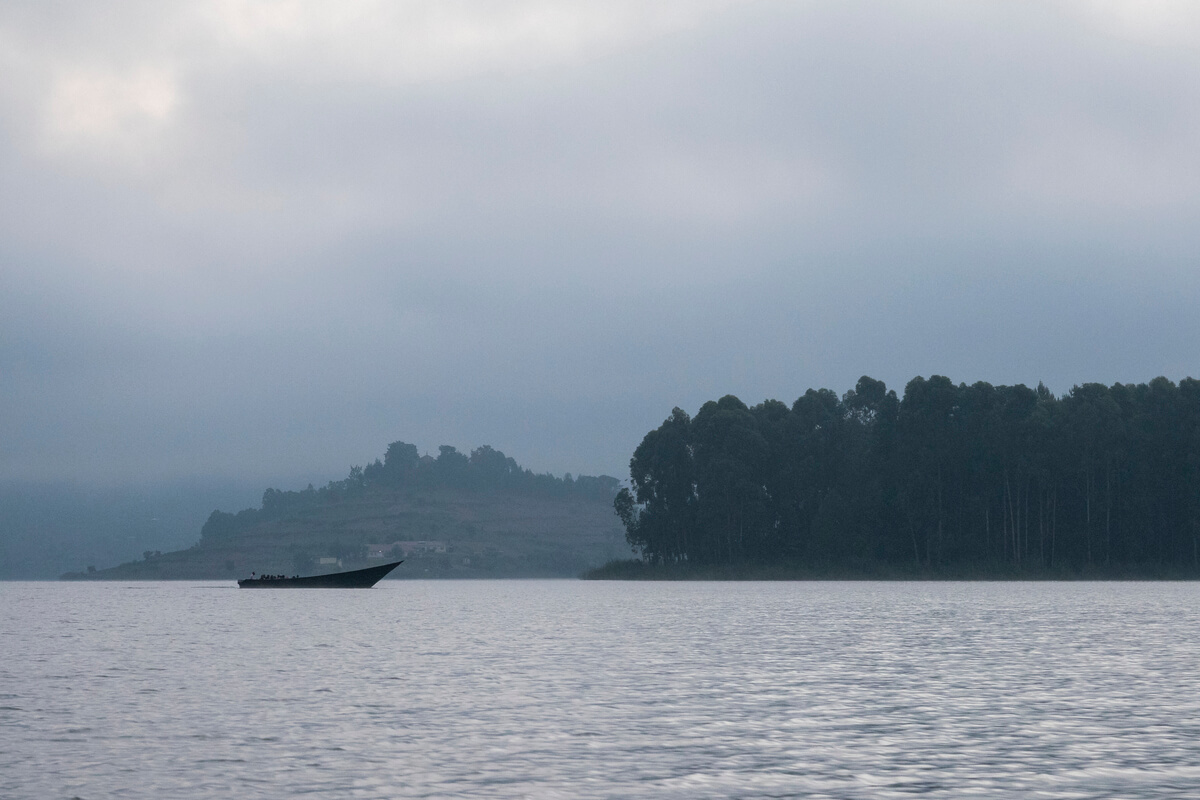
The Top Destinations in Uganda
Mgahinga Gorilla National Park
Mgahinga Gorilla National Park is the smallest national park in Uganda, but it is one of the most surprising. In this national park, located in the mountainous area of the Virunga volcanoes, you can also go trekking to see mountain gorillas. In addition, outings are also organised to try to see golden monkeys, a species endemic to this area.
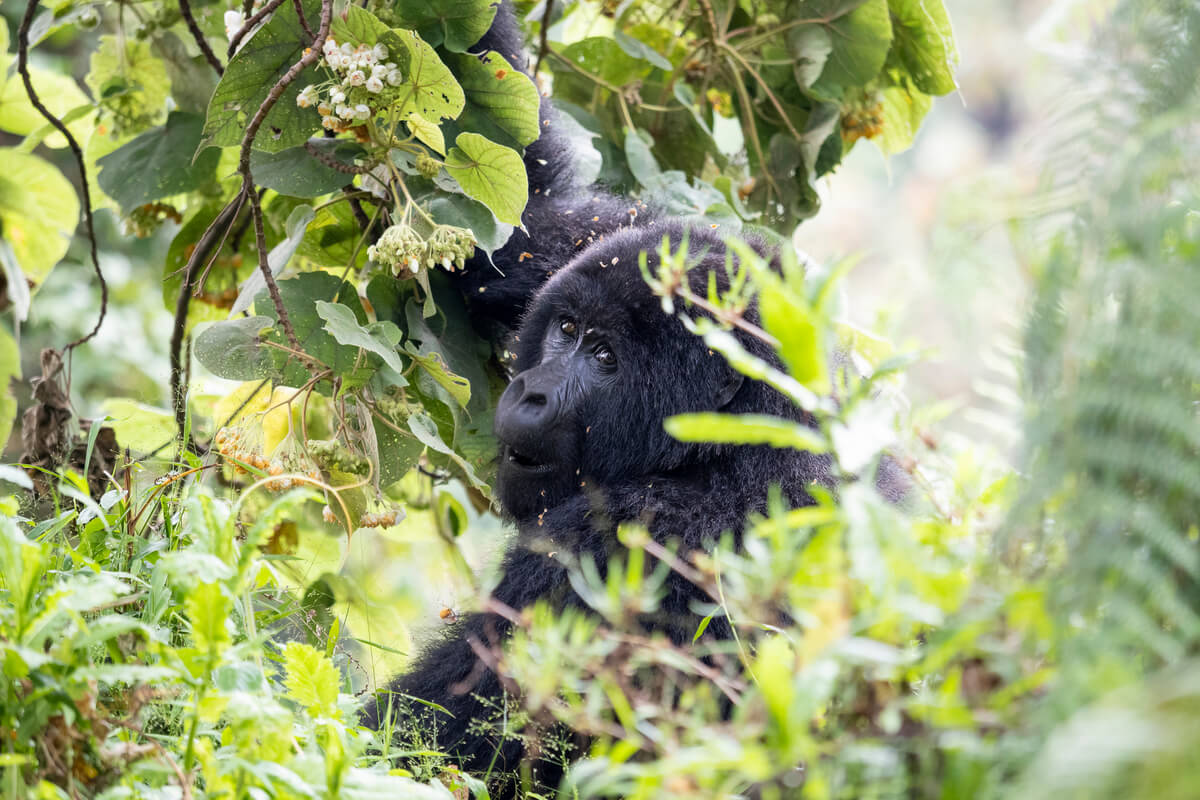
Kibale Forest National Park
Kibale National Park has the highest density of wild chimpanzees in the world. This makes it one of the best areas to try to see them.
We humans share 99% of our DNA with chimpanzees. Watching them is an unforgettable experience.
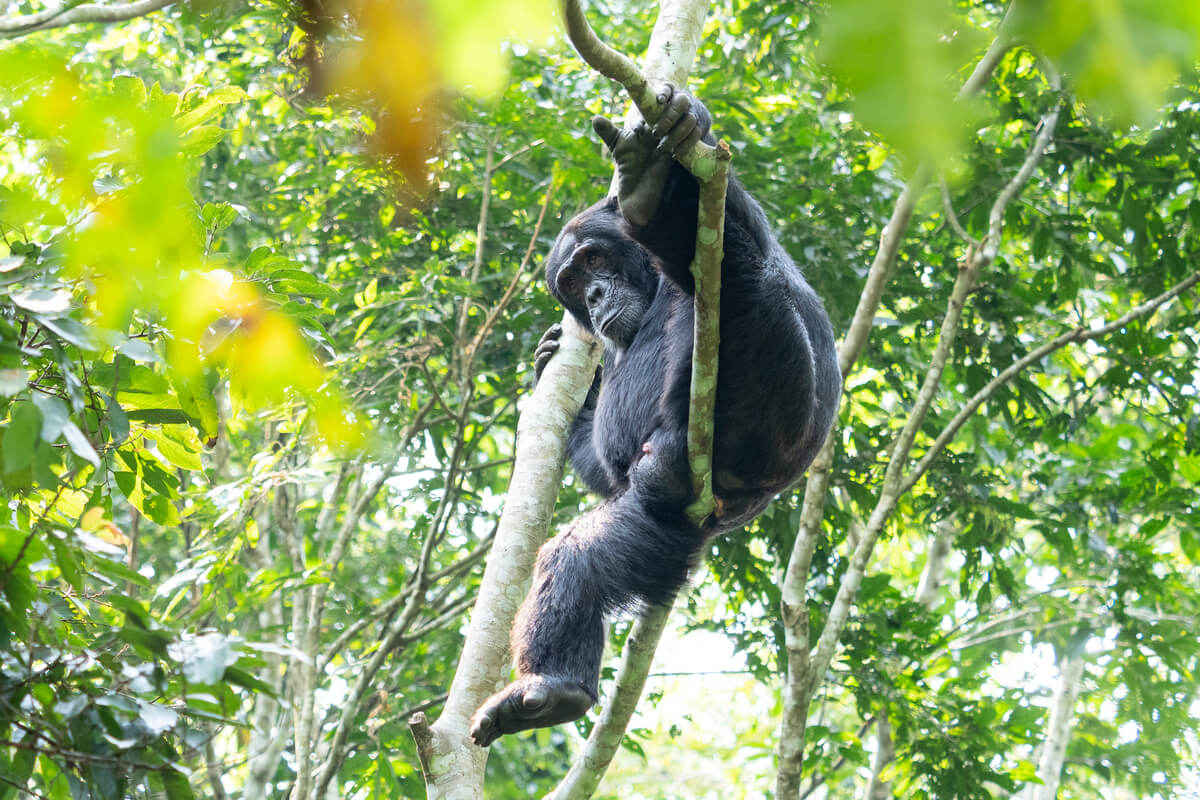
Murchison Falls National Park
Murchison Falls National Park is another must-see on a trip to Uganda. In this national park you can go on some of the most interesting safaris in the country, with the chance to see a great diversity of wildlife.
It is also worth taking a boat trip to Murchison Falls, one of the most beautiful spots on the White Nile.
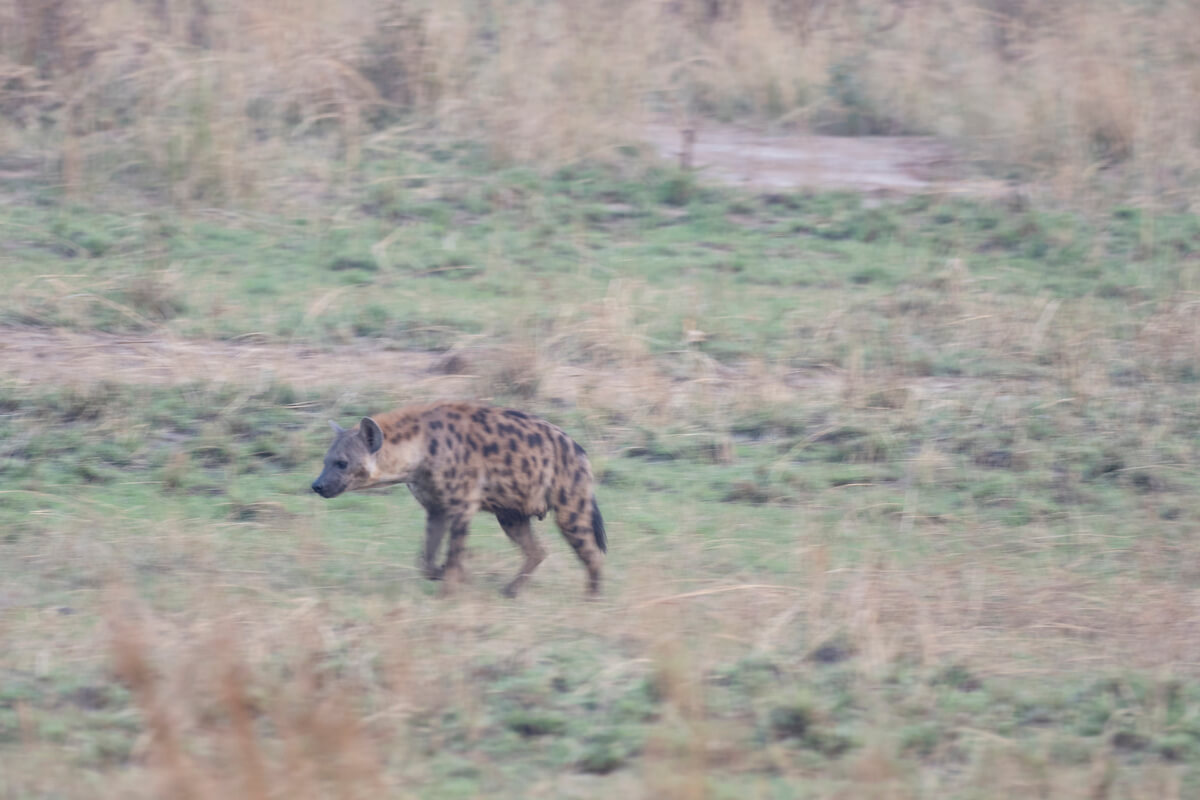
Queen Elizabeth National Park
Queen Elizabeth National Park preserves one of the most spectacular savannah ecosystems in Uganda.
There you can go on safari to look for elephants, lions and many other mammals; and you can also take boat trips along its channels, among hippos and crocodiles.
Ziwa Rhino Sanctuary
Visiting the Ziwa Rhino Sanctuary is a good way to support an important conservation project in Uganda.
A group of rhinos lives in semi-freedom in this sanctuary. Walking excursions are organised so you can observe and photograph them. Once their population has grown enough, the main goal is to release them into the national parks in the north of the country, where they became extinct because of poaching.
Bwindi Impenetrable Forest National Park
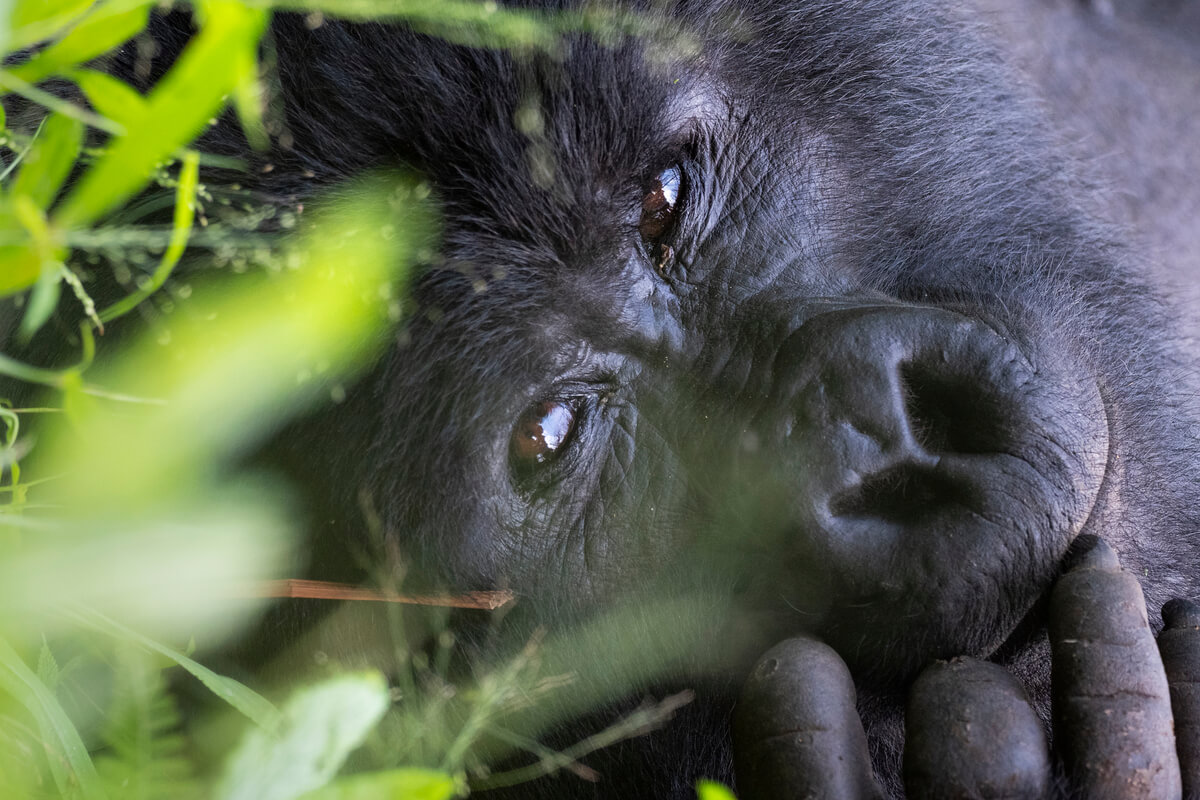
Bwindi Impenetrable Forest National Park is a rainforest that is home to half of the world’s wild mountain gorilla population.
The mountain gorilla trek lets you spend an hour with these threatened and impressive primates. One of the best experiences in Uganda.
Lake Bunyonyi
Lake Bunyonyi is the ideal setting to relax in Uganda after an intense route of safaris and treks. It is one of the most idyllic landscapes in the country.
Lake Mburo National Park
Little Lake Mburo National Park is another very interesting area in which to enjoy Uganda’s nature. This national park has a wetland area as well as a savannah area. In addition, there are no large predators, which makes walking safaris possible.
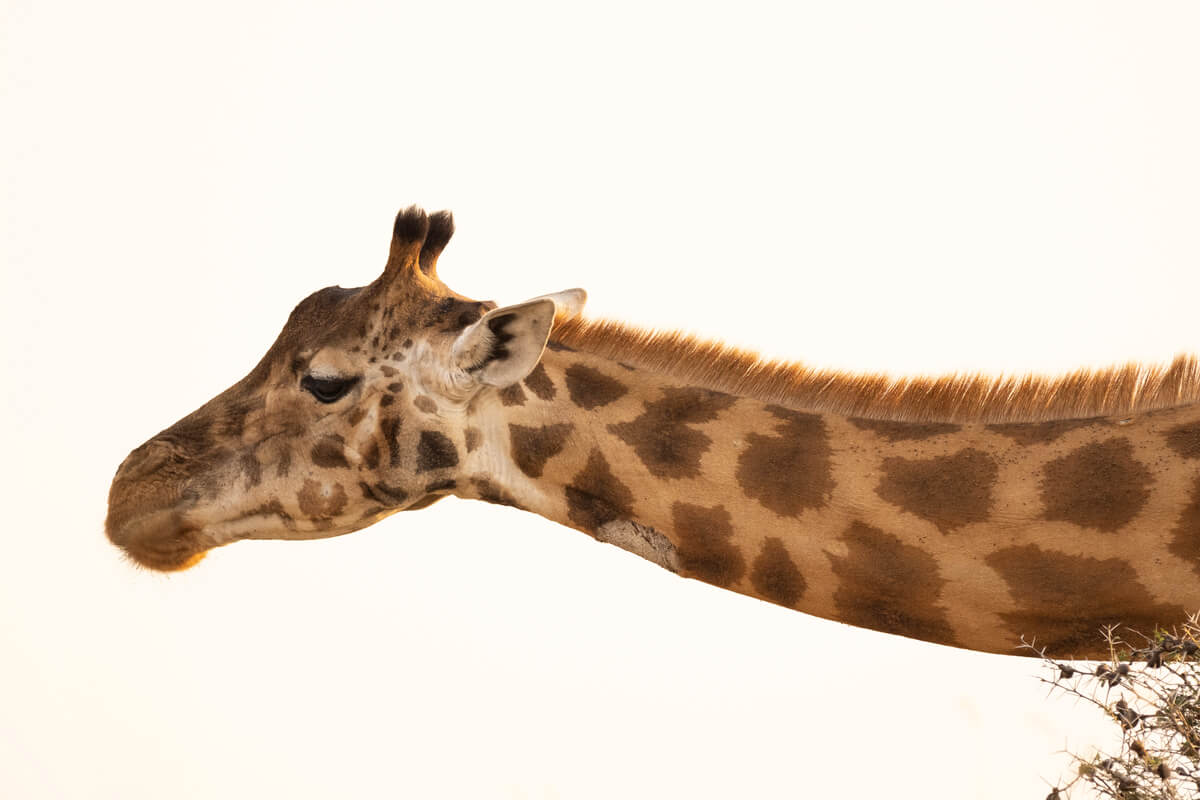
Some of the most notable species you can see in this national park are zebra, impala and Rothschild’s giraffe.
Other Interesting Places on a Trip to Uganda
When I prepare a trip, there are always places I research and find interesting but that I end up not visiting . In Uganda, in order to stick to the budget I had, I ended up ruling out quite a few interesting spots.
In this list you will find other areas that, depending on your tastes, you may want to see during a trip to Uganda:
Budongo Forest
This forest is part of Murchison Falls National Park and is one of the other areas of Uganda where you can see chimpanzees. It is not usually as easy to see them as in Kibale National Park, but there are usually far fewer people. In addition, the permit is cheaper: it costs 120 USD in Budongo and 250 USD in Kibale.
Kidepo Valley National Park
This national park, in the north-east of Uganda, is one of the most remote in the country. Getting there from the capital means a long journey of about 10 hours, so it is mainly worth going if you have several days to spend in this national park.
It is a very uncrowded area, where the safaris are usually spectacular. Especially in the dry season it is an excellent area to try to see elephants and lions. With a bit of luck you can also catch a glimpse of leopards and even cheetahs.
Katonga Wildlife Reserve
This nature reserve is not very touristy. This means it is not included in most trips to Uganda, and the hotel infrastructure near the reserve is quite scarce and basic.
However, it is a good reserve for walking safaris, for trying to see sitatunga, and for enjoying the wide variety of water birds in the reserve’s marshes.
Mabamba Swamp
Mabamba Swamp is a wetland area quite close to the capital (you can get there in a little under an hour by car). It is quite popular as one of the best places to see one of Uganda’s most emblematic birds: the shoebill.
Fort Portal
Fort Portal, often called the city of gardens, is one of the most beautiful towns in Uganda. It lies about 1,500 metres above sea level and is surrounded by green hills, crater lakes and tea plantations. It is a very interesting stop for those looking to do some hiking during a trip to Uganda.
Some of the most attractive areas for excursions are: the routes between the Crater Lakes, Mahoma Falls or the trail to Nyamiska Falls.
Your Uganda safari
Ready to plan your 10 days Uganda safari?
Request a free, no-obligation quote and receive a proposal from local operators, without intermediaries. It only takes a couple of minutes to tell us what you have in mind.