
For people short on time, or who want to combine a safari in Kenya with a few beach days on the country’s coast or in Zanzibar, a 5 day Kenya safari is usually enough to feel the thrill of game drives and see some of the most impressive natural areas in the country, such as the Masai Mara National Reserve or Lake Nakuru National Park.
In these cases, the important thing is to be clear from the start that on a 5 day safari in Kenya it is impossible to see the whole country. In my view, it is better to choose a couple of reserves and do all your game drives in them, so you don’t lose so much time on transfers and can spend most of the trip searching for, finding and photographing wild animals.
Another thing to bear in mind is that sometimes you won’t see the famous Big 5 on a 5 day route through Kenya. In the end, the more time you dedicate to game drives, the greater your chances of finding the most elusive animals. Even so, with a bit of luck, it is very common to see elephants, buffalo, lions and rhinos. You do need a little more luck to see the last member of the Big 5: the leopard. Cheetah sightings are also somewhat harder, and you need a bit of luck and a good guide.

5 Day Kenya Safari: The Basics
Are 5 days enough for Kenya?
As I mentioned earlier, a 5 day safari in Kenya is not enough to get to know the country’s most outstanding nature reserves. Even so, if you choose a good itinerary, you can have an intense safari experience and enjoy the thrill of seeing wonderful African wildlife first-hand. That said, on a 5 day trip I never recommend a safari that also includes Tanzania. If you are torn between a Kenya vs Tanzania safari and you only have 5 days, it is much better to choose one of the two destinations.
I am a great lover of safaris and wildlife photography, and on my trips to Kenya I always prioritise safaris. But I also know that many people prefer to combine a few days of safari with other cultural experiences or a few days at the beach. In these cases, I think 5 days of safari is a good option.
Also, for people who have never been on a safari or spent long periods watching wildlife, I think 5 days is a good number of days to try this experience. I have met people who, from the fourth day onwards, were already getting a bit tired of the activity. After all, on safari you spend many hours in the car, and there is a certain monotony and waiting time before you get to see truly wonderful scenes. It isn’t worth it for everyone, and you also need to be clear about your own personality and tastes when deciding how many days are best for a safari.

How much does a 5 day Kenya safari cost?
In my post on the cost of a safari in Kenya I go into detail about the budget for a safari in this country. The cost of a trip like this is influenced mainly by these points:
- Whether the safari is private or in a group. If you go in a group, usually six or seven people in the same vehicle, you get better prices. However, this means you can’t customise the route and you have to adapt a little to everyone’s tastes.
- The cost also varies according to the way the safari is organised. That is, depending on whether you do the safari independently (not recommended if you have no experience in East African destinations and in looking for animals), whether you hire a car with a driver, whether you book a full safari directly with a local agency, or whether you book with an agency from your own country or an international one. Based on my experience, I think the best option is to book your safari with a local agency. That way you get a much more competitive price, avoiding intermediaries, and at the same time you can rely on a guide who knows the destination perfectly throughout the route. If this option interests you, by filling in this form I will put you in touch with the local agencies in Kenya that I trust.
- The accommodation during the safari. The choice of accommodation also has a significant influence on the cost of a 5 day Kenya safari. There is quite a difference between sleeping inside or outside the national parks. In fact, depending on the accommodation you choose, safaris are classed as standard, mid-range, luxury or luxury plus.
- The season in which you travel. From June to December prices are higher, with the peak of high season running from July to mid-October.
If you book your safari with a local agency, the standard prices for a 5 day safari in Kenya for two people would be as follows:
- Standard group safari: Between USD 850 and USD 1,200 per person.
- Standard private safari: Between USD 1,250 and USD 1,700 per person.
- Mid-range private safari: Between USD 1,700 and USD 2,500 per person.
- Luxury private safari: Between USD 2,500 and USD 3,500 per person.
- Luxury plus private safari: More than USD 3,500 per person.
When comparing prices between different proposals for 5 day Kenya safari itineraries, it is important to look carefully at the number of game drives done each day and how much time is spent inside each nature reserve. For example, it is not the same to spend one more day on safari in the Masai Mara, where the entry fee is USD 200 per person per day from June to December, as to spend a day doing activities around Lake Naivasha.
|
PLAN YOUR NEXT ADVENTURE Want a closed price for your 5 day Kenya safari?Tell us your dates and budget and verified local operators will send you a proposal with direct prices, no intermediaries and no commitment. |

What is the best time for a safari in Kenya?
The best time for a safari in Kenya is during the dry season, especially between June and September and also in January and February. During these months the weather is more stable, it rains little and conditions for wildlife viewing are ideal. From June to September, moreover, the great wildebeest migration in the Masai Mara takes place, with the famous Mara River crossing in late August and early September, which makes these months the most spectacular for a safari, although they are also the busiest and most expensive.
Personally, January and February are my favourite choice. Although you can’t see the great migration, it is a very good time to see the big cats. There are also far fewer people and prices are more competitive. If you would like more information, I encourage you to read my guide to independent travel in Kenya.
How do you book a 5 day Kenya safari?
These are the steps I recommend following to book a safari in Kenya:
- Find out all you can about the destination and the different reserves and national parks, so that you are clear which ones you prefer to visit on a 5 day itinerary. In the Kenya section of this site you can find plenty of information.
- Contact a local agency, saying which national parks you want to visit and what your safari budget is. Remember that you can now book an English-speaking safari guide in Kenya directly with a local agency, as many local guides speak excellent English. This way you avoid intermediaries and save on the cost of booking the safari.
- Review the proposals from the local agencies, and suggest changes to the accommodation or itineraries according to your personal preferences.
- Buy your flights, so that the safari dates are settled.
- Book the safari, usually by paying between 20% and 30% of the total value of the safari.
- One month before the start of your 5 day Kenya safari, pay the remaining balance of the safari.
- Enjoy this wonderful experience to the full 🙂
5 Day Kenya Safari: Four Recommended Itineraries
On my trips to Kenya I have always spent more than five days on safari, so none of the following itineraries is based exactly on my own experience in the country. Even so, I have prepared four itineraries that I would recommend and choose myself if I only had 5 days in Kenya.
As I have already said, and as I have applied when designing these itineraries, I think that on a safari of this length it is better to focus on a couple of reserves and leave the others for a future trip.
1. Safari in the Masai Mara and Lake Nakuru
This is the classic 5 day Kenya safari itinerary, focused mainly on visiting the country’s most famous reserve: the Masai Mara safari reserve. It also includes a stop at Lake Nakuru National Park, one of the best places in Kenya to see rhinos.
So, on this itinerary, with a bit of luck, it is possible to see the iconic Big 5 (lion, elephant, buffalo, rhino and leopard).
Day 1: Arrival in Nairobi and afternoon safari in Lake Nakuru National Park
Most safaris in Kenya start in Nairobi, and this one is no exception. I recommend arriving in the morning or, alternatively, in the afternoon or evening of the day before the safari begins. In that case, a recommended place to stay in Nairobi is the Kozi Suites Nairobi Airport.
Once the safari begins and you meet your local guide, all you have to worry about is enjoying yourself. This itinerary starts with a drive of about three hours to the entrance of Lake Nakuru National Park. For many people this national park is the first place where they experience a safari and their first contact with African wildlife. It is an ideal place for it.
Lake Nakuru National Park is perfect for seeing rhinos. White rhinos are usually seen without too much difficulty, both first thing in the morning and in the afternoon. There are also black rhinos. They are a little harder to see, but especially in the morning and in the acacia forest you can sometimes spot one.
On Lake Nakuru safaris you can also see Rothschild’s giraffes, zebras, impalas, waterbuck, warthogs and many other mammals. As for the big cats, you can see lions and leopards. Lions are easier to see, although it is still difficult. The best time to see lions in Lake Nakuru National Park is at dawn and in the acacia forest area.
The scenery of this national park is also very beautiful, with the great Lake Nakuru as the main star. Until 2010, the lake was home to one of the largest populations of flamingos in the country, which covered its salty waters and tinted the landscape pink. Since then, however, the flamingo population has dropped dramatically because of the deterioration in water quality, which affected their main food source. Today the number of flamingos on the lake is much smaller, but you can still see small groups of these elegant birds from several points near the lake.

Where to stay in Lake Nakuru National Park?
If you are doing a safari in Lake Nakuru for more than one day, it is preferable to choose one of the accommodations inside the national park, above all so that you don’t have to pay the park entrance fee more than once within 24 hours.
The two main accommodations inside the park are:
- Lake Nakuru Lodge. It is near the acacia forest, for me the best area to move around during a dawn or dusk game drive, as you sometimes see lions, black rhinos or leopards.
- Sarova Lion Hill Game Lodge. An exclusive lodge inside the national park, also located in an area very favourable for seeing lions.
Day 2: Morning safari in Lake Nakuru and afternoon safari in the Masai Mara
I recommend starting this new day of your 5 day Kenya safari very early, so that you can begin the game drive just before sunrise. That way you will have more chances of seeing the park’s most elusive animals. On one of my safaris in Lake Nakuru National Park, I saw black rhinos, lions and even a striped hyena just minutes after dawn. And the best part is that there wasn’t another vehicle in sight.
After about three hours of safari, when the best part of the day for seeing animals is over, it is time to leave the park and head for the African savannah of the Masai Mara.
The journey to this reserve is long, between four and five hours depending on road conditions and traffic. Even so, it is best to stop halfway for lunch at a local restaurant. If you go on safari with one of my trusted local agencies, your guide will surely choose a good place to eat.
If you don’t dawdle too much, you will reach the entrance to the Masai Mara in the early afternoon, and you will be able to do a first game drive in this reserve that afternoon. Sunset is always one of the best times to see animals and enjoy photography.
It is hard to forget your first minutes in the Masai Mara. Its endless plains are just the setting for one of the best places to search for, admire and photograph Africa’s great mammals. Herds of elephants move calmly and majestically across the land. The slender silhouette of giraffes stands elegantly against the sky. And close to them, impalas, zebras and wildebeest wander.
Seeing the herbivores of the Masai Mara is a wonderful experience, but there is no denying that the real stars of a safari in the Masai Mara are the African big cats. This reserve is the land of lions, cheetahs and leopards.
Also, if you visit the reserve between late July and early November, you can also easily see the great wildebeest migration. It is one of the most impressive scenes in the natural world.
After sunset, game drives are not permitted, so it will be time to head to your accommodation. If you sleep inside the reserve, you can make much more of the last hours of daylight. If you sleep outside, it is cheaper, but you must leave the reserve before 18:30.
We tailor this route to your datesWould you like to do the Lake Nakuru and Masai Mara itinerary, but with the lodges, pace and budget that suit you? Local operators will adapt the route to you and send you a no-obligation proposal. ✓ Personalised safari itineraries |

Where to stay in the Masai Mara
Having the chance to sleep inside the reserve is a privilege. Not only for the feeling of immersion in the wild nature of the savannah, but also because you can make much more of the first and last minutes of the day, which are usually superb for seeing cats and taking photos. In this case, I recommend some of these accommodations:
- Ashnil Mara Camp. Set beside the Mara River, it is one of the best-located camps in the Masai Mara. It is in an area with one of the highest densities of wildlife and predators in the reserve. Price of a double room: €300 (breakfast included).
- Fig Tree Camp. It is beside the Talek River, also in a very good area from which to start your game drives and see animals from the outset. Price of a double room: €330 (all meals included)
- Sarova Mara Game Camp. A camp in the heart of the Masai Mara, in one of the best areas to see the great migration. Price of a double room: €780 (all meals included).
If you don’t give photos such a high priority and prefer to cut costs, sleeping outside the reserve, near the entrance, is also a good option. In this case, my preference is to sleep in the area near the Talek Gate. In my experience, from there you can quickly reach areas where it is common to see lions, cheetahs or leopards. Some recommended accommodations in the Talek Gate area are:
- Talek Bush Camp. A very good option if you want to sleep near the Talek Gate without giving up comfort and good value for money. Price of a double room: €160 (all meals included)
- Mara Duma Bush Camp. A camp just outside the reserve, also beside the Talek River. Price of a double room: €110 (breakfast included)
- Cocodrile Camp. The perfect option for travellers on a tighter budget. The tents are basic but clean. The food in the restaurant is expensive, about USD 15 a meal, so if you are on a tight budget it is better to bring food bought at the supermarket. This is where I stayed for four nights. Price of a double room: €70 (breakfast included)
Finally, if you want to do a 5 day Kenya safari as cheaply as possible, then it is better to choose accommodation near the Sekenani Gate, as it is the cheapest and access from Nairobi is easier.
Days 3 and 4: Full days of safari in the Masai Mara
These two days of full safari in the Masai Mara will surely give you unforgettable moments and will be the best stage of your 5 day Kenya safari. I assure you that even if you drive along the same tracks and see the same landscapes each day, every day can surprise you with unique scenes of wildlife. You might come across elephants walking in an orderly line towards a small lake to drink, watch lion cubs playing in the tall grass, or witness a cheetah stalking its prey… Every encounter is different, and that unpredictability is precisely what makes safari magical.
I have spent four consecutive days in the Masai Mara and it never ceases to amaze me: there is always an unexpected moment or a different animal behaviour. These are the moments that turn a safari into something unforgettable, and the Masai Mara offers them in abundance.


Day 5: End of the safari and transfer to Nairobi
If you are lucky enough to sleep inside the reserve, the drive out of the Masai Mara will give you a last chance to admire the incredible wildlife and the landscapes that make this place a paradise. If, on the other hand, your accommodation is outside the park, it may not be worth paying the entry fee (USD 100 per person from January to June and USD 200 per person from July to December), as you would have very little time to enjoy the safari.
This last day is mainly intended for returning to the capital, Nairobi, from where you can take your flight home or continue your trip to the Kenyan coast, with destinations such as Diani Beach, or to Zanzibar (Tanzania). It is time to say goodbye to the savannah and close this 5 day Kenya safari full of unforgettable experiences.
2. The great migration in the Masai Mara
This other 5 day Kenya safari proposal is very similar to the previous one, but it focuses solely on the Masai Mara, with game drives there every day. It is really a proposal that I recommend only to people who are very keen on photography or to people who have already been on safari before and know they love this activity.
If you do a safari focused on the Masai Mara, an excellent option is to go there during the great migration, although prices are higher and there are more people. If not, another very good option is to go in November or in January or February.
The itinerary in this case would be as follows:
Day 1: Transfer from Nairobi to the Masai Mara
If you decide to follow this itinerary, I again recommend arriving in Nairobi in the morning or else the night before. That way you can reach the Masai Mara in the early afternoon and do your first game drive in the Masai Mara at sunset.
The first hours in the African savannah are unforgettable, and don’t rule out seeing a lion, cheetah or leopard already on your first evening; as well as the usual giraffes, zebras, impalas, buffalo, wildebeest…
If your budget allows and you want to avoid the drive, you also have the option of flying by light aircraft directly to the Masai Mara. This option costs about USD 250 (one way) or USD 400 (return).

Where to stay in the Masai Mara
I understand that if you take this 5 day Kenya safari itinerary it is because you want to make the most of your game drives, in order to see memorable scenes that are harder to come across. In that case, if it fits your budget, I encourage you to choose the accommodation with the best location inside the reserve.
Some of the Masai Mara lodges most highly rated by photographers are the following:
- Ashnil Mara Camp. Set beside the Mara River, it is one of the best-located camps in the Masai Mara. It is in an area with one of the highest densities of wildlife and predators in the reserve. Price of a double room: €300 (breakfast included).
- Sarova Mara Game Camp. A camp in the heart of the Masai Mara, in one of the best areas to see the great migration. Price of a double room: €780 (all meals included).
In some cases, if you only want to do a safari in the Masai Mara you can book a package directly at the accommodation. Even so, I always recommend comparing their offer with that of a trusted local agency in Kenya.
Days 2, 3 and 4: Full days of safari
Three full days of photographic safari in the Masai Mara, especially during the Great Migration, offer extraordinary opportunities for wildlife viewing. The days begin before dawn, with a light breakfast, so that you are already inside the reserve shortly before sunrise. These first hours of the day are ideal for photography and wildlife watching, as the big cats are especially active, on the move and, at times, in the middle of a hunt.
One of the most striking moments during the Great Migration is undoubtedly the river crossing by wildebeest and zebras. It is a scene charged with emotion and drama, where the tension can be felt among both the animals and the observers. Because of the importance of these crossings, it is common for numerous vehicles to gather, as guides communicate with each other when activity is spotted at the river.
In these situations, it is essential to maintain a responsible attitude that respects the environment. You should not pressure your guide to get too close to the crossing point, as it is essential to leave enough space for the animals to follow their natural behaviour without interference. Respecting these rules not only protects the wildlife but also ensures a more authentic and sustainable safari experience, in line with the conservation principles of the Masai Mara.


Day 5: Drive back to Nairobi
As on the first safari proposal, this last day begins with a last sunrise in the Masai Mara, before setting off on the journey back to the country’s capital.
Even so, if you have slept inside the reserve, don’t stop watching your surroundings on the drive out of the Masai Mara. At times, the last kilometres of the park deliver unexpected encounters.
On one of my safaris in the Masai Mara, on the very last day and when the heat was already inviting us to leave the reserve, I was lucky enough to see a serval. It is one of Africa’s small cats, and it is quite difficult to see.

3. 5 Day Kenya Safari in Amboseli and Tsavo West
I would recommend this itinerary to travellers who already know the Masai Mara, to people looking to explore less crowded parks, or to the most passionate elephant lovers.
It is a route centred on the wonderful Amboseli National Park, an exceptional place to see elephants with Mount Kilimanjaro in the background, and also on Tsavo West and Tsavo East National Parks, a park off the most common routes in Kenya, but which has a lot to offer.
This 5 day Kenya safari is also ideal for finishing in Mombasa, and then going to spend a few days on the coast at Diani Beach.
Day 1: Nairobi to Amboseli
In general, these safaris start around eight in the morning in Nairobi, as the journey to Amboseli usually takes between five and six hours. The best plan is to reach the park at midday, have lunch there and then begin the first game drive of the trip, inside Amboseli National Park.
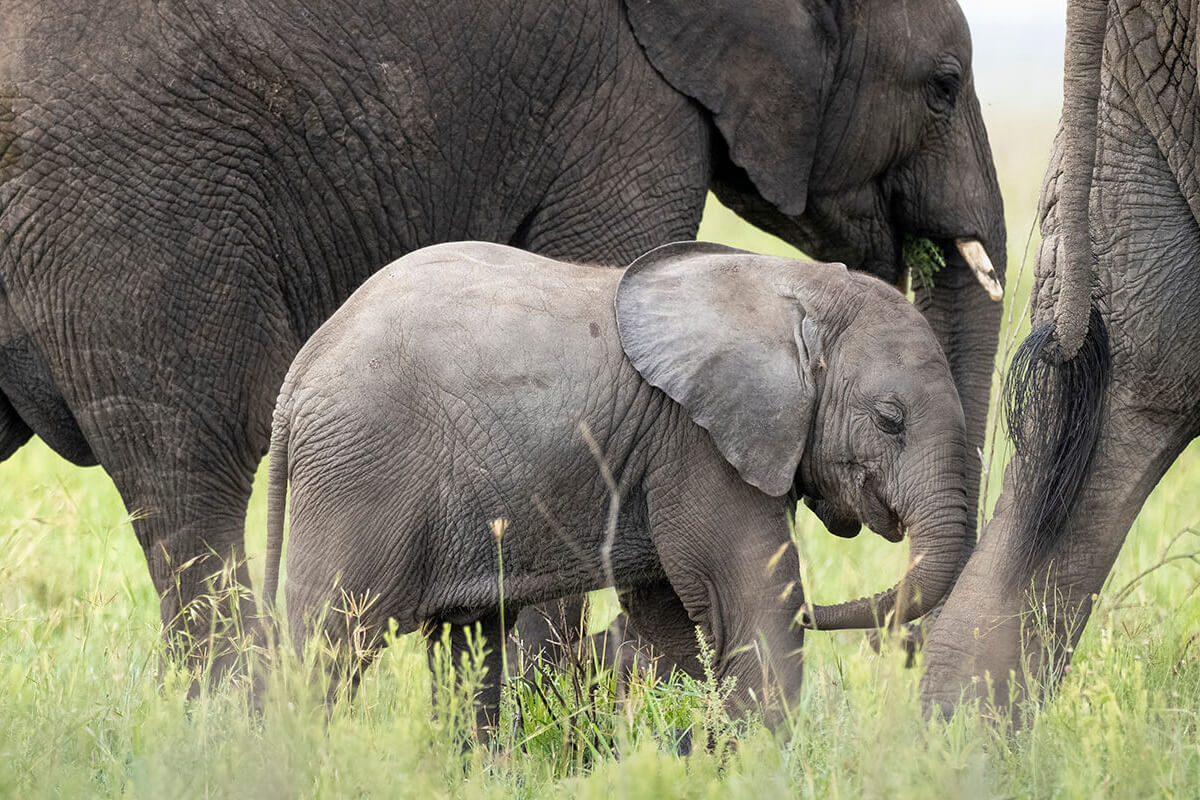
Sunset is one of the best times to explore the plains of Amboseli. It is usually when there is the greatest chance of seeing elephants walking towards the woods beneath Kilimanjaro. A unique opportunity to photograph these great mammals with the highest mountain in Africa in the background.
Besides elephants, in Amboseli you can also see giraffes, zebras, buffalo, impalas and other herbivores. As for predators, lions and cheetahs are seen occasionally. Hyena sightings are also quite common, especially in the early hours.
Where to stay in Amboseli National Park?
As always, sleeping inside the national parks is a special experience and lets you make better use of the first and last hours of daylight. If you want to sleep inside the park, I recommend the Oi Tukai Lodge.
Even so, in the case of Amboseli, staying at the lodges just outside the park is also a very good option. The accommodations are very close to the entrance, and the formalities for entering the reserve are usually quite quick. That said, it is highly advisable to choose one of the accommodations near the Kimana Gate, as it is the closest area where elephants are found at sunrise and sunset. In this area, I recommend one of these accommodations:
Day 2: Safari in Amboseli National Park
The second day of the route starts with a sunrise safari in Amboseli National Park. Like sunset, sunrise is a good time to see the elephants coming out of the woods and advancing in a synchronised way towards the swamp area in the centre of the park. So it is a great moment to photograph them.
Besides, on morning game drives in Amboseli there are also some chances of seeing some of the big tuskers. These are male elephants characterised by their enormous tusks. There are very few in the world, because of poaching, and Amboseli is one of the best places in the world to see them. If you don’t see any, I recommend asking your guide for the story of one of these famous elephants. Sadly, two of the most emblematic and famous, Craig and TJ , have died in recent years of natural causes.
After about three or four hours of safari, and taking advantage of the fact that Amboseli is a small park, the most advisable thing is to go back to your accommodation for lunch and a rest during the hottest hours of the day.
In the afternoon, about three hours before sunset, I recommend setting off on safari again. I assure you there are always new scenes to see. You only have to look carefully and appreciate the magic of African nature and wildlife.

Day 3: Morning safari in Amboseli and transfer to Tsavo West National Park
This itinerary proposal for a 5 day Kenya safari continues with a last morning game drive in Amboseli. If you are lucky enough to see Kilimanjaro completely clear, with an elephant or giraffe walking right in front of it, I assure you that you will never forget this scene. You will also be able to take photos worth framing!
At mid-morning, it is time to say goodbye to Amboseli and make a drive of about 3 hours to the next destination: Tsavo West National Park.
The feeling on arriving at this national park is usually completely different from Amboseli. It is a larger and much wilder park. The density of animals is also lower, which means you need to be more patient and spend more time finding the animals. This also makes the encounters much more relaxed and intimate, as there are far fewer visitors in this park.
Also, during the safari in Tsavo West there are two unmissable stops: the Shetani lava flows, which recall the volcanic past of this part of Kenya; and the Mzima Springs, one of the best places in Kenya to see hippos at close range.

Day 4: From Tsavo West National Park to Tsavo East National Park
This new day begins with a new game drive. As I have said, it is not always easy to find animals in Tsavo West, but if you travel with a good guide from a local agency, I am convinced the park will not disappoint you. Also, the morning is a good time to see lions, which are normally active at night trying to hunt.
After a couple or three hours of safari, it is time to move on to Tsavo East National Park, crossing beautiful landscapes and doing a game drive along the way.
When you arrive, I recommend stopping at the lodge to eat well and rest a little. In the afternoon, it is time for another game drive. In this national park, the great stars are the red elephants, which get their colour from the ferruginous dust characteristic of the park. To see them, the best thing is to head for the Kanderi Swamps area.
Besides, in this park you can see antelopes typical of the desert ecosystem, which are hard to see in other parts of Kenya. For example, you can see the beisa oryx, the lesser kudu, the gerenuk or Hunter’s hartebeest. It will probably be the first time you have heard of these species, but that is the beauty of travelling and learning new things…
Day 5: Last safari in Tsavo East and transfer to Diani Beach
This route ends with a last safari in Tsavo East National Park, before driving to Diani Beach, where you can spend a few days relaxing independently.
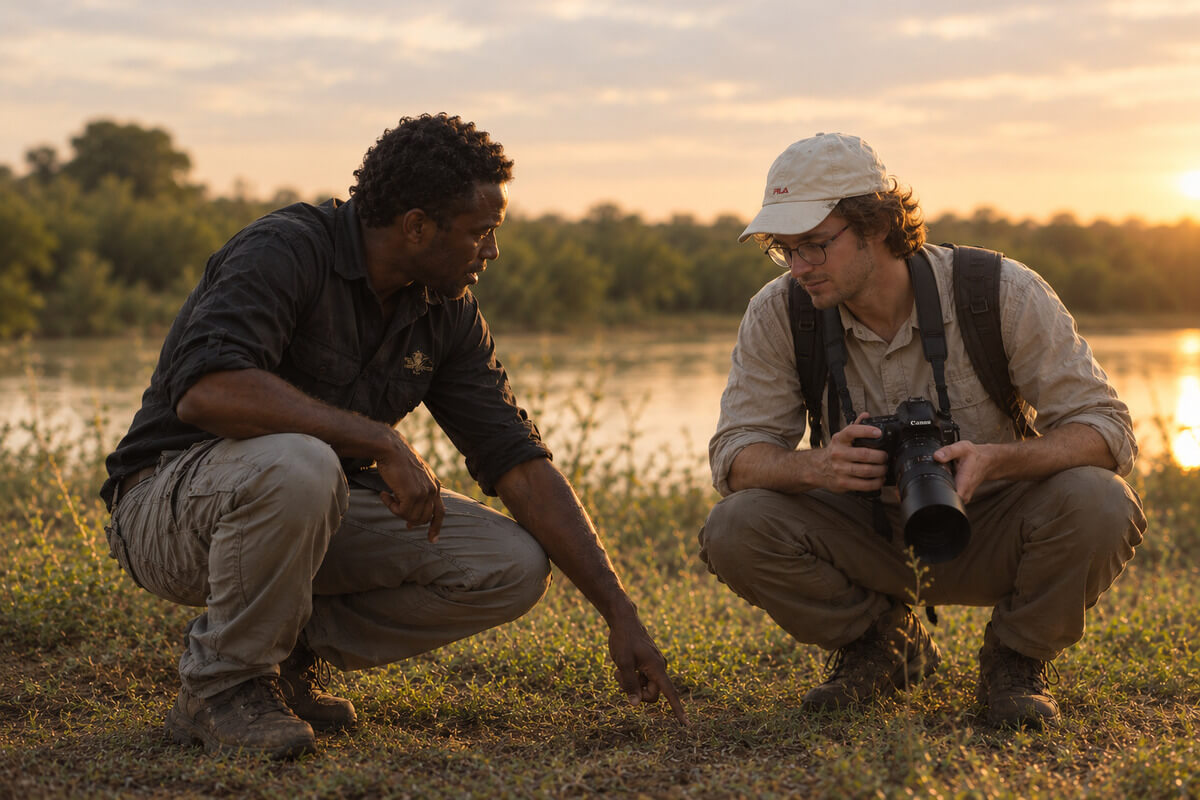
I recommend booking the days you spend in Diani Beach independently; you can book the accommodation directly on Boooking.com. The white sand beaches, turquoise waters and palm trees make this place an ideal destination for relaxing after the safaris. You can also enjoy activities such as snorkelling, diving, sunset boat trips or simply relax at a beachfront resort, enjoying the tropical climate.
 |
SAFARIS BY LOCALS Safari plus beach? Let local experts put it togetherCombining Amboseli, Tsavo and Diani Beach means getting the logistics right. Talk to local operators who know the roads and the parks, and get a route built around you. |
4. A 5 Day Kenya Safari Through Samburu National Reserve and Ol Pejeta Conservancy
The last proposal for a 5 day Kenya safari is based on visiting two of the most impressive reserves in the north of the country. Both are dominated by a semi-arid ecosystem, so the experience is quite different from classic savannah safaris.
That said, on an itinerary of only 5 days I think it is a little tight to combine Samburu National Reserve with the Masai Mara, an option that fits much better into a Kenya itinerary of 10 days.
Specifically, this 5 day route is focused on the Ol Pejeta Conservancy and Samburu National Reserve, with rhinos and leopards as the great stars of the trip.
Day 1: From Nairobi to Ol Pejeta
As with most of the best Kenya safaris, this route starts in the country’s capital, early in the morning. From Nairobi to the entrance of Ol Pejeta takes about four hours, as long as you have no mishaps. On my last trip, a tyre on the car got a puncture on the way to Ol Pejeta, so it took me more than five hours to get there…
On arriving at Ol Pejeta at midday, I recommend you go first to your accommodation to check in and have lunch. In the ecosystems of northern Kenya, it is usually very hot at midday, so it is always better to stop for a couple of hours. Then, in the early afternoon, it is time to get to know Ol Pejeta. It is a private non-profit reserve where huge conservation projects are carried out. The last two northern white rhinos live there, and there is also a sanctuary for rescued chimpanzees. This means that, besides going on game drives, you can do other activities to learn about these projects and many other things.
Even so, I recommend dedicating at least one afternoon or morning solely to a game drive. In Ol Pejeta you will have many chances of seeing white rhinos and also black rhinos. Sightings of lions are also becoming more frequent.
At sunset, it is time to return to your accommodation. If you stay at the Sweetwaters Serena Camp, one of the most recommended options, you can keep watching wildlife all night, as animals come to drink at the waterhole in front of the accommodation.
Where to stay in Ol Pejeta?
In Ol Pejeta I think the best thing is to sleep inside the reserve, especially because otherwise you have to pay the entry fee again the next morning. Inside the Ol Pejeta reserve, the most recommended places to stay are:
- The Stables: This accommodation is run by the Ol Pejeta reserve itself and is the cheapest option. The rooms are simple, but have all the necessary comforts.
- Sweetwaters Serena Camp. A mid-range to upper-range accommodation inside the conservation area. It offers comfort and elegance, but its most notable feature is its location: right in front of the lodge there is a waterhole much frequented by animals at night and in the early hours.

Day 2: A day of safari in Ol Pejeta and discovering its conservation work
On a full day in Ol Pejeta you can enjoy the essence of safaris in this reserve, characterised by its great diversity of wildlife and by the imposing Mount Kenya as a backdrop. However, beyond vehicle safaris, it is highly recommended to spend part of the day on one of the activities that make Ol Pejeta a benchmark in conservation.
These are optional experiences, at an additional cost, guided by the reserve’s rangers and directly linked to its wildlife protection programmes. They include walking safaris, a particularly rewarding way of discovering small details of the ecosystem that often go unnoticed on drives in a vehicle. Another option is to take part in an activity alongside the teams fighting poaching, or to book a visit to see up close the last two northern white rhinos, an experience as striking as it is moving.
During the hottest hours, the most advisable thing is to take a break for lunch at your accommodation and rest. Again, if you are staying at the Sweetwaters Serena Camp, I recommend sitting down to read with a view of the waterhole, where it is common to watch various animals come to drink.
In the afternoon, there is nothing better than ending the day with another game drive, making the most of the softer light and the increase in wildlife activity before sunset.

Day 3: From Ol Pejeta to Samburu National Reserve
The day starts early with a last morning game drive in Ol Pejeta. At that hour, with the animals still active and spectacular light, it is one of the best times to enjoy the reserve.
After the safari, you can go back to your accommodation for breakfast and then it is time to begin the transfer to Samburu National Reserve. The drive takes about 3 or 4 hours, through increasingly arid and rural landscapes, very different from those of central Kenya.
Again, if you reach Samburu at midday, it is preferable to have lunch at the accommodation and rest a little until the temperature drops slightly. Around three in the afternoon, it is time to enjoy the first game drive in this very special reserve, one of my favourites to visit on an independent trip to Kenya.
Samburu National Reserve is famous for being home to unique species adapted to this dry environment, such as Grevy’s zebra, the reticulated giraffe, the gerenuk and the beisa oryx. These animals are known as the Special 5 of Samburu. It is also one of the best places in Kenya to see leopards, especially near the Ewaso Ng’iro River.
Where to stay in Samburu National Reserve?
In Samburu I highly recommend sleeping inside the reserve, given that there are options that are not excessively expensive and that put you in a much better position to make the most of the game drives from the first to the last light of day.
The options I recommend are:
- Samburu Riverside Camp. A small accommodation run by local people, where you sleep in simple tents (but well equipped with a bed, mosquito net and bathroom). Meals are also included in the price, and they always serve local cuisine.
- Lion King Bush Lodge. It is also a tented camp-style accommodation, in the mid-range. It is somewhat more expensive than the previous one.
- Samburu Sopa Lodge. A higher-budget option, with greater comforts. This lodge is also at the top of a hill, offering a beautiful view of Samburu.

Day 4: Safari in Samburu National Reserve
On this full day of safari in Samburu National Reserve, the ideal is to set out early in the morning to make the most of the hours when animals are most active, driving the tracks near the river, where much of the wildlife tends to gather.
After the morning safari, of about four hours, you return to your accommodation to have a leisurely lunch and rest during the hottest hours of the day. Many lodges in Samburu are in spectacular locations, so even from the accommodation itself it is common to see elephants, baboons and a great variety of birds.
In the afternoon, a new game drive to keep exploring the reserve and look for the species that have not yet appeared. In Samburu most of the tracks are sandy, and this is perfect for seeing animal footprints. It is very exciting to follow tracks, trying to locate the big predators… Even so, off-roading is not allowed, so if the tracks leave the road, there is nothing to be done but wait for the animal to become active again and show itself.
At sunset, it is time to return to the accommodation for dinner and enjoy the tranquillity of northern Kenya, far from the country’s most touristy areas.


Day 5: A last safari and the transfer to Nairobi
The last day of the 5 day Kenya safari begins with the last early start of the trip, for an early game drive in Samburu. After five days of little sleep you may be a bit tired, but I recommend making the most of the sunrise light to try to see leopards or enjoy the last sightings before saying goodbye to the reserve.
After breakfast, it is time to leave the reserve and return to Nairobi, where the safari ends. The journey is long, about 6 or 7 hours, so I recommend that your flight home leaves in the evening or the following morning. In any case, when you book your safari, especially if it is a custom route with a local agency, I recommend sharing your flight times so the route can be adapted and you avoid logistical problems.
|
YOUR NEXT ADVENTURE AWAITS Ready to plan your 5 day Kenya safari?Tell us which route appeals to you most and receive a no-obligation proposal from trusted local operators, with direct prices and no middlemen. |

