
On my trips and safaris to Kenya I have always spent more than a week exploring and enjoying the country. Even so, if you don’t have more time or budget, a week is ideal for a first safari. So, drawing on my experience, I have put together the must-sees for a Kenya 7 day itinerary.
In my view, the great appeal of Kenya is its national parks and reserves, which are the setting for some of the most thrilling safaris on the planet. Each of them also has its own landscapes and wildlife. That is why it can be hard to define a 7-day route through Kenya: you have to leave out some of these places to end up with a reasonable plan.
As I repeat in many of my articles about safaris, it is better to be selective and visit fewer national parks, so you can spend more time in each one and go on more game drives. On routes that cover many places in a short time, almost half of the trip ends up spent on transfers. And that isn’t worth it.
What to see in Kenya in 7 days: the must-sees
Although Kenya also has a beautiful coastline, for me the must-sees for a Kenya 7 day itinerary are a handful of its national parks and conservation areas.
In the list below I have included the places I would visit on a first 7-day safari in Kenya.
Masai Mara National Reserve
Masai Mara National Reserve is the great emblem of the savannah and of the best Kenya safaris. It needs little introduction, and it is the undisputed destination to see in Kenya in 7 days.
The Masai Mara safari area, together with Serengeti National Park, is the ecosystem of the annual great migration of wildebeest, zebras and other herbivores. It is also one of the best places in Africa to see the three big cats: lion, leopard and cheetah.
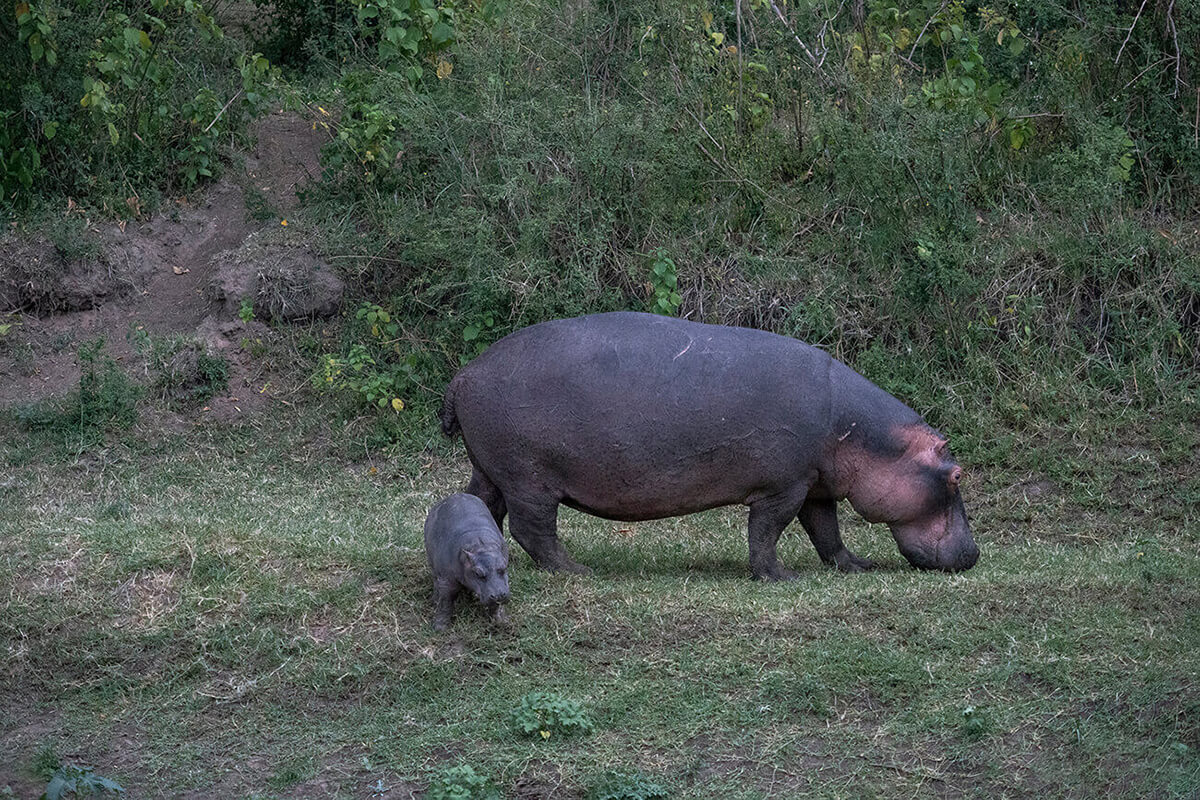
On top of that, in the Masai Mara it is also very common to see elephants, giraffes, buffalo, hippos, crocodiles and, with a bit of luck, the elusive black rhino.
Whatever the case, safaris in the Masai Mara are an unforgettable experience. To make the most of it, I recommend dedicating at least two days to this national reserve.
The best lodges to stay in the Masai Mara
If your budget allows, it is always better to sleep inside Masai Mara National Reserve. This lets you make much more of your game drives, especially in the first and last hours of the day, and lose less time travelling to your accommodation.
In this case, I recommend staying at one of these places:
- Ashnil Mara Camp. Set beside the Mara River, it is one of the best-located camps in the Masai Mara. It lies in an area with one of the highest densities of wildlife and predators in the reserve. Double room price: €300 (breakfast included).
- Fig Tree Camp. Located beside the Talek River, also in a very good area from which to start your game drives and see animals right from the beginning. Double room price: €330 (all meals included).
- Sarova Mara Game Camp. A camp in the heart of the Masai Mara, in one of the best areas for watching the great migration. Double room price: €780 (all meals included).
If photos are not such a priority for you and you prefer to cut costs, sleeping outside the reserve, near the entrance, is also a good option. In that case, my preference is to stay in the area near Talek Gate. In my experience, from there you can quickly reach areas where lions, cheetahs or leopards are regularly seen. Some recommended places to stay near Talek Gate are:
- Talek Bush Camp. A very good option if you want to sleep near Talek Gate without giving up comfort and good value for money. Double room price: €160 (all meals included).
- Mara Duma Bush Camp. A camp just outside the reserve, also beside the Talek River. Double room price: €110 (breakfast included).
- Cocodrile Camp. The perfect option for travellers on a tighter budget. The tents are simple but clean. The restaurant food is expensive, about $15 per meal, so if you are on a tight budget it is better to bring food bought at the supermarket. This is where I stayed for four nights. Double room price: €70 (breakfast included).
Finally, if you want to do a 7-day safari in Kenya as cheaply as possible, then it is better to choose accommodation near Sekenani Gate, as it is the cheapest and access from Nairobi is quicker.
Tips for visiting the Masai Mara
On my safaris in Kenya, the Masai Mara has always been the high point of the trip. For this reason, when planning your route, I advise leaving this reserve for the end of the itinerary.
The best times for a game drive are early in the morning or late in the afternoon. That is when it is cooler and the animals are most active. I strongly recommend getting up early. If you prefer to rest, it is better to take a break at midday, when there is far less animal activity.
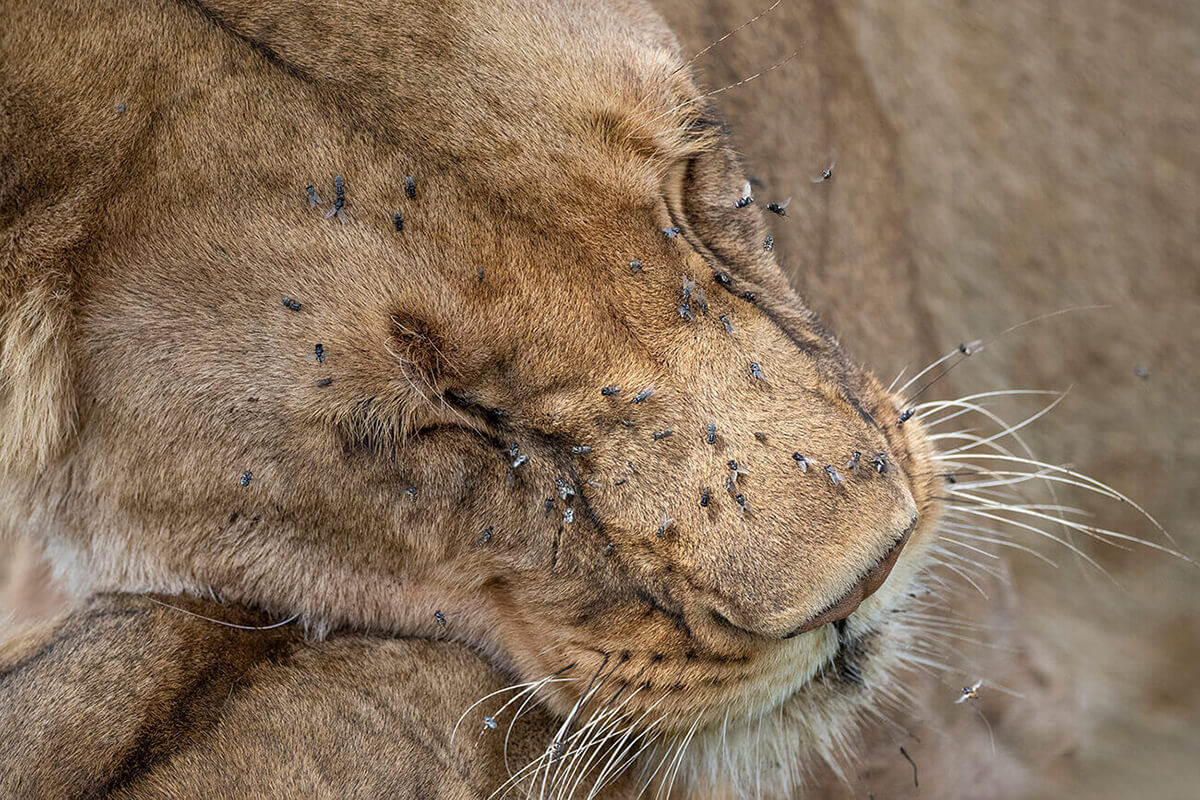
There are tsetse flies in the Masai Mara, so it is important to apply insect repellent to any skin not covered by your clothes. It is also always better to wear long sleeves. And so as not to attract flies or mosquitoes, it is best to dress in light-coloured clothing (beige, light brown or light green are the best options), since dark colours (especially black and navy blue) attract these insects.
Where is the Masai Mara?
Masai Mara National Reserve is located 230 kilometres south-west of Nairobi. The drive to Sekenani Gate, the nearest entrance, takes almost five hours.
My experience in the Masai Mara
For me, the Masai Mara is one of the most spectacular destinations on the planet. On my various safaris there, I have witnessed both the beauty of Africa’s big cats and the rawness of nature.
These are some of the moments I remember especially:
- During the great migration, on a safari in the Masai Mara in July, I saw a group of five lionesses hunt an adult wildebeest. It was a sad and yet fascinating moment.
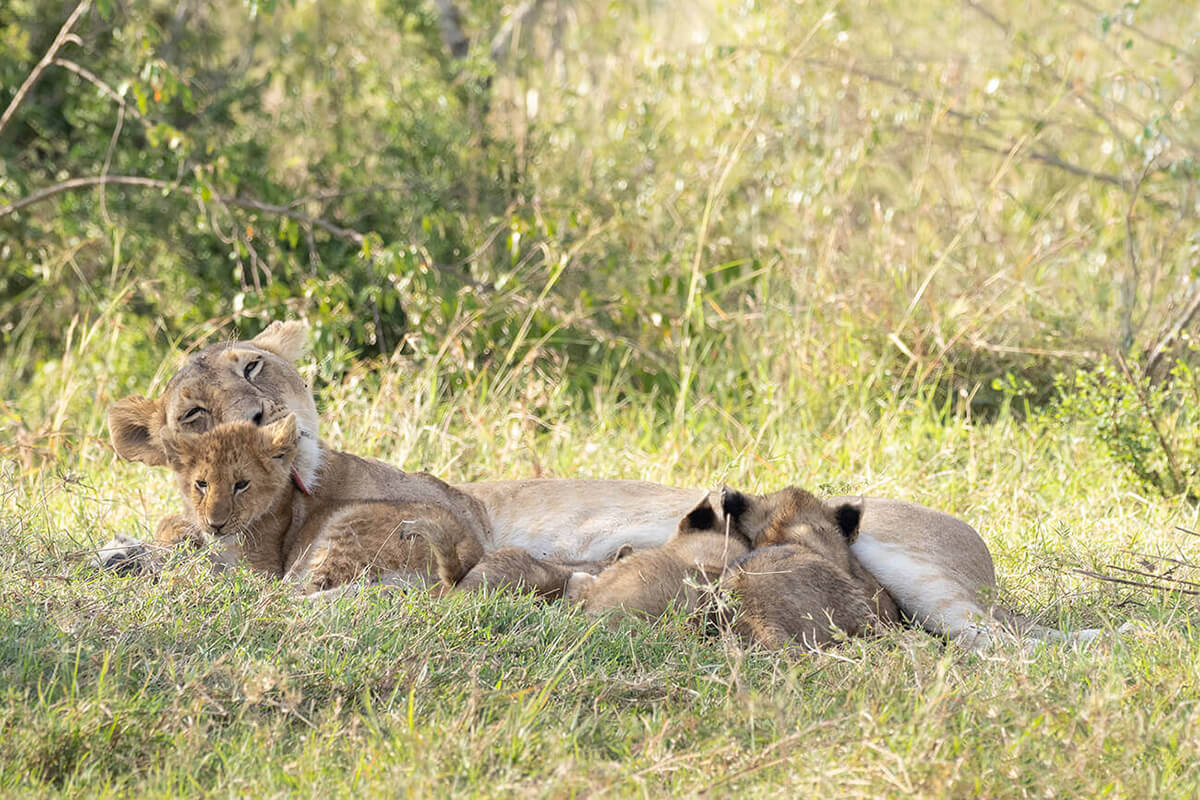
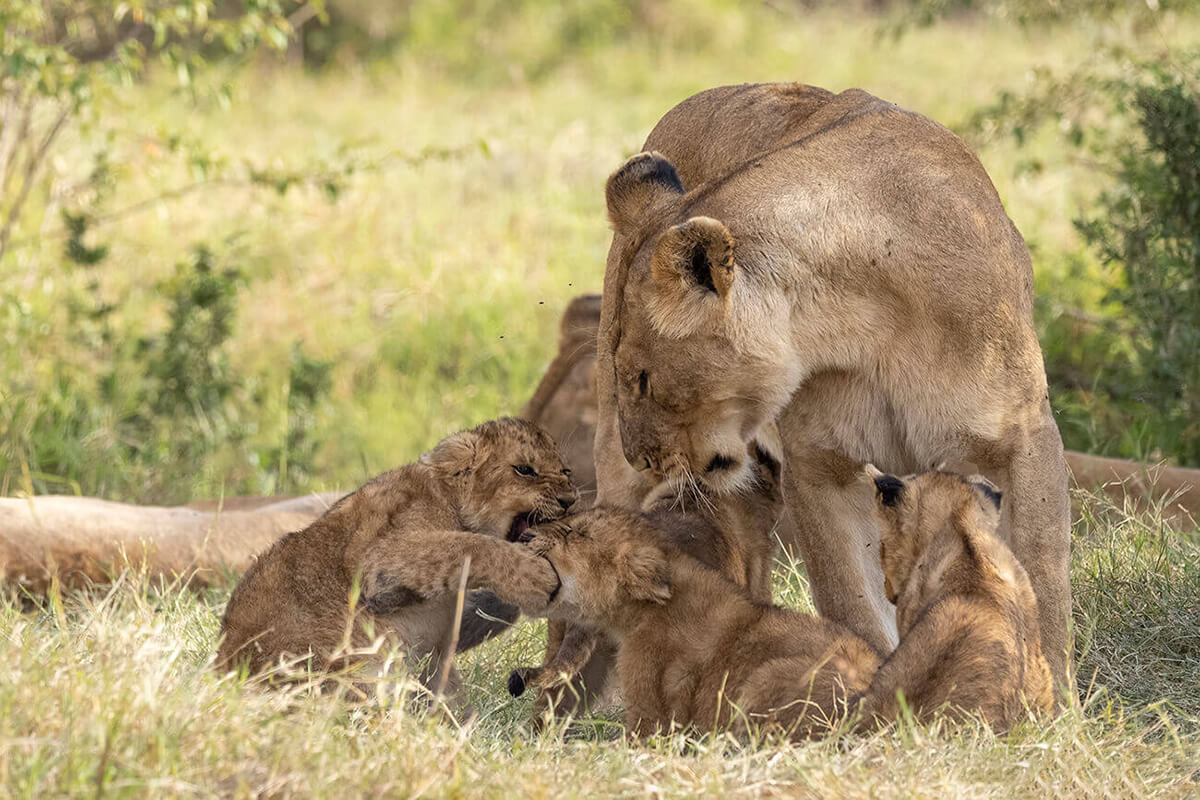
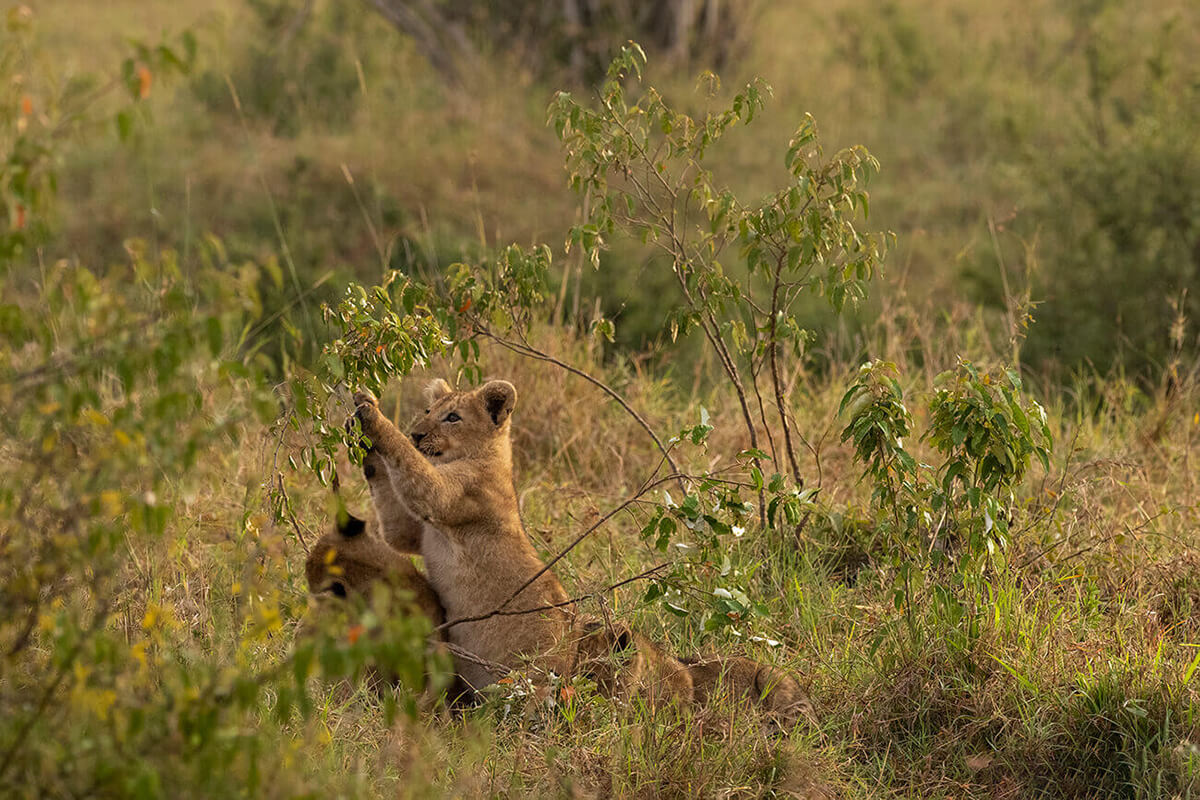
- On another occasion, I was able to watch the three-month-old cubs of the Rongai Pride for three days in a row, one of the most famous lion prides in the Masai Mara.
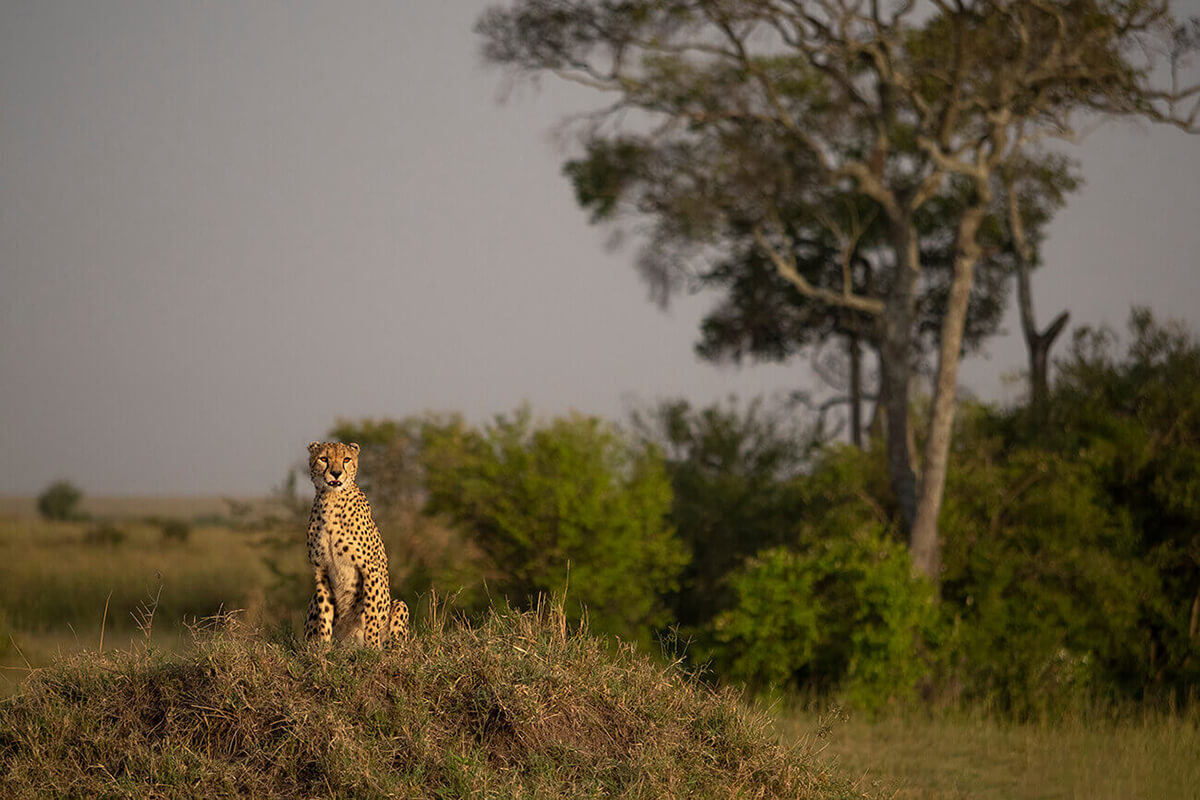
- In the Masai Mara I have also seen a hunting attempt by a coalition of cheetahs.
- Also, although it was a very brief sighting, in the Masai Mara I saw one of Africa’s most elusive cats: the serval.
For these moments, and many others, I am convinced that among the reserves to see on a Kenya 7 day itinerary, the Masai Mara can never be missing.
Lake Nakuru National Park
When deciding on the must-sees for a 7-day trip in Kenya, it is also important to consider the distance between the different places. Given that the Masai Mara is an essential visit, for reasons of proximity it is also well worth adding Lake Nakuru National Park to your safari itinerary.
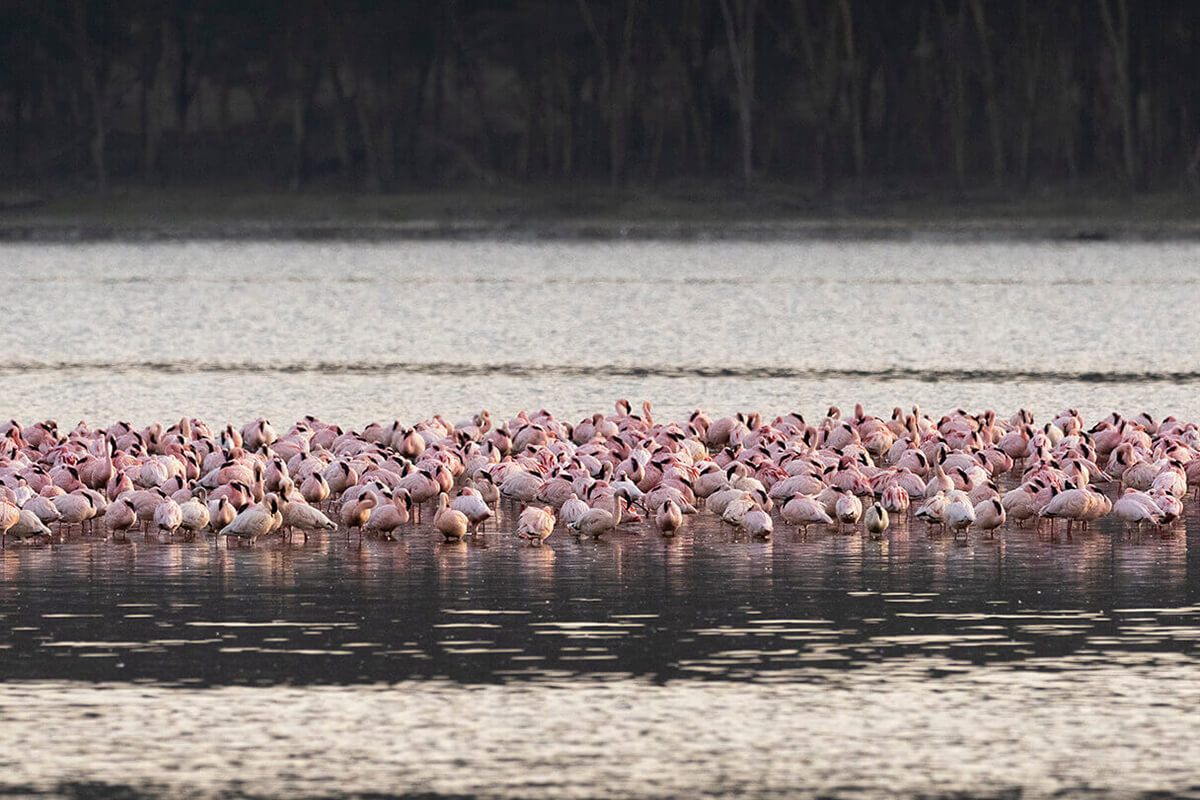
The great emblem of this national park is Lake Nakuru itself, which until 2010 was home to one of the largest flamingo populations in Kenya. Even so, that population has declined considerably and, although flamingos can still be seen, they are no longer as spectacular as they used to be.
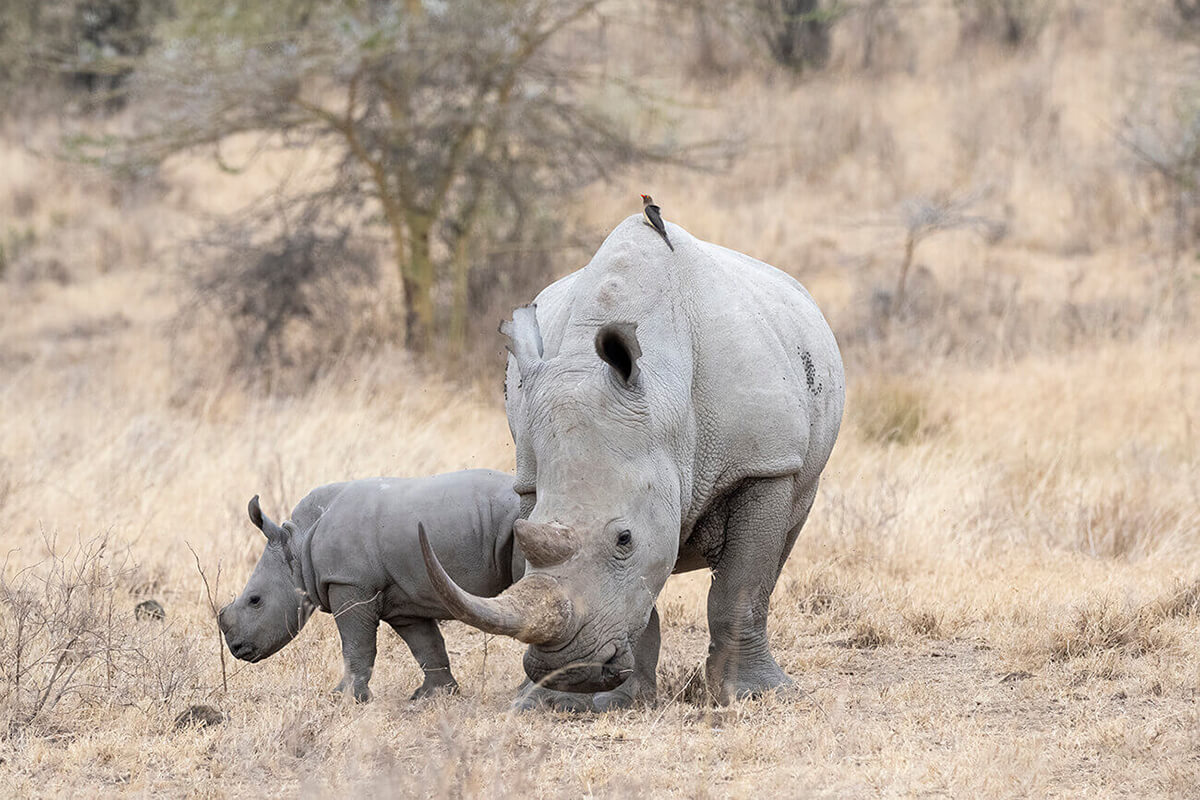
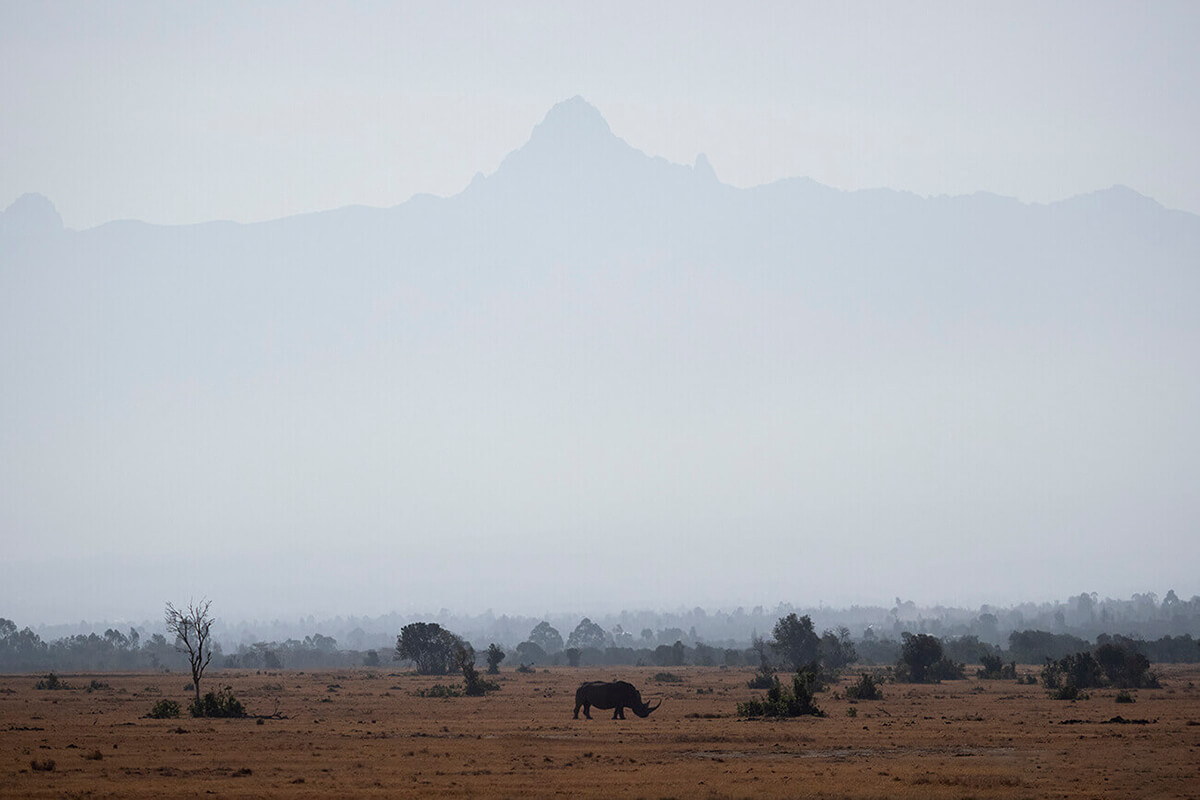
That said, flamingos are not the only stars of Lake Nakuru National Park. For me it is a place to see in Kenya in 7 days above all because it lets you almost guarantee rhino sightings. Together with Ol Pejeta Conservancy, this park is one of the best places in Kenya to see this fascinating and threatened mammal.
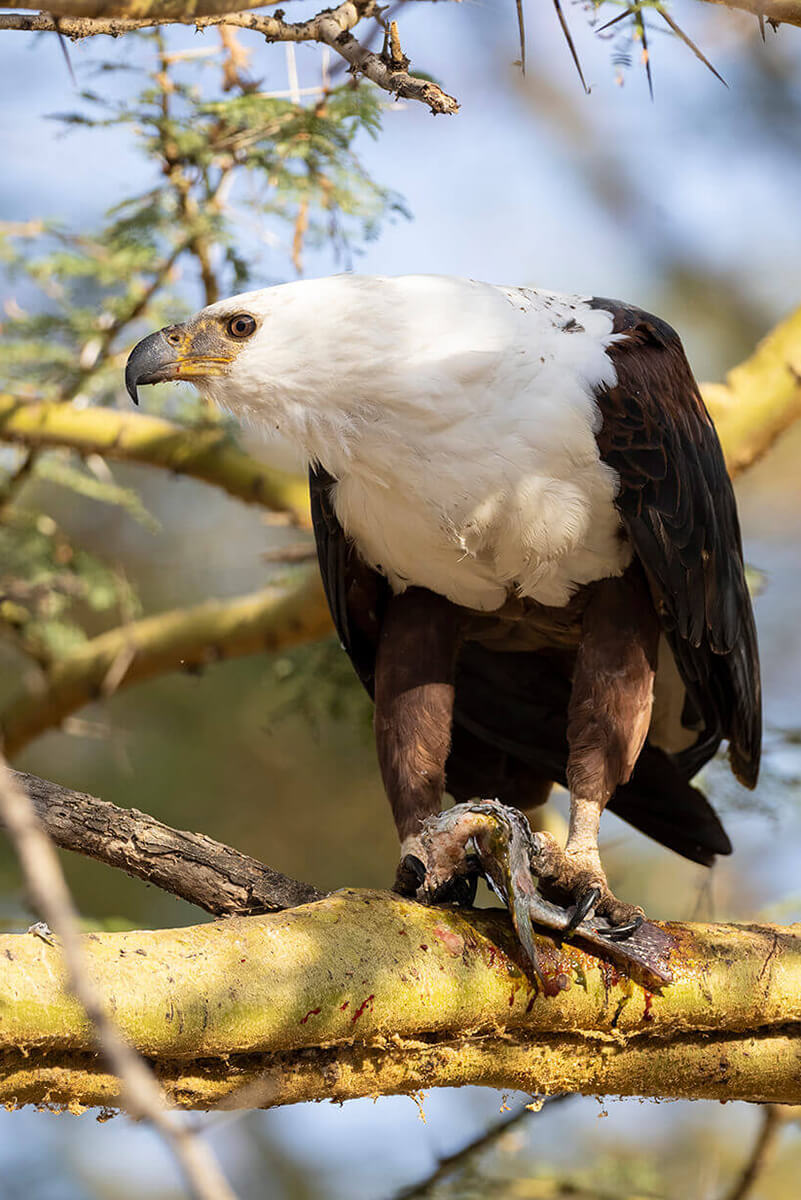
You can also see Rothschild’s giraffes, an endangered subspecies, and a great many bird species. As for big cat sightings, lions can occasionally be seen and, with a lot of luck, a leopard.
|
PLAN YOUR NEXT ADVENTURE Want a Kenya safari without the guesswork?Tell us roughly what you have in mind and I will put you in touch with the trusted local operators best suited to the kind of safari you are after. You deal directly with them, with no middlemen, and I am here to answer any questions while you plan. |
The best lodges to stay in Lake Nakuru National Park
If you are going on a safari in Lake Nakuru for more than one day, it is preferable to choose one of the places to stay inside the national park, above all so that you don’t have to pay the park entrance fee more than once within 24 hours.
The two main places to stay inside the park are:
- Lake Nakuru Lodge
- Sarova Lion Hill Game Lodge
They are two fairly expensive options, but if you are doing independent travel in Kenya on a smaller budget, there is also the option of sleeping at one of the campsites inside the reserve. There are two types of campsite:
- Public campsites. They don’t require advance booking, and have water and toilets. They cost $20 per person. In Lake Nakuru National Park there is only one public campsite, Makalia campsite.
- Special campsites. They require advance booking (reservations@kws.go.ke). They have no water or toilets, and cost $35 per person. Inside Lake Nakuru National Park there are seven special campsites; you can check them here.
If you don’t want to camp and would rather have cheaper accommodation, then I recommend Lillypond Camp. It is a fairly rustic place, but very affordable and very well located. It is only three minutes from Nderit Gate, which for me is the best-located entrance to the park, as it is the part of the park where rhinos, giraffes and even lions or leopards are most often seen.
Tips for visiting Lake Nakuru National Park
Many 7-day Kenya safaris include only an afternoon visit to Lake Nakuru, so the park is very quiet in the morning, especially at sunrise. For this reason, I recommend starting your game drives very early and heading to the acacia woodland near Nderit Gate. That is where you have the best chances of seeing lions, leopards, black rhinos and Rothschild’s giraffes.
The middle of the day is a good time to head to the lake and see the flamingos. It is also worth going up to the Baboon Cliff viewpoint.
How to get to Nakuru
This national park is in the Rift Valley, in the south-west of the country. From Nairobi to the main park entrance it is about 160 kilometres and 3 hours’ drive.
Between Masai Mara National Reserve and Lake Nakuru National Park it is about four hours’ drive.
My experience in Lake Nakuru National Park
I have been lucky enough to go on safari in Lake Nakuru National Park on two different trips.
Some of the best moments I have had there are:
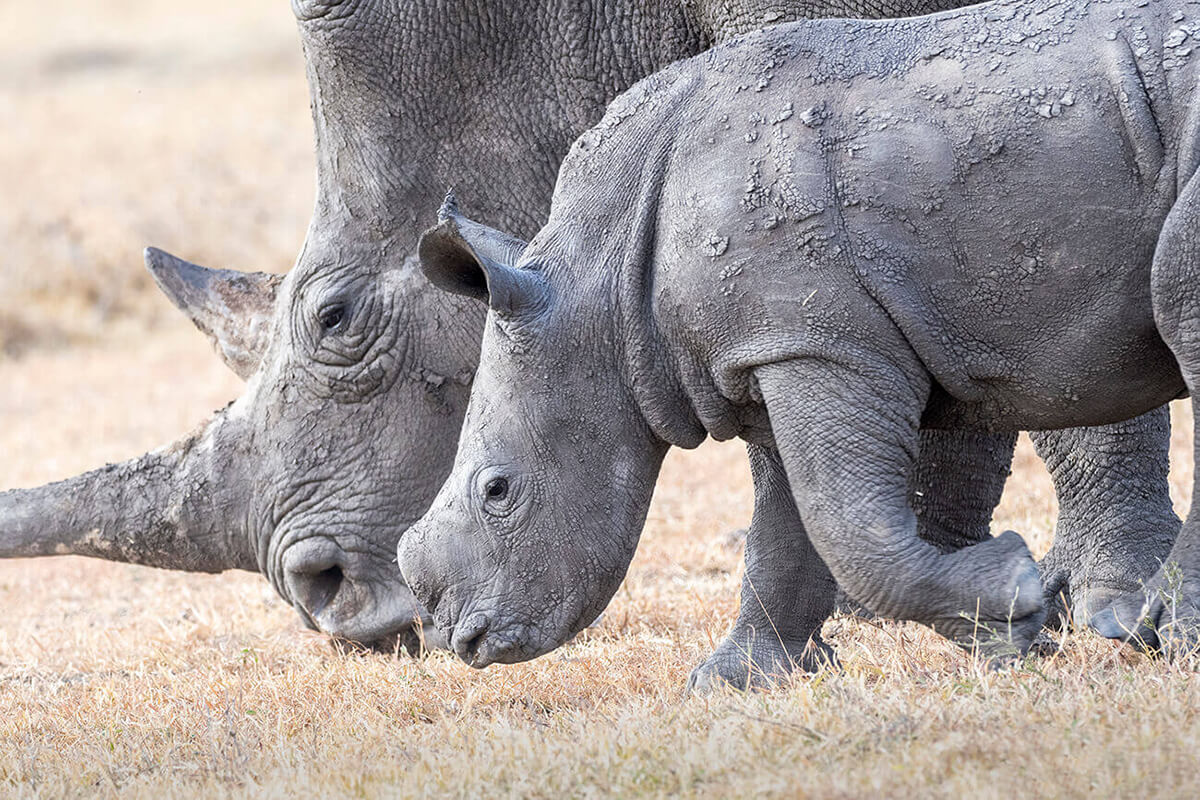
- The chance to see a white rhino with her calf. Without a doubt, it is an ideal national park for seeing rhinos on a 7-day route through Kenya.
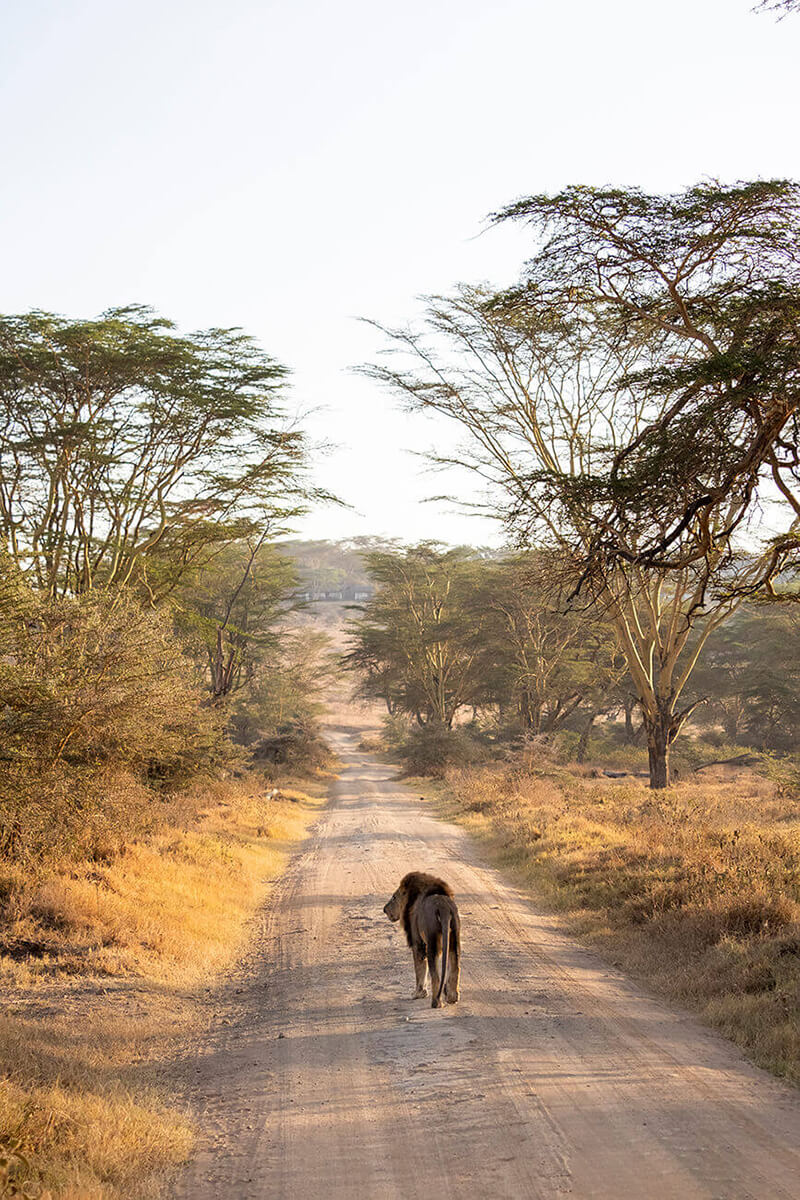
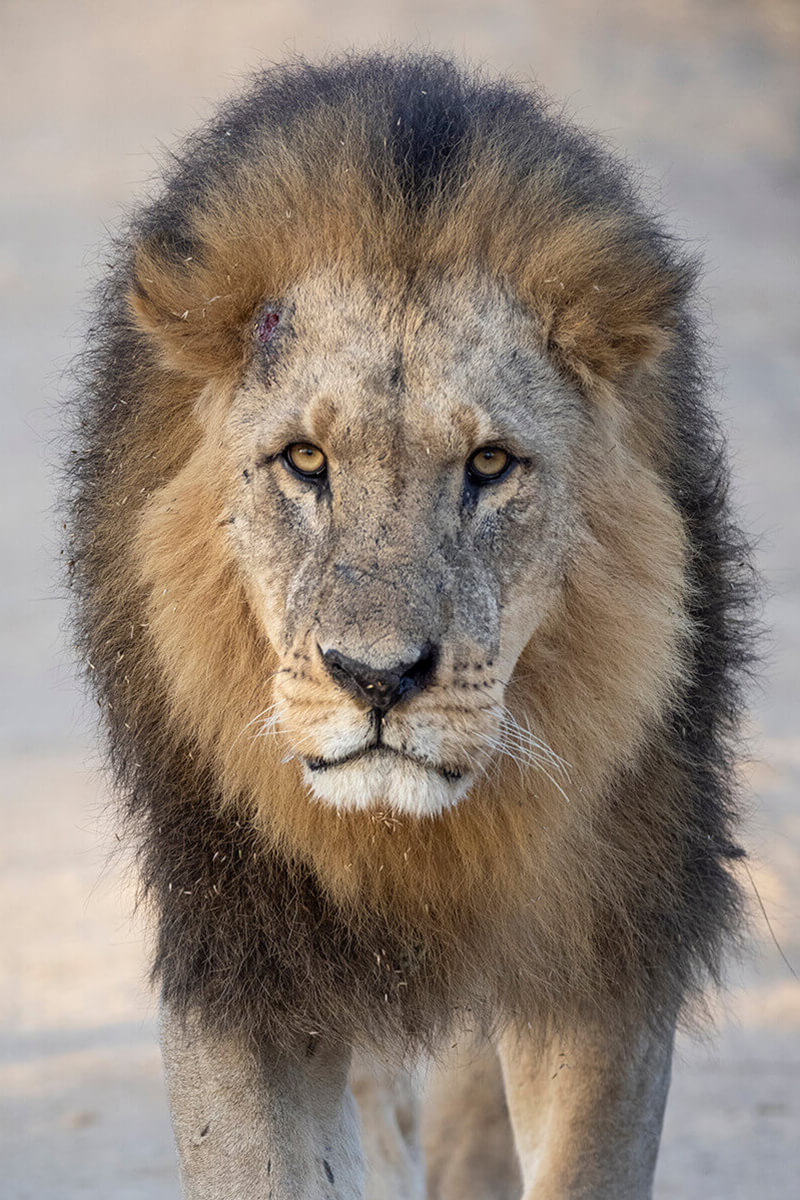
- One sunrise, together with my guide, we came across a male lion walking along the park’s dirt tracks. I was able to watch and photograph him for about twenty minutes as he moved along, and there was no other vehicle there.
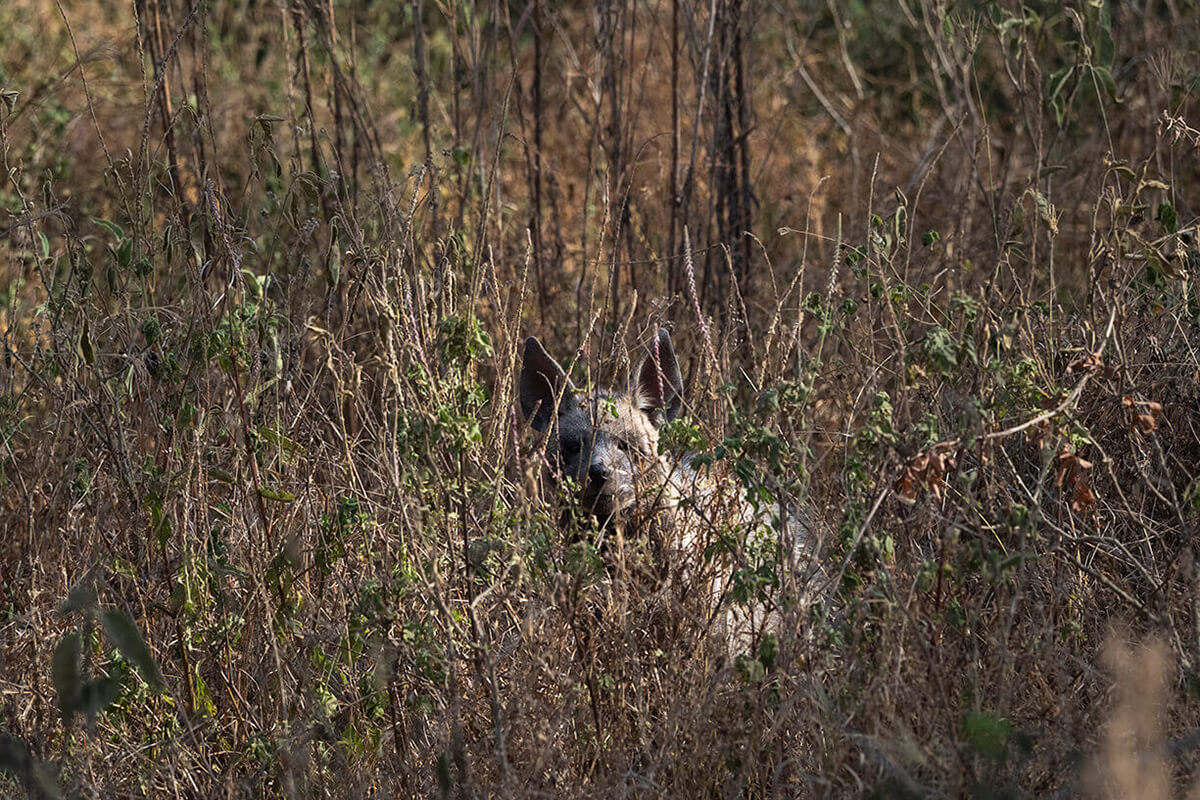
- A fleeting sighting of a striped hyena, a species of hyena that is quite hard to see and photograph.
- The first time I visited this national park, there were still lots of flamingos on Lake Nakuru. The view from Baboon Hill, with part of the lake tinted pink by the flamingos, was impressive.
Samburu National Reserve
Samburu National Reserve is one of the most special places for a 7-day safari in Kenya. This conservation area is dominated by a semi-arid ecosystem, almost desert-like, which makes the landscape and wildlife quite different.
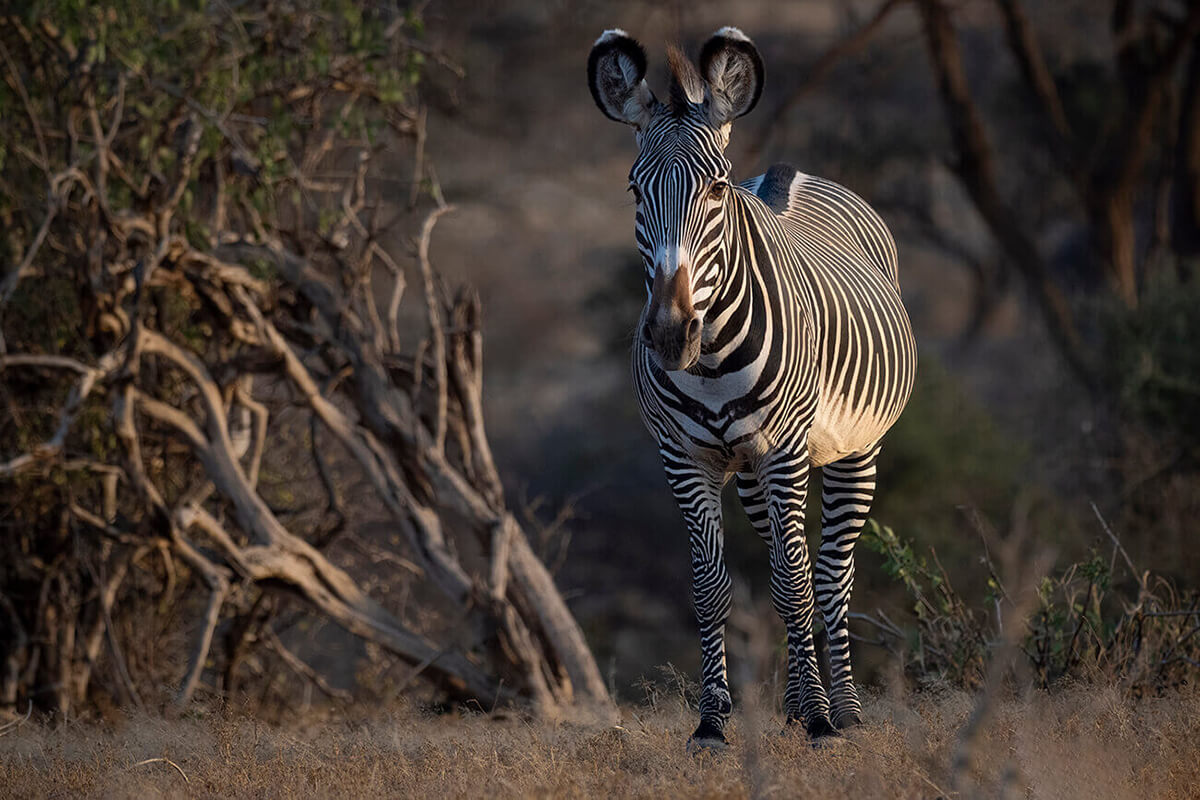
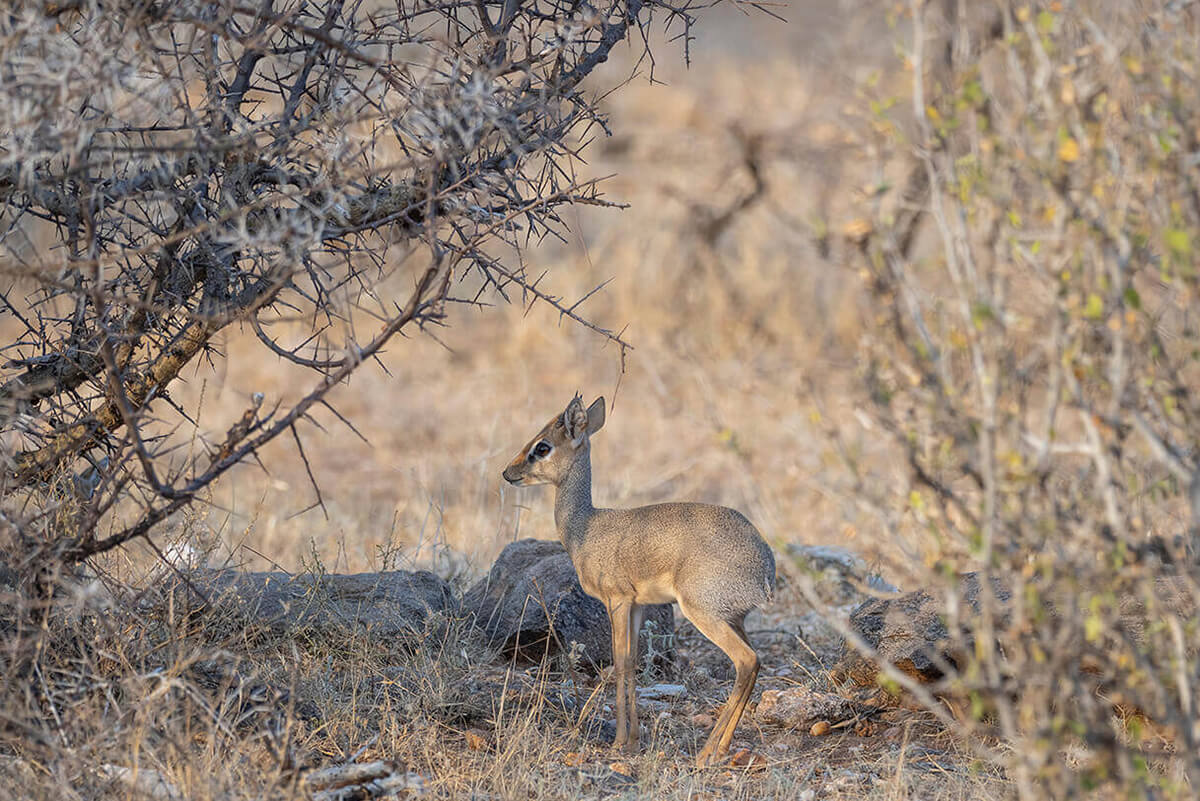
Samburu is one of the best places to see the elusive leopard, for me the most elegant cat in Africa. Its semi-arid climate also means you can see some species here that are found nowhere else in Kenya. That is why on safaris in Samburu people often talk about the Special 5. These are five animals that cannot be seen in any other Kenyan reserve. Specifically: the reticulated giraffe, Grevy’s zebra, the gerenuk, the beisa oryx and the Somali ostrich.
Where to stay in Samburu National Reserve
Once again, it is much better to sleep inside this reserve. There are more affordable options than in the Masai Mara.
Some of the best lodges to stay at are:
- Elephant Bedroom Camp (high budget).
- Samburu Sopa Lodge (mid/high budget)
- Lion King Bush Lodge (mid budget)
- Samburu Riverside Tented Camp (mid/low budget)
Alternatively, you can choose to sleep outside Samburu National Reserve. In that case the best option is to stay near Archer’s Gate, the main entrance.
Tips for a safari in Samburu
Because of the semi-arid climate in this part of Kenya, from eleven in the morning until four in the afternoon it is always very hot. In the heat the animals also stop to rest, so game drives are far less productive.
So, in Samburu it is even more important to get up very early so you can start your game drive about twenty minutes before sunrise. In the afternoon, it is also worth extending the game drive until the very last light. It is the best time to see animals and also to get the best light for photos.
On the other hand, it is a very dusty park, so I recommend bringing a scarf or a cloth to cover your camera while driving. For the same reason, I don’t recommend changing camera lenses (if yours are interchangeable) while the vehicle is moving.
On every game drive in Samburu I recommend carrying about two litres of water, as it is very hot.
How to get to Samburu Reserve
This national reserve is in Laikipia county, in the centre of the country. From Nairobi to the main entrance of the reserve, Archer’s Gate, it is about 315 kilometres and about 7 hours’ drive.
On the other hand, the drive from Samburu to Lake Nakuru is about 6 hours; and getting from Samburu to the Masai Mara takes almost 10 hours.
My experience of Samburu National Reserve
So far I have had the chance to visit Samburu Reserve once, when I spent two days and two nights inside the park. It is one of the places I like most in Kenya, and I am already planning my next visit.
Some of the most exciting moments on safari in Samburu have been:
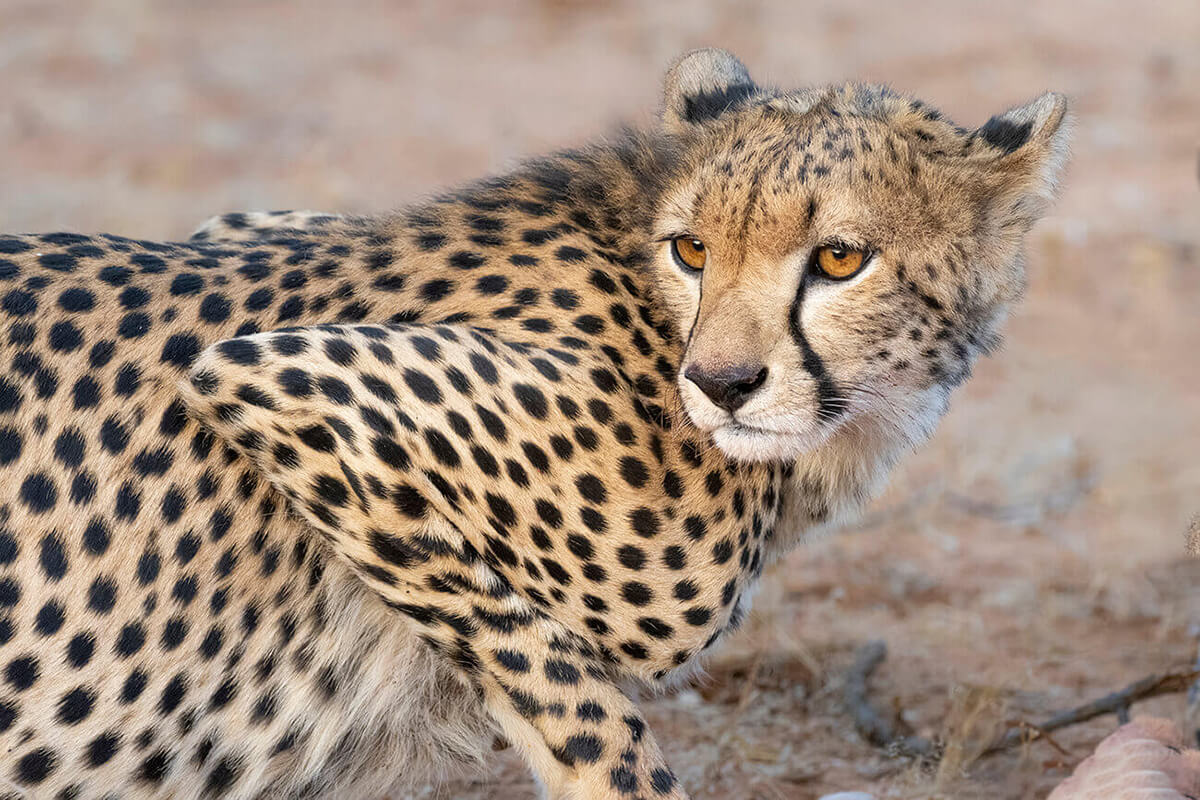
- The chance to see a coalition of three cheetahs just after they had killed a Thomson’s gazelle. I photographed them as they fed on their prey, in beautiful sunset light.
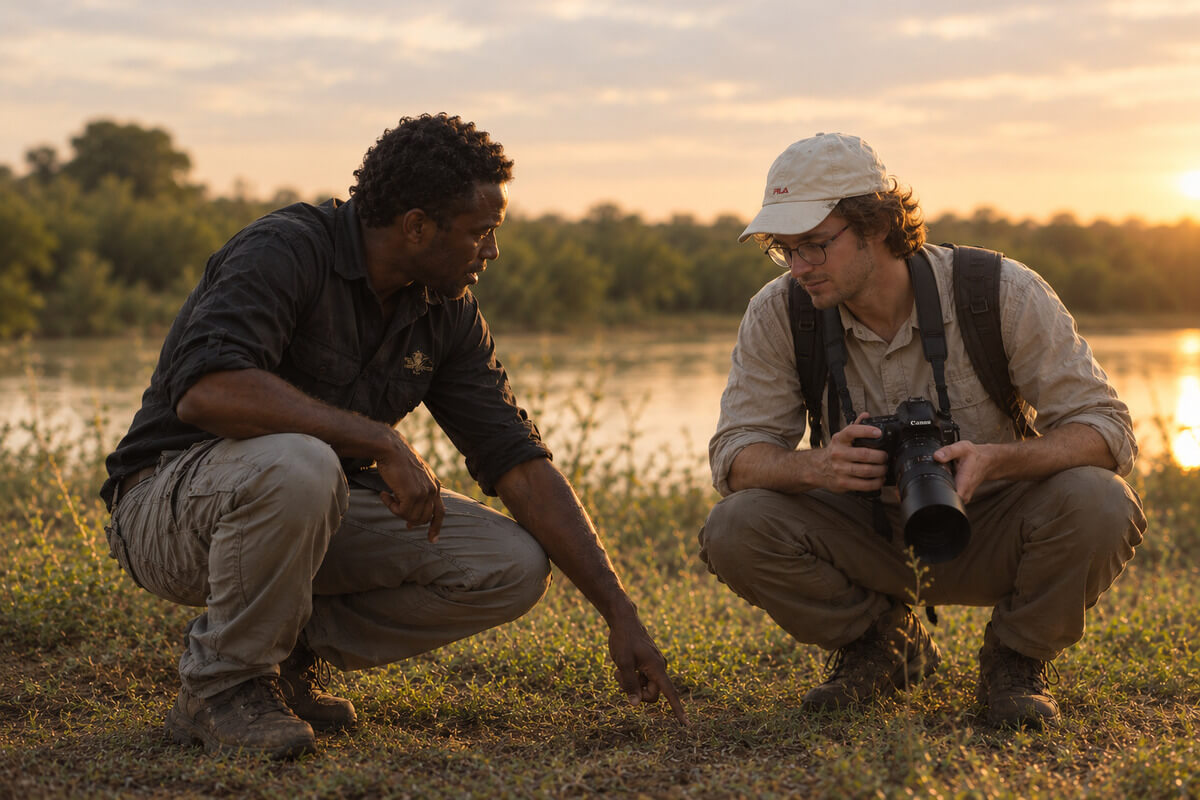
- Although I didn’t see any leopard, I was tracking their footprints together with my local guide. It was thrilling to see that they had been there, even though I didn’t see them.
- Seeing elephants in the bed of the Ewaso Ng’iro River digging for water and creating the only waterholes in the national reserve.
Amboseli National Park
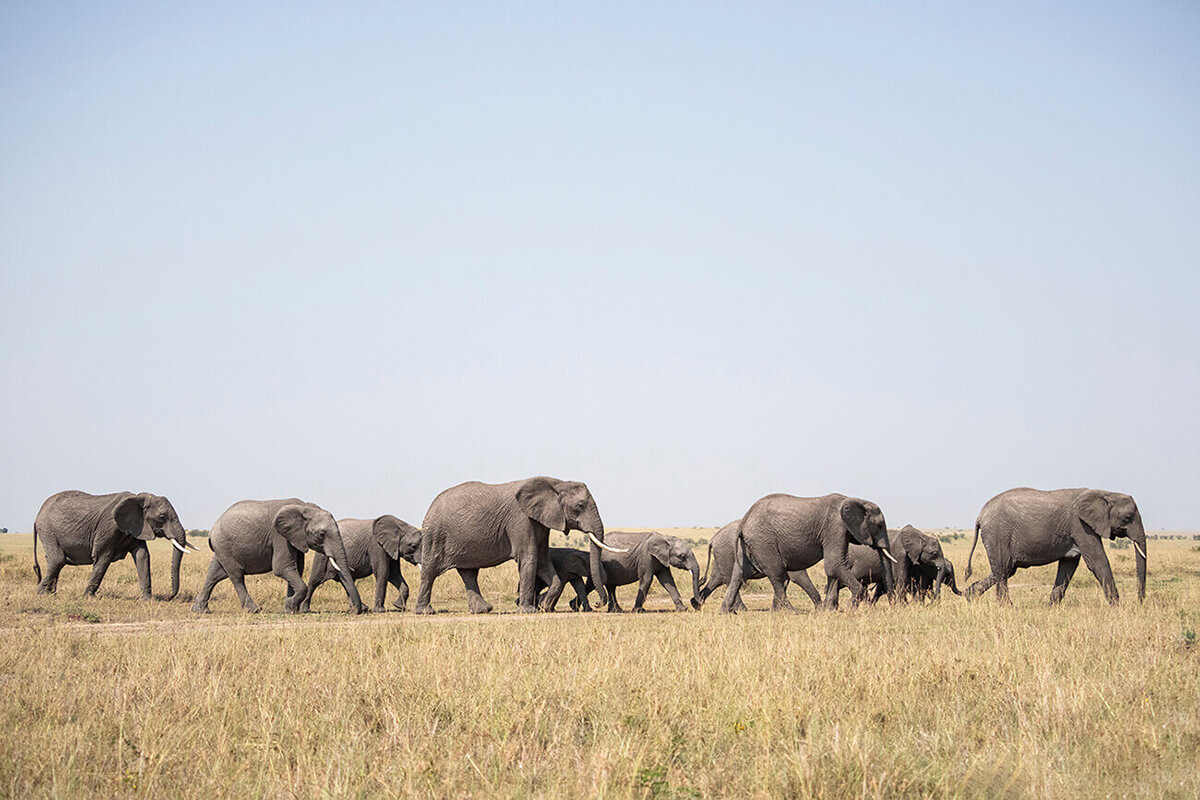
The last great emblem to see in Kenya in 7 days is Amboseli National Park. This national park, in the south of the country, is one of the most iconic in Kenya thanks to its spectacular views of Kilimanjaro and its huge herds of elephants. The name “Amboseli” comes from the Maasai word Empusel, which means “salty, dusty place”. A fairly accurate description, especially in the dry season, when the central lake dries up completely and leaves an almost surreal landscape.
Amboseli is famous for having some of the largest concentrations of elephants in Africa. Seeing these herds with Kilimanjaro in the background (when the clouds allow) is one of the most legendary images of any safari in Kenya. Besides elephants, it is also usual to see lions, cheetahs, giraffes, buffalo and hyenas. However, you can’t see the full Big Five here, as neither rhinos nor leopards live in the park.
Where to stay in Amboseli National Park
As always, sleeping inside national parks is a special experience and lets you make better use of the first and last hours of daylight. If you want to sleep inside the park, I recommend Oi Tukai Lodge.
Even so, in the case of Amboseli, staying at lodges just outside the park is also a very good option. These places are very close to the entrance, and the formalities for entering the reserve are usually quite quick. That said, it is highly advisable to choose somewhere near Kimana Gate, as it is the closest area where elephants are found at sunrise and sunset. In this area, I recommend one of these places:
- Tulia Amboseli Camp
- AA Lodges Amboseli
Tips for visiting Amboseli National Park
Amboseli is one of the hottest parks in Kenya, so it is important to be prepared for the heat, especially at midday. Sun protection, a hat and plenty of water are essential.
If you want to see elephants on the move, the best times are first thing in the morning (around 7:00) and in the afternoon (around 17:00), when they travel between the dry areas and the swamps. During the middle of the day they usually stay in the wet areas resting, so sightings are less dynamic.
To see Kilimanjaro clear of cloud, the best time is the long dry season, between June and September, when there are fewer clouds. Even so, even in those months it doesn’t always show itself, so patience is key.
Finally, although the elephants are used to vehicles, it is important to stay respectful: avoid loud noises and don’t get too close, especially if there are calves.
How to get to Amboseli
Amboseli National Park is about 230 kilometres from Nairobi. The drive takes between 4 and 5 hours, with a good part of the route on unpaved roads in good condition.
To go from Lake Nakuru or the Masai Mara to Amboseli you have to pass through Nairobi, as there is no direct road. This makes the journey quite long: between 7 and 8 hours from Nakuru and between 9 and 10 hours from the Masai Mara.
My experience in Amboseli
I haven’t yet been able to visit Amboseli National Park. As you will have seen from reading my articles, I tend to prioritise slower-paced itineraries, spending quite a lot of time in each national park.
Even so, I am sure that on my next safari in Kenya I will include this national park, as it seems to me a very photogenic and interesting place.
What to see in Kenya in 7 days: other highlights
Honestly, for a 7-day safari in Kenya, I wouldn’t visit anything else apart from the must-sees above.
Even so, for those who want a slightly different route, with an activity other than the classic 4×4 game drives, these destinations are very good options:
- Aberdare National Park. A very different national park, with very dense forests where it is impossible to do a game drive. Here you sleep in lodges strategically located in front of waterholes, and you can watch the animals from behind a large window. During the night, you are alerted when the most notable animals, such as hyenas, rhinos or leopards, approach the waterhole.
- Lake Naivasha. This lake is a paradise for waterbirds and also for hippos. Boat trips of about two hours are offered. You can also do walking safaris in a private reserve, Crescent Island Reserve.
- Ol Pejeta Conservancy. This reserve is run by a non-profit organisation and is one of the most outstanding conservation projects in Africa. You can go on 4×4 game drives, but also see the last northern white rhinos (only 2 individuals remain), visit the chimpanzee sanctuary or learn about the work of the rangers fighting poaching.
- Hell’s Gate National Park. In this Rift Valley national park there are no dangerous animals, so the most common thing to do is cycle, and see giraffes, zebras, impalas and other herbivores in a very different way.
- Diani Beach. For those who want to combine a 7-day safari in Kenya with a bit of relaxation and beach time, this is the ideal destination.
The best Kenya 7 day itinerary
It is clear that a 7-day route through Kenya has to be selective. There is no time to see everything, and on a trip like this it is far better to prioritise quality over quantity. It is better to visit fewer national parks and spend more time on game drives than to try to cover everything and spend most of the trip on the road.
By proximity and for what they offer, for me there are two must-sees for a Kenya 7 day itinerary: the Masai Mara and Lake Nakuru. From there, the ideal is to add just one more: either Samburu National Reserve, if you are after a wilder, different landscape, or Amboseli National Park, if you want to see big herds of elephants with Kilimanjaro in the background. Trying to fit everything into one itinerary, frankly, I don’t see as a good option.
For this reason, the two routes I recommend most are as follows:
- Day 1: Leave Nairobi for Samburu National Reserve. Afternoon game drive in Samburu.
- Day 2: Full day of safari in Samburu National Reserve.
- Day 3: Sunrise game drive in Samburu and transfer to Lake Nakuru National Park. Sunset game drive at Lake Nakuru.
- Day 4: Morning game drive at Lake Nakuru and transfer to the Masai Mara. Sunset game drive in the Masai Mara.
- Day 5: Full day of safari in the Masai Mara.
- Day 6: Full day of safari in the Masai Mara.
- Day 7: Morning game drive in the Masai Mara and transfer to Nairobi, ending the 7-day safari in Kenya.
If you prioritise Amboseli, then the route I recommend would be the same, but spending the first days visiting Amboseli instead of Samburu.
Want this 7-day route adapted to your dates?Tell us when you plan to travel and which parks appeal most, and local operators I trust will send you tailor-made proposals so you can compare and choose the one that fits your trip. ✓ Personalised safari itineraries |
How to book a 7-day safari in Kenya
Whether you opt for independent travel in Kenya or travel with an agency, I always recommend arranging the safari part with a local Kenya tour operator. A good guide and good logistics are essential to enjoying the magic of safaris.
To book everything without surprises, it is best to book the safari before arriving at your destination, following these steps:
- Research the destination well and the different reserves and national parks, so you are clear about what you want to see in Kenya in 7 days. I recommend reading some of these guides: Kenya vs Tanzania safari, Masai Mara safari guide and Samburu National Reserve safari guide.
- Contact a local operator, saying which national parks you want to visit and your budget for the safari. You can contact the trusted local operators I have travelled with directly through this form. Remember that you can currently book an English-speaking safari guide in Kenya directly with a local operator. This way you avoid middlemen and save on the cost of booking the safari.
- Review the local operators’ proposals, and suggest changes to the accommodation or itineraries according to your personal preferences.
- Buy your flights, so the safari dates are settled.
- Book the safari, usually by paying between 20% and 30% of the total value of the safari.
- One month before the start of the 7-day safari in Kenya, pay the remaining balance of the safari. In some cases, you can also pay the remaining balance in cash on arrival in Kenya.
- Enjoy this wonderful experience to the full 🙂
How much does a 7-day trip to Kenya cost?
In my post on the Kenya safari cost I discuss the budget for a safari in this country in detail. The cost of a trip like this is mainly influenced by these points:
- Whether the safari is private or in a group. If you go in a group, usually six or seven people in one vehicle, you get better prices and it is the best way to do a cheap Kenya safari. However, this means you can’t customise the route and have to adapt a little to the tastes of all the travellers.
- The cost also varies depending on how the safari is organised. That is, depending on whether you do the safari independently (not recommended if you have no experience in East African destinations and in looking for animals), by hiring a car with a driver, by booking a complete safari directly with a local operator, or by booking with a European or international agency. After my experiences, I think the best option is to book the safari with a local operator. That way you get a much more competitive price, avoiding middlemen, and at the same time you can rely on a guide who knows the destination perfectly throughout the route. If this option interests you, by filling in this form I will put you in touch with my trusted local operators in Kenya.
- The accommodation during the safari. The choice of accommodation also has a significant influence on the cost of a 7-day safari in Kenya. There is quite a difference between sleeping inside or outside the national parks. In fact, depending on the accommodation chosen, safaris are classified as standard, mid-range, luxury or luxury plus.
- The season in which you travel. From June to December prices are higher, with the peak of high season between July and mid-October.
If you book the safari with a local operator, the standard prices for a 7-day safari in Kenya for two people would be as follows (if there are more than two people, the price drops substantially):
- Standard group safari: Between $1,300 and $1,500 per person.
- Standard private safari: Between $1,800 and $2,200 per person.
- Mid-range private safari: Between $2,500 and $3,000 per person.
- Luxury private safari: Between $3,200 and $4,000 per person.
- Luxury plus private safari: More than $4,000 per person.
When comparing prices between different 7-day Kenya safari proposals, it is essential to look at the details of the itinerary, especially the number of game drives included each day and the real time spent inside each park or reserve.
A programme that includes full game drives in the morning and the afternoon is not the same as one in which some days are given over to alternative activities, such as cultural visits or a stop at Lake Naivasha. Differences like these directly affect both the experience and the final price of the trip.
It is also worth bearing in mind that the days in the Masai Mara tend to be the most expensive of a 7-day safari in Kenya. This is largely due to the high cost of entrance fees, which are currently $200 per person per day between July and December, and $100 between January and June.
|
YOUR SAFARI STARTS HERE Get a clear price for your 7-day Kenya safariSkip the middlemen. Request a quote and compare direct proposals from verified local operators, so you can see exactly what is included in each itinerary before you decide. |
Practical information for seeing Kenya in 7 days
In my guide to independent travel in Kenya, with a lot of useful information that also applies if you visit the country with an agency, I explain in detail all the organisational aspects to bear in mind before and during a safari in Kenya.
In brief, these are the practical points to bear in mind on a 7-day trip to Kenya:
Do you need a visa to visit Kenya for 7 days?
For tourist trips to Kenya you don’t need to apply for a visa, but you do need to obtain an electronic travel authorisation (eTA). The application is made on this website.
I recommend applying between three and two weeks before the trip. To do so, you must have a passport valid for at least 6 months from your arrival in Kenya.
Which vaccinations are needed?
The only compulsory vaccination is yellow fever. Hepatitis, tetanus and typhoid vaccinations are also advised. And depending on the length of the trip, other vaccinations may be advisable. The best thing is to visit a travel medicine clinic a few months beforehand to get all the health information.
You must also keep in mind that malaria exists in the country. So it is necessary to take every possible measure to avoid mosquito bites: a good repellent, a mosquito net and light-coloured, long-sleeved clothing. In most cases, malaria prophylaxis medication is advised.
Where to fly into Kenya
If you are going on safari in Kenya, the usual thing is to arrive by plane at Jomo Kenyatta International Airport, in Nairobi. From Europe, there are direct flights with Kenya Airways, Lufthansa, Brussels Airlines, Air France and KLM.
After arriving in Nairobi, you can drive to the national parks and national reserves.
What is the best time for a 7-day safari in Kenya?
You can travel to Kenya all year round, but there are two especially recommended seasons:
- From June to October, with dry weather and coinciding with the Great Migration in the Masai Mara.
- From January to February, also dry and with very good visibility for game drives.
The main rains usually fall from March to May, although in November and December there is also a shorter rainy period. It is the least recommended time for a 7-day safari in Kenya, although it has some advantages such as fewer tourists and lower prices.
Is it worth visiting Kenya for more than 7 days?
Although seeing Kenya in 7 days is enough to enjoy a fairly complete safari, especially if you include the Masai Mara, if you have a bit more time and budget, it is always better to do a Kenya itinerary of 10 days. That way you can spend an extra day or so in each reserve, and extend the itinerary.
Also, if you have 12 days or more, it can be a good idea to combine Kenya and Tanzania in the same trip.
 |
SAFARIS BY LOCALS Ready to plan your Kenya trip?Find the best Kenya trips and safaris with a local operator. Tell us your dates and interests and we will connect you with trusted local teams who know every park first-hand, with direct prices and no intermediaries. |

