Joining a Tanzania group safari is one of the best ways to cut the cost of your trip, and it is also a great chance to meet people and share the thrill of exploring the African savannah together.
That said, planning and booking a group safari in Tanzania can be a little confusing. That is why I decided to write this post, based on my own experience of safaris in Tanzania, both private and in a group. Below, I explain the different types of group safari and the ways to book one.
What exactly is a group safari in Tanzania?
To avoid any confusion, it is worth clarifying what we mean by a group safari in Tanzania. A group safari is a safari in which the organising company brings together different people (initially strangers) so that they share the same vehicle and guide.
Usually, each safari vehicle carries 6 people plus the guide. Sometimes a group safari runs with two vehicles travelling together, so the group can end up with 12 travellers and two guides.
In practice, the costs are split between the six people travelling in each vehicle. This is important to bear in mind when deciding between a group safari in Tanzania and a private safari. If there are four or more of you, I always recommend going private, as the cost difference is very small. On a private safari you have much more freedom along the route and can customise the safari itinerary.
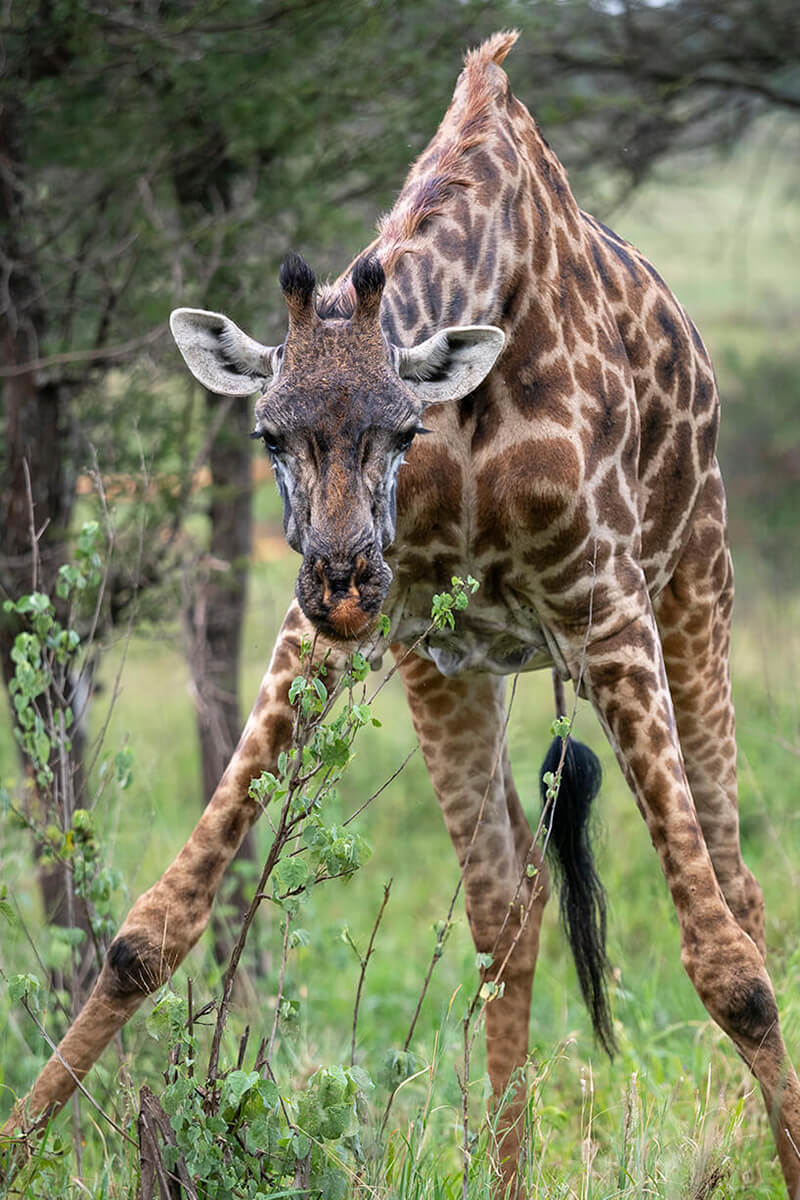
Safari in Tanzania
Which Tanzania safari fits your trip?
Group departure or private safari, fixed dates or flexible: tell us your dates, budget and interests and receive a free, no-obligation proposal from local operators, without intermediaries.
Types of group safari in Tanzania and how to book them
Not all group safaris in Tanzania are the same, and they are not all booked in the same way.
In short, there are three types of group safari:
- Group safaris with international agencies (high budget).
- Group safaris with local agencies on fixed dates (mid-range budget).
- Group safaris with local agencies with daily departures (low budget).
1. Group safaris with international agencies
Group safaris in Tanzania organised by international agencies are itineraries sold by Spanish agencies or agencies from other countries, offering a fixed group route. These safaris run on specific, already closed dates, and the route cannot be changed.
In general, these safaris are well organised and, if you book with a Spanish travel agency, the whole group is usually Spanish-speaking. This can make communication and socialising easier if your English is not great.
However, there is one big drawback: the price. International agencies act as intermediaries, which pushes the price up considerably. It also means less money reaches the destination country, in this case Tanzania.
For this reason, I always promote and recommend booking safaris directly with local agencies. As I explain below, it is also possible to do a group safari in Tanzania directly with a local agency.
2. Group safaris with local agencies on fixed dates
One of the most common formats for a group safari in Tanzania is the departures organised by local agencies on fixed dates.
These are usually mid-range safaris, with accommodation in lodges or tented camps, and they last a little longer than other formats, generally between 8 and 12 days.
Since demand for this type of trip is not always steady, local agencies set one or two departure dates during the high-season months. This way, they can bring individual travellers together until the group is complete. The minimum number needed to confirm the safari is usually 4 people, while the maximum size is normally capped at 12 participants. When the group exceeds 6 people, it is split into two vehicles to guarantee comfort and good views during the game drives.
In most cases, these trips are run with an English-speaking guide and bring together travellers of different nationalities. However, in recent months, together with some trusted local agencies I work with, we have started to organise Spanish-language group safaris, operated directly by local agencies in Tanzania.
The aim is to form completely Spanish-speaking groups with a Spanish-speaking local guide, while keeping prices competitive by cutting out intermediaries. You can ask me about the departures currently available.
3. Group safaris with local agencies with daily departures (low budget)
Finally, there are low-budget group safaris in Tanzania. This option is also offered by local agencies and is the cheapest alternative.
These safaris can last between two and six days and can be booked on practically any date. Unlike fixed-date safaris, the local agencies pool travellers among themselves until the six seats in each vehicle are filled. This keeps prices low and makes it possible to offer group safaris with daily departures.
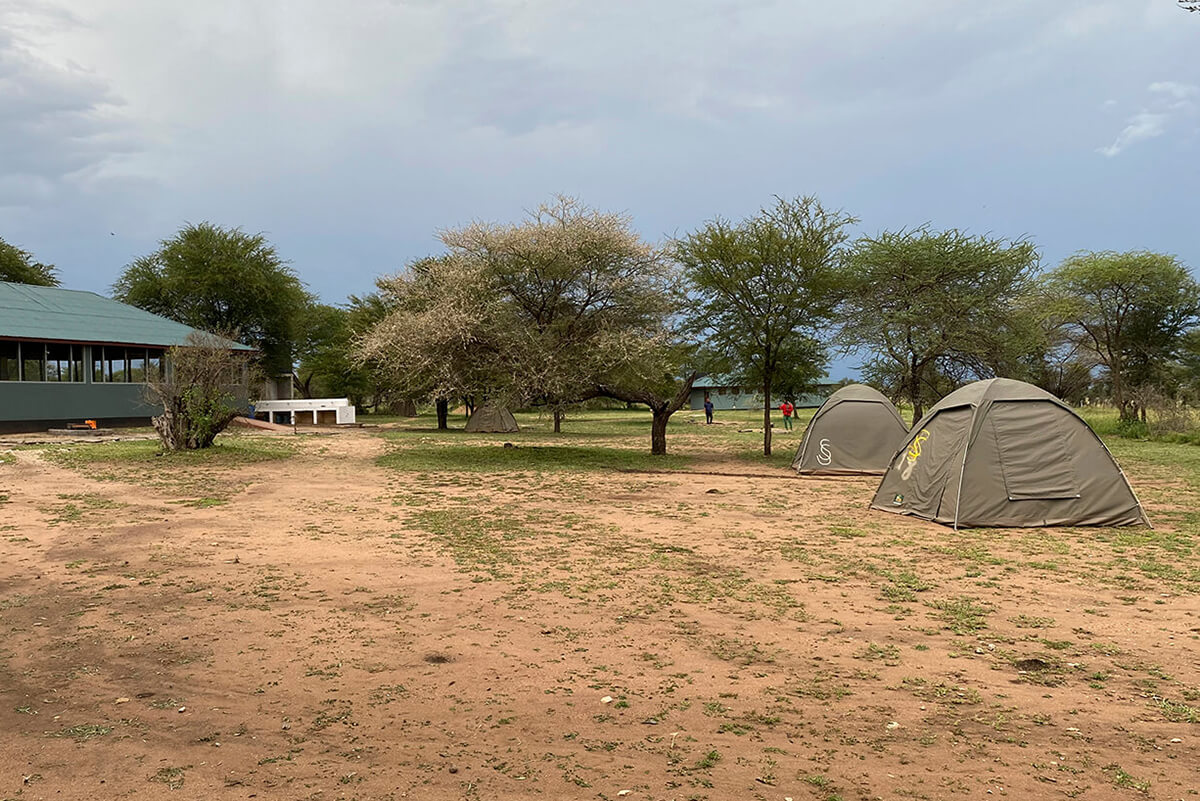
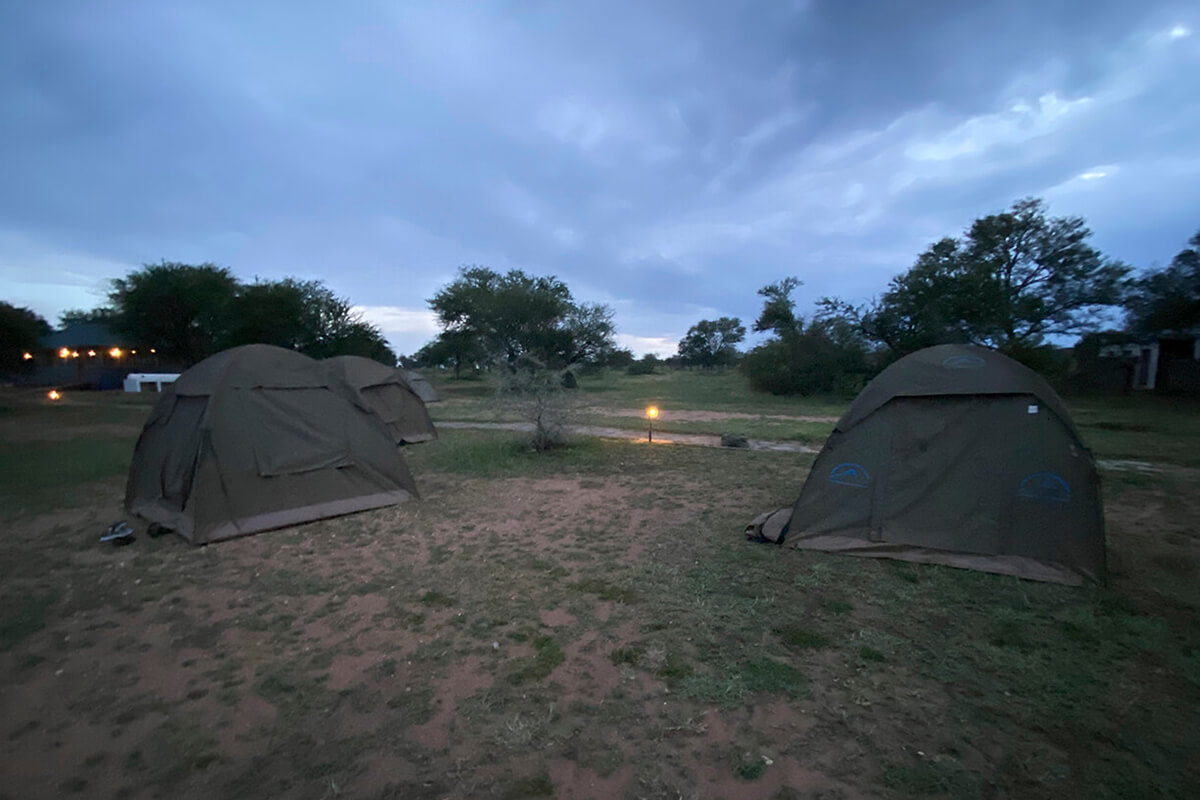
Before booking this type of safari, it is important to understand what travelling low cost involves. Accommodation is camping inside or near the national parks, sleeping in simple tents. It is a very immersive experience, as you sleep right in the wild, although the facilities can be basic: at some campsites there is not always hot water and the toilets can be simple.
Also, travellers on these safaris can be of any nationality, so the guide is usually English-speaking. Therefore, if you want a Spanish-speaking safari in Tanzania, this is not usually the best option.
For meals, on this type of safari a cook usually accompanies the group and takes care of all the meals. Although the cooking is simple, I was surprised by the quality and variety of the dishes prepared with few utensils and a single gas burner.
This type of safari is ideal for travellers on a tight budget, backpackers, or people who put the safari experience ahead of comfortable accommodation.
Can you join a Spanish-speaking Tanzania group safari?
As I have already mentioned, yes, you can do a Spanish-speaking group safari in Tanzania. If you do not speak English, the best way to keep communication flowing on a group safari is for the other travellers to be Spanish speakers too, and for the local guide to speak Spanish.
To meet both conditions, the best options are:
- A group safari with a local agency on fixed dates. In this section of the site, you can check the departures organised directly by local agencies and focused on filling Spanish-speaking groups.
- A safari with an international agency from Spain. In this case, as it is a Spanish agency, all the clients speak the same language.
If you have a lower budget, you can also try a low cost group safari in Tanzania with Spanish-speaking support. Even so, you should bear in mind that:
- The group will include people of other nationalities, with whom you will only be able to communicate in English.
- By paying a supplement (which you would have to cover in full) you can have a local guide who speaks Spanish. Even so, the most likely scenario is that the guide gives the explanations in English (probably the main language of the group) and then repeats the explanations or clarifications in Spanish for you. If you are interested in this option, you can request a quote from a local agency.
Private or group safari?
Four or more? Compare a private safari
Whether you travel as friends, a family or a couple, we adapt the route to your dates and budget so you can decide with a real quote in hand.
✓ Free, no-obligation quote
✓ Local operators, no intermediaries
✓ Route adapted to your budget
The pros and cons of a group safari in Tanzania
Whenever there are four or more of you, or you have a good budget, I recommend a private safari. For me, it is always the best option, and by booking directly with a local agency you can keep the Tanzania safari cost competitive.
Even so, some travellers clearly prefer to cut costs as much as possible, and in that case group safaris are unbeatable. I have done low cost group safaris myself when my budget was tighter.
Still, before booking a group safari it is important to be aware that travelling in a group can also have some drawbacks. Here are the key points to help you decide:
Advantages of booking a group safari
- The price is cheaper, as the costs of the vehicle, guide and fuel are split between six people.
- If the group gets along well, it can be a lot of fun and you can make friends for life.
Disadvantages of a group safari
- You cannot customise the itinerary or the dates.
- There can be disagreements within the group, creating unpleasant or stressful situations.
- On low cost group trips there are few comforts, and you need to be mentally prepared for that. For example, when sleeping at a campsite it is not advisable to go to the toilet during the night, as the toilets are about 100 metres from the tents and there may be dangerous animals around.
- During the safari, decisions are usually made by the guide. So it is the guide who decides how long you spend at each sighting or situation. On a private safari, by contrast, it is usually the client who can decide whether to spend more time watching a certain animal.
- If you enjoy photography, on a group safari there is less room to move inside the vehicle, and you will not always have the best angle for taking photos. In fact, for photo safaris I recommend a maximum of three people in the vehicle.
The best time for a group safari in Tanzania
The best time to visit Tanzania for a safari is the same whether you go on a group or a private safari. In general, it is best to travel to Tanzania during the dry season, which runs from June to October and from January to February.
The dry season is considered better for a safari for the following reasons:
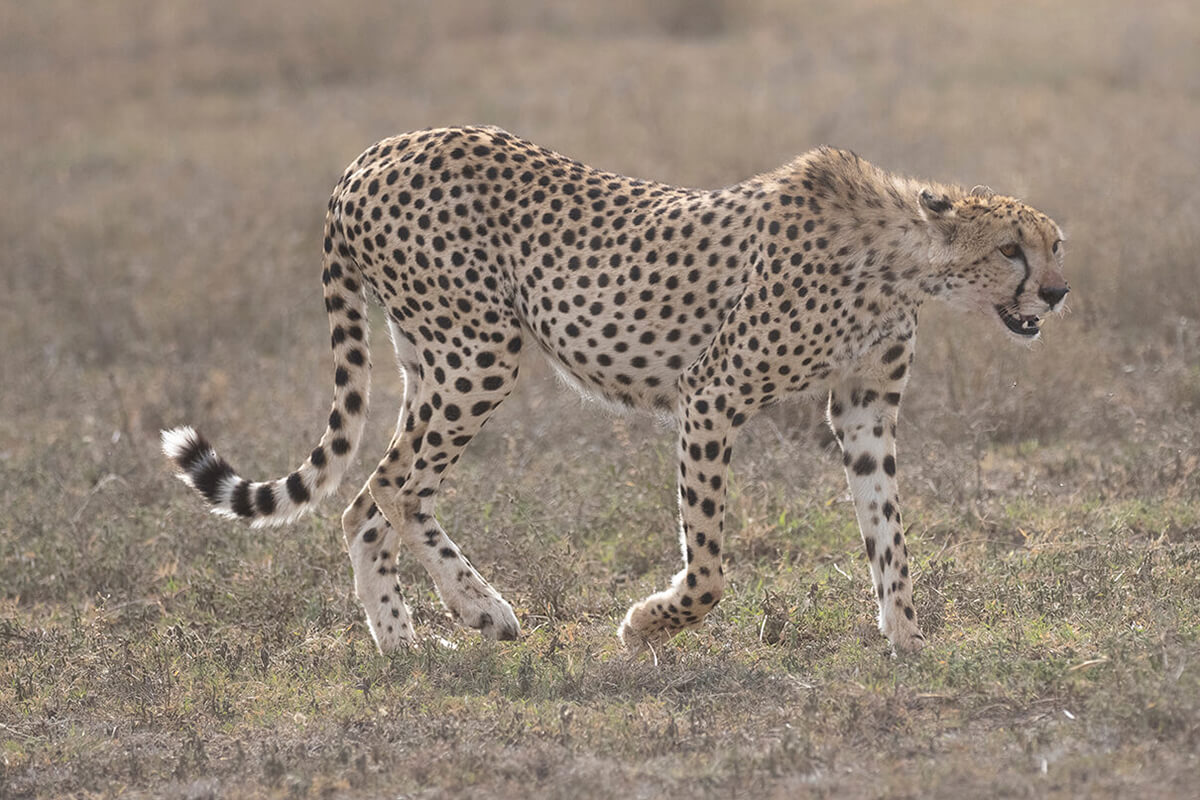
- There is less vegetation. On the savannah, the grass can grow quite tall during the rainy season, which makes it very easy for animals to be camouflaged. When it does not rain, there is hardly any vegetation, which makes it much easier to spot elusive animals such as leopards or cheetahs.
- Animals gather at water points. The lack of water also means more animals are concentrated around rivers or lakes, which are the only source of water during these months. This makes spotting herbivores much easier, and it also helps you find the big cats.
Also, if you want to do a group safari, it is usually better to choose one of the high-season months. In general, groups form more easily during this period. So, for a group safari I recommend travelling in June, July, August, September, December (second half), January or February.
How much does a Tanzania group safari cost? (real prices)
The price of a safari in Tanzania varies quite a lot in general, as it depends on many factors. Even so, the cost of group safaris is usually more contained, especially if you book directly with a local Tanzania tour operator. In general, these are the usual prices:
- Low cost group safaris, booked with a local agency, with an English-speaking guide and camping accommodation, cost between 200 and 250 dollars per person per day.
- Mid-range group safaris, with a local agency and a Spanish-speaking guide, cost about 350 dollars per person per day.
- Finally, group safaris sold by international agencies usually cost between 400 and 450 dollars per person per day.
To get better prices, as I have said, the best thing is to book your group safari with a local agency. Also, if you book well in advance (six months or more), you can often get additional discounts.
How to choose a good local agency for a group safari
If, as I recommend above, you decide to book a Tanzania group safari with a local agency, it is essential to choose carefully who you travel with. A good agency makes all the difference. A quality local agency should meet all of the following:
- A good website and social media presence.
- Real, good reviews, on Tripadvisor or Google.
- Good customer service, with quick and clear replies.
- Real quotes with no hidden costs.
- A licence and all documentation up to date so they can legally run safaris.
In recent years, the number of local agencies has grown enormously, and with it the difficulty of telling which ones really offer a quality service. On top of that, these days it is relatively easy to fake reviews or inflate social media followers, which can create a false sense of trust.
If you do not want to spend hours researching and comparing agencies, you can use this form and I will personally put you in touch with local agencies I trust, with which I have travelled or which I know first-hand. Also, if you are interested in a Spanish-speaking group safari, with fairly exclusive routes and accommodation, you can see the proposals they have designed with me. They are my favourite routes and the ones I recommend the most.
My experience on a Tanzania group safari with a local agency
On my first experience of independent travel in Tanzania, during a long seven-month trip across Africa, I was travelling on a limited budget. For that reason, I decided to do a six-day group safari in the north of the country.
I am very passionate about wildlife watching and photography, so I was not sure whether this type of experience would win me over. I am very used to travelling alone and spending a lot of time waiting for interesting scenes, even if that means spending hours standing still in the same spot watching animals.
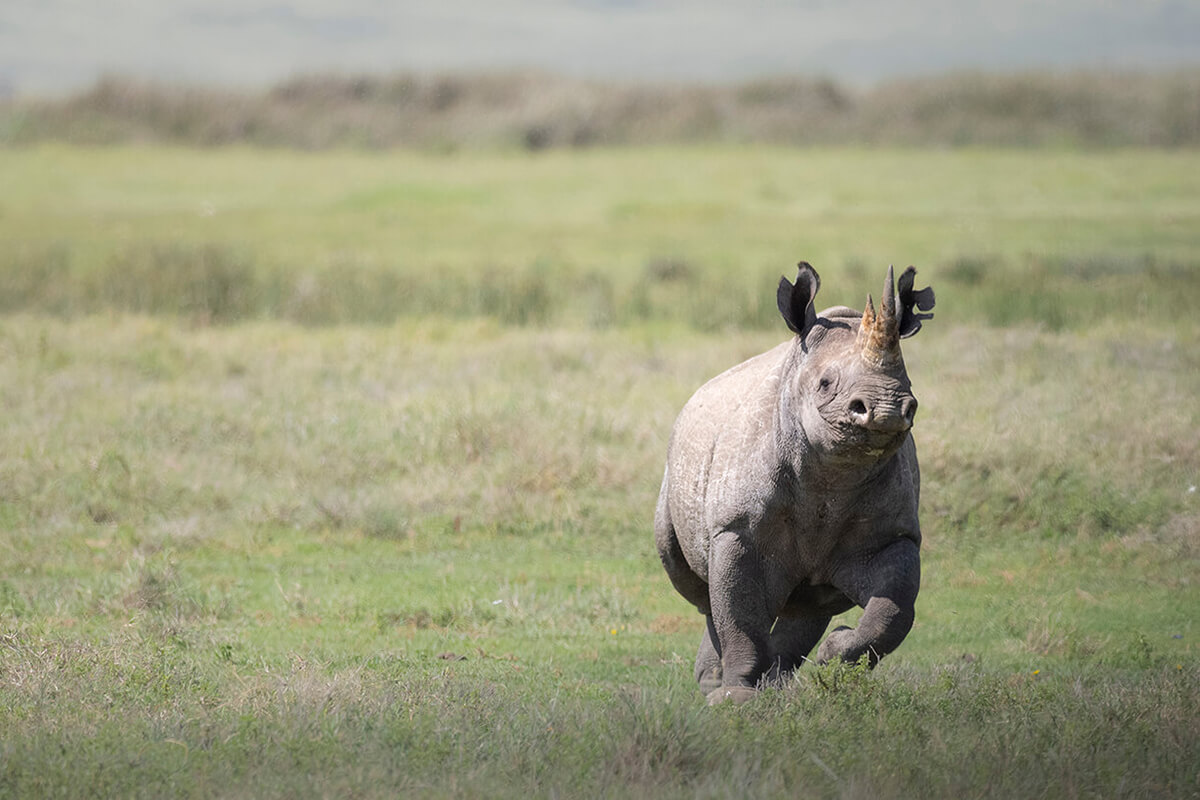
On a group safari I knew photos would not be the priority and that I would have to adapt to the group’s pace. I went without great expectations, but the experience ended up being very positive. I was able to explore amazing places such as the Serengeti, Tarangire National Park and Ngorongoro Crater, and I was also lucky enough to see the Big Five.
Perhaps the photo opportunities were not as good as those I had had the week before while travelling independently in Kenya, but I still enjoyed the safari enormously. In the end, the important thing is to understand clearly what a Tanzania group safari involves and to accept that the lower price also comes with some limitations.
In my case, I travelled with a group of six people: five of us spoke Spanish and the other traveller was a man from Slovenia. We got along really well from the very first day and, on top of that, we were lucky to have a local guide who spoke Spanish, which made the experience even more comfortable.
The route we followed was this:
- Day 1: Safari in Tarangire National Park.
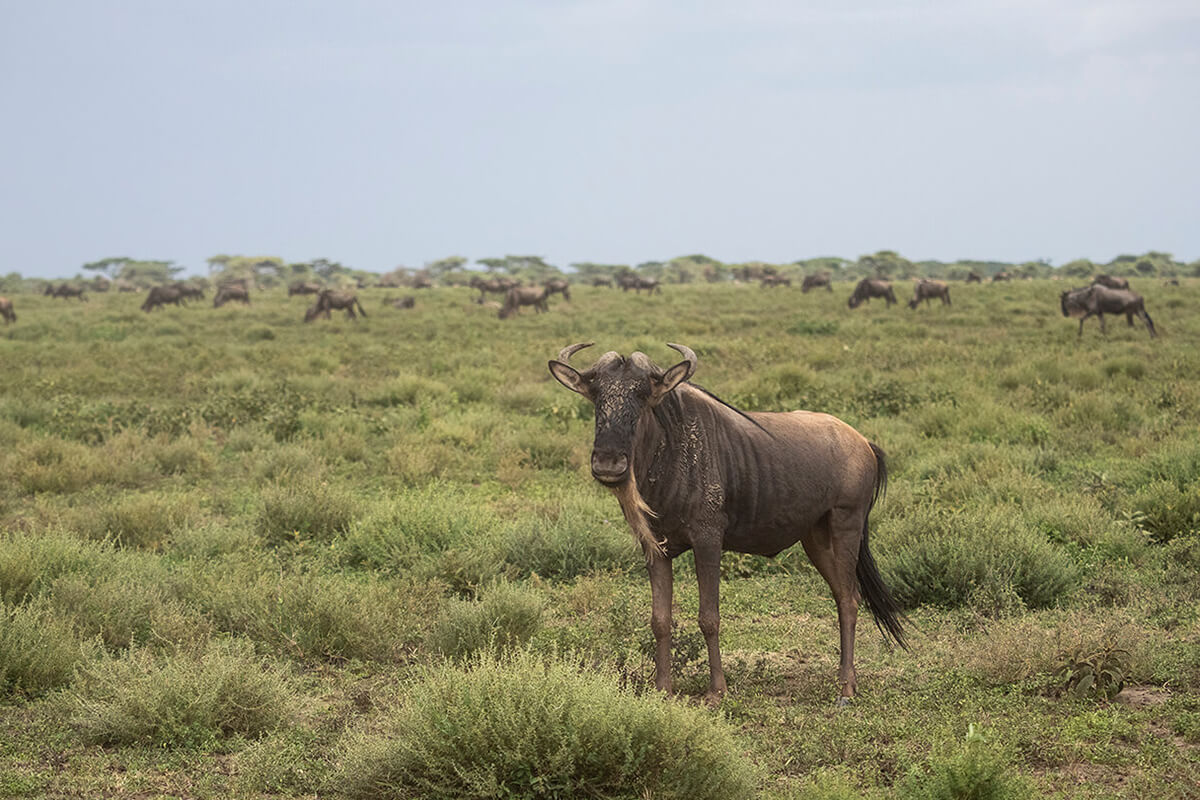
- Day 2: Transfer from Mto wa Mbu to Central Serengeti, passing through the Lake Ndutu area, where we were able to see the Great Migration.
- Day 3: Safari day in the Serengeti.
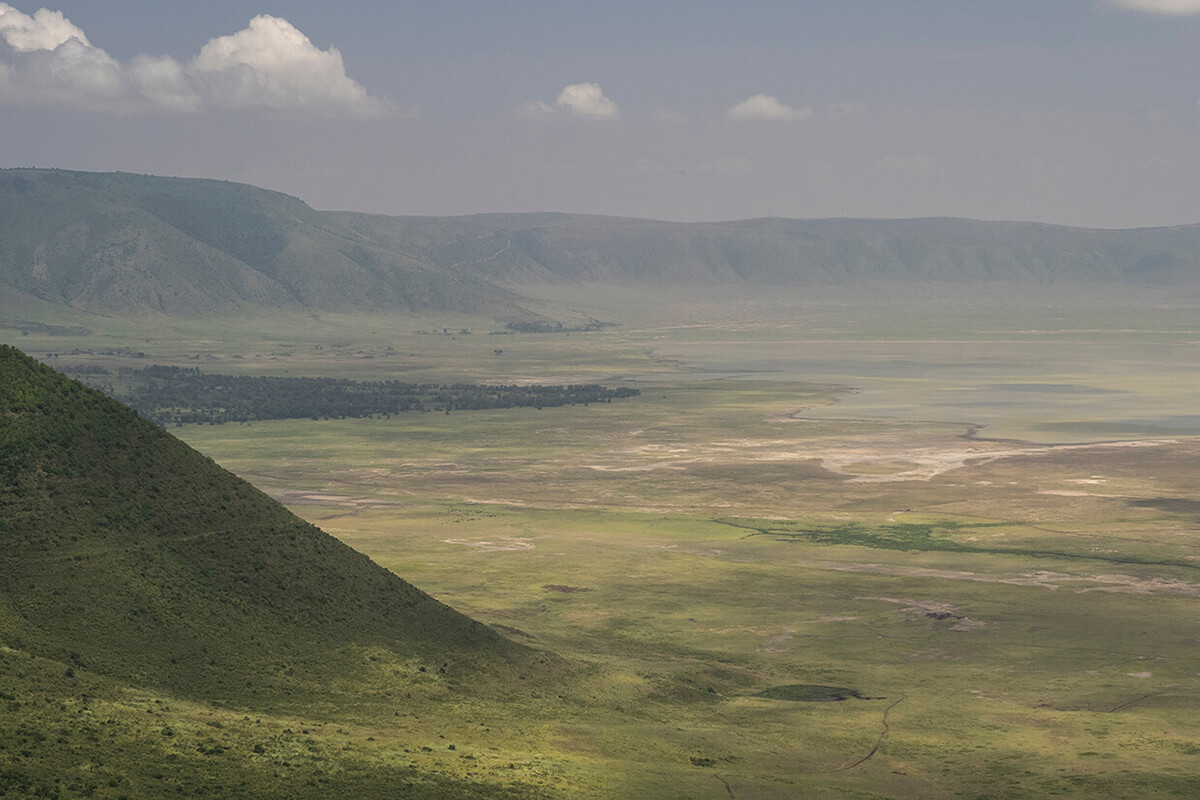
- Day 4: Morning safari in the Serengeti and transfer to the rim of Ngorongoro Crater.
- Day 5: Safari in Ngorongoro Crater and cultural experience in Mto wa Mbu.
- Day 6: Safari in Lake Manyara National Park and return to Arusha.
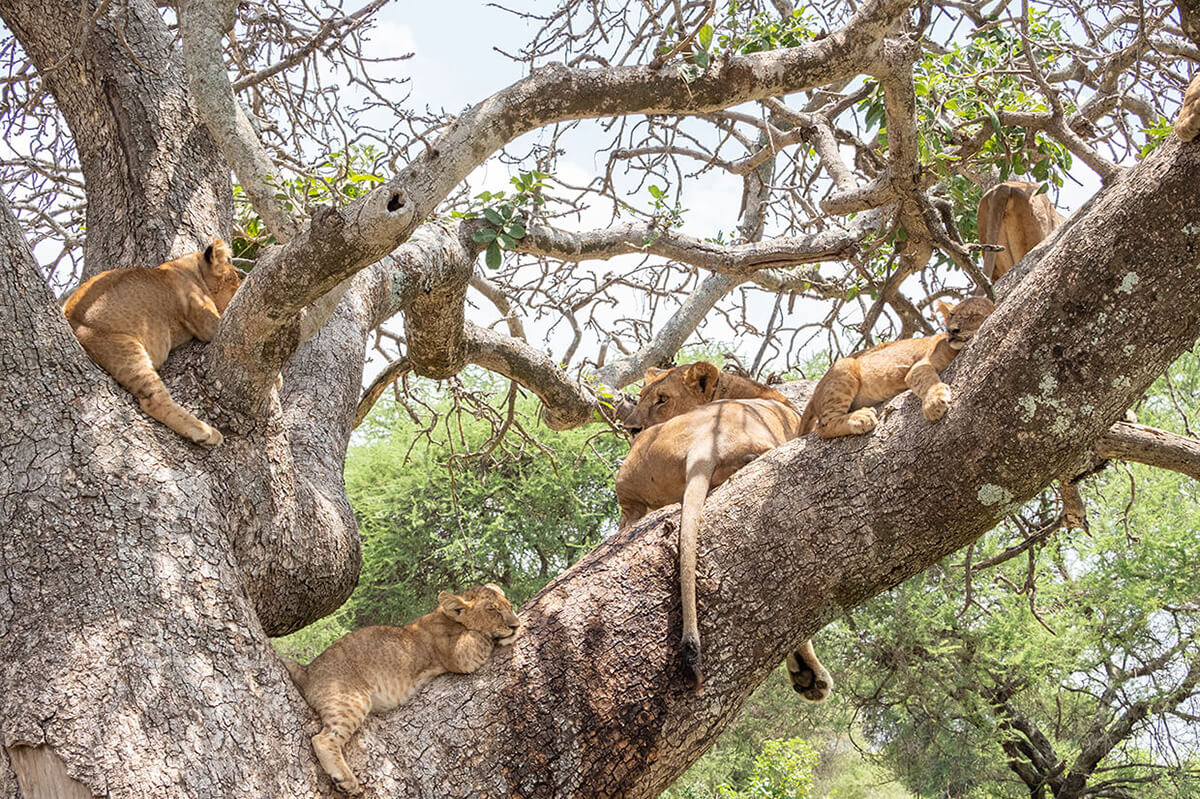
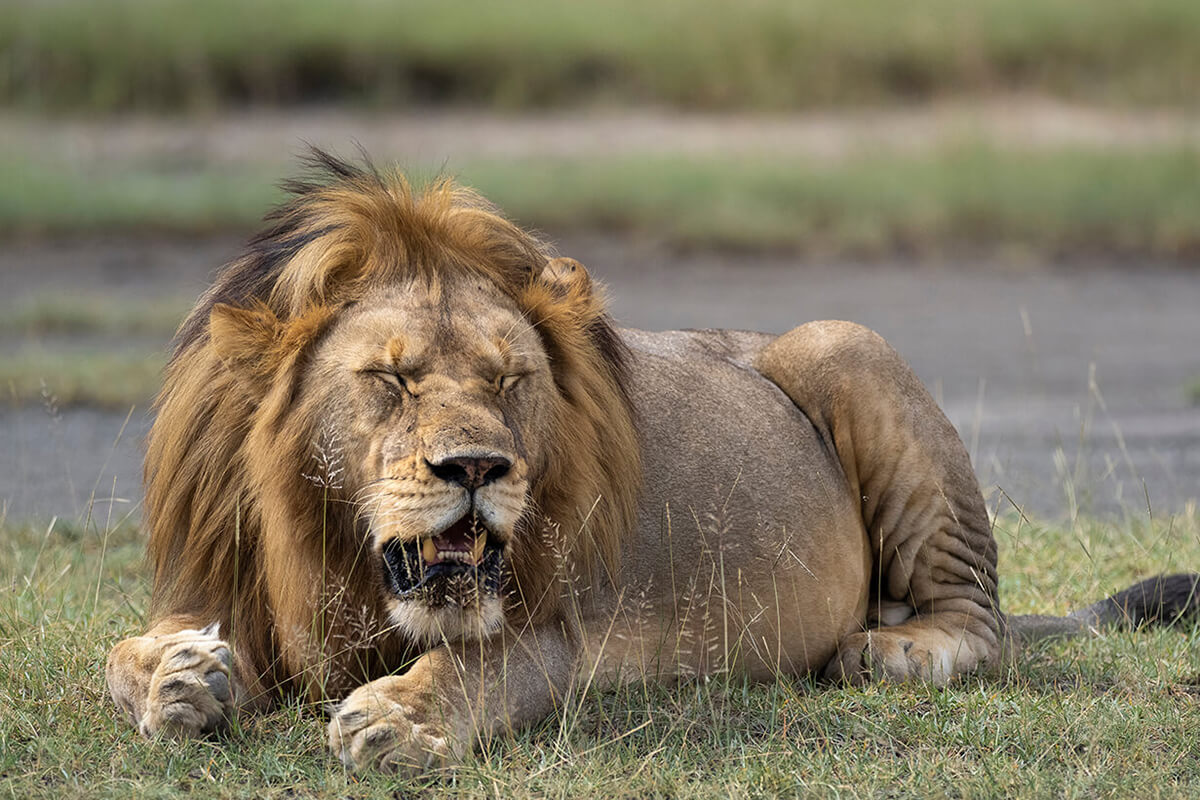
Both in the Serengeti and in Ngorongoro Crater I slept at public campsites. Sleeping out in the wild, listening to the animals during the night, is something I will never forget. One night, an elephant strolled between the tents. Another early morning I was woken by the sound of a herd of buffalo grazing a few metres from my tent. And on another occasion, as I tried to sleep, I heard the distant roar of lions breaking the silence of the savannah.
Is a group safari worth it? (Conclusion)
From my experience, a private safari is still the best option whenever the budget allows, as it offers greater flexibility, comfort and the chance to adapt the trip to your interests.
However, if the goal is to cut costs without giving up the experience, I find a Tanzania group safari a highly recommendable alternative. When it is organised with a good local agency, everything is usually well coordinated and the prices are much more affordable thanks to sharing the costs of the vehicle, the guide and the safari logistics.
All in all, a group safari is a fantastic way to experience Tanzania’s great national parks and watch African wildlife roaming free, making a trip that often seems out of reach far more affordable.
The most important thing is to choose the right type of group safari and be clear about your expectations: if you know what to expect, the experience can be truly unforgettable.
Frequently asked questions about group safaris in Tanzania
How many people travel in one vehicle on a Tanzania group safari?
Safaris in Tanzania are normally run in Toyota Land Cruisers adapted for safari. These vehicles have the driver’s seat and three additional rows at the back, with two seats in each row.
The most common arrangement on group safaris is six people per vehicle, filling all the rear seats and guaranteeing that every traveller has a window during the game drives.
On some occasions, the group may be split into two vehicles, so the total group can reach up to twelve people, although always spread across several vehicles.
Do you share a room?
In lodges and tented camps, rooms are usually double or triple. Even if you travel in a group, each couple or booking keeps its own private room.
If you travel alone, the agency will normally pair you with another member of the same group to share a room. There is also the option of paying a single supplement to sleep alone.
On camping safaris, the tents are usually set up for two people. In this case, if you travel alone, many agencies allow you to sleep in a single tent at no extra cost.
Is there an age limit for a group safari?
There is no strict age limit for taking part in a group safari in Tanzania. However, it is usually recommended that children be at least 12 years old, as safari days can be long and demanding.
When travelling with young children, it is normally better to opt for a private safari, as it lets you adapt the schedule and pace of the trip more easily.
What happens if the safari group does not fill up?
For low-cost group safaris in Tanzania there are not usually any problems filling the groups. Local agencies “swap” clients to make sure safaris go ahead with at least four people.
On mid-range group safaris with fixed dates, the safaris are confirmed once four or more people have booked. If four people are not reached, the departure would be cancelled and, if any payment has been made, the money is refunded. Even so, this is very uncommon, as groups generally fill up easily.
Is a group safari in Tanzania safe?
Yes, a group safari in Tanzania is a safe activity, especially when done with a professional local agency and certified guides.
During the safaris, you always stay inside the vehicle, which is designed specifically for this type of activity. The animals are used to the presence of vehicles and, if you follow the guide’s basic rules, there is usually no risk.
On safaris with accommodation in lodges or tented camps, safety is also well organised. At campsites inside the national parks, it is important to follow the instructions of the guide and the campsite staff, especially at night, as animals can move freely around the area.
Your safari in Tanzania
Ready to plan your group or private safari?
You now know the types, the best months, the prices and how to choose an agency. Tell us your dates and get a free, no-obligation quote for your safari in Tanzania, designed with local operators.