Finding an English speaking safari guide Tanzania trip is easier than it sounds, and these days you can book directly with local agencies. Based on my own experiences on safaris with local agencies, in this article you will find the steps to book a Tanzania safari with a local English-speaking guide, with no middlemen. I also share some tips that would have been very useful to me before I organised my first safaris on the African continent.
I recommend that, even if you end up booking your safari through an agency, you find out as much as you can about what there is to do on a trip to Tanzania, so that you can take an active part in planning the itinerary. Although Tanzania is a wild destination full of animals, not every park offers the same experience. It is also very important to travel with a good local guide who is able to find the animals and explain their role in the ecosystem of the savannah.
[ez-toc]

How to book an English-speaking safari guide in Tanzania: 2 options
To organise a Tanzania safari with an English-speaking safari guide, there are two options:
- Book a safari in Tanzania through a travel agency in your home country.
- Book a safari with a local Tanzanian agency, which also provides local guides who speak English and other languages.
1. How to book a Tanzania safari through a travel agency in your home country
Around ten years ago, booking a safari in Tanzania through a travel agency back home was the most common option. You could choose between agencies specialising in safaris in Africa and larger wholesale agencies focused on selling trips all over the world.
In any case, the advantage of these agencies tends to be their good customer service, which is always in your own language. And because they are companies from your own country, they also inspire more trust, especially those that have been operating for years and have built up a certain reputation.
However, organising a safari in Tanzania through one of these agencies also has some drawbacks:
- The cost is much higher. Agencies in your home country or international agencies act as intermediaries and subcontract the safaris to local agencies. This adds an extra cost to the price of the safari. In many cases, booking a safari directly with a local agency can save you more than €500 per person.
- There is less flexibility. Many agencies sell ready-made safari packages and lack the flexibility to organise a fully tailor-made safari.
- There is less impact on the local economy. Intermediary agencies also tend to put a lot of pressure on local operators to lower their margins, which ends up meaning lower profits for the local economy in Tanzania.

Local operators in Tanzania
Looking for an English-speaking guide in Tanzania?
Tell us your dates, the parks you want to visit and your budget, and we will ask local Tanzanian operators for a tailor-made proposal. Free, no obligation and without intermediaries.
2. Booking a Tanzania safari with a local agency and an English-speaking guide
The alternative to international agencies is to book the safari directly with a local agency. It is an increasingly popular option because, thanks to WhatsApp and email, it is now very easy to communicate with Tanzanian agencies and organise a tailor-made safari with no middlemen.
Organising your trip this way has three clear advantages:
- Lower price. With no intermediaries, costs are significantly reduced.
- A personalised itinerary. It is much easier to plan a tailor-made route, choosing which national parks you want to visit and where to stay. And because you speak directly with travel agents based in Tanzania, you get up-to-date recommendations. This is perfect for knowing which national parks offer the best safaris, something that can change from year to year.
- A bigger impact on the local economy. When you book a safari in Tanzania directly with an agency in the country, all the money stays in the country, which has a far more positive effect on the agencies’ staff, the guides and the population in general.
In addition, local guides in Tanzania all speak English, and many of them also speak other languages such as Spanish, Italian, French or German. Even so, when you request information about a safari, it is important to say which language you need your guide to speak. English is the standard, but a guide who speaks another language sometimes carries an extra cost (usually between 30 and 40 dollars a day).
This way of planning a trip to Tanzania can also have some drawbacks:
- Communication with local agencies is usually in English, whether by email or WhatsApp. For those who do not feel confident in the language, this can be a small difficulty. However, thanks to machine translation tools, it is now quite easy to understand written messages and reply appropriately. Many local agencies also send itineraries directly in other languages.
- As for customer service, it may not reach the level of personalisation or presentation offered by many agencies back home. Sometimes itineraries are not presented in the most elegant way, or the style of communication is more direct and less polished. This is partly because many local agencies work with small teams and have to manage their time and resources very efficiently.
- Regarding payment, it normally has to be made in US dollars, which can lead to additional bank charges. However, many agencies now accept card payments, so it is worth checking with your bank which method has the lowest fees and the best exchange rate. For bank transfers, compare the fees charged for sending money abroad.
Still, in my view the advantages clearly outweigh the drawbacks. This is the way that I always use and recommend for a safari in Tanzania. In fact, I have organised my own trips exactly like this. So if you want to organise a Tanzania safari with my trusted local agencies, you can fill in this form and they will send you a tailor-made safari proposal.


English speaking safari guide Tanzania: how to find a good agency and guide
If, as I recommend above, you decide to book a safari in Tanzania with a local agency, it is essential to choose carefully who you travel with. A good agency makes all the difference. An experienced safari consultant will help you design the ideal itinerary and choose the most suitable accommodation for your budget, your interests and your way of travelling. Having an English-speaking local safari guide is also key to making the most of the experience, understanding everything that happens around you and significantly increasing your chances of seeing wildlife.
In recent years the number of local agencies has grown enormously, and so has the difficulty of telling which ones really offer a quality service. On top of this, it is now relatively easy to fake reviews or inflate social media followers, which can create a false sense of trust.
If you do not want to spend hours researching and comparing agencies, you can use this form and I will personally put you in touch with local agencies I trust, ones I have travelled with or know first-hand. All of them have English-speaking guides, and many also have guides who speak other languages, so they can easily organise an English-speaking safari in Tanzania.
The only thing to bear in mind when planning your Tanzania safari with a local agency is that the safari consultants (the people who design the route with you) work in English, so email communication will be in that language. If English is not your first language, this is not usually a problem: it is very easy to translate messages. Among the agencies I recommend, there are also some where the consultants speak other languages, as they used to be guides and learned them along the way.
Steps to book a safari in Tanzania with Tanzanian agencies
When planning a Tanzania safari with a local tour operator, the steps to follow are these:
- Research a little what to see and things to do in Tanzania and decide what you want to visit and for how many days. These are all the Tanzania posts I have written, based on my experiences in this country.
- Decide the travel dates (these can be approximate).
- Ask a local agency in Tanzania for a quote and a personalised itinerary. You can use this form so that I put you in touch with my trusted local agencies. If you want your guide to speak a language other than English, be sure to say so on the form.
- Personalise and adjust the itinerary with the local agencies. The first itinerary they send you is always a first draft, which you can then customise (whether by changing the itinerary or the accommodation). The price quoted may also change depending on the accommodation.
- Confirm the safari with a first payment, usually between 20 and 30% of the total. The payment is made in US dollars, so check with your bank which payment method offers the lowest fees and the best exchange rate.
- Book your flights and arrange your travel insurance.
- About 3 or 4 weeks before the start of the safari in Tanzania, pay the full amount. Some agencies also accept the final payment on arrival at the destination, although I find that less advisable, as you would have to carry a lot of cash.
- Start your safari in Tanzania and enjoy this magical, unforgettable experience.

What to visit on a safari in Tanzania
Almost 40% of Tanzania is protected conservation area, and there are 17 national parks in total. It is a country with a huge amount of wildlife, and Tanzania in particular has the largest number of wild lions in Africa.
That said, animal density is not the same in every park, nor are the safari possibilities. The northern part of the country is where the safaris are best, where you see the most animals and where, being more used to vehicles, they show no fear and let you watch them calmly. That is why, on a first safari in Tanzania, the most recommended parks to visit are:
- Serengeti National Park. This national park is the great emblem of Tanzania, known for its endless plains, the great migration and its large population of lions, leopards and cheetahs.
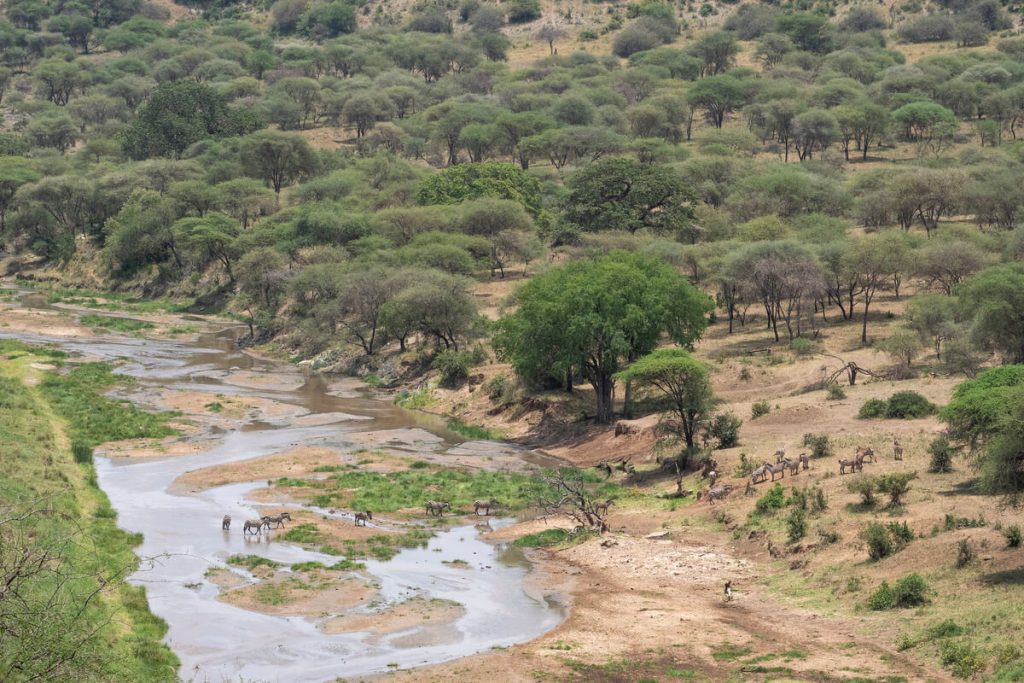
- Tarangire National Park. A slightly underrated national park in northern Tanzania that has gained popularity year after year thanks to the large numbers of elephants you can see and the beautiful baobabs that surprise every traveller. In the dry season, the concentration of animals near the Tarangire River is spectacular.
- Ngorongoro Crater. One of the most spectacular places in the world to go on safari, and one of the few places on the planet where you can see the Big 5 in a single morning’s game drive. Despite its small size, the density of wildlife is extremely high and the views from the crater rim are breathtaking.
- Lake Manyara National Park. Years ago this park was a must in northern Tanzania, but in the last year most of the wildlife has moved to Tarangire National Park, so safaris around Lake Manyara are now less recommended.
In addition, if on a route through the north of the country you want to discover some landscapes or learn about the local culture, it can also be very interesting to visit some of these places:
- Lake Natron. A remote, wild and little-visited place. Here you can see thousands of flamingos and impressive volcanic landscapes. It is also the gateway to Ol Doinyo Lengai, the sacred volcano of the Maasai.
- Lake Eyasi. An ideal spot to meet some of the tribes that still keep traditional ways of life, such as the Hadzabe (hunter-gatherers) or the Datoga (herders and blacksmiths).
- Materuni Waterfalls. Perfect for resting for a day after the safari and enjoying a greener setting, with the chance to hike and visit coffee plantations.
On the other hand, in Tanzania you can also go on safari in the south of the country. There are huge protected areas there, but the wildlife density is lower and it can be harder to see the most iconic animals, especially the big cats. If you do a safari in the south, the most recommended parks would be:
- Nyerere National Park. It is one of the largest protected areas in Africa, and you can go on boat safaris, 4×4 safaris and walking safaris. On safari you mostly see elephants, giraffes, buffaloes and a wide variety of antelopes. It is also one of the few places in Tanzania where African wild dog sightings are occasional.
- Ruaha National Park. An immense, wild park with landscapes of baobabs and hills. It is not a park I would recommend for a first safari in Tanzania, but it is a good destination for those with more experience who want to discover less crowded places.
- Mikumi National Park. More accessible from Dar es Salaam and with good road connections, Mikumi is a good option if you are looking for a short safari in the south. Although it does not have the richness of the north, it does let you see quite a lot of animals in a short time.
- Udzungwa Mountains. It is not a traditional safari destination, but this national park is ideal for lovers of hiking, biodiversity and jungle landscapes. You can see endemic species of monkeys, a great variety of birds and waterfalls.


What is the recommended length for a trip to Tanzania?
As a minimum, I recommend a 6-day safari in Tanzania. It is the best way to visit more than one park and have the chance to see most of the animals and, with luck, an interesting scene or two.
I am a great enthusiast of photography and safaris in Africa (you can read more about my trips here), and I would tell you that, if you can, you should opt for a 10-day safari. However, I know that not everyone shares the same passion for this experience, and I know people who, although they enjoyed it a lot, felt that a 5-day Tanzania safari was enough. In short, it is a little subjective and each person will give you a different number of days.
Even so, my advice is always to choose fewer national parks or reserves, but spend more time in them. This increases the chances of seeing the more elusive animals, such as leopards or cheetahs, or of witnessing unique moments such as a big cat cub, hunting scenes or other action.
If you want to visit Kenya and Tanzania on the same safari, or to do a safari in Tanzania and then spend a few days on the island of Zanzibar, I recommend that the trip is no shorter than 10 days, and preferably around 12 days. If you are still deciding between the two countries, see this comparison of a Kenya vs Tanzania safari.


How much does a safari in Tanzania cost?
The costs of a safari in Tanzania vary depending on the time of year, the number of people and the accommodation. In general, for a private safari booked with a local agency, the usual prices per person per day are:
- Camping safari: Between 250 and 300 USD per adult per day.
- Safari in standard accommodation: Between 300 and 400 USD per adult per day.
- Safari in mid-range accommodation: Between 400 and 600 USD per adult per day.
- Safari in luxury accommodation: More than 600 USD per adult per day.
These costs are based on a safari for two people. If there are more of you, the price per adult is lower. On the other hand, if you travel alone the price is considerably higher, so in that case travelling in a group is a great alternative. Also, if you need a guide who speaks a language other than English, you normally have to add (in total) between 30 and 40 USD a day. In the post on the cost of a Tanzania safari you can find all the details on this, or on the official website of the Tanzanian national parks.
You can reduce the cost of a safari by joining a group safari. These safaris are generally low-cost (camping) and it is not always possible to have a guide who speaks a language other than English. In this case, the cost is usually between 200 and 250 USD per adult per day.

Free quote
Want to know what your safari would cost?
Prices change with the season and the number of travellers. Send us your dates and budget and receive a personalised proposal from local operators.
✓ Local operators, no intermediaries
✓ Itinerary adapted to your budget
✓ Free, no obligation
Tips before travelling to Tanzania
During the planning and, above all, throughout the safari experience, I recommend following these tips:
- First of all, I recommend that you find out as much as possible about Tanzania and rely on quality local agencies to help you plan a tailor-made safari at a good price. Some of the posts on the blog can be very useful for this: Tanzania safari cost: how much does it cost in 2025?, Organising a Tanzania safari with a local agency in 10 steps or Going on a safari in Kenya or Tanzania.
- One or two months before the trip, it is also highly advisable to visit an international travel medicine clinic, so they can advise you on vaccinations and malaria prophylaxis, whenever necessary depending on the type of safari and your medical history.
- When packing, I recommend choosing light-coloured clothing so as not to attract mosquitoes or tsetse flies. Also, to be better protected against insects, it is always best to wear long sleeves.
- If you like photography and have a camera with a zoom lens, remember to practise a little before the trip. That way you will be more skilled throughout the safari in Tanzania and you won’t miss any scene. There are incredible moments that last only a few seconds.
- I also recommend reading and being clear about all the preparations that I detail in the guide to independent travel in Tanzania, as much of the information is just as useful if you travel with a local agency.
My experience of a safari in Tanzania with a local guide
On my last trip, when travelling independently in Tanzania, I booked two group safaris with a local agency. I would have liked to do a longer private route, but I was travelling through Africa for more than six months and could not afford to hire a vehicle and guide just for myself.
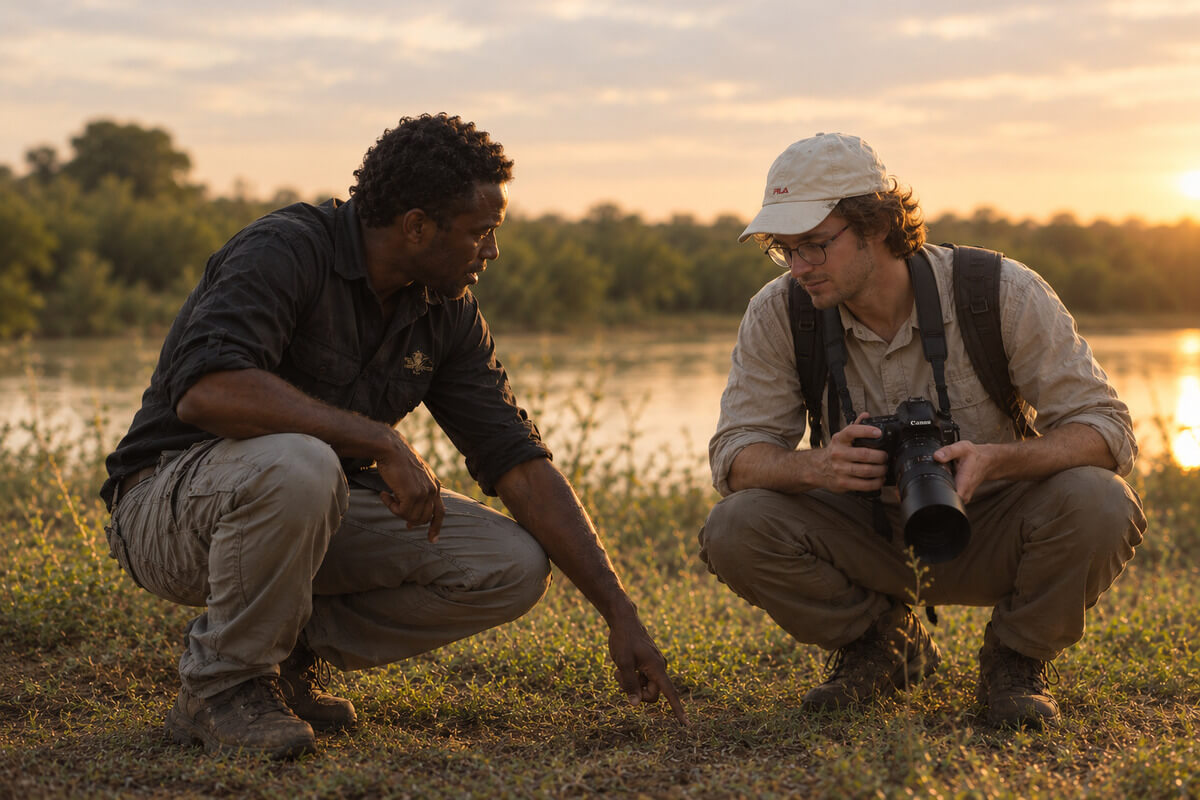
On one of these group safaris, which I booked with one of my trusted local agencies, I was lucky to have a local guide who spoke our language. The experience with him was really good. He was a very funny man and spoke the language perfectly, so communication with him was very fluent, as everyone in the group spoke the same language.
During this six-day safari, I saw a large number of elephants on a Tarangire safari in the national park; I witnessed the great migration in the Lake Ndutu region; I saw lions, cheetahs and leopards in the Serengeti; and I finished the route by seeing a black rhino in the Ngorongoro Crater. It was a magical experience, and one in which I could once again confirm that you can go on safari in Tanzania with a guide who speaks your language by booking directly with local agencies, without losing quality of service and paying much less.


Frequently asked questions about an English-speaking safari guide in Tanzania
Although I have already covered the main points throughout the post, below I add a few other specific questions that may be useful to know about:
Do all guides in Tanzania speak English?
Yes. Every professional safari guide in Tanzania speaks English, and some of them have chosen to specialise in another foreign language, such as Spanish, Italian, French, German…
Guides who speak languages other than English are harder to find, but all the trusted local agencies I recommend have guides who speak several languages within their team.
Is it safe to book a safari in Tanzania with a local agency?
If you choose a good, trusted local agency, safety is practically guaranteed. That said, it is important to choose agencies that have been around for years, have good reviews and solid operations. The search can be confusing, which is why I recommend using this form, with which I will put you in touch with agencies I have travelled with and know first-hand are an excellent choice.
How far in advance should I book a safari?
I recommend booking a safari between six and three months in advance, especially if you want to travel at the peak of high season (July and August). You can also book with less notice, although this means paying a little more.
Does a guide who speaks another language make the safari more expensive?
Local guides in Tanzania who speak languages other than English tend to have higher rates. For this reason, requiring such a guide may raise the cost of the safari by around 30 dollars a day. This rate also varies depending on the local agency, the season in which the safari takes place and the availability of the guides.
Will the guide be with me for the whole trip?
When you book a safari, the local guide will meet you on arrival at the airport and you will be with him throughout the whole route. Guides are in charge of making sure the safari logistics run perfectly, and they know the country and all the national parks very well.
At the end of the safari, the guide will take you to the airport. So you will be with him for the whole route through the country, and able to communicate easily.
Can I travel in Tanzania if I do not speak English?
Even if you do not speak English, you can go on a safari in Tanzania without any problem, even when booking with a local agency. The only moment when you will not have your guide’s help is at the airport border control, where you will have to show your visa. But if you are clear about the documents you need to present, you will have no problems. After that, you will meet your guide and he will take care of everything.
Your Tanzania safari
Ready to plan your safari in Tanzania with local experts?
Request a free, no-obligation quote and receive a proposal from local operators, without intermediaries. Tell us what you have in mind and we will adapt the itinerary to you.