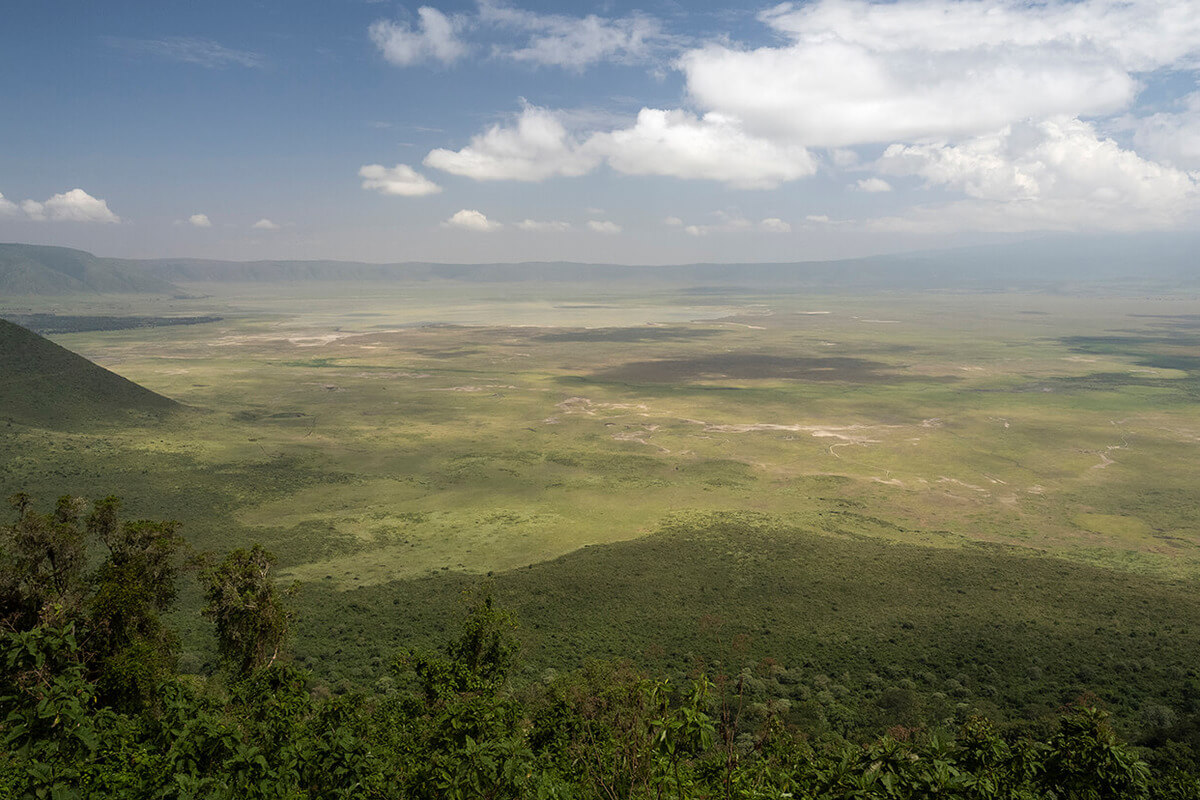
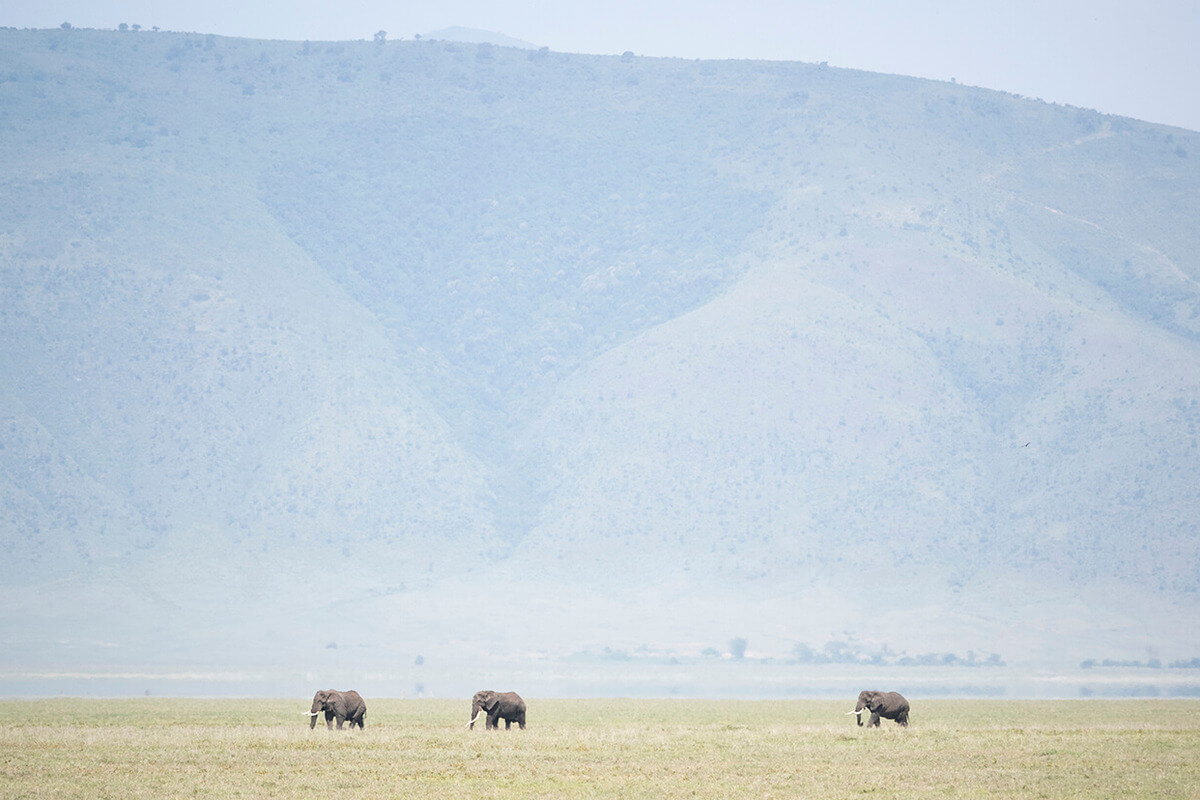
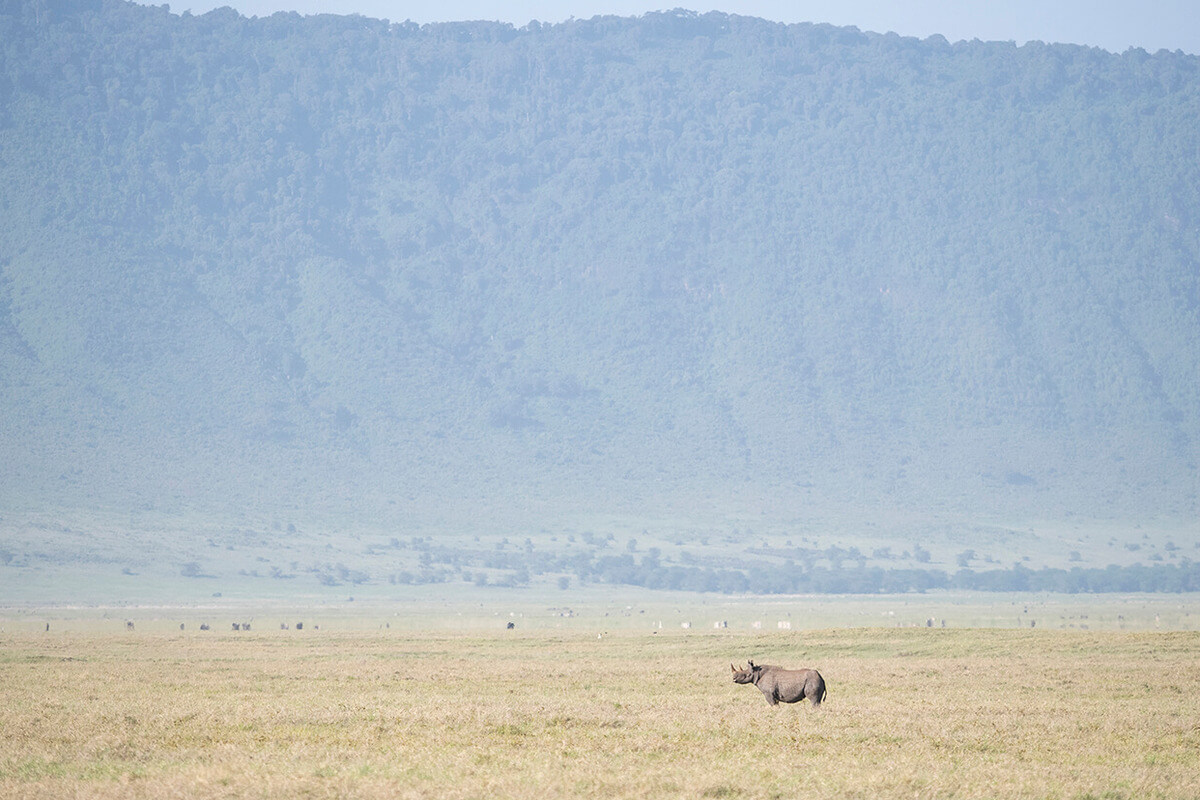
Going on an Ngorongoro Crater safari is one of the most memorable moments of an independent trip to Tanzania. The famous Ngorongoro Crater, which is really a volcanic caldera, is home to around 25,000 mammals, including elephants, giraffes, zebras, lions, leopards, rhinos and much more. These animals live permanently inside this natural amphitheatre, which is surrounded by walls more than 500 metres high.
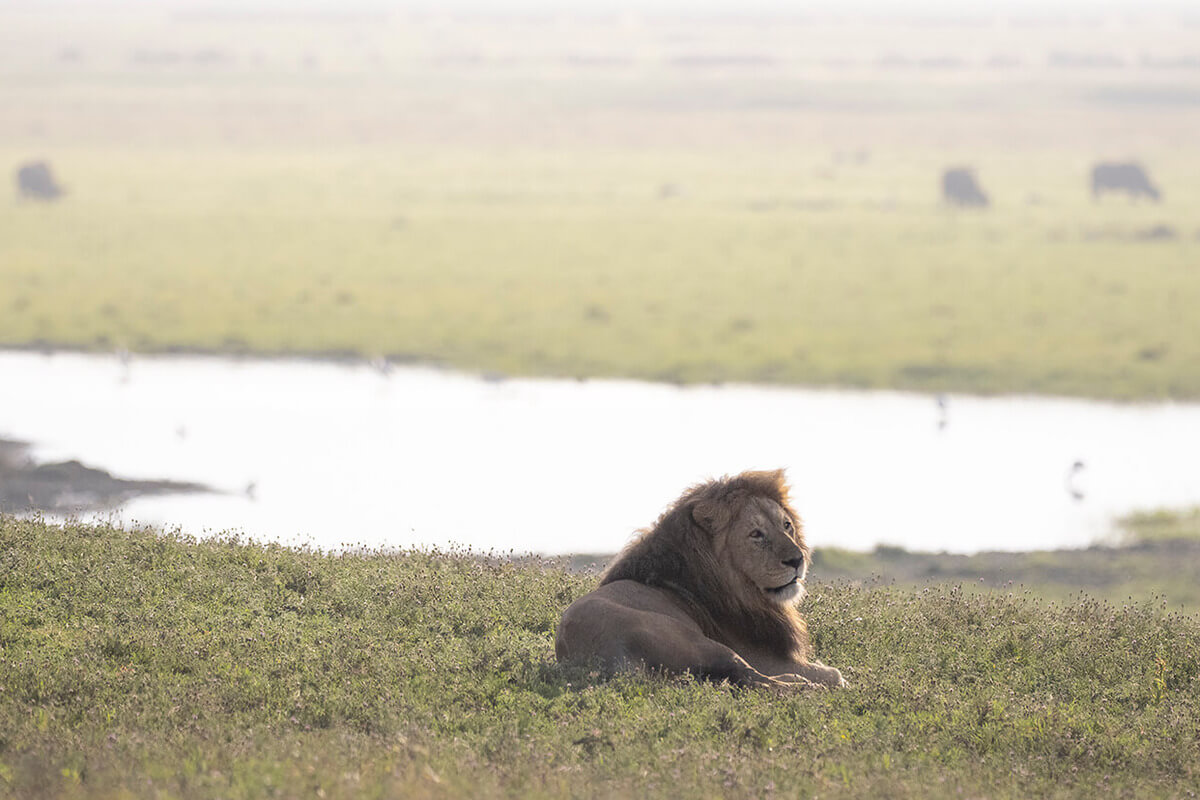
On a safari in Ngorongoro you don’t have to look hard to find animals. The whole horizon is full of small figures on the move. Spotting the big cats is a bit harder, but in general lions can be seen on most safaris. What’s more, the dominant males in the Ngorongoro Crater are majestic lions.
It’s a wonderful place, but also one with many peculiarities, where conservation is a challenge. That’s why safaris there are tightly controlled and there are more restrictions than in other national parks in Tanzania. This makes the price of a safari in Ngorongoro higher than in other parks in the country, because every time you enter the crater you have to pay a fee of 295 dollars per vehicle. In this post you’ll find all the details on this and much more.
Ngorongoro safari: a quick clarification
This whole post is focused on safaris in the Ngorongoro Crater, but it’s worth clarifying that the crater is only a small part of the Ngorongoro Conservation Area. This conservation area covers more than 8,000 km² and surrounds a good part of Serengeti National Park. That’s why, on 4×4 safaris in Tanzania, you first have to cross the whole conservation area to reach the Serengeti plains.
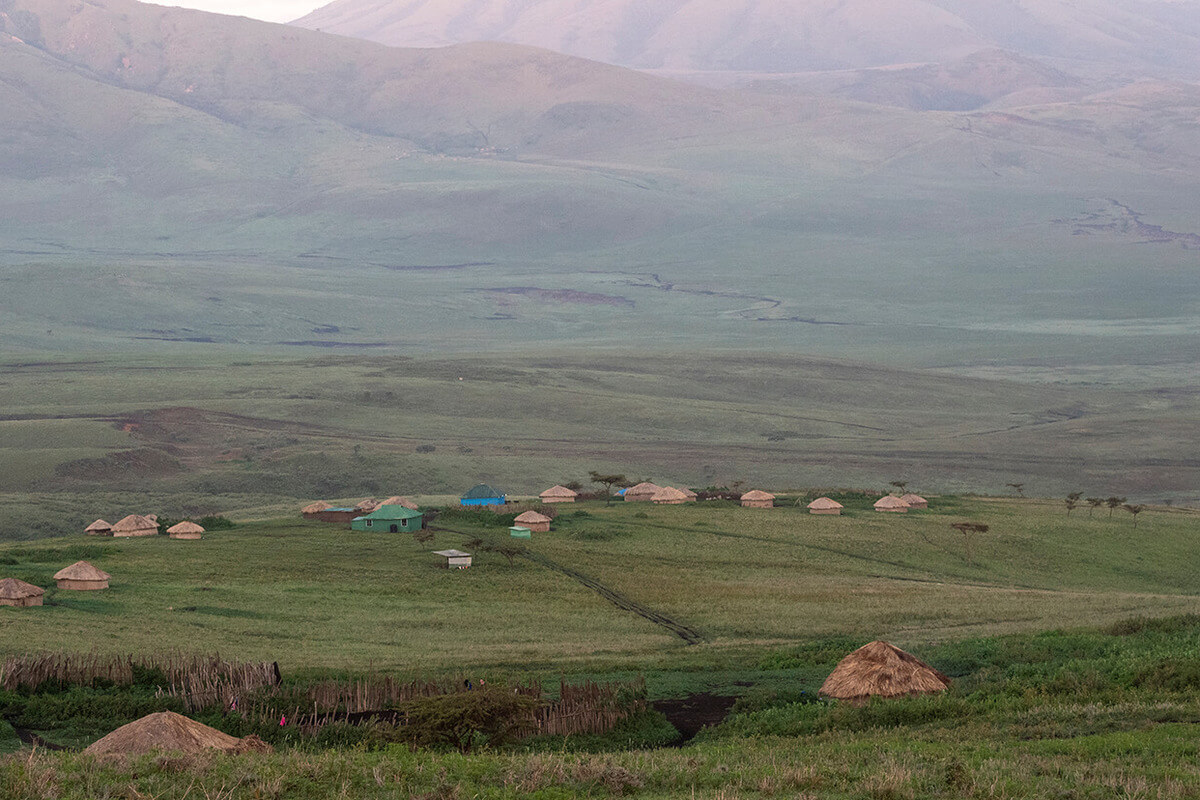
The Ngorongoro Conservation Area also protects a savannah environment where all the big African mammals can be found. Some traditional Maasai villages still exist there, living alongside the wildlife.
And although the crater is the highlight of this conservation area, there is another very interesting area to visit on safari: Lake Ndutu. As I explain in one of the itineraries for a Tanzania safari in 5 days, visiting Lake Ndutu between January and March is spectacular, as that’s when more than a million wildebeest arrive there to give birth.
Practical information for an Ngorongoro Crater safari
How to get there and descend into the crater
As you can easily imagine, the Ngorongoro Conservation Area is not accessible by public transport. It can only be visited by 4×4, and the usual way is to book a safari in Arusha that includes the crater and other national parks in northern Tanzania, such as Serengeti safari country, Tarangire National Park or Lake Manyara National Park.
When booking your safari, I recommend choosing a Tanzania local tour operator. It works out cheaper and the money goes directly to the country, with no middlemen. If this option interests you, you can use this form and I’ll put you in touch with the trusted local operators I have travelled with.
The journey from Arusha to the entrance of the Ngorongoro Conservation Area takes about two and a half hours (around 155 kilometres). Once inside the conservation area, after fifteen minutes of driving you reach the Ngorongoro Crater viewpoint. Without a doubt, one of the most beautiful panoramic views on any safari in Tanzania or Kenya.
From the top of the crater, there are three roads that lead down inside it, which is the whole area where safaris take place. They are: Seneto (the only way down into the crater), Lerai (can only be used to climb out) and Lemala (which can be used both to go up and down). The usual route down is via Seneto, which is about 30 kilometres and an hour’s drive from the entrance to the conservation area.
Can you visit the Ngorongoro Crater independently?
If you decide to make an independent trip through Tanzania in a rented 4×4, it is also possible to do a safari in the Ngorongoro Crater. However, to enter the crater it is necessary for a licensed local operator to arrange the permits in advance with the Ngorongoro Conservation Area Authority. Unlike other national parks, this has to be done beforehand, as they don’t accept processing it at the entrance gate.
In these cases, the best option is to ask the 4×4 rental company to handle the paperwork on your behalf. If that’s not possible, you can ask an agency in Arusha, although it can sometimes be a slightly complicated process.
I have no experience with this, as I did my safaris directly with local operators.
What hours are safaris allowed inside the crater?
To minimise the impact of tourism on the delicate Ngorongoro Crater, there is no accommodation inside the caldera and night safaris are not allowed either. Specifically, you can only stay inside the crater from six in the morning to six in the evening. However, since it’s a fairly limited area, most safaris last around six hours.
How much does an Ngorongoro safari cost?
The Ngorongoro Crater is the most expensive place to go on safari in Tanzania. Even so, it is still highly recommended to include it in a Tanzania itinerary.
As I mentioned at the start of the post, to do a safari in the Ngorongoro Crater you have to pay 295 dollars per vehicle. But the costs don’t end there. You also have to pay 70.80 dollars per person to enter the Ngorongoro Conservation Area (this has to be paid whether or not you go into the crater, so the fee also applies when you cross the conservation area on your way to the Serengeti).
In addition, if you sleep inside the conservation area, you also have to pay an extra 59 dollars per person (on top of the accommodation price). Although this makes a Tanzania safari more expensive, it’s preferable to sleep near the crater the night before the safari so you can start the safari early in the morning, when there are fewer people and it’s easier to see predators active (whether patrolling their territory, interacting with each other or hunting).
So, on a private safari for two people, the day of the safari in the Ngorongoro Crater would cost around 270 dollars per person, in fees alone. On top of that, you would need to add the cost of the 4×4 vehicle, the guide and the accommodation.
That said, not all the destinations usually visited on a safari in northern Tanzania are as expensive. That’s why it’s feasible to organise private safaris for two people at a cost of between 300 and 400 dollars per person per day, especially if you plan ahead and book the safari directly with a local operator. You can even cut the cost further by doing a group safari, where you typically pay between 200 and 250 dollars per person per day (in this case sleeping in a tent, sharing the vehicle with six people and with an English-speaking guide). Besides, if you would like an English-speaking safari guide in Tanzania on a private safari, or a local guide who speaks another language, you sometimes have to pay a supplement of around 30 dollars a day (per group) for languages other than English.
|
PLAN YOUR NEXT ADVENTURE Want a clear price for your Ngorongoro safari?Book directly with a local Tanzanian operator and get a closed quote with no intermediaries. Tell us your dates and the kind of safari you want, and we’ll put you in touch with trusted local operators, free and with no commitment. |
Where to sleep near the Ngorongoro Crater
Sleeping on the crater rim, so you can descend and start your safari at the beginning of the day, is in my view a great choice. That said, not all the accommodation is cheap.
The cheapest option (where you sleep on group safaris or low-budget private safaris) is Simba Campsite. It is a public campsite (renovated and in fairly good condition) where you can sleep in a tent. There are toilets and showers with hot water. At night it’s quite normal for buffalo to wander between the tents, and to hear the roar of a distant lion.
If you’re looking for a bit more comfort, I recommend one of the tented camps, such as Lions’ Paw Camp or Lemala Ngorongoro Camp.
What animals can you see inside the crater?
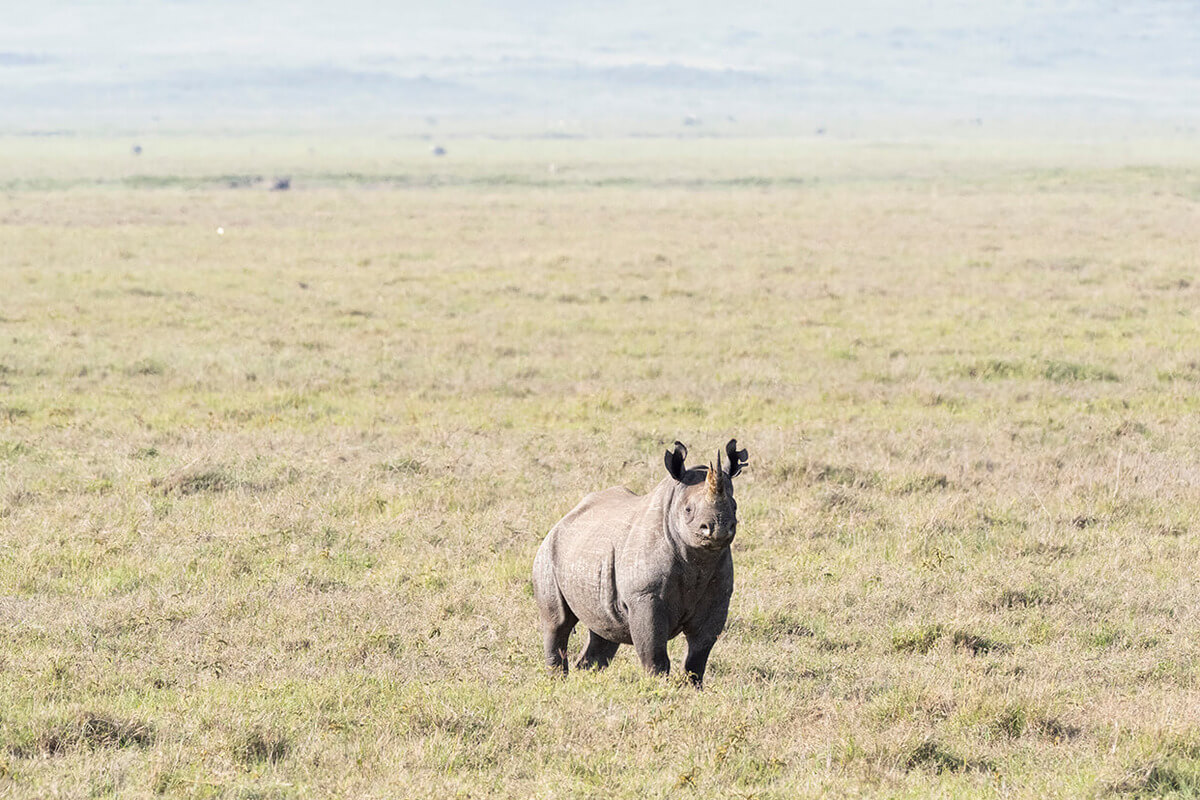
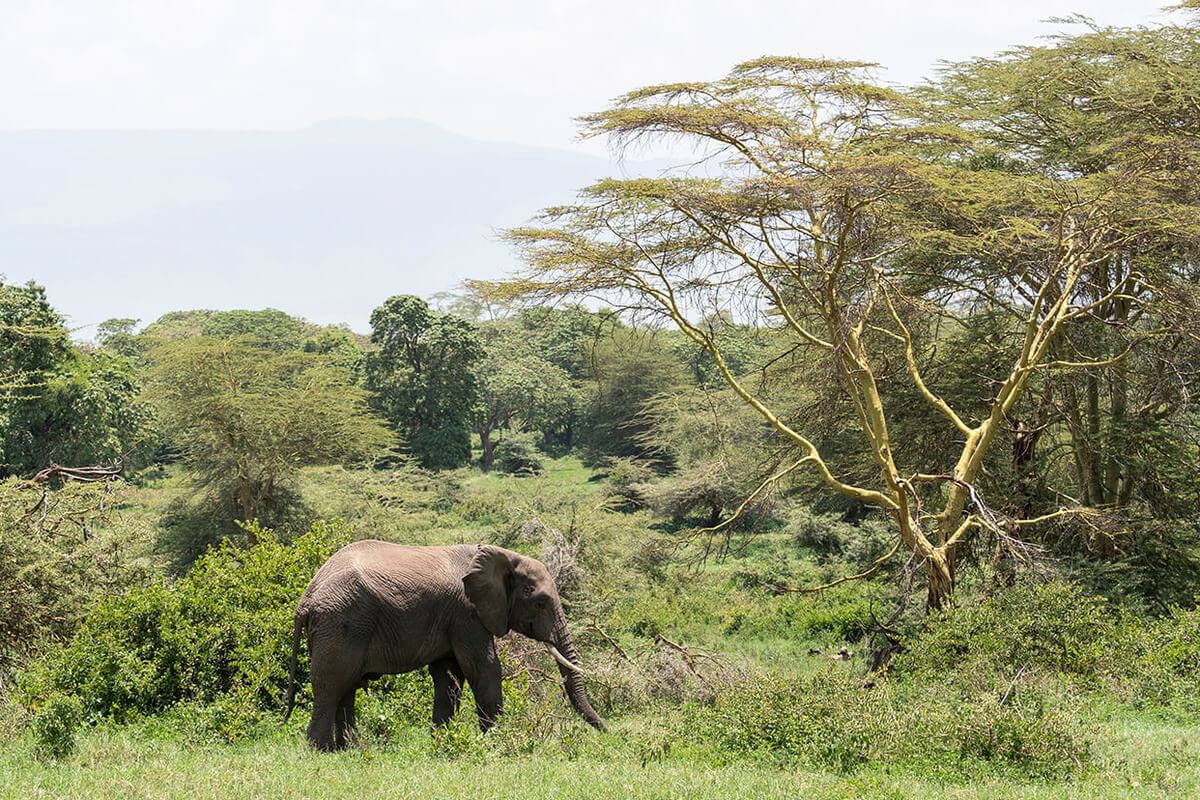
Spending just a few minutes in the Ngorongoro Crater is enough to realise it’s a fascinating safari destination. It is one of the places in Africa where you are most likely to see the famous Big 5. The leopard is possibly the hardest animal to spot. By contrast, sightings of elephants, buffalo, lions and black rhinos are quite common. However, always keep in mind that the animals are wild, so nothing is guaranteed.
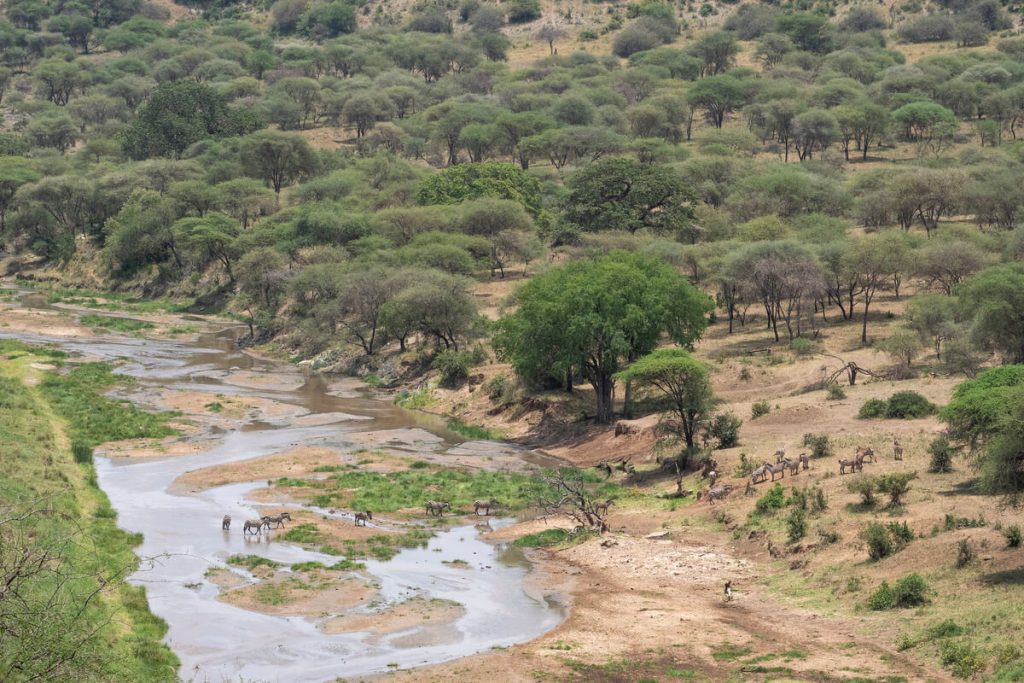
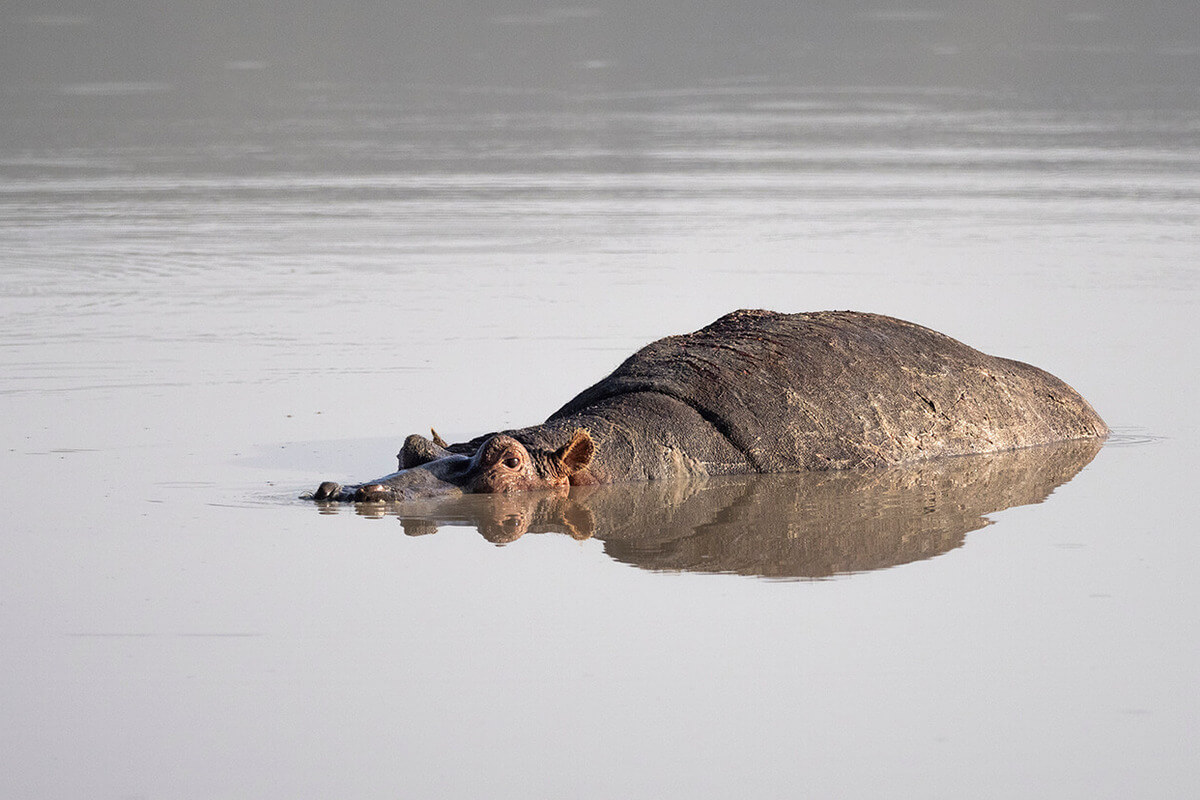
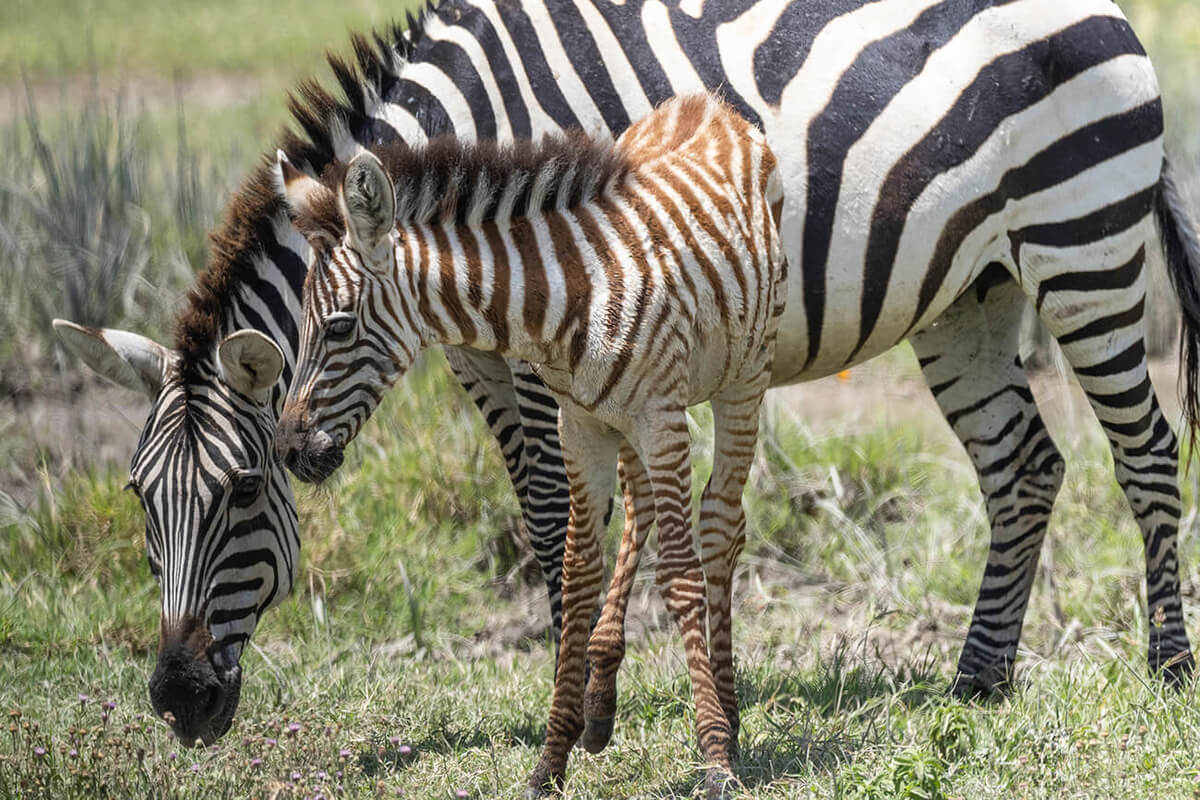
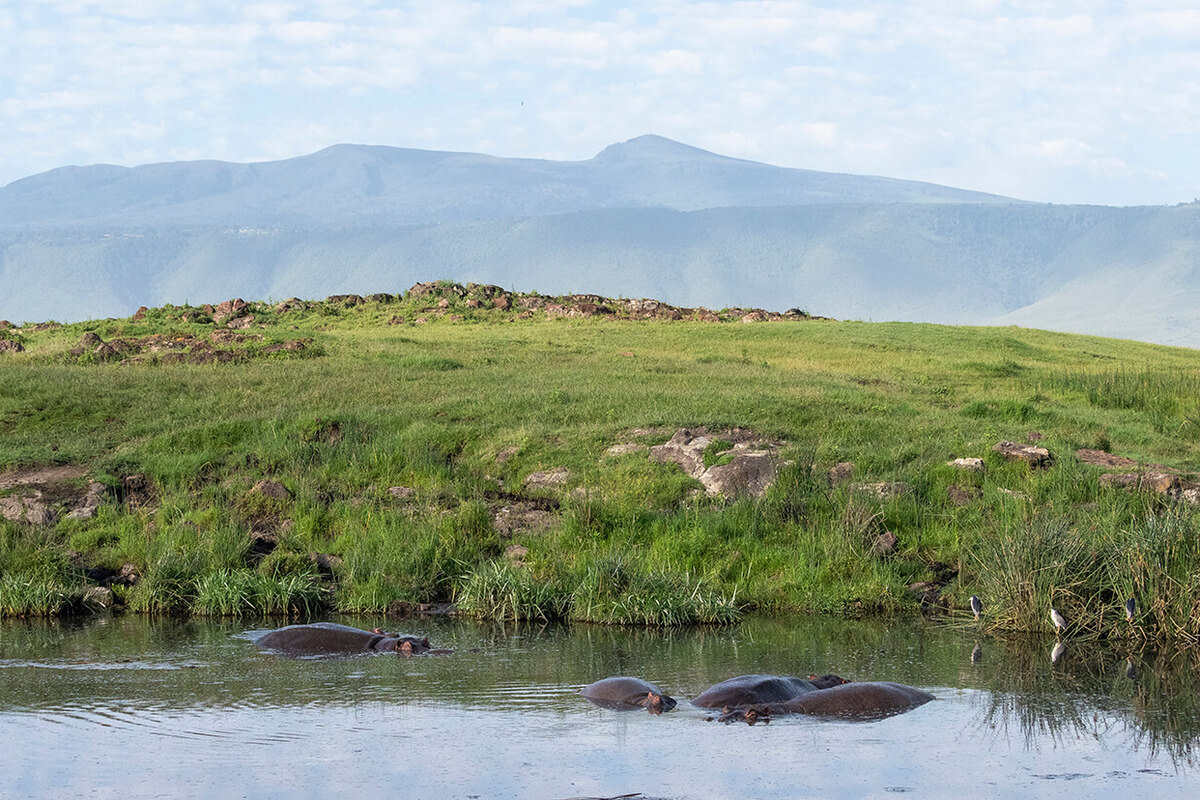
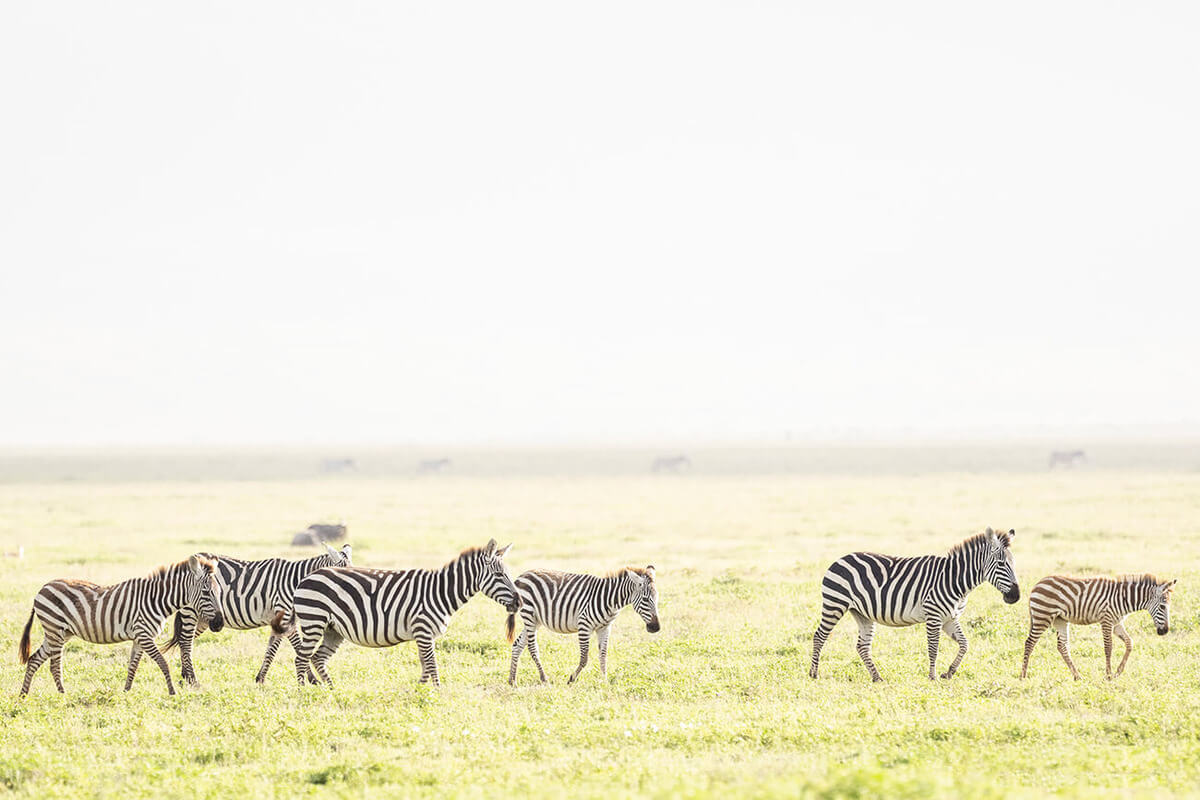
You can also see plenty of herbivores, such as giraffes, wildebeest and zebras. There are also some pools and lakes with quite a few hippos.
In recent years, sightings of servals have also become more frequent. It is a small, very photogenic African wild cat that is very hard to see in other national parks.
What is the best time of year to visit the Ngorongoro Crater?
Since the animals that live in the Ngorongoro Crater do not migrate, safaris are excellent at any time of year. However, the weather and the number of visitors can vary:
- During the rainy season (March and April) there can be more rainfall. This can make visibility and driving more difficult. However, the rain doesn’t usually last all day. In general, these two months would be the least recommended, although it is still a good time to go.
- During the high season (July to September) there are more visitors to the crater and, since it isn’t as vast as the national parks, some spots can get crowded.
Tips for visiting the Ngorongoro Crater
If you’re planning an Ngorongoro Crater safari soon, I recommend following these tips:
- Bring warm clothes. As the crater rim is at almost 2,300 metres above sea level, nights and mornings are quite cold. To stay comfortable it’s important to bring a jacket or fleece, as the temperature can easily drop to 10 °C.
- Avoid mosquito bites. Because of the altitude, I noticed there were fewer mosquitoes around the Ngorongoro Crater. Still, there are some, and they can transmit tropical diseases such as malaria. So it’s important to use mosquito repellent and sleep under a mosquito net. During the day it’s also best to wear long sleeves and light colours. Dark colours attract mosquitoes and also tsetse flies.
- Bring enough water. Tap water at lodgings or campsites is not drinkable, so it’s important to bring enough water. Accommodation sells water and other drinks, but at a much higher price. That said, if you do the safari with a local operator, water will be included in the price of the tour, so you won’t have to worry about it.
- Start the safari early. Experiencing the sunrise inside the Ngorongoro Crater is unforgettable. It’s also the best time to see lions on the move.
We adapt your route to your datesWant to descend into the crater at dawn and combine it with the Serengeti or Tarangire? Local operators who know the area can adapt a route to your dates, pace and budget, with direct prices. ✓ Personalised safari itineraries |
My experience: two safaris in Ngorongoro
I’ve been lucky enough to go on two safaris in the Ngorongoro Crater, on two different Tanzania safaris with a local operator. I was fascinated by this place, and I constantly think about going back.
Although I went to the same areas on both safaris, the wildlife highlights were different. On the first, the lions (including some cubs of three or four months) were the stars. During the second safari, however, the high point was seeing a black rhino from very close.
The first safari in Ngorongoro
After a cold night at Simba Campsite, where I woke up more than once because of the buffalo grazing next to my tent, the guide came to pick us up at 6:30 in the morning to start the descent into the caldera. Six hundred metres of descent that would take us to one of the most impressive places on the planet.
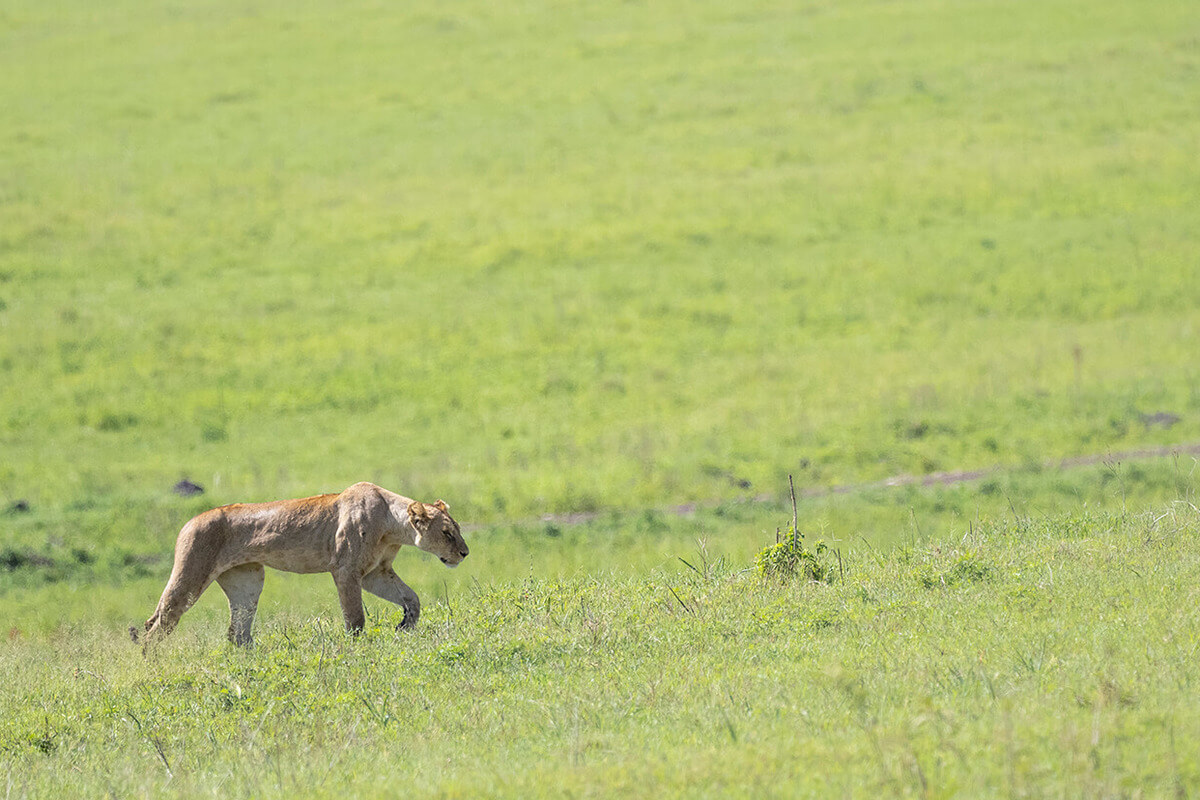
Once we entered the crater, in beautiful golden light, we saw a group of vehicles stopped. We quickly headed over and found a group of lionesses and young male lions. They were a little far from the track, about fifty metres away.
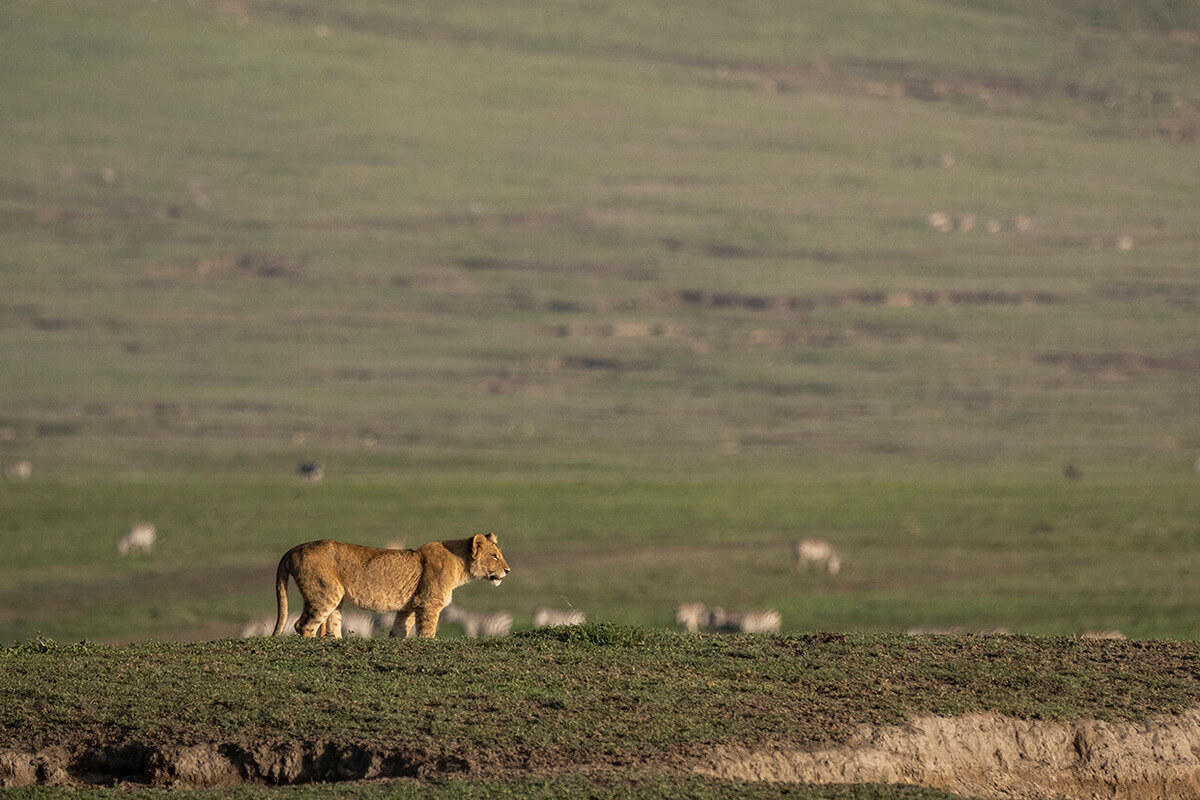
We then continued driving around the crater, seeing lots of zebras, elephants, giraffes, gazelles… The density of animals was indescribable. In the distance I also spotted a pair of black rhinos; I found them thanks to my guide, as without binoculars they were almost impossible to see.
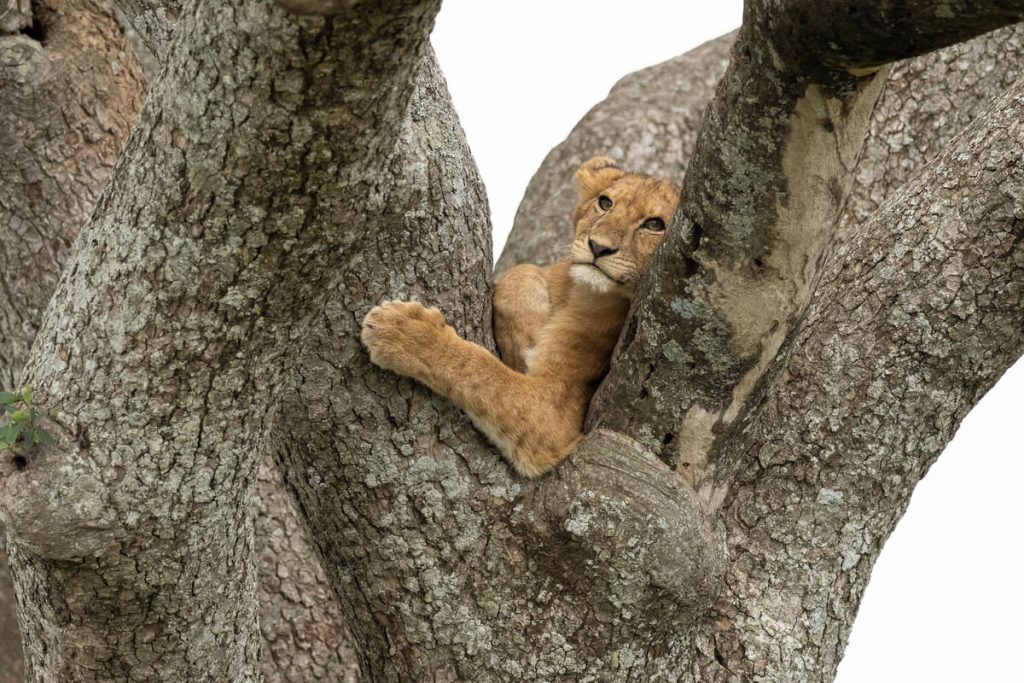
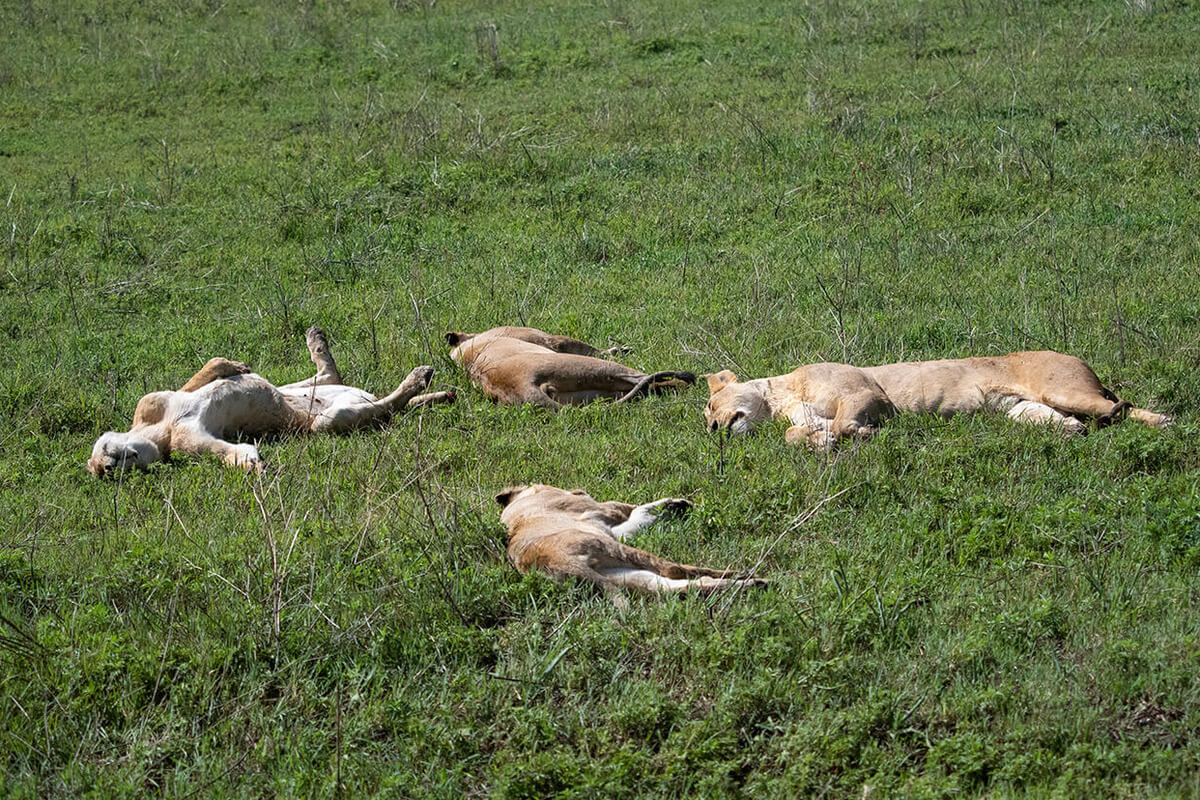
A little later we saw more vehicles stopped, and there we found four adult lionesses and four cubs of about three months. They were sleeping, as it was starting to get hot. At some point, though, one of the little ones moved a bit and went off exploring.
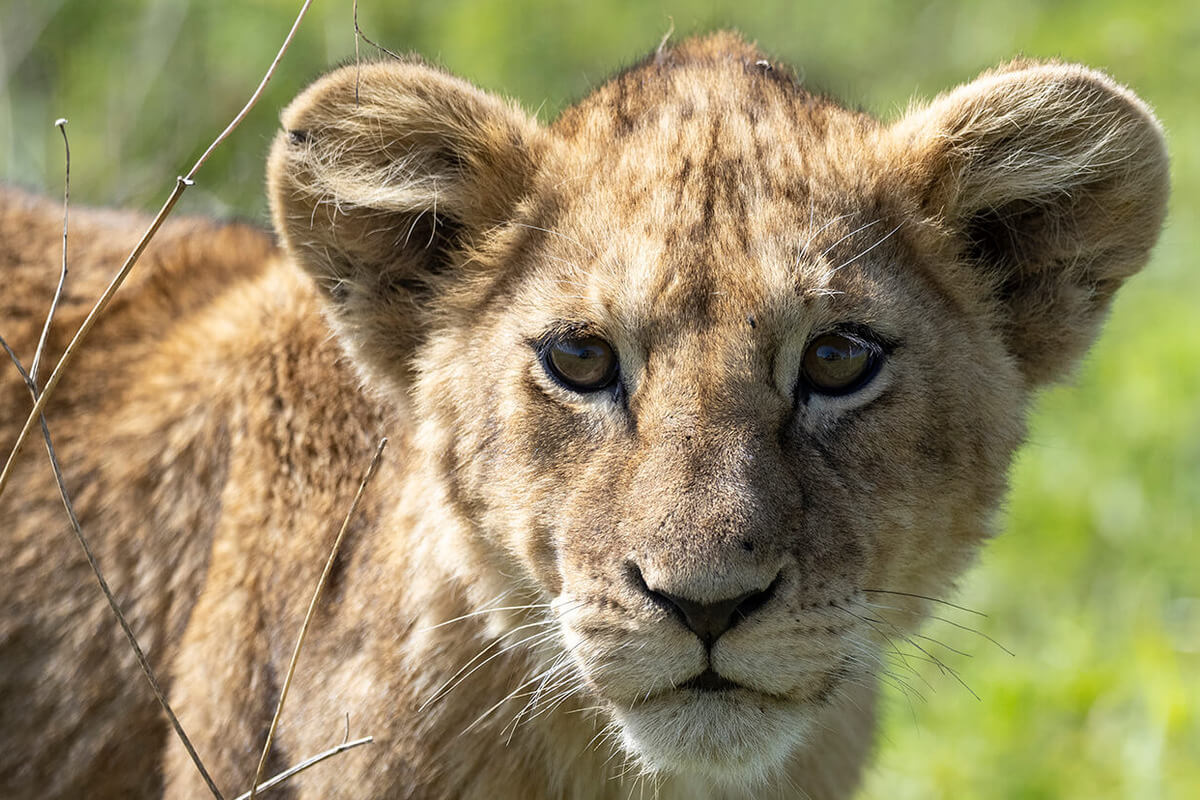
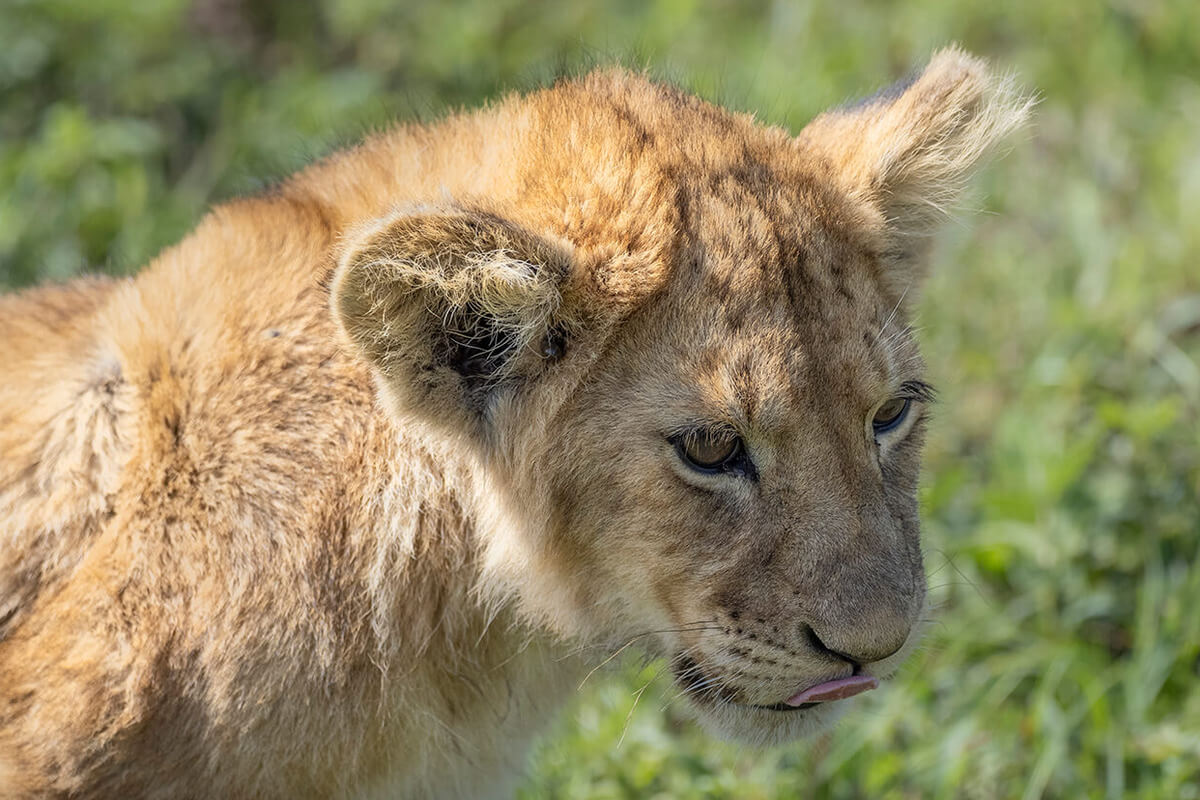
We finished the Ngorongoro Crater safari by stopping near Lake Magadi, where we could get out of the vehicle to use the toilet and walk a little closer to the lake. After that, all that remained was to head to the ascent road to leave the crater. It is without doubt one of the most impressive places to see in Tanzania.
A second Ngorongoro Crater safari experience
During another safari experience in Tanzania, I visited the Ngorongoro Crater again. The start was quite similar, and in the morning, the best time to see cats in action, we saw a group of vehicles stopped. When we got there I understood why: there were two male lions on the move. Unfortunately, just as we arrived, both stretched out, and they didn’t seem to have much intention of moving. That’s why it’s so important to reach the crater first thing.
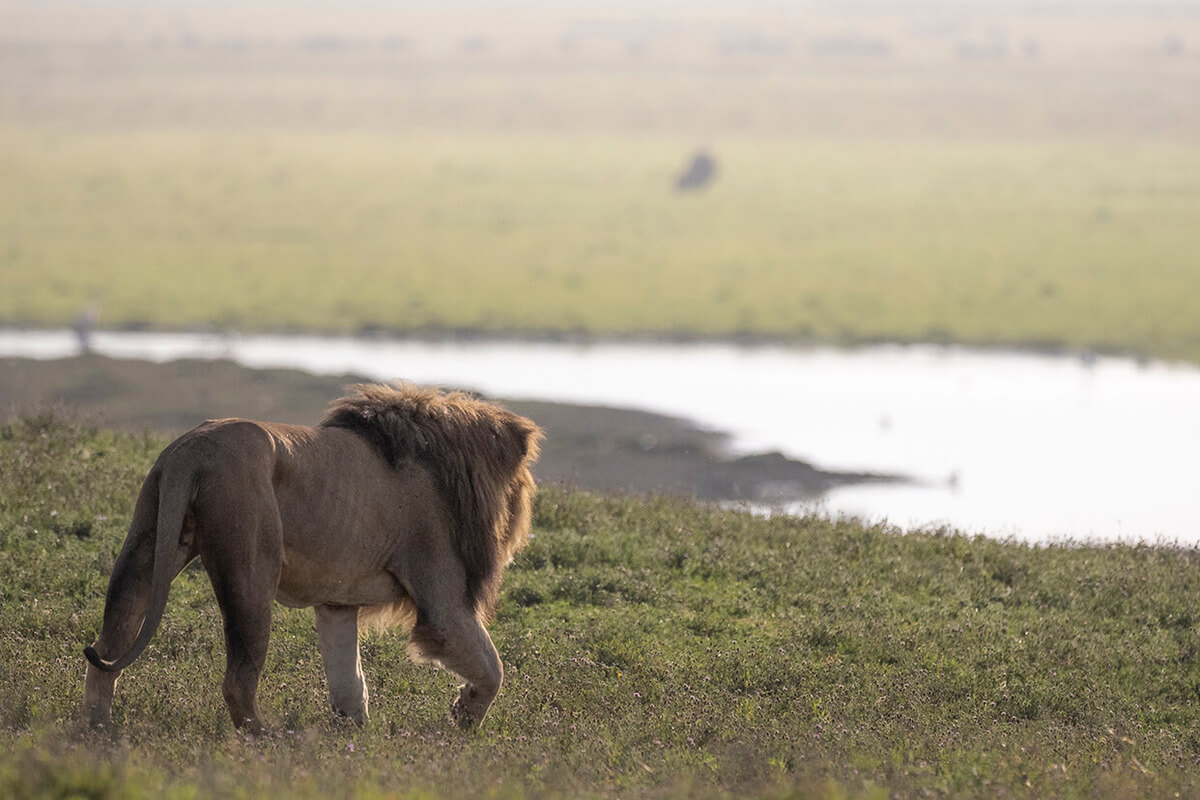
The next hour was quieter, driving among thousands of herbivores in search of some of the hardest animals to see. Finally, we found a black rhino, which I was able to watch and photograph up close. This species of rhino is known for its territorial and quite aggressive behaviour.
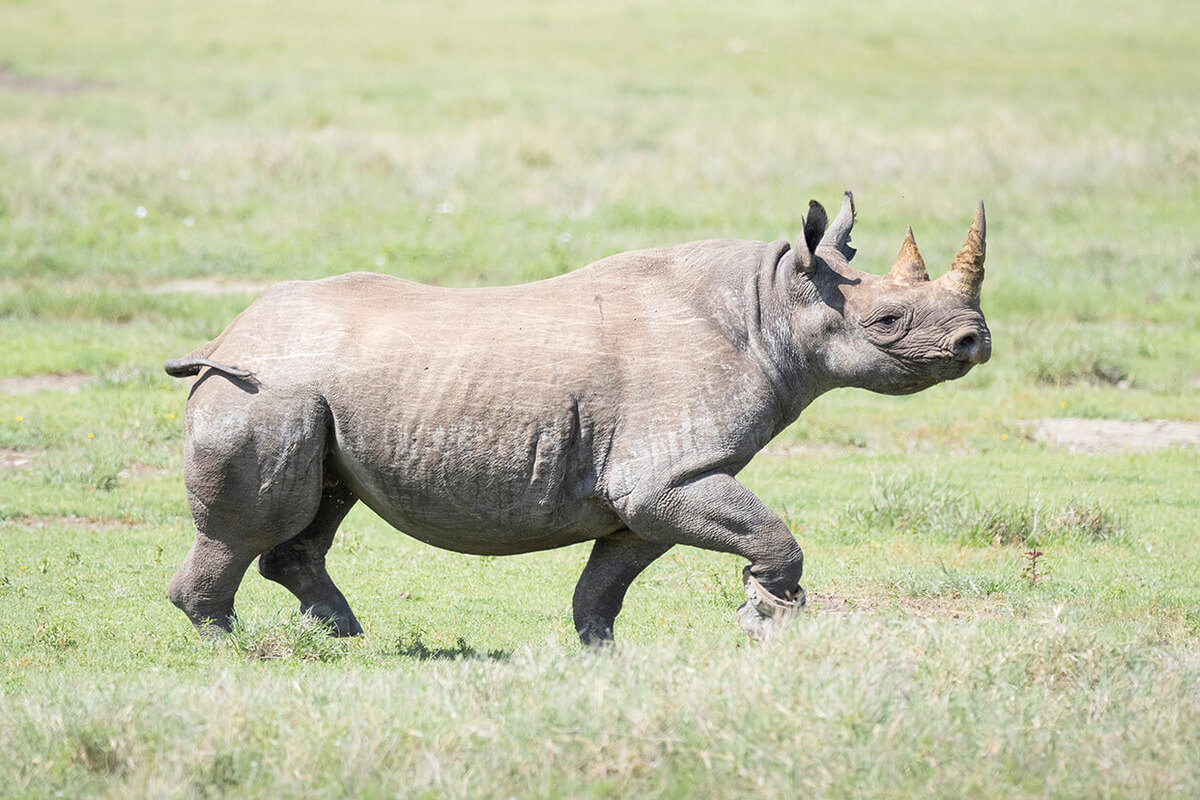
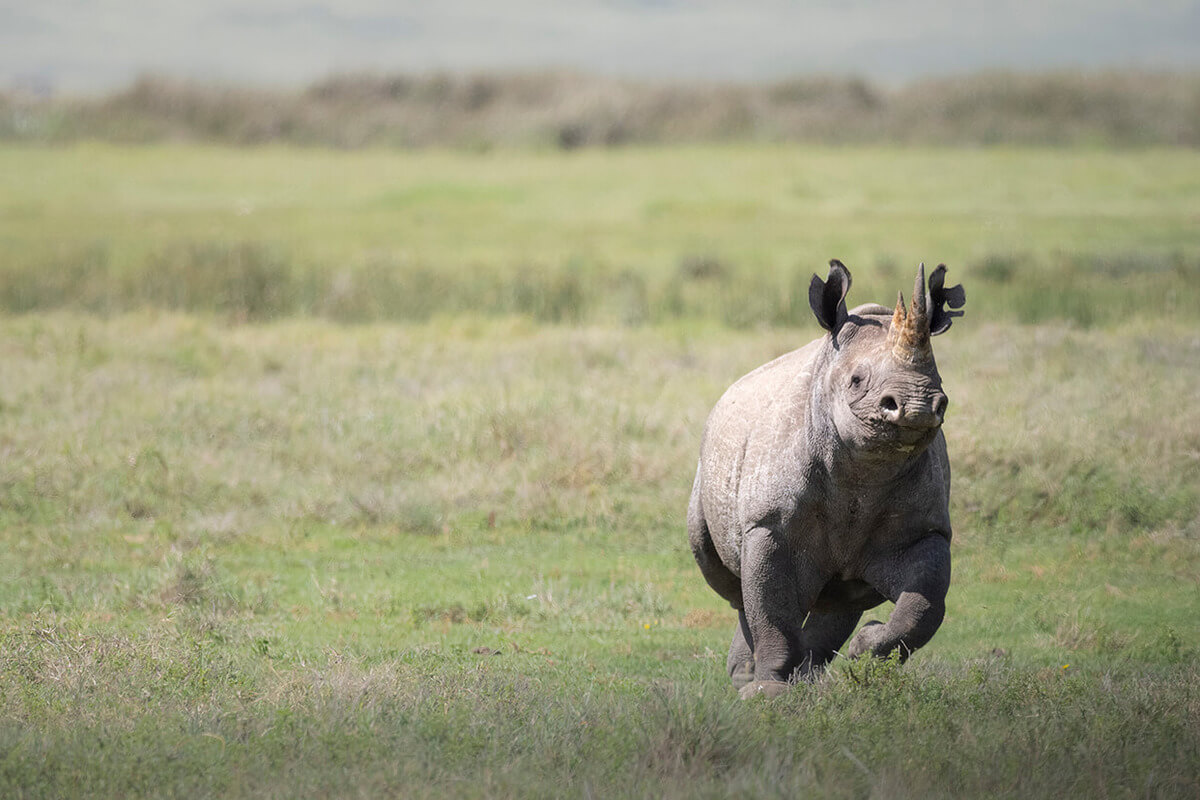
After this, the guide decided to stop at Lake Magadi, so we could use the toilet and enjoy the views of the lake. Personally, we spent too long there, especially knowing that by driving around we could have seen very interesting things in the crater.
When we set off again, the guide found a new pair of lions, possibly the same ones we had seen in the morning, which had moved. They were two huge, majestic male lions. The pity is that they were fast asleep. Only one of them lifted his head now and then, just to change position and go on sleeping.
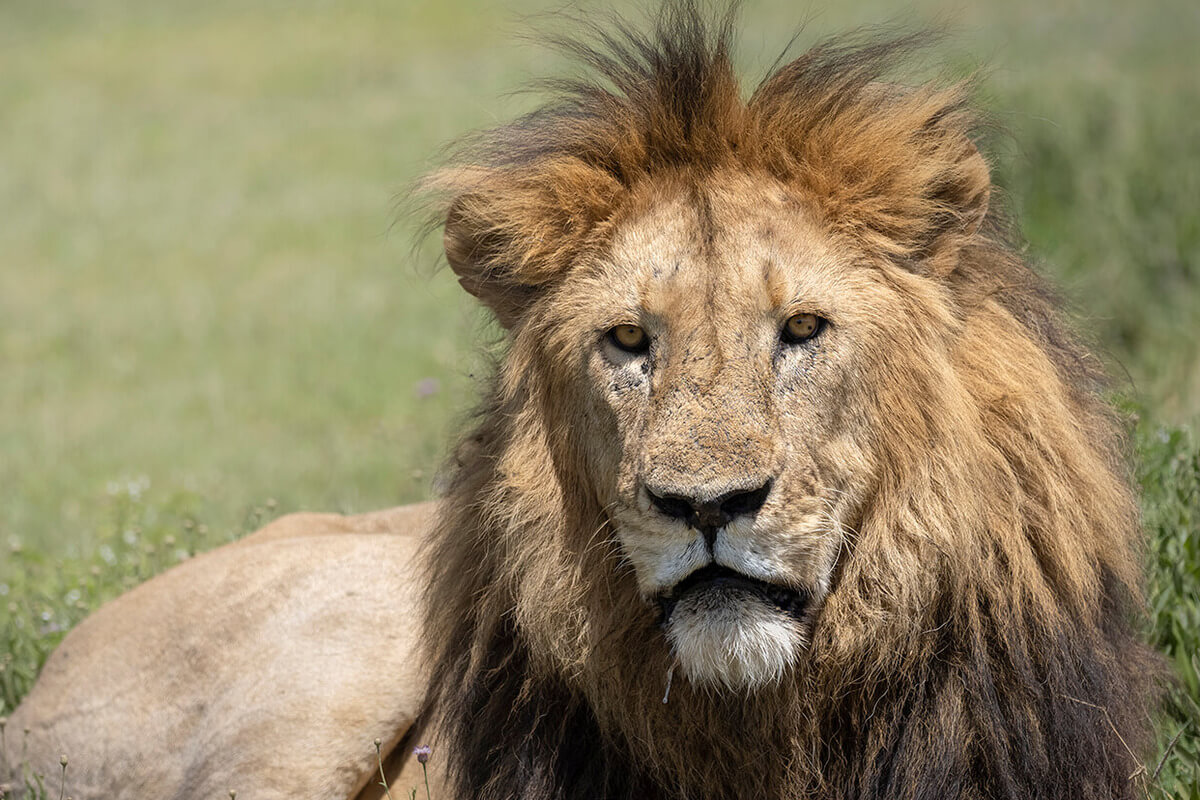
Finally, we ended the safari by visiting the forested area that covers part of the crater. Leopards can sometimes be seen there. We had no luck with the cats, but we did see several elephants. Then we headed to the track to leave the crater. Once again, an unforgettable experience…
 |
SAFARIS BY LOCALS Ready to plan your Ngorongoro Crater safari?🦁 Find the best trips and safaris in Tanzania with a local operator, with no middlemen and a free, no-obligation quote. 🏨 Best prices on accommodation in Tanzania here. |